The Comics Art Allegory; braiding words, pictures and motifs through adjacent panels…


FROM DUSK TILL DRAWN: Comics Art Studies and Graphic Narratives Composition, Workshops, Events & Zine Publishing @ Faculty of Communication Arts, Chulalongkorn University [Bangkok – THAILAND]
The Comics Art Allegory; braiding words, pictures and motifs through adjacent panels…
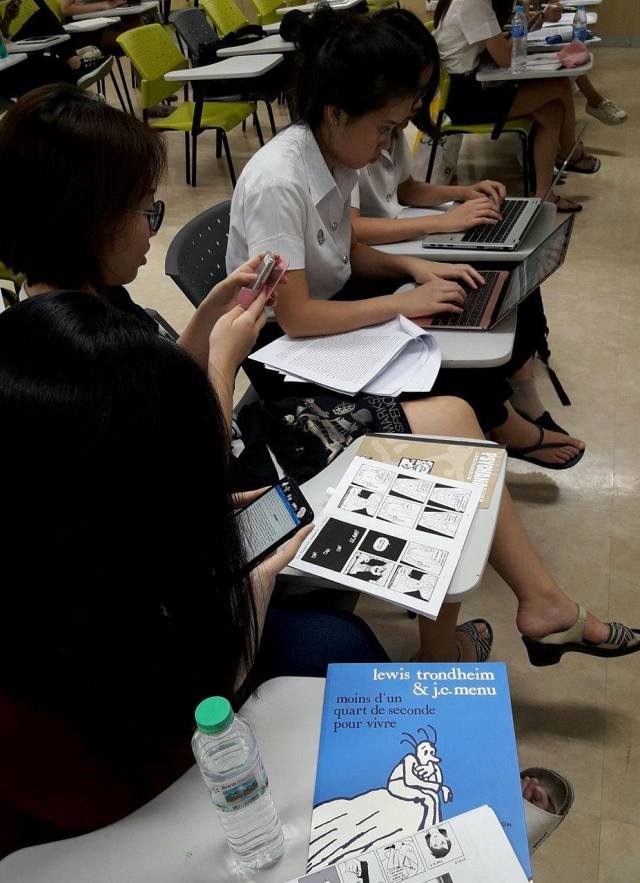
For the first semester of 2017, the “Managing Creativity for Communicative Innovation” course (Communication Management, International Program, Faculty of Communication Arts, Chulalongkorn University, Bangkok, Thailand) had three main goals:
1) select, summarize and partly translate 9 Thai alternative comics, and contact a foreign publisher to get them signed abroad. This endeavor was highly successful as it resulted in the publication of 4 titles by Art Jeeno in French language from Éditions çà et là: see here.
2) Publish, promote and distribute our own zine gathering the constrained comics composed by former “Graphic Writing” CommArts students.
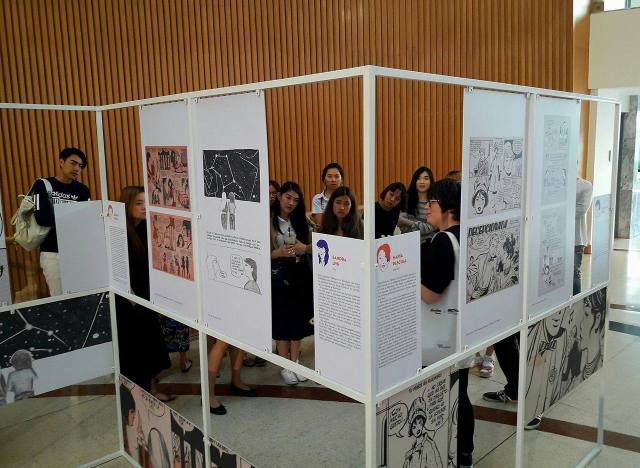
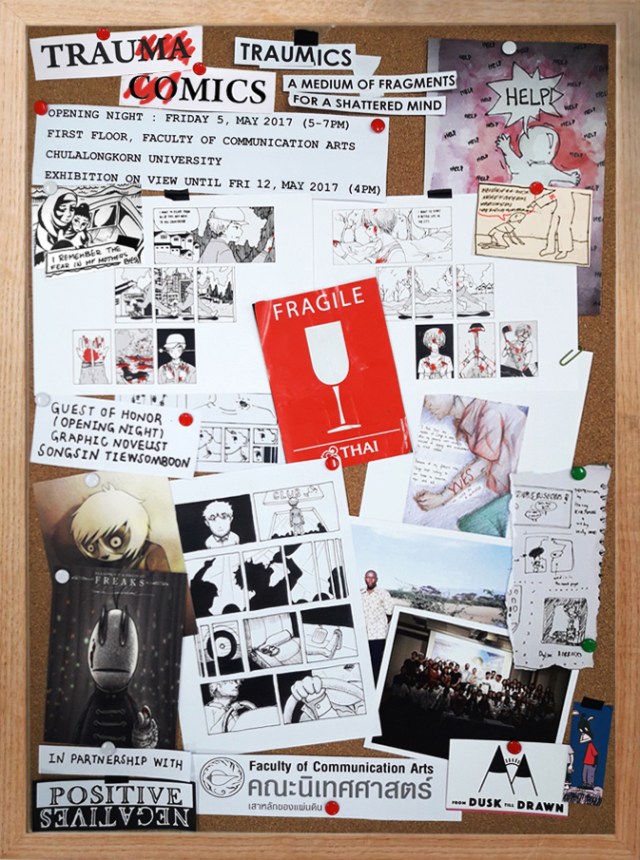
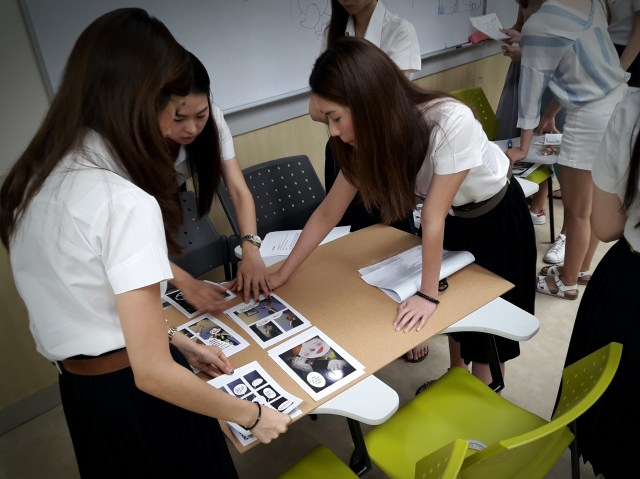
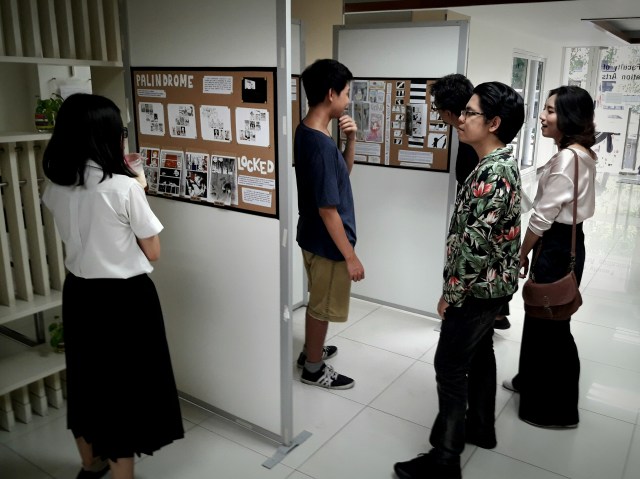
3) Organize an exhibition of the “Traumics” (Comics on Trauma) composed by CommArts & CommDe (Program in Communication Design, Department of Industrial Design, Faculty of Architecture, Chulalongkorn University) students.

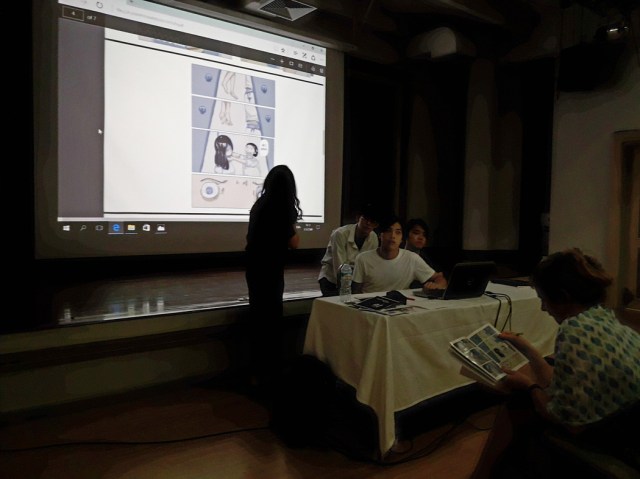



















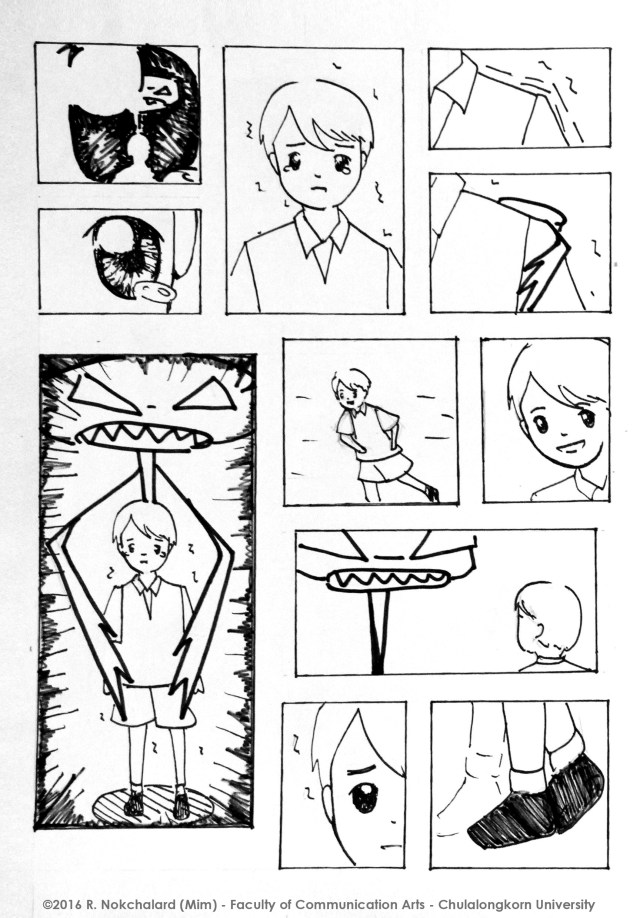
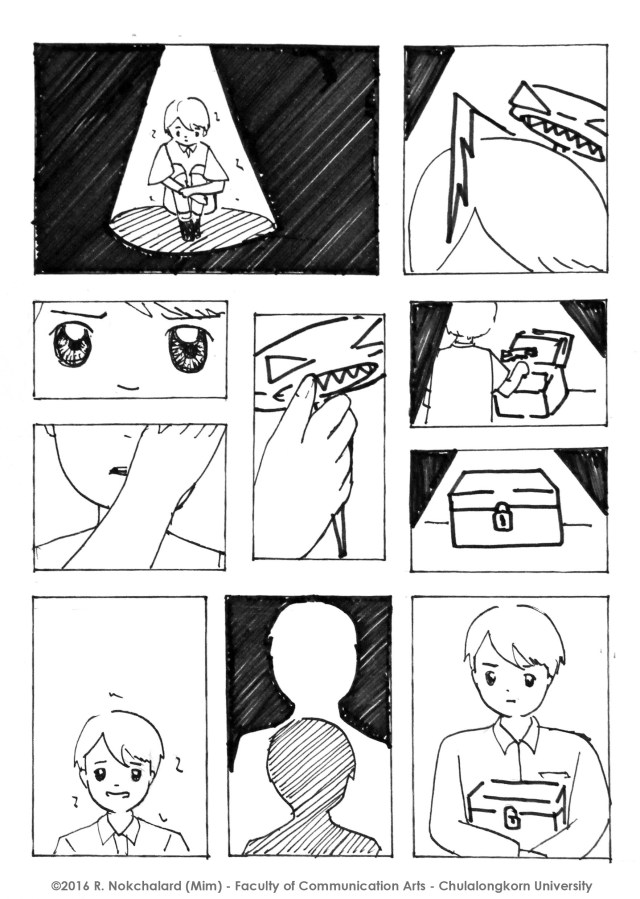
“Nailed” is a silent graphic narrative by Thai student Rattanakorn (Mim) for the IMGT COMM course (2800217), November 2016. In response to a video (see below) where a young child is the victim of a cruel joke perpetrated by adults, her comics captures how the child’s inner world is shattered by the traumatic psychological abuse and how it will affect his late life.
Description of the Imaginative Communication course: “Methods of conversing emotions, feelings, ideas, values, beliefs and meaning of life through the languages of the imaginative world in the form of poetry, music and songs, literature, drama, film or other creative works of Thai and foreign artists; relationship between science and art of communications; media design for imaginative works; analysis of images and narratives.” This semester’s theme: “Psychic Trauma; To Say the Unutterable”. Communication Management, International Program, Faculty of Communication Arts, Chulalongkorn University.



“The Wave” is a graphic narrative (on the themes of psychological fright, phobia and school bullying) by Thai students Jinwara (Sugar) and Rattanakorn (Mim) for the IMGT COMM course (2800217), November 2016.
Description of the Imaginative Communication course: “Methods of conversing emotions, feelings, ideas, values, beliefs and meaning of life through the languages of the imaginative world in the form of poetry, music and songs, literature, drama, film or other creative works of Thai and foreign artists; relationship between science and art of communications; media design for imaginative works; analysis of images and narratives.” This semester’s theme: “Psychic Trauma; To Say the Unutterable”. Communication Management, International Program, Faculty of Communication Arts, Chulalongkorn University.
A clever use of potentialities and features of the comics form (layout, composition, design, text/image relationship, iconic solidarity, iconic iteration…) to serve the content.

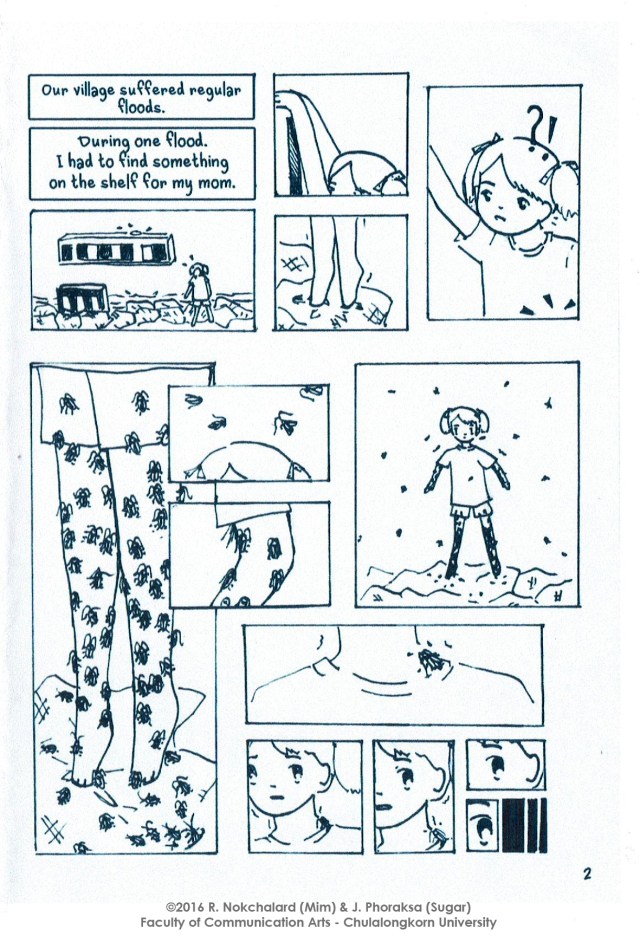
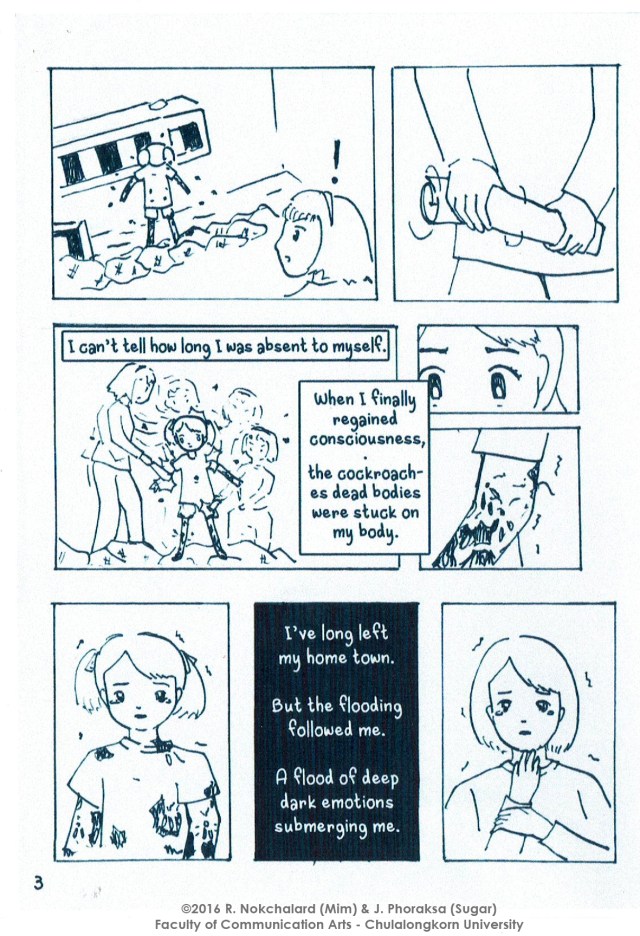

Reproduced with the authors’ permission. All rights remain to the authors.
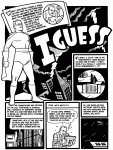
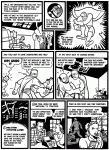
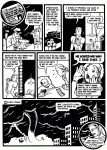


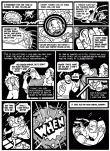
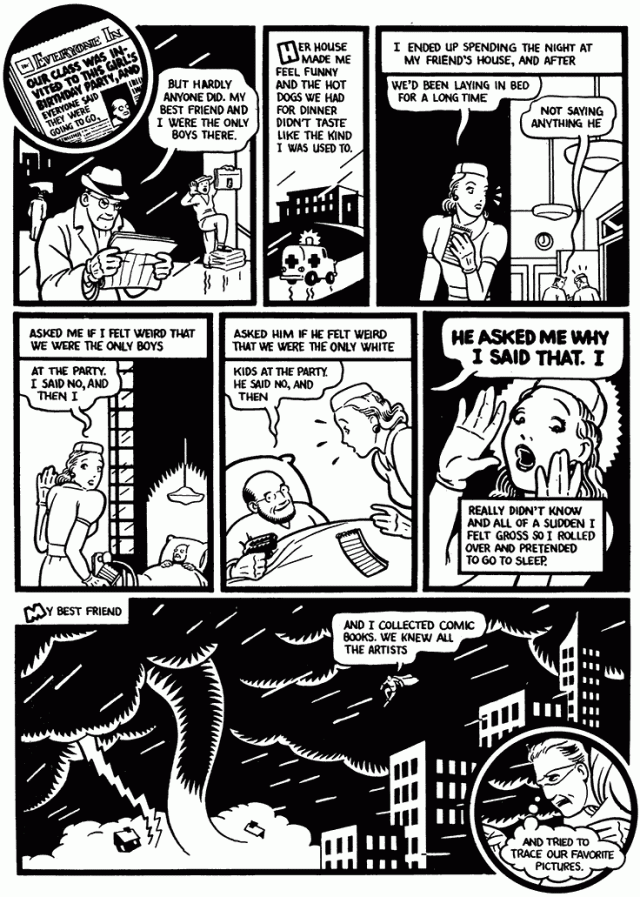
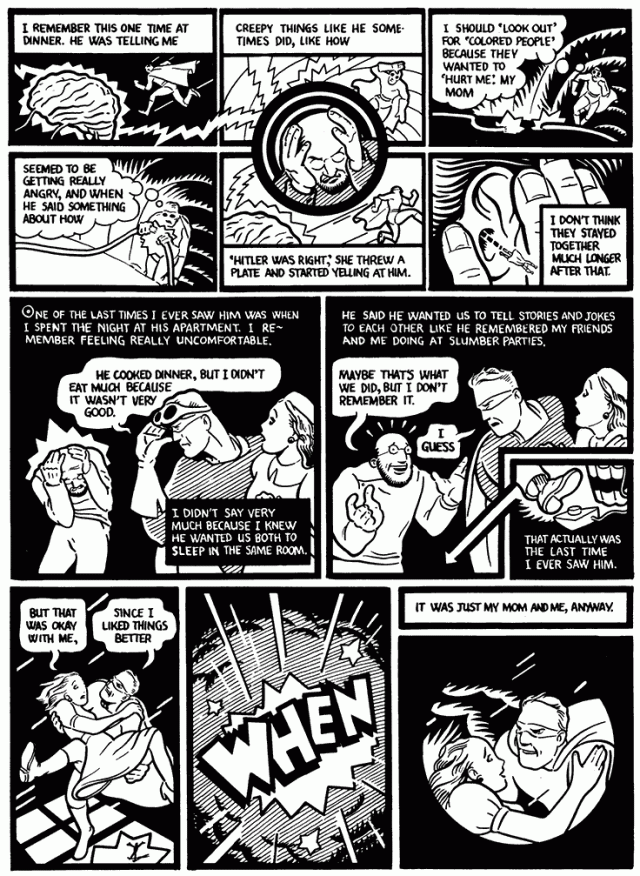
I Guess (a.k.a. “Thrilling Adventure Stories”) by Chris Ware (USA) in: RAW Vol 2, #3, High Culture for Lowbrows, Penguin Books, 1991. Via Glad You Asked.
Copyright ©1990 Chris Ware
If words can be drawn, and images written, then the tension between words and images can become quite complex. For example, in “I Guess” (Raw 2:3, 1991, reprinted in Ware, Quimby), alternative cartoonist Chris Ware experiments with a radically disjunctive form of verbal/visual interplay: a six-page story that sustains parallel verbal and pictorial narratives throughout, never quite reconciling one to the other […]. Admittedly, “I Guess” represents a radical questioning of the way comics work […]. Dismantling genre as well as form, Ware’s experiment demonstrates the potential of comics to create challenging, multilayered texts: his simple broadly representational drawings contribute to, rather than mitigate, the suggestive complexity of the narrative, while the blank naive narrational voice both amplifies and undercuts the appeal of the drawings. (Charles Hatfield, “Alternative Comics: An Emerging Literature”, The University Press of Mississippi, 2005)





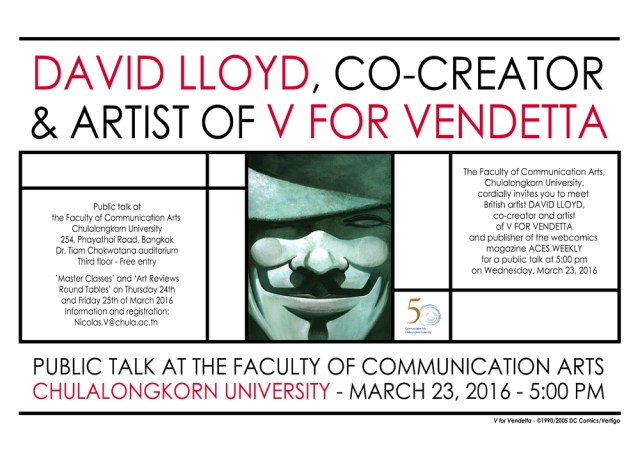
V for Vendetta co-creator and artist David Lloyd, special guest of our Faculty (Faculty of Communication Arts), Chulalongkorn University, for a public talk, a retrospective exhibition, a masterclass, a workshop and portfolio reviews. The workshop and portfolio reviews have their own dedicated post over here. Press interviews (tv, radio, magazine, newspaper) conducted with David Lloyd during his visit in Thailand are gathered at the end of this article.
During the public talk held at the Faculty of Communication Arts on March 23, 2016, David Lloyd discussed the creation of the essential graphic novel V for Vendetta, its movie adaptation, the designing and popularity of the iconic Guy Fawkes/V/Anonymous mask, the historical launch of the “British Invasion”, the developing field of webcomics, and the composition of profound, engaged and sophisticated narratives in Comics Art.


In the early 80s, English artist David Lloyd created and designed the character of V and his now famous Guy Fawkes mask (known lately as the “Anonymous mask”). Inviting the promising writer Alan Moore to join his comics project, David Lloyd required from his collaborator to avoid any thought balloons or voice over emanating from the masked freedom fighter. The constraint, remarkable and innovative at the time in the field, strengthened the ambiguity and complexity of the inner motivations and turmoil of V as he spreads terror amongst the leaders of a corrupted and fascist government in a dystopian England evoking George Orwell’s 1984. First conceived with a stark and impressing black-and-white chiaroscuro and serialized between 1982 and 1985 in the English magazine Warrior, the sophisticated narrative drew the attention of major publishers on the other side of the Atlantic.


V for Vendetta, and David Lloyd as an artist and a liaison representative, participated to the groundbreaking “British Invasion” of American comics which led to the creation of the high-quality Vertigo imprint by DC Comics and to the publication of major graphic novels such as Alan Moore and Dave Gibbons’ Watchmen. Working with Grant Morrison on John Constantine: Hellblazer, with Garth Ennis on War Stories or with Jamie Delano on the outstanding tales Nightraven and The Horrorist, David Lloyd never ceased to explore the complexity of the human psyche without ever compromising his own artistic and political integrity. Regarded by the critics as an essential graphic novel, V for Vendetta experienced a new wave of popularity through its 2006 movie adaptation produced by the Wachowski brothers (now sisters) and starring Natalie Portman and Hugo Weaving. The Guy Fawkes mask became an anti-establishment and anti-authoritarian symbol in protests around the world, from the Occupy Wall Street movement to the Arab Spring revolutionary wave. Through its appropriation and extended use by the ‘hacktivist’ group Anonymous, it is now one of the most important revolutionary icons in recent decades with more than 100,000 official copies of the masks being sold annually. Using the gained popularity of his creation to promote the works of other (and often debuting) cartoonists, David Lloyd launched in 2012 the online comics anthology Aces Weekly, one of the first attempts of the kind in the developing field of webcomics.
On March 28, 2016, David hold a masterclass with the students of the Creative Writing (28003216 – Graphic Writing) course. He discussed comics art and visual storytelling and provided individual comments on the graphic narratives produced by the students.


Press interviews (tv, radio, magazine, newspaper) done with David Lloyd during his visit in Thailand.
TELEVISION:
The first of the two-part interview with David Lloyd for Thai channel Voice TV is available (in Thai) over here. The second of the two-part TV interview (in Thai) with David Lloyd focuses on the comics artform, on the banning of sound effects in V for Vendetta and on digital comics (David Lloyd being the publisher of the Aces Weekly digital comics anthology). Report shot in front of the retrospective exhibition dedicated to David’s career, right after his public talk at the Faculty of Communication Arts, Chulalongkorn University.
MAGAZINE:
Interview with David Lloyd conducted by khun Pim-On for the magazine a day bulletin #407 (at the Faculty of Communication Arts, Chulalongkorn University). Available (in Thai) over here.
NEWSPAPER:
Interview with David Lloyd and four-page “cover story” by Richard S. Ehrlich for the Bangkok Post weekly cultural supplement Brunch (April 3-9, 2016). Available (in English) on this page.
RADIO:
Podcast of the interview (in English w/ Thai translation) with David Lloyd by three famous Thai cartoonists (Suttichart Sarapaiwanich, Eakasit Thairaat and Songsin Tiewsomboon) for RadioMANGA. Available over here!
Podcast of the interview (in English) with David Lloyd by Colin Cheney & Donald Quist for Poet in Bangkok. “In this eighth episode (Episode #8: A Very Small Irony), Colin and Donald speak with acclaimed comics artist David Lloyd, co-creator and illustrator of V for Vendetta. David discusses his working class upbringing and how American culture fed his development as an artist. He gives insight into some of his earlier collaborations with Alan Moore and other writers. David also shares his impressions of Bangkok and provides his perspective on the use of his V for Vendetta Guy Fawkes mask by Thai protesters”. Available over there!


I would like to extend my sincere thanks to David Lloyd for honoring our Faculty with his visit, to Assistant Professor Dr. Duang-Kamol Chartprasert, Dean of the Faculty of Communication Arts, Chulalongkorn University, Dr. Jirayudh Sinthuphan, Communication Management Program chairperson, and all the CommArts staff for their support. I would like to express my thanks to Bird, Look-in, Lookme, Looksorn, Narada, Big, Vi, Bomb, Nic Dunlop and Colin Cheney for their valuable assistance. Aj. Nicolas Verstappen




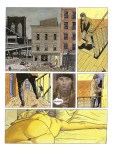


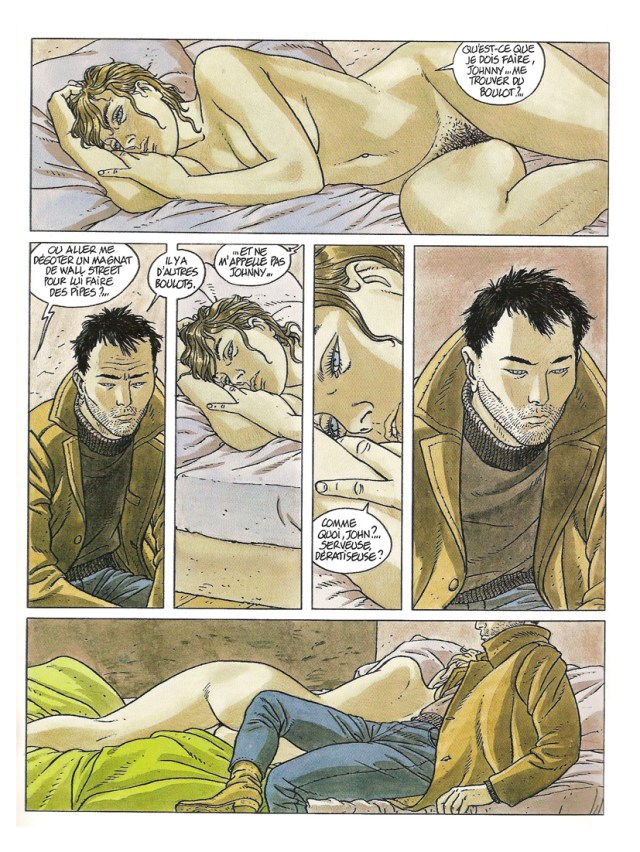
Brother John (in French), story by Jerome Charyn (USA) & art by André Juillard (FR), in: USA Magazine (L’Écho des savanes) spécial été #48/49, Albin Michel, FR, June 1990.


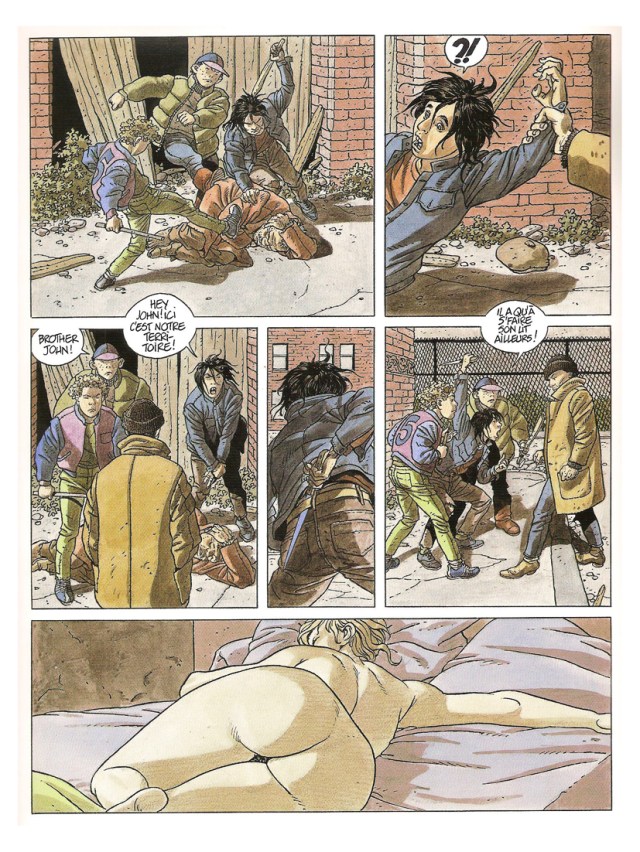

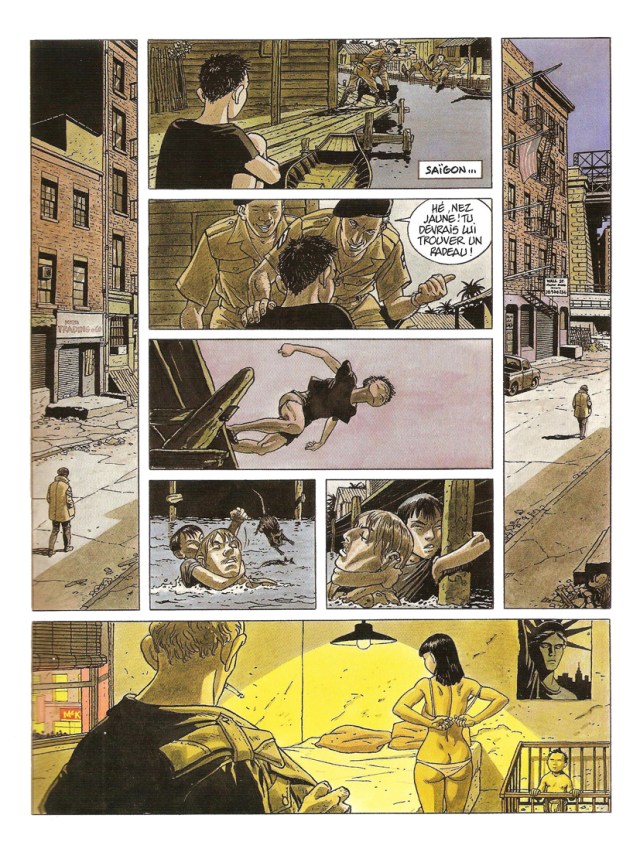
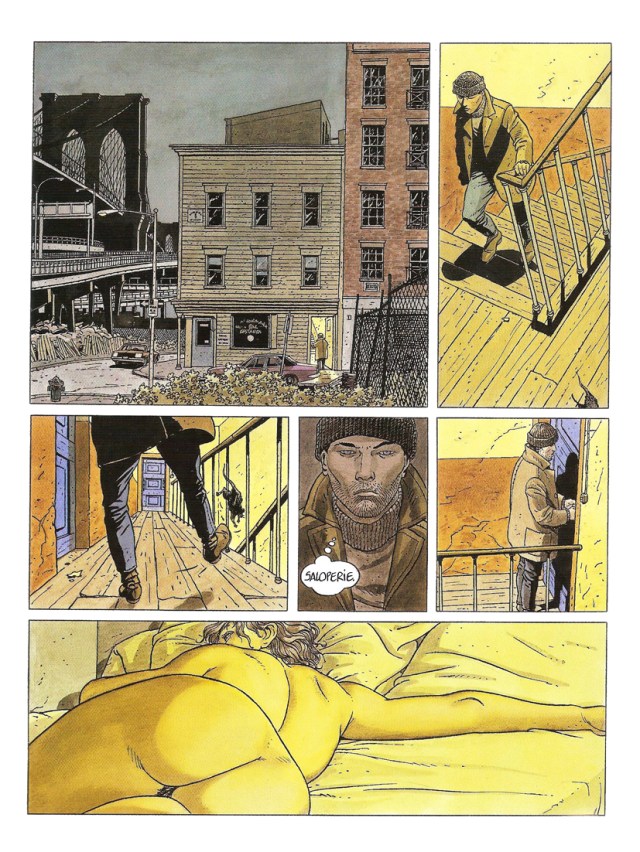




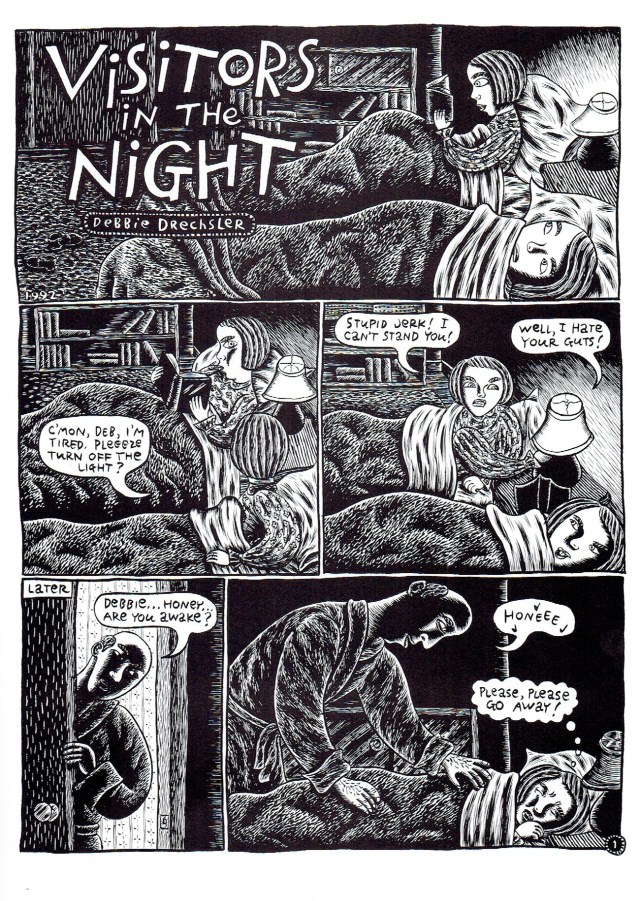
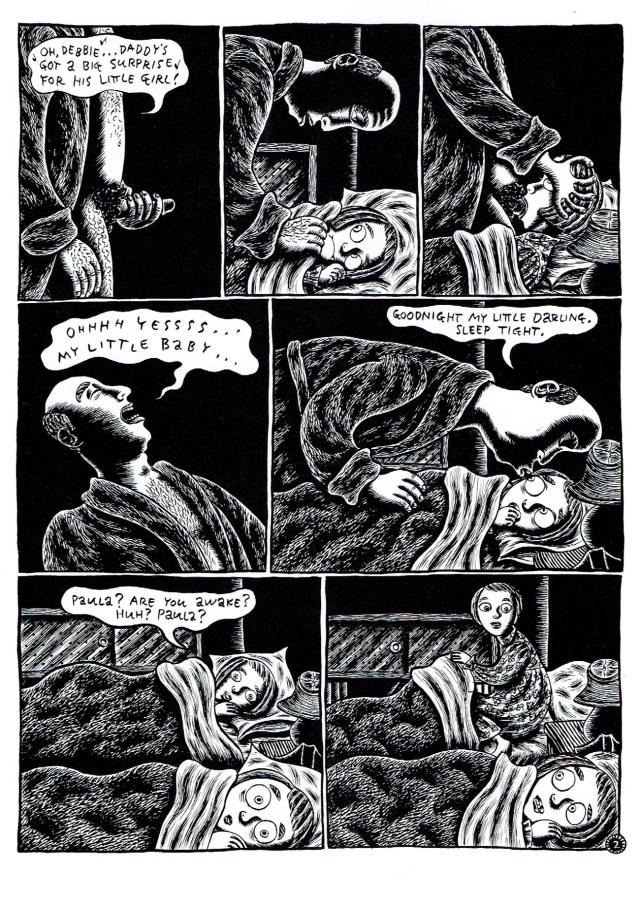
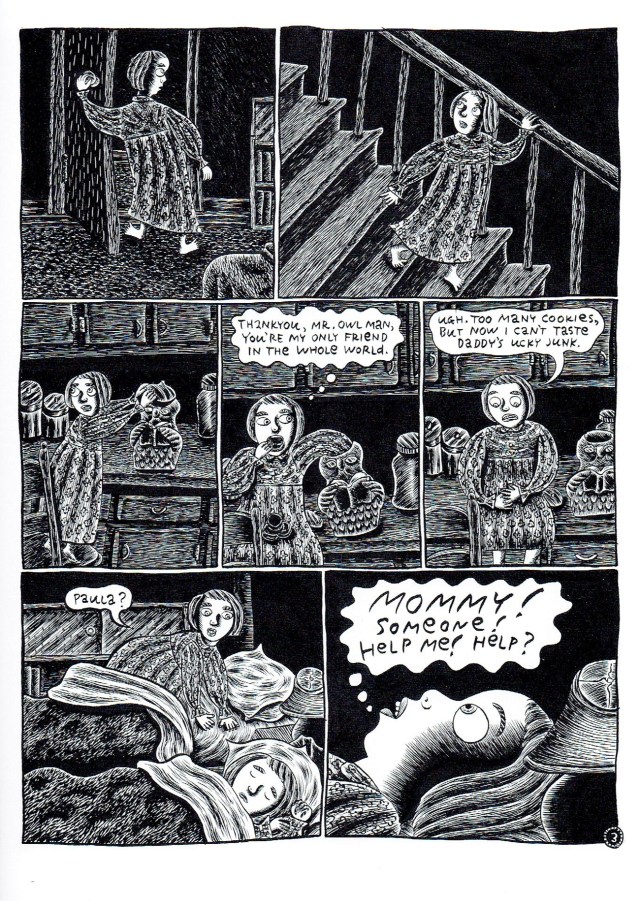
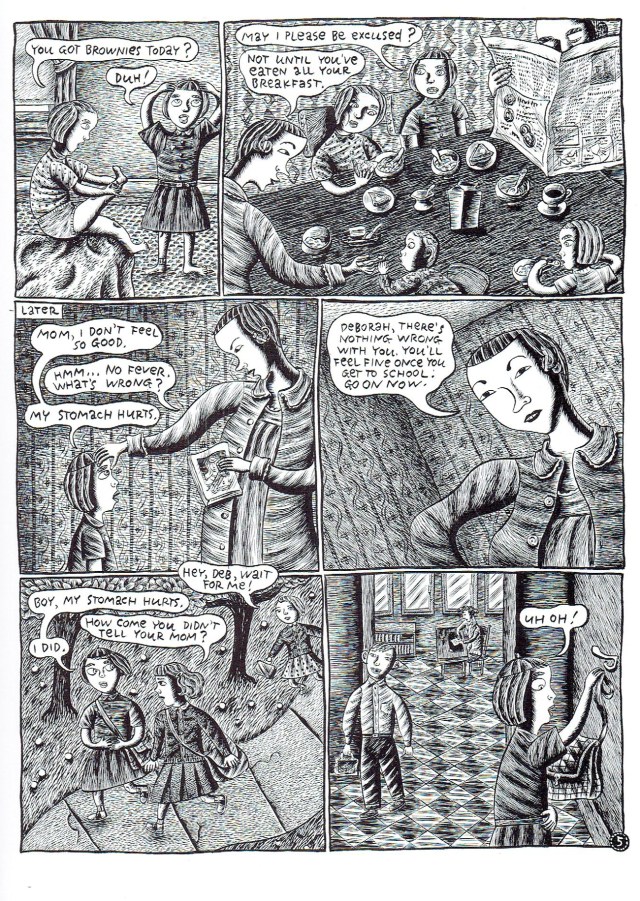
Daddy’s Girl: Visitors in the Night (first version) by Debbie Drechsler (USA), in: Drawn & Quarterly (Anthology) Vol.1, #10, Drawn & Quarterly, CAN, 1992. The author’s first name “Debbie” was changed into “Lily” in the Daddy’s Girl collection (Fantagraphics Books, USA). More on the topic in our interview with Debbie Drechsler.
“Visitors in the Night” – or “Daddy’s Girl” as the book was eventually called – is a masterpiece of horror. And it’s all the more horrifying because it is true, and because the actions depicted, the innocence-killing, soul-destroying actions, are happening right now, everyday, all around the world. (Richard Sala, in XeroXed #4, July 2004)
Contains scenes of a sexual nature. Viewer discretion advised.
Copyright ©1992 Debbie Drechsler





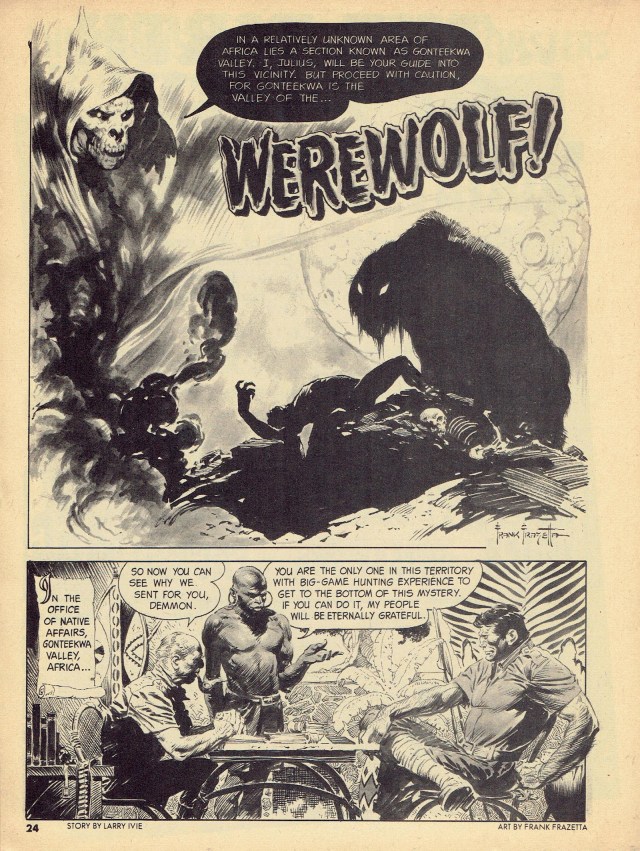
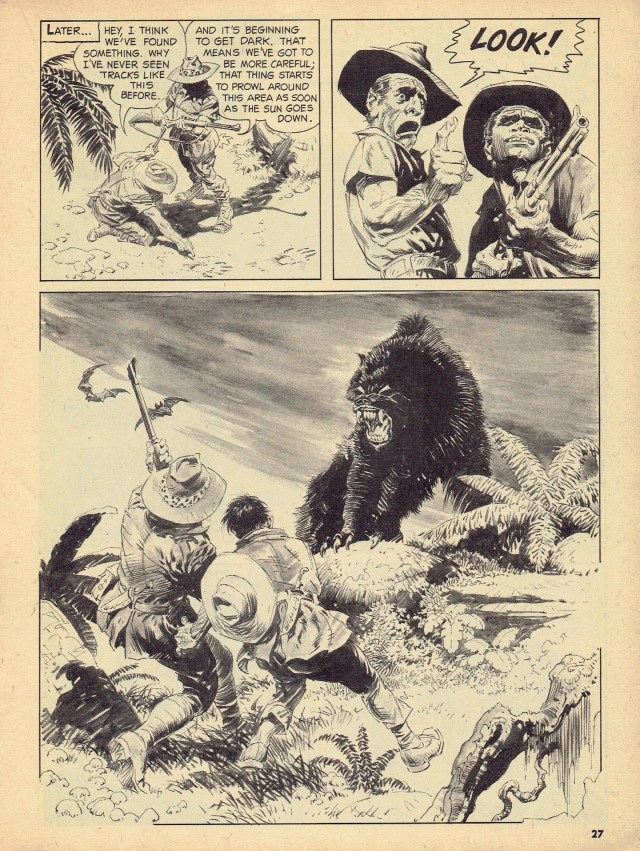
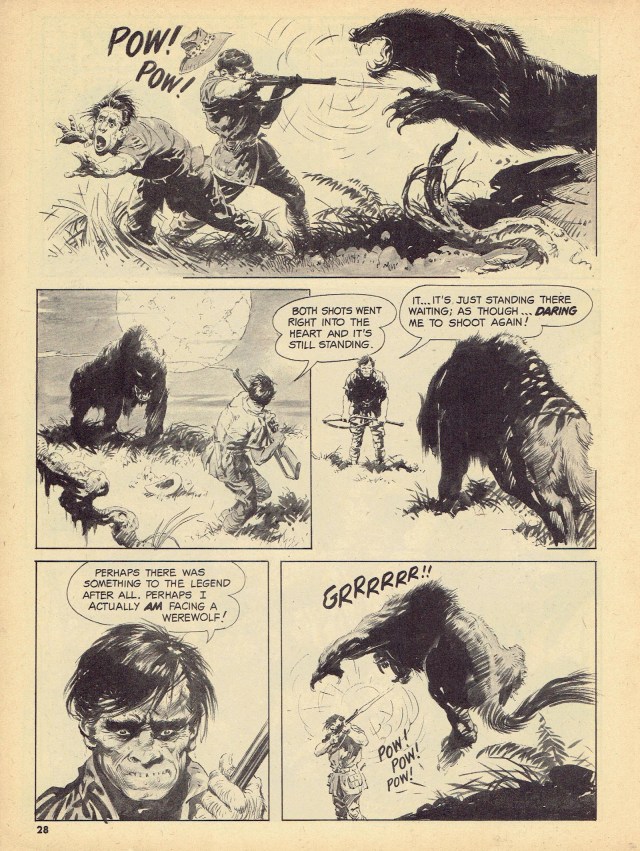
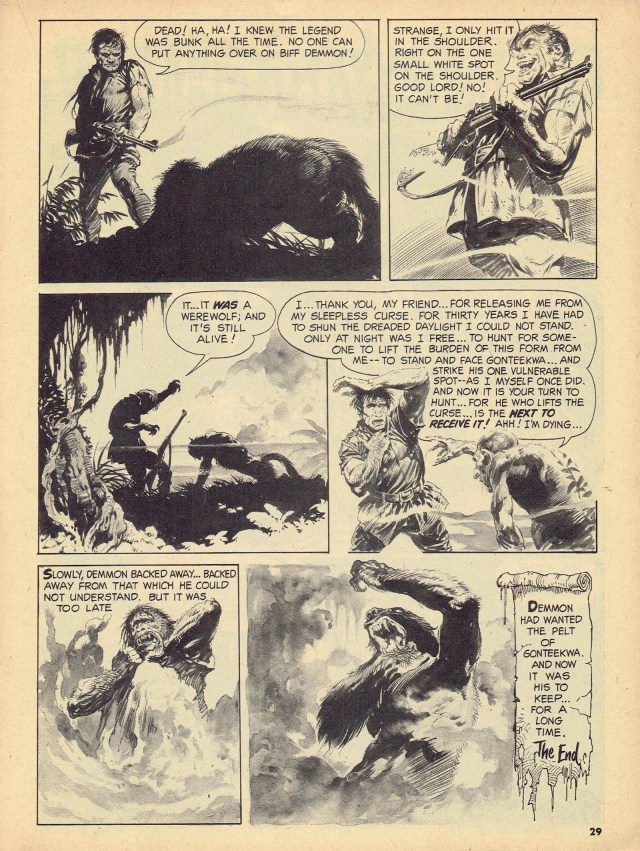
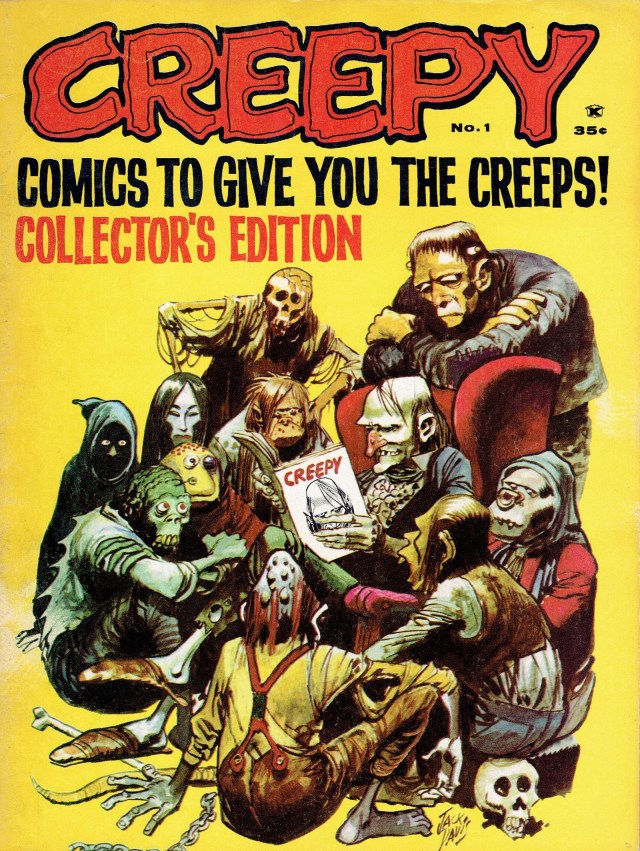
Werewolf, script by Larry Ivie (USA) and art by Frank Frazetta (USA), in: Creepy #1, Warren Publishing, USA, late 1964.
Copyright ©1964 Warren Publishing/Ivie/Frazetta




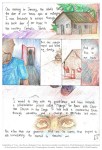
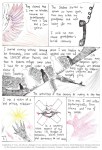
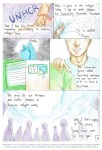
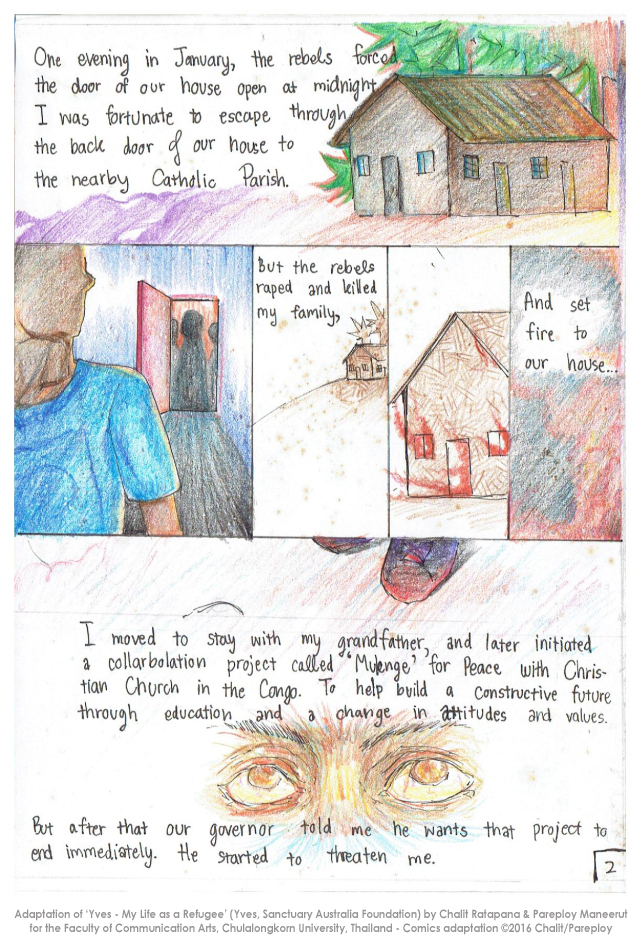
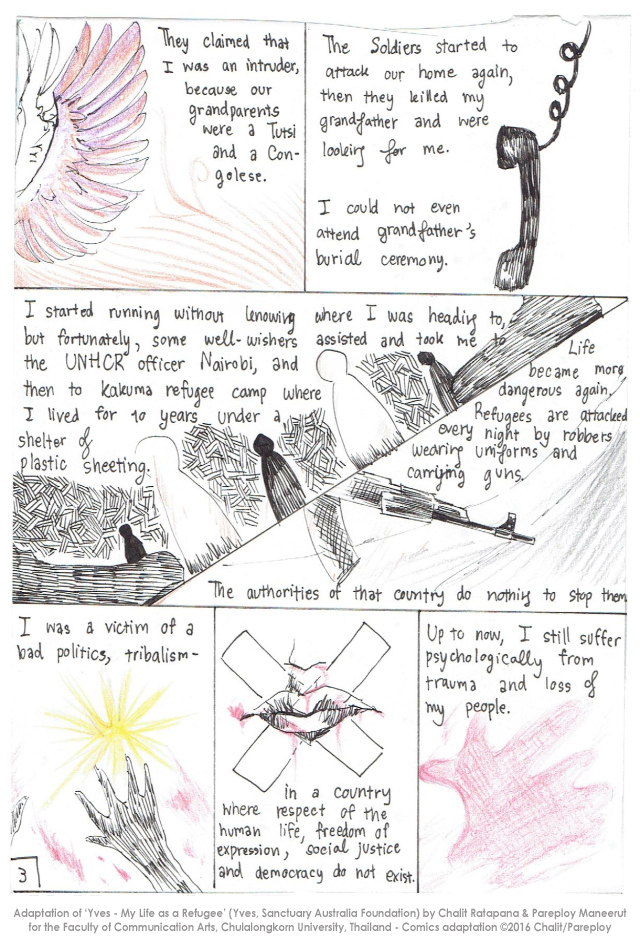
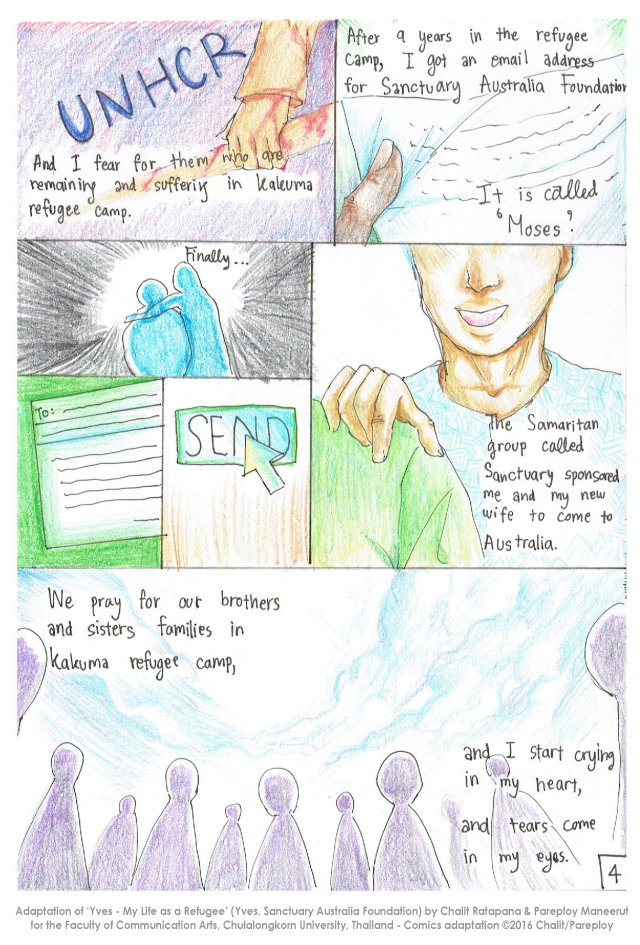
A graphic narrative (on the topic of ‘War Trauma’ and/or ‘War Refugees’) by Thai students Chalit Ratapana (Faculty of Communication Arts; adaptation/script) and June (Pareploy Maneerut; Faculty of Political Science; art) – based on the true story of Yves -a Congolese refugee who survived ethnic cleansing- (Sanctuary Australia Foundation) – as an assignment for my Imaginative Communication course (2800217), April 2016.
Update: The Sanctuary Australia Foundation, which offered a safe haven to Yves, has decided to publish the 4-page comics alongside Yves’ original testimony. I guess the Foundation saw -as I did- how Chalit and June were able to capture and to express -skillfully, with power and sensitivity- the plight of an individual and how, at the same time, they grasped and shared the tragic fate experienced by too many. Crossing the borders of the Democratic Republic of Congo, Australia, Belgium and Thailand, crossing comics panel borders, so many boundaries were physically and symbolically overcome… I’m proud of you Chalit & June and I hope your graphic narrative will participate in “engaging audiences in conflicts and displacement crises that seem remote (…), especially when there appear to be no means of relating to the people in the stories” (to quote PositiveNegatives founder Benjamin Dix, see Comic as Art, Education and Advocacy). Thank you Chalit, June and Mark Hallam (from the Sanctuary Australia Foundation). And thank you, Yves, for your painful yet indispensable testimony. Best regards. Nicolas V.

Description of the Imaginative Communication course: “Methods of conversing emotions, feelings, ideas, values, beliefs and meaning of life through the languages of the imaginative world in the form of poetry, music and songs, literature, drama, film or other creative works of Thai and foreign artists; relationship between science and art of communications; media design for imaginative works; analysis of images and narratives.” This year’s theme: “Crossing Borders”. Communication Management, International Program, Faculty of Communication Arts, Chulalongkorn University.

 from-dusk-till-drawn.com