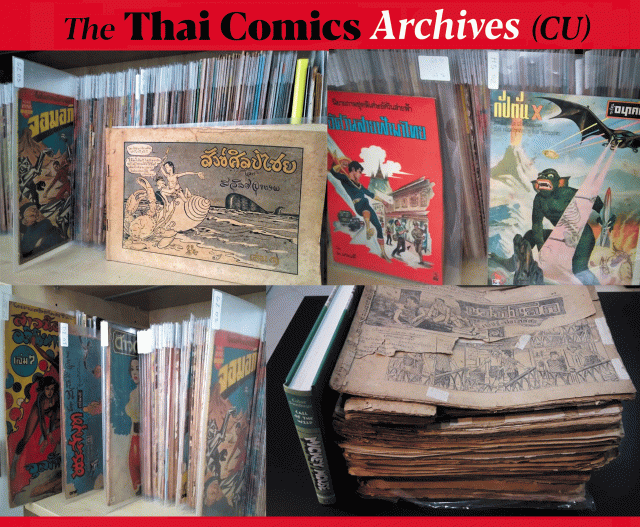
NEW LISTINGS AND RESOURCES FOR ACADEMIC RESEARCH ON THAI COMICS NOW AVAILABLE ON THIS DEDICATED PAGE:

FROM DUSK TILL DRAWN: Comics Art Studies and Graphic Narratives Composition, Workshops, Events & Zine Publishing @ Faculty of Communication Arts, Chulalongkorn University [Bangkok – THAILAND]
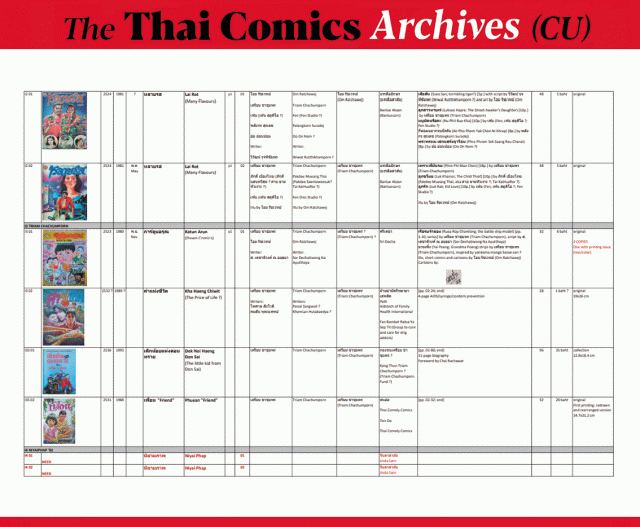
NEW LISTINGS AND RESOURCES FOR ACADEMIC RESEARCH ON THAI COMICS NOW AVAILABLE ON THIS DEDICATED PAGE:
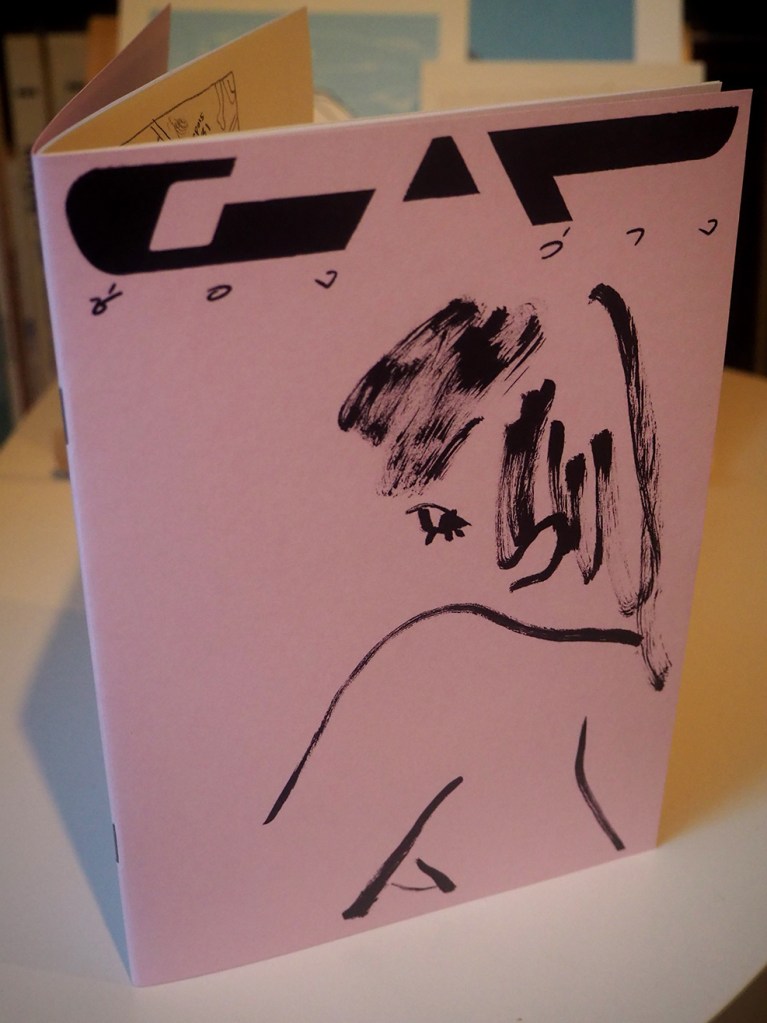
Delighted to announce the launch of the bilingual (EN/TH) comics zine series GAP/ช่องว่าง, edited by yours truly. The main purpose is to offer a new/regular creative space to young -or seasoned- Thai cartoonists, showcasing critical, autobiographical and/or experimental narratives. Each issue will also feature a foreign guest, sharing about his/her bond to Thailand. For this first issue, the cover art is signed by talented artist MM. Kosum, with GAP title designed by Khwansubhanut Banlunara, and with stories by Applesoda, Ping Sasinan, Sasi Tee & Namsai K., and illustrations by Arty Nicharee and Brussels-based guest artist Abdel de Bruxelles. The A5-sized and 24-page zine is limited to 200 copies, and with a cover price of 100 baht (3 EUR; 3.5 USD).
For orders within Thailand: 100 baht + 20 baht for registered mail. Orders outside Thailand: 3.5 USD + 6 USD for registered mail [or 3 EUR + 5 EUR for registered mail]. Contact me at Nicolas.V [at] chula.ac.th
Comics submissions, from Thai artists, are welcome too at the same email address. Nicolas
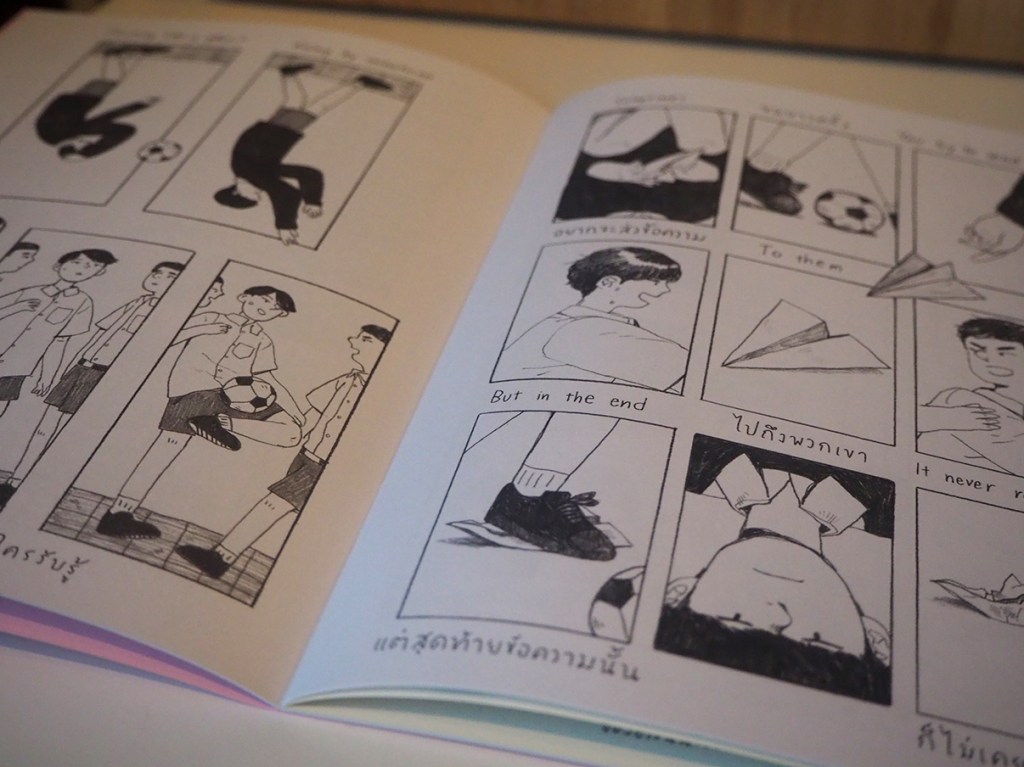

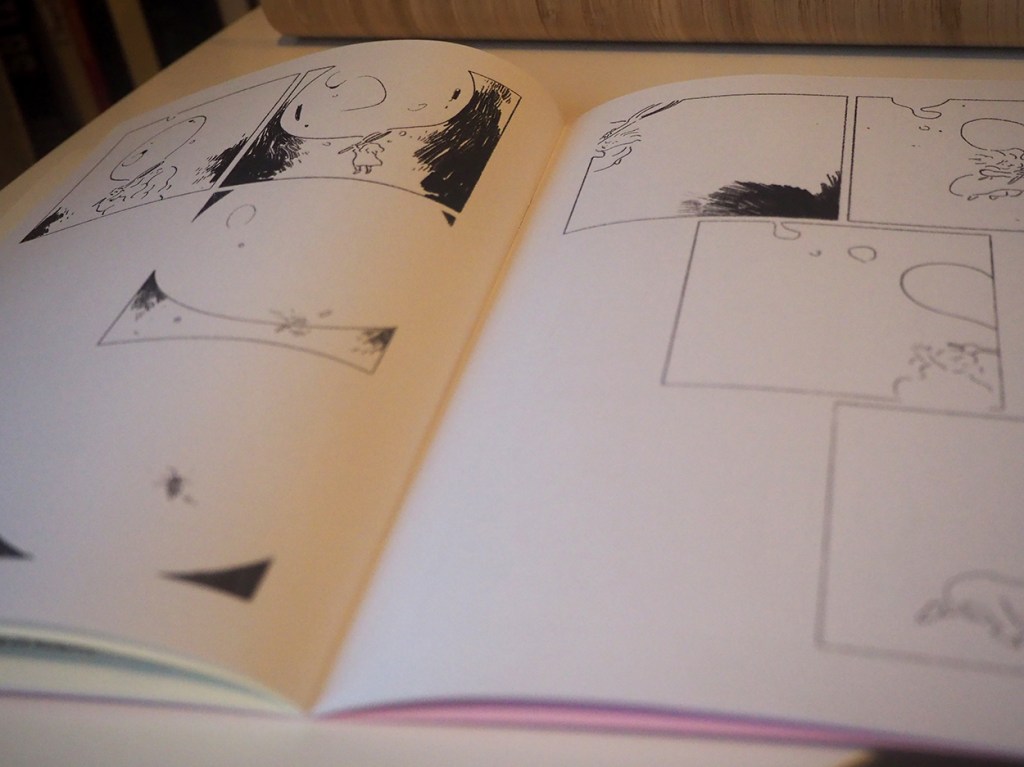
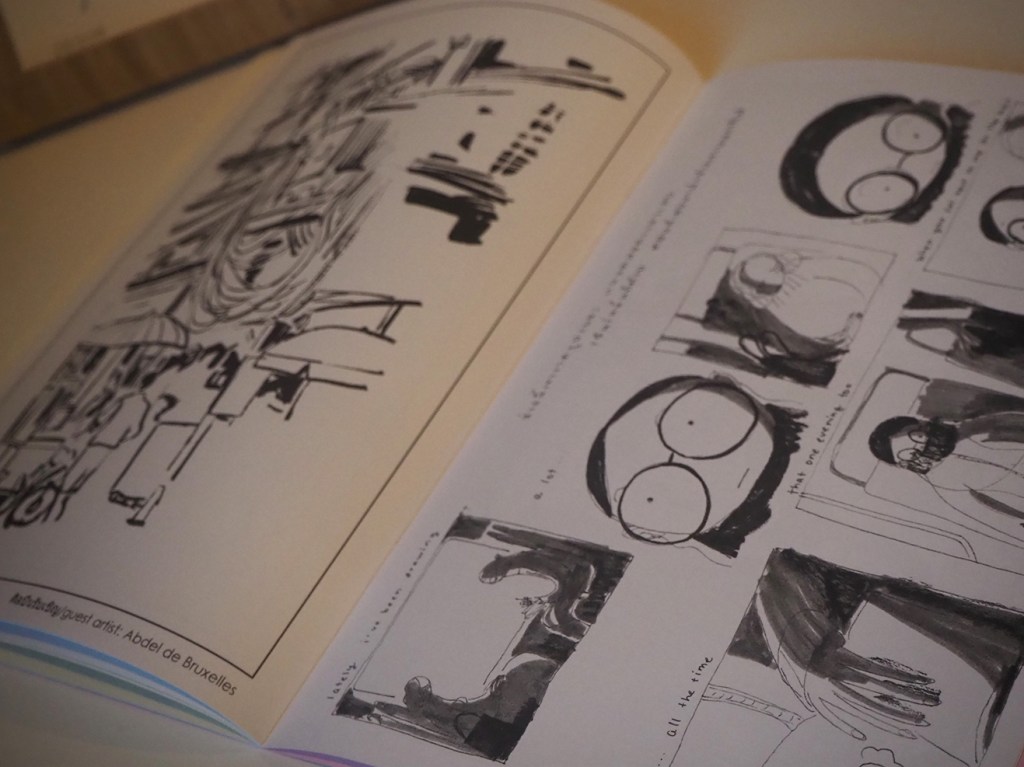

GAP/ช่องว่าง #01 backcover and artwork by Arty Nicharee

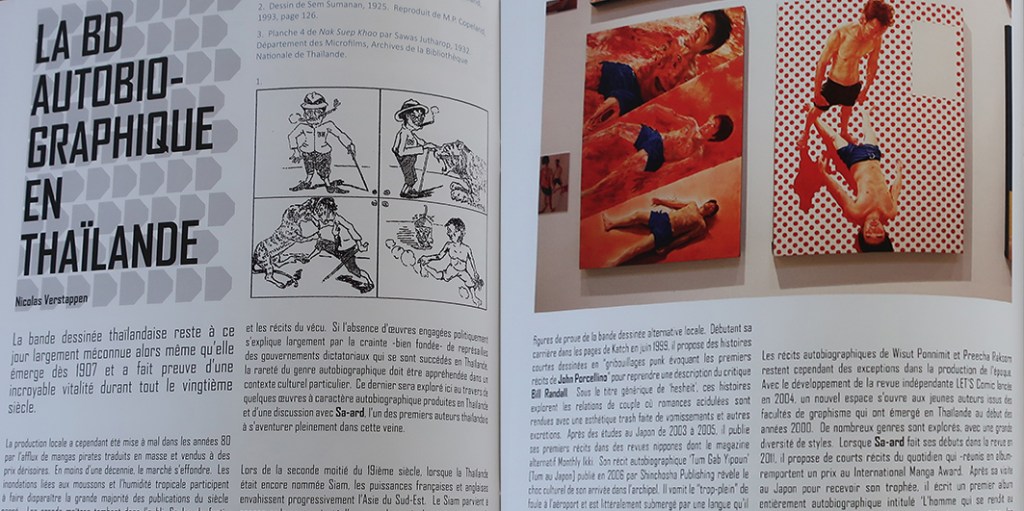
The second issue of the Centre Belge de la Bande Dessinée [Comics Art Museum – Brussels] magazine Le Dessableur has been released on June 2021, with a 10-page special feature on “Thai Autobiographical Comics” (composed by yours truly). Autobiographical graphic narratives are almost absent from the Thai comics production -even from its alternative scene- for various cultural and political motives. The feature -in French with Dutch translation- explores these constraints through the rare, remarkable and counter-cultural examples of Thai autobiographical comics. It spans from Sem Sumanan’s first self-representation in a 1924 Siamese comic strip and Isaan cartoonists’ regionalist memoirs, up to the contemporary zine scene and Sa-ard‘s 2020 daring and brilliant self-published graphic novel “Kan Sueksa Khong Krapong Mi Fa” (The Education of a Tin Can who had a Dream). Thanks Sa-ard for the cover art and the enlightening interview! And thanks Greg Shaw for the invitation; it was a pleasure! N.
Order information on: https://www.cbbd.be/fr/cbbd/le-dessableur


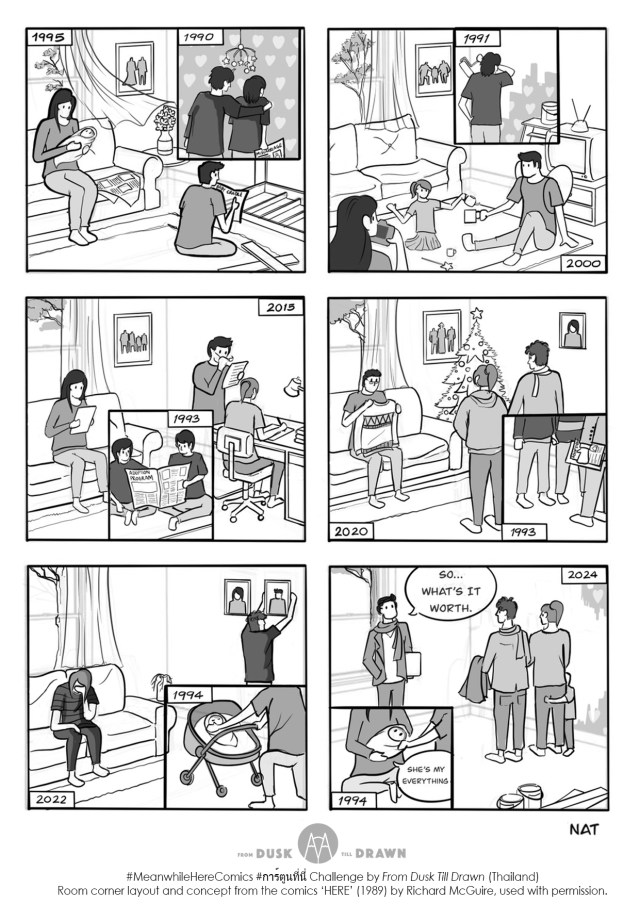
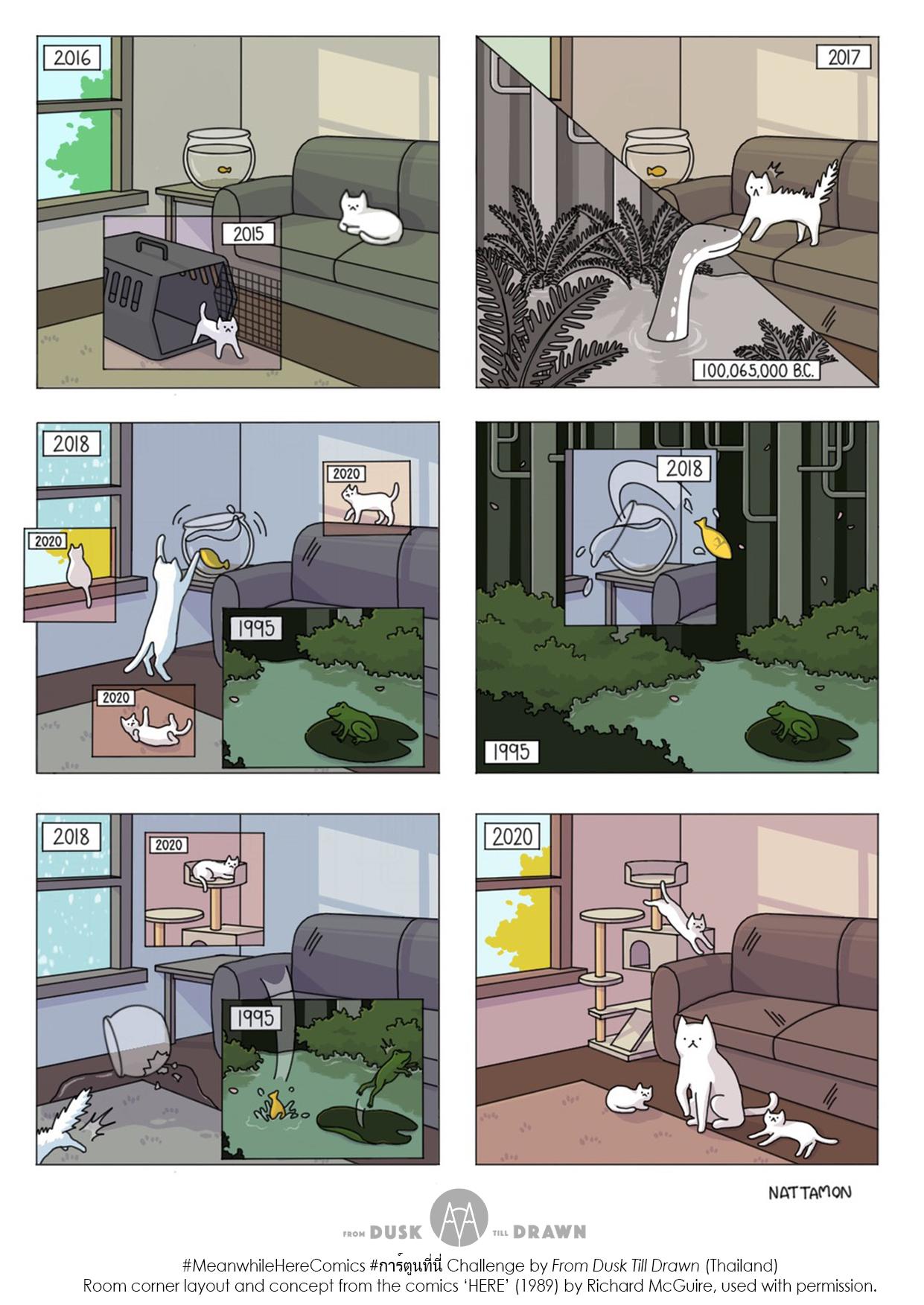
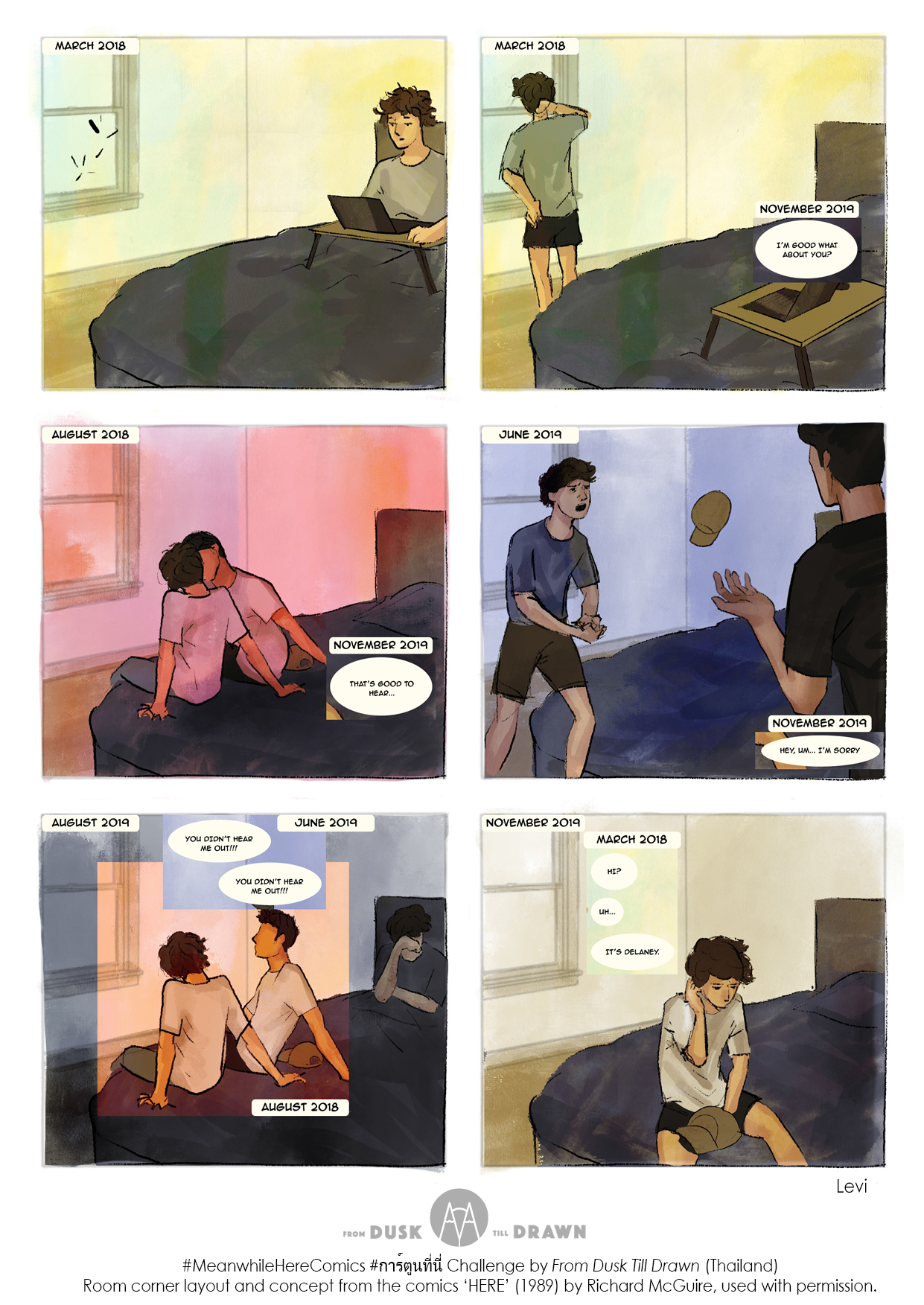
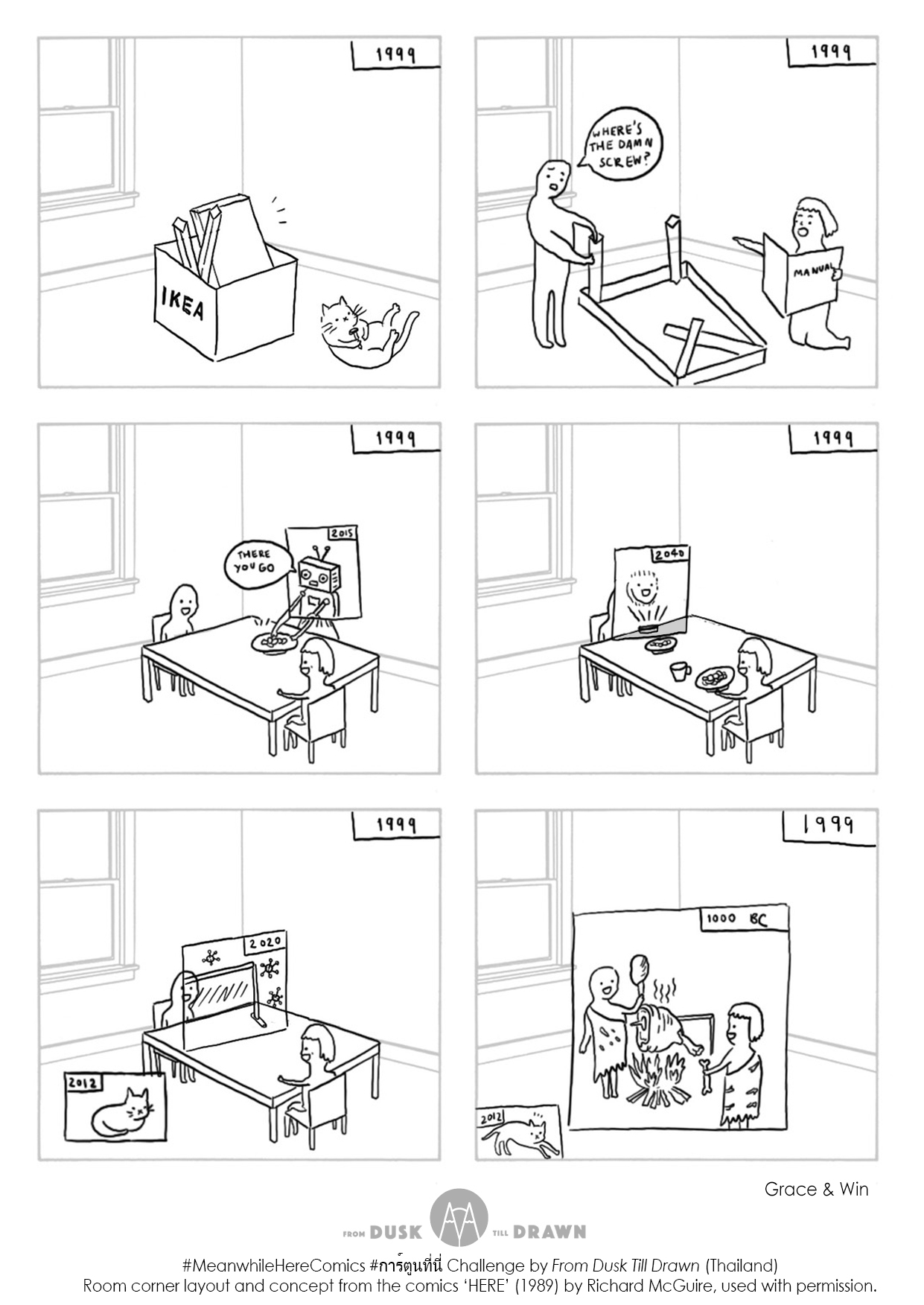
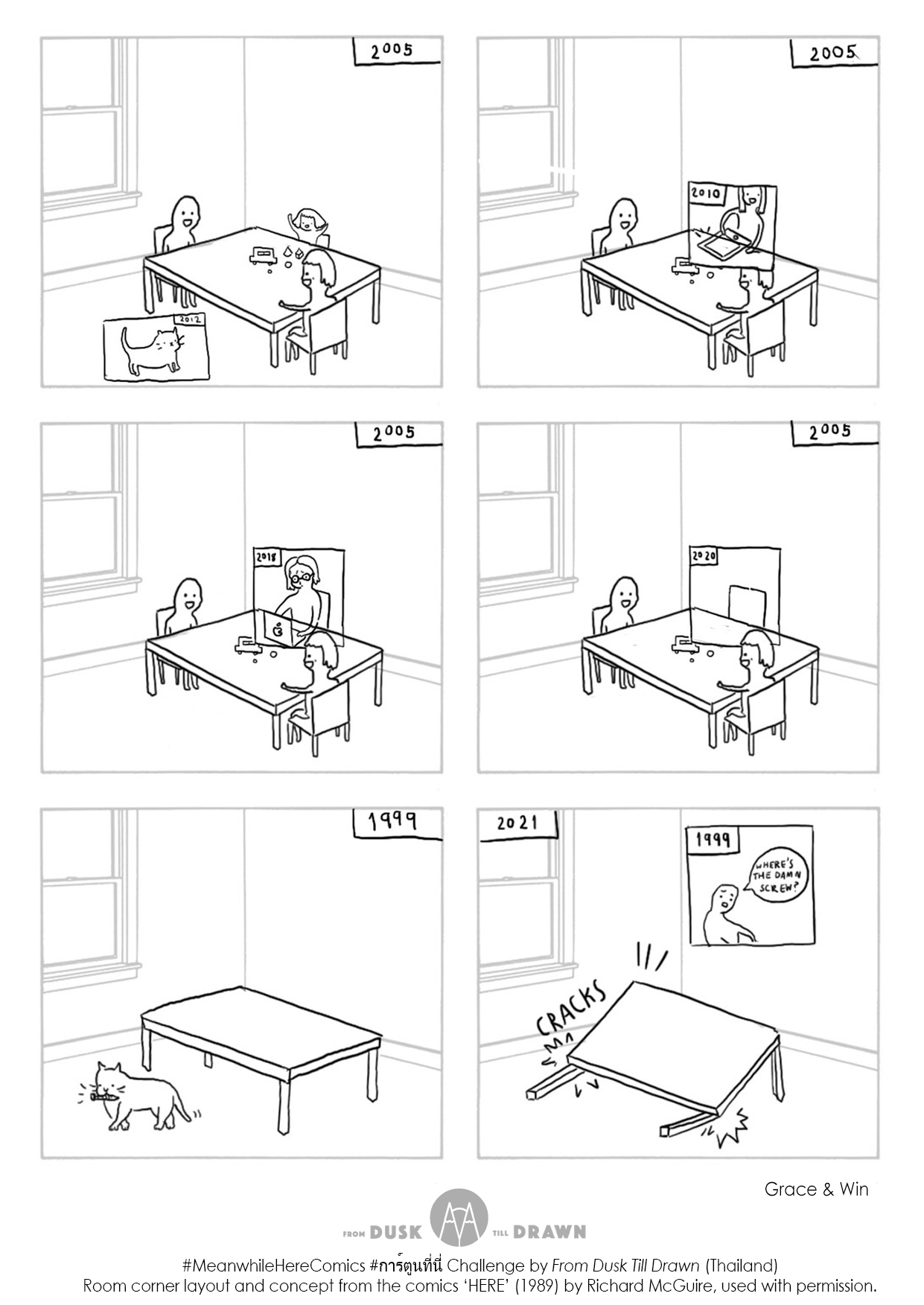
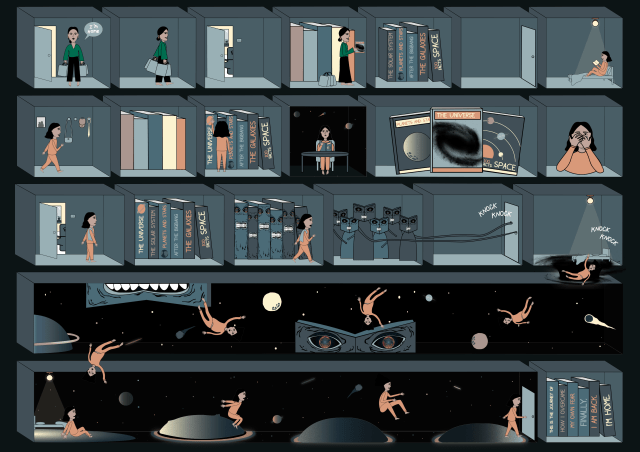
As an assignment for the “Visual Media Studies” course (GenEd course offered by the Faculty of Communications Arts, Chulalongkorn University, Thailand), students from various faculties and departments (Architecture, Communication Design, Psychology, Engineering, Literature…) were asked to explore the concept of “windows on time in a single place” developed by American cartoonist Richard McGuire with his two stories titled “Here” (1989 in the pages of RAW, and 2014 as an extended graphic novel). The complete groundbreaking graphic narrative can be read on this post: “Here” by Richard McGuire.
Here are some of the results, tackling topics such as Thai political turmoil, adoption, Black Lives Matter, but also time travel, family ties and… cats. Many more results from the CommArts students are also posted on this page.
PS: click on the comics pages for higher resolution.






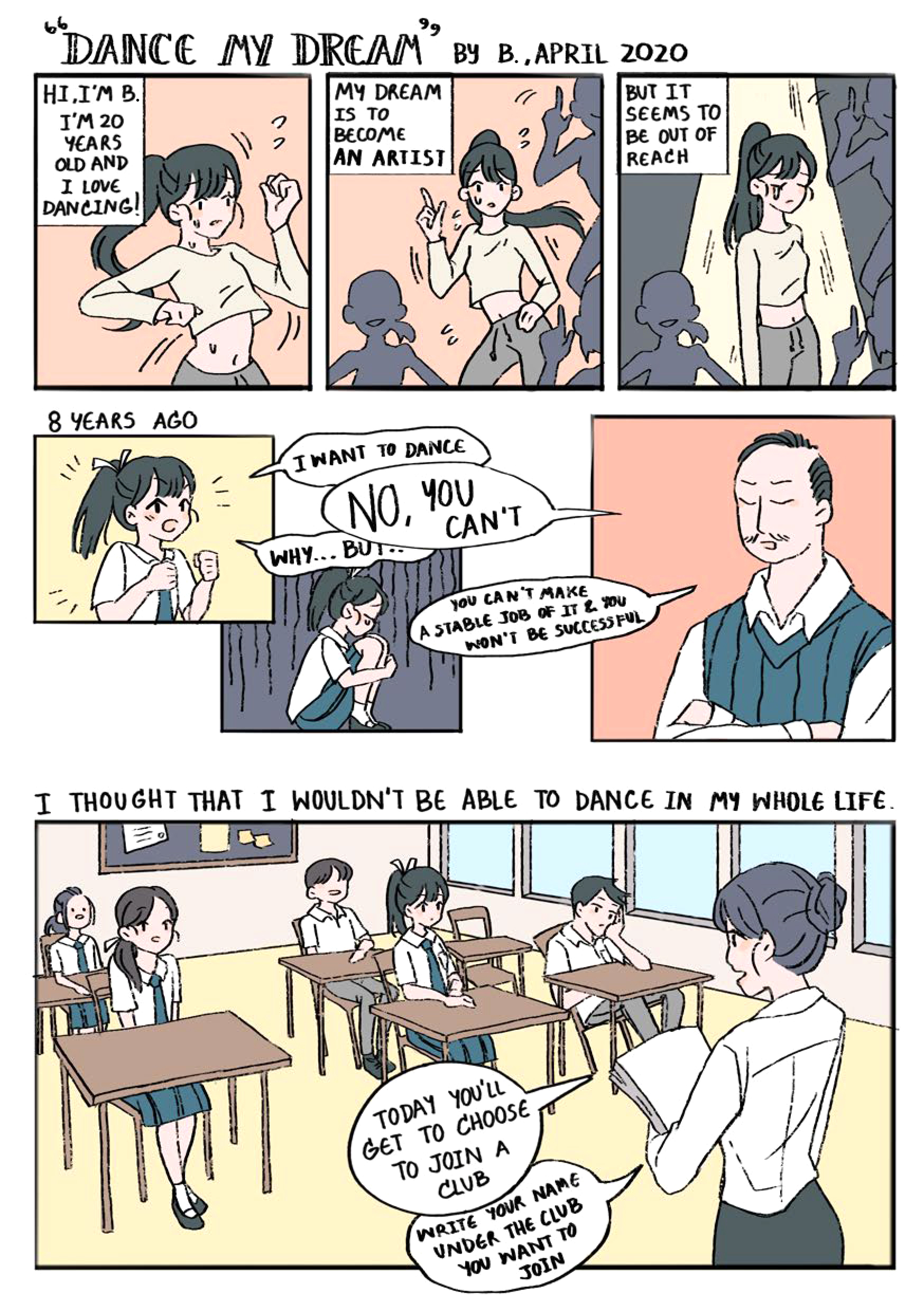
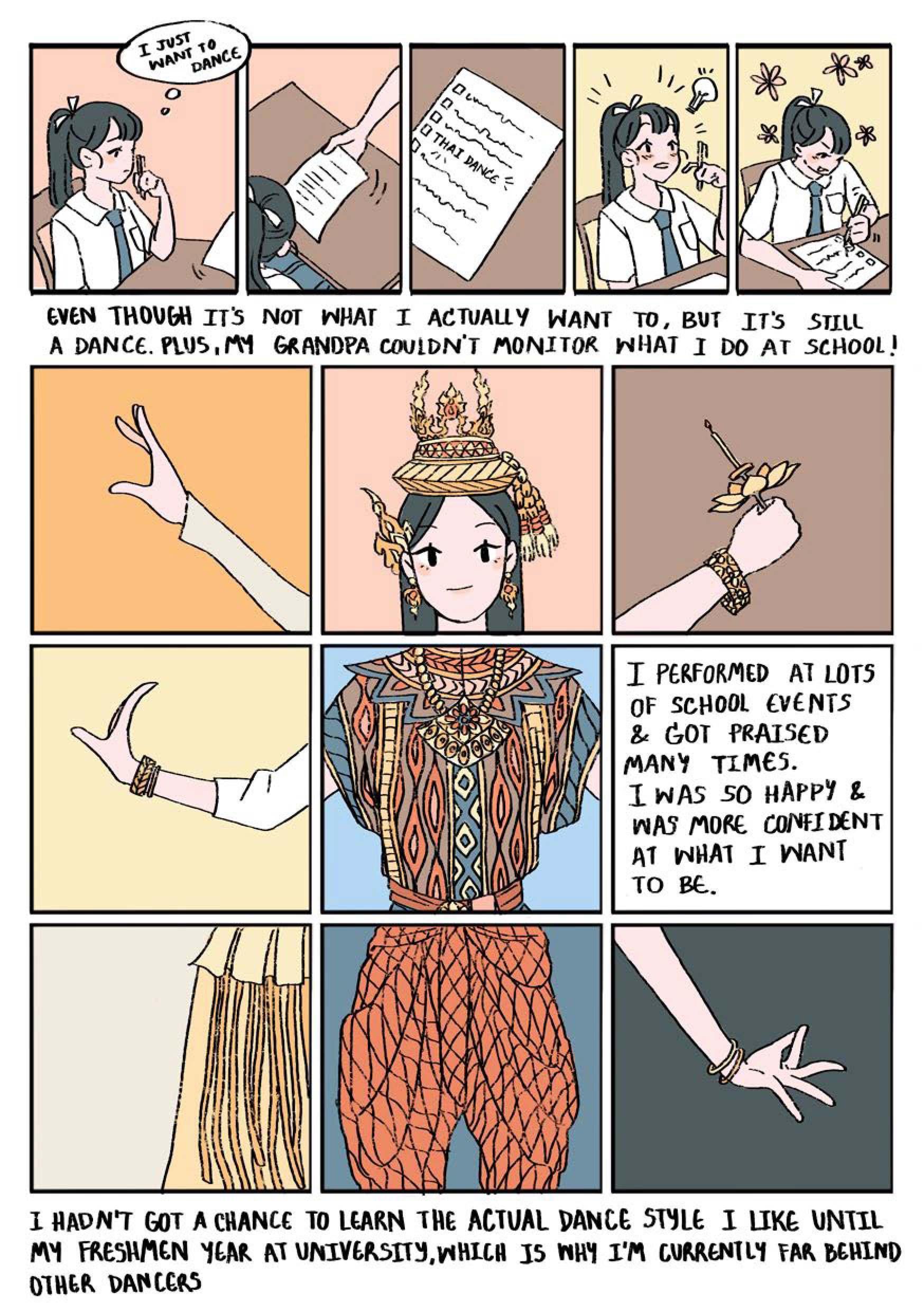
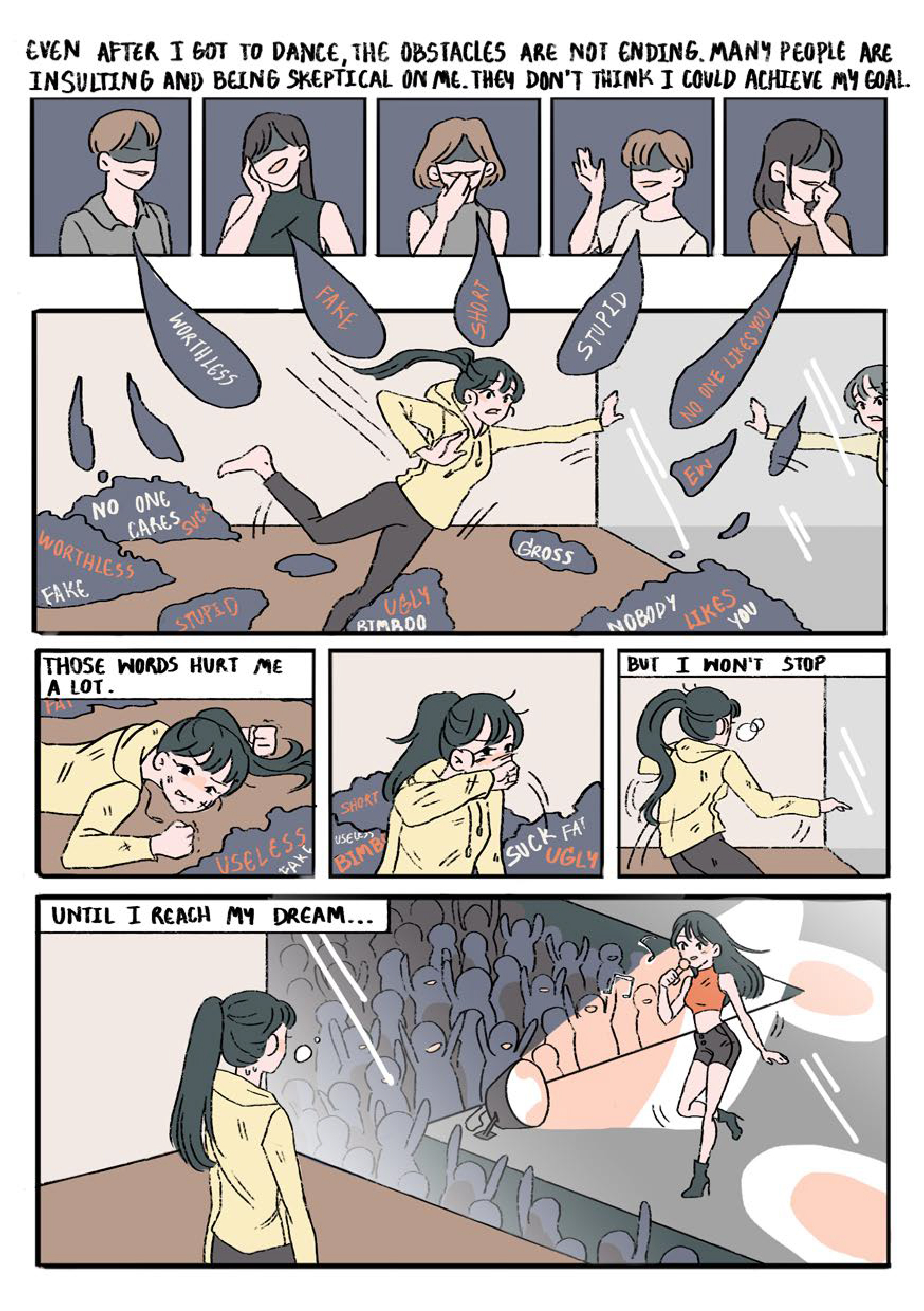
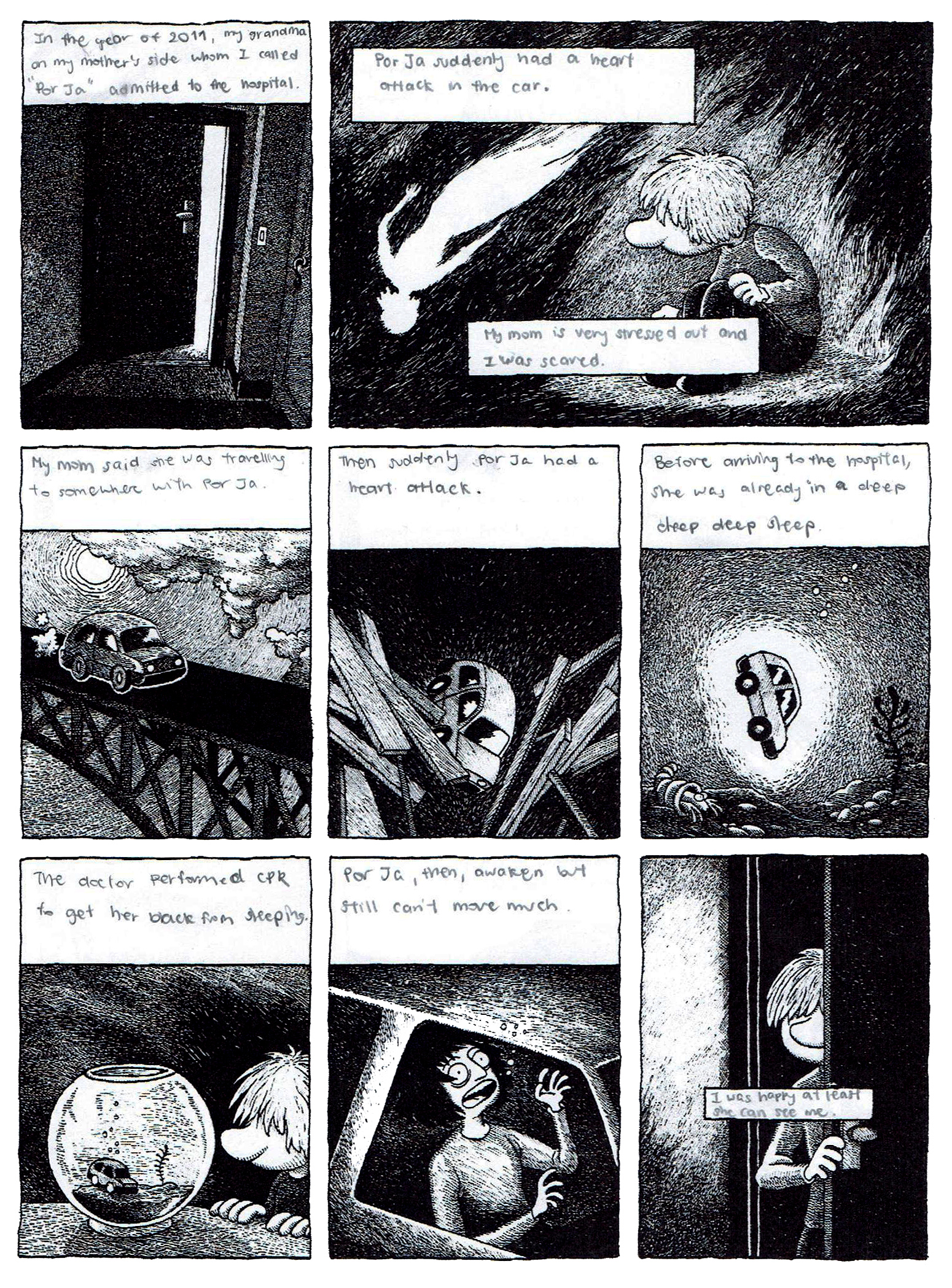
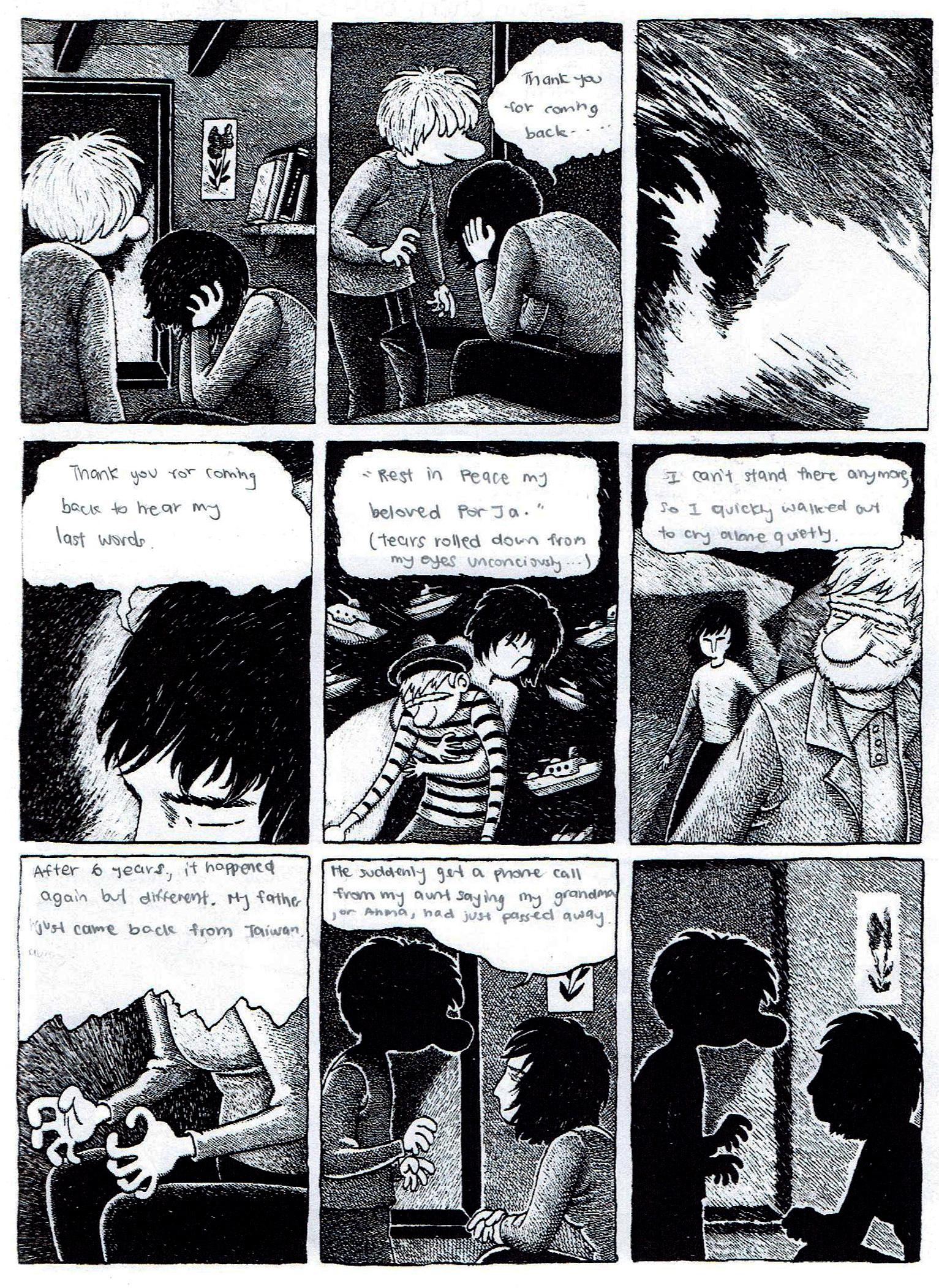
After several preparatory assignments [see dedicated post for details], CommArts students from the Creative Writing: Non-Fiction Comics Composition course [Chulalongkorn University, Thailand] were asked to produce their final assignment: an autobiographic comics. As mentioned in the previous post, the two main challenges were to compose a short comics without prior art training, and to write an autobiographic narrative in a country where the autobiographical genre is almost absent from local literature (and comics) as it is seen as ill-mannered in Thai culture to talk about oneself, and as shortcomings or mishaps are not to be disclosed in a context where [to save (i.e. preserve)] the face or self-image is essential. Their final and individual comics projects weren’t limited in size, length or technique; each student had to pick the best fitted format to convey his/her autobiographic narrative. The stories were composed over a period of one month, instead of two due to the pandemic outbreak. Individual comment sessions were held weekly via the Zoom platform.
Here are some of the resulting graphic narratives! More coming soon!
[All artworks are reprinted with the consent of the students, and remain their property. Some nicknames have been changed at student’s request].
Autobiographic comics by student B. (with some help from her sister).
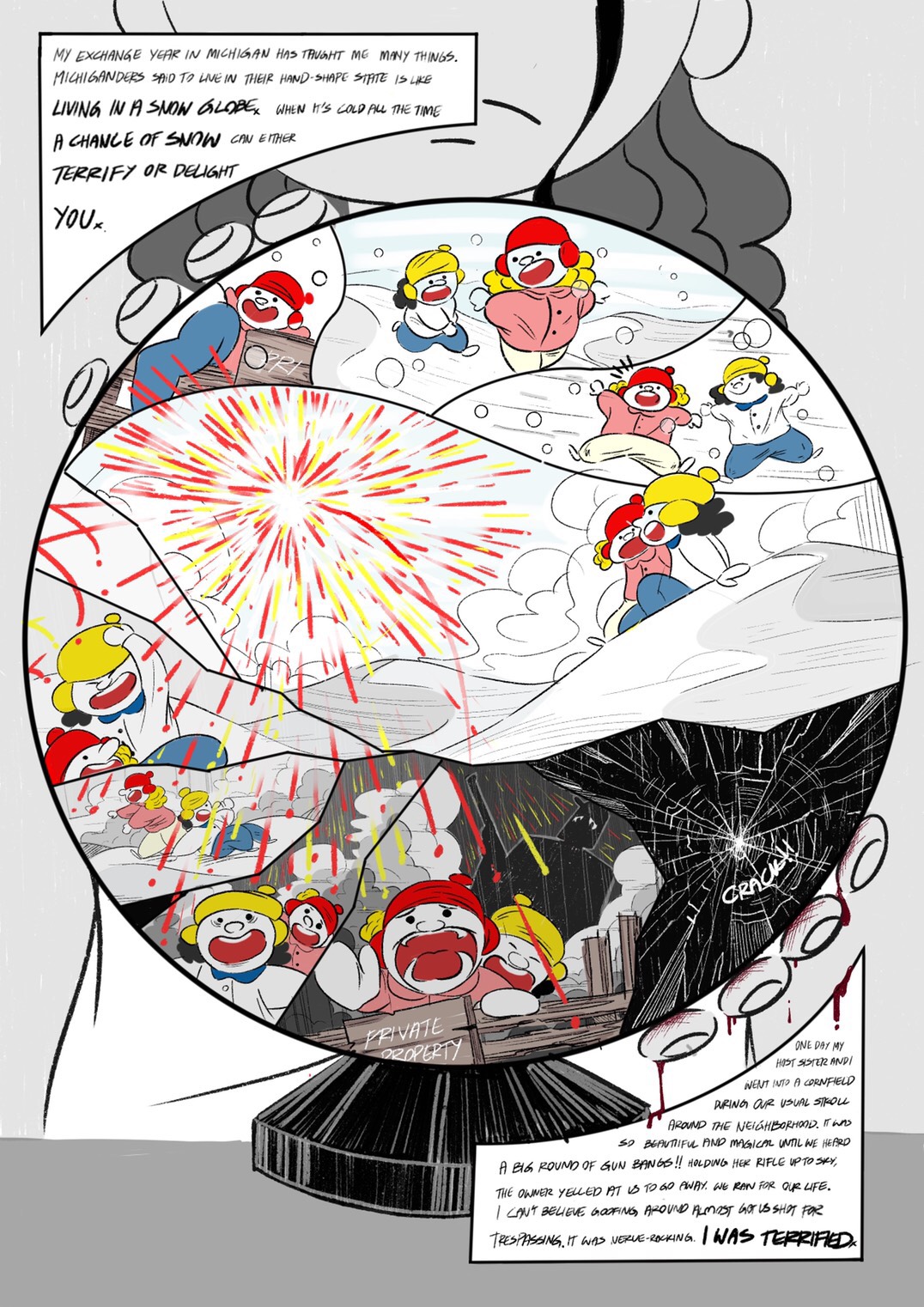
Autobiographic (GIF) comics by exchange student Alex
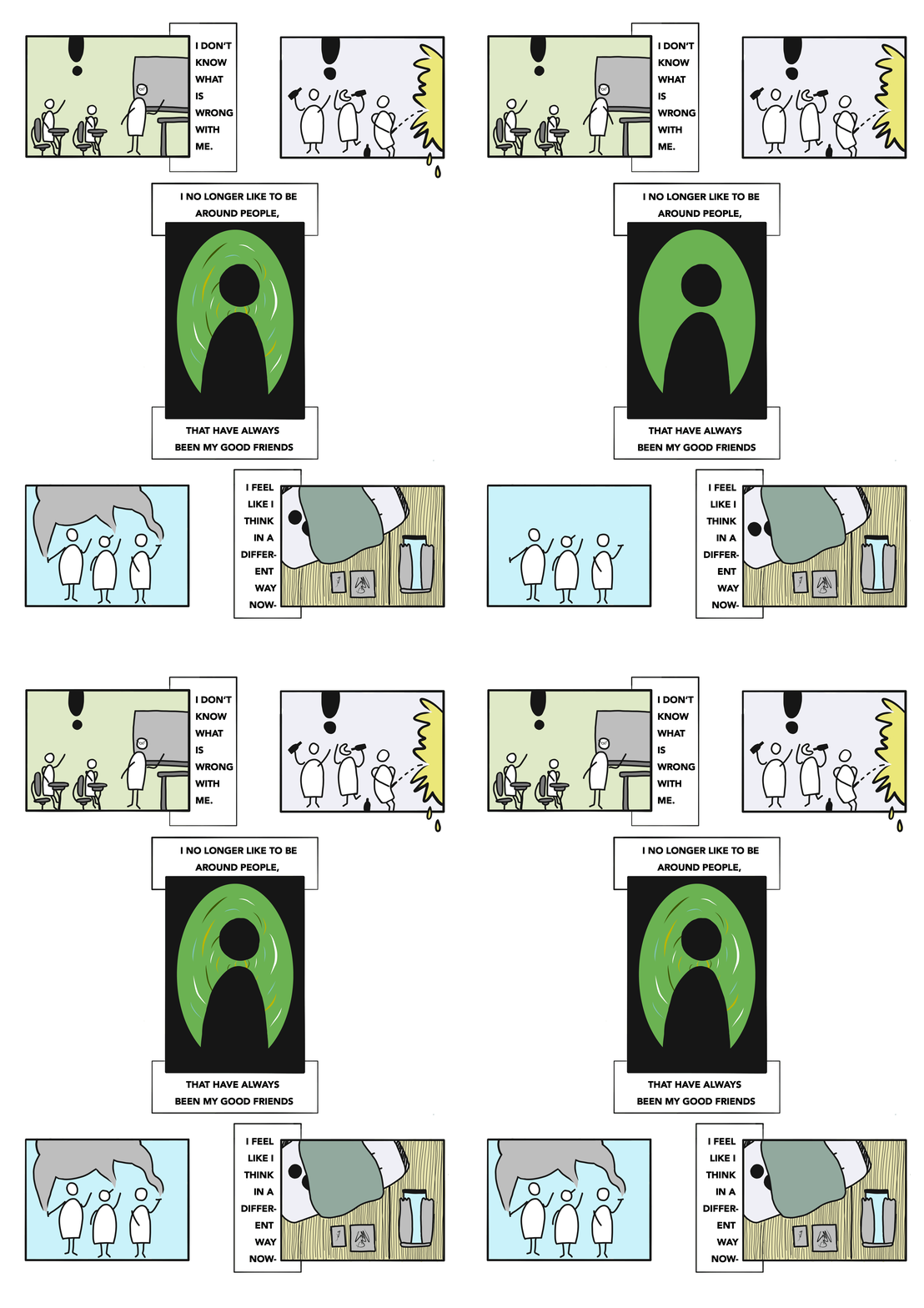
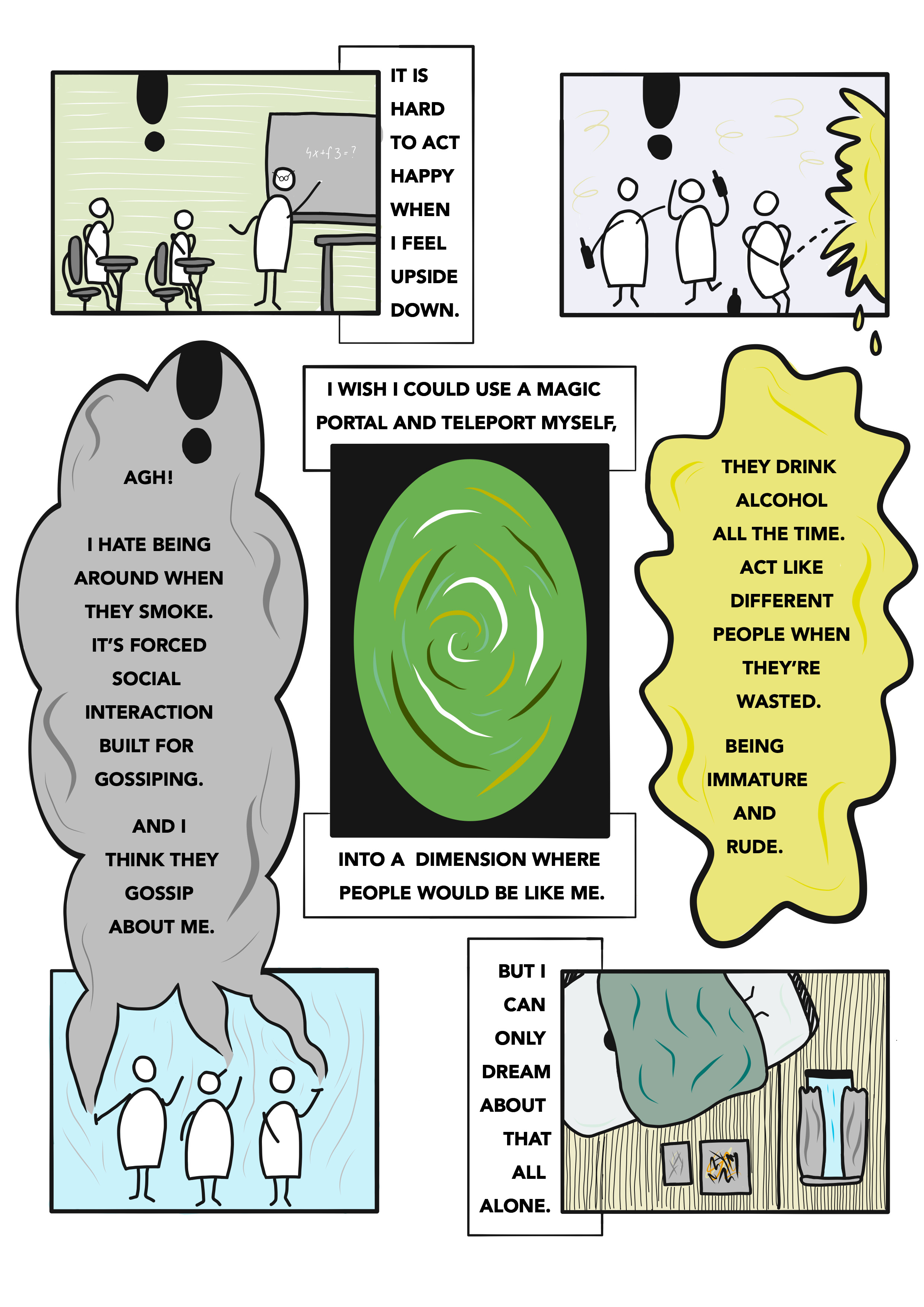
Autobiographic comics by student Smile
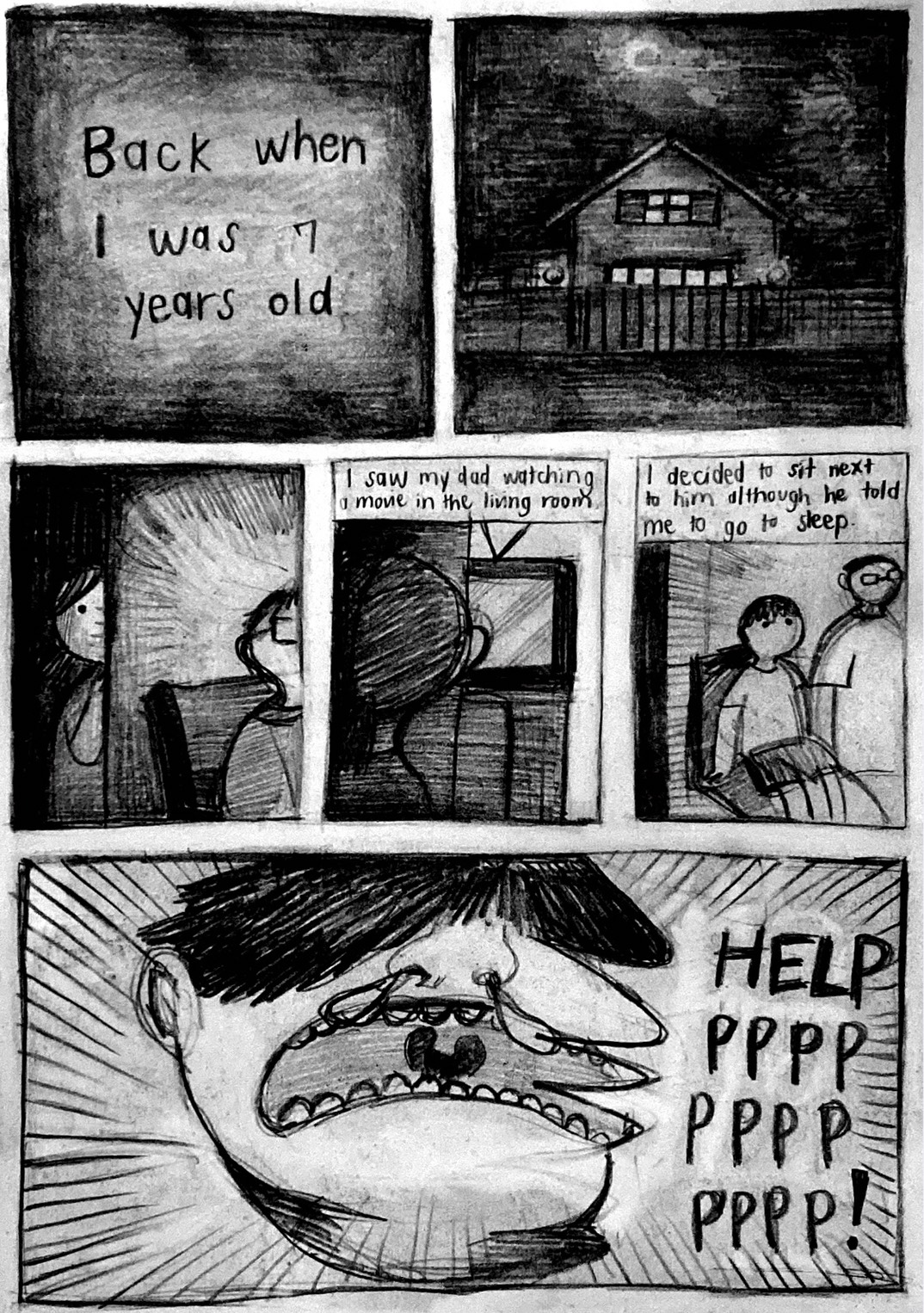


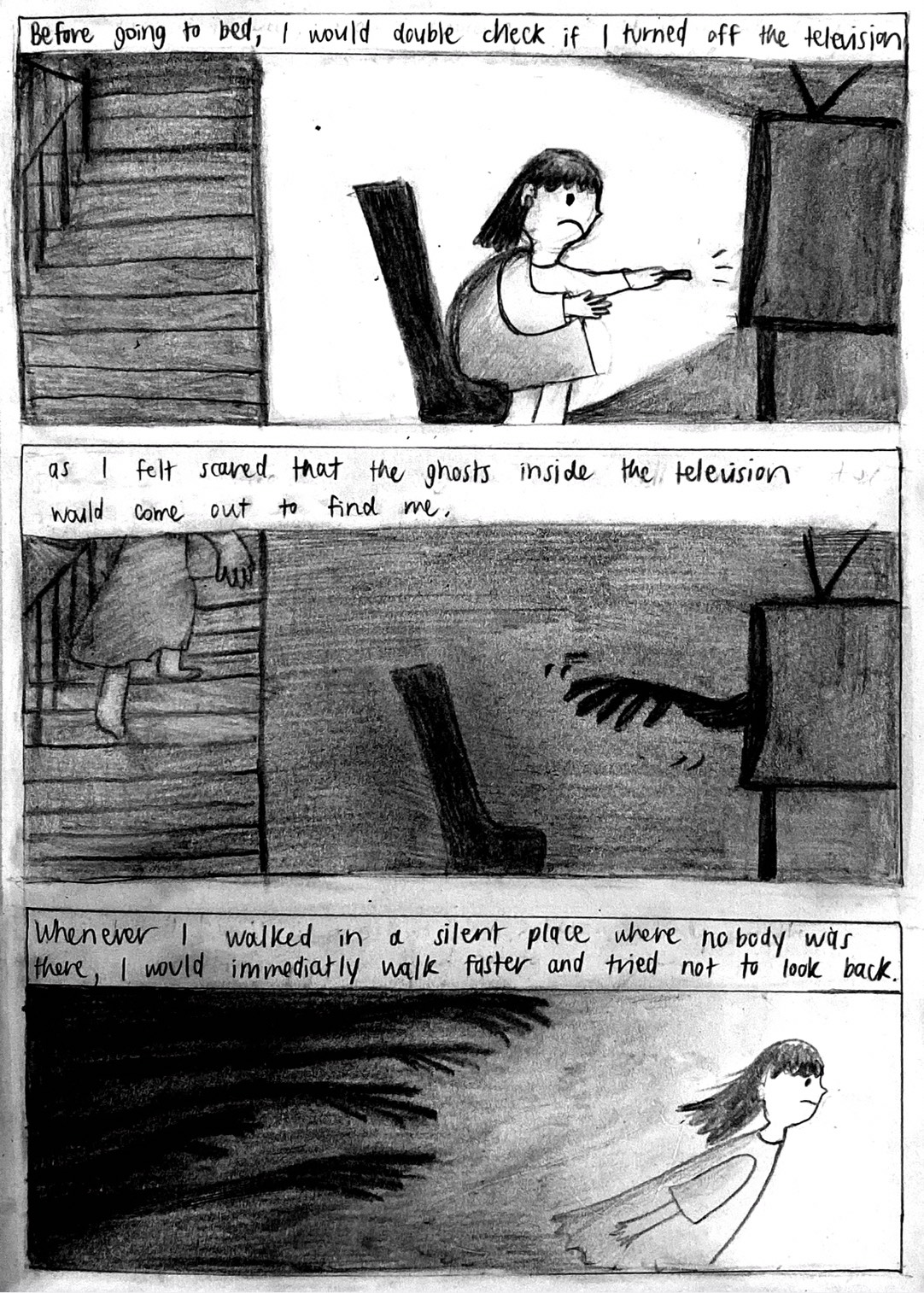

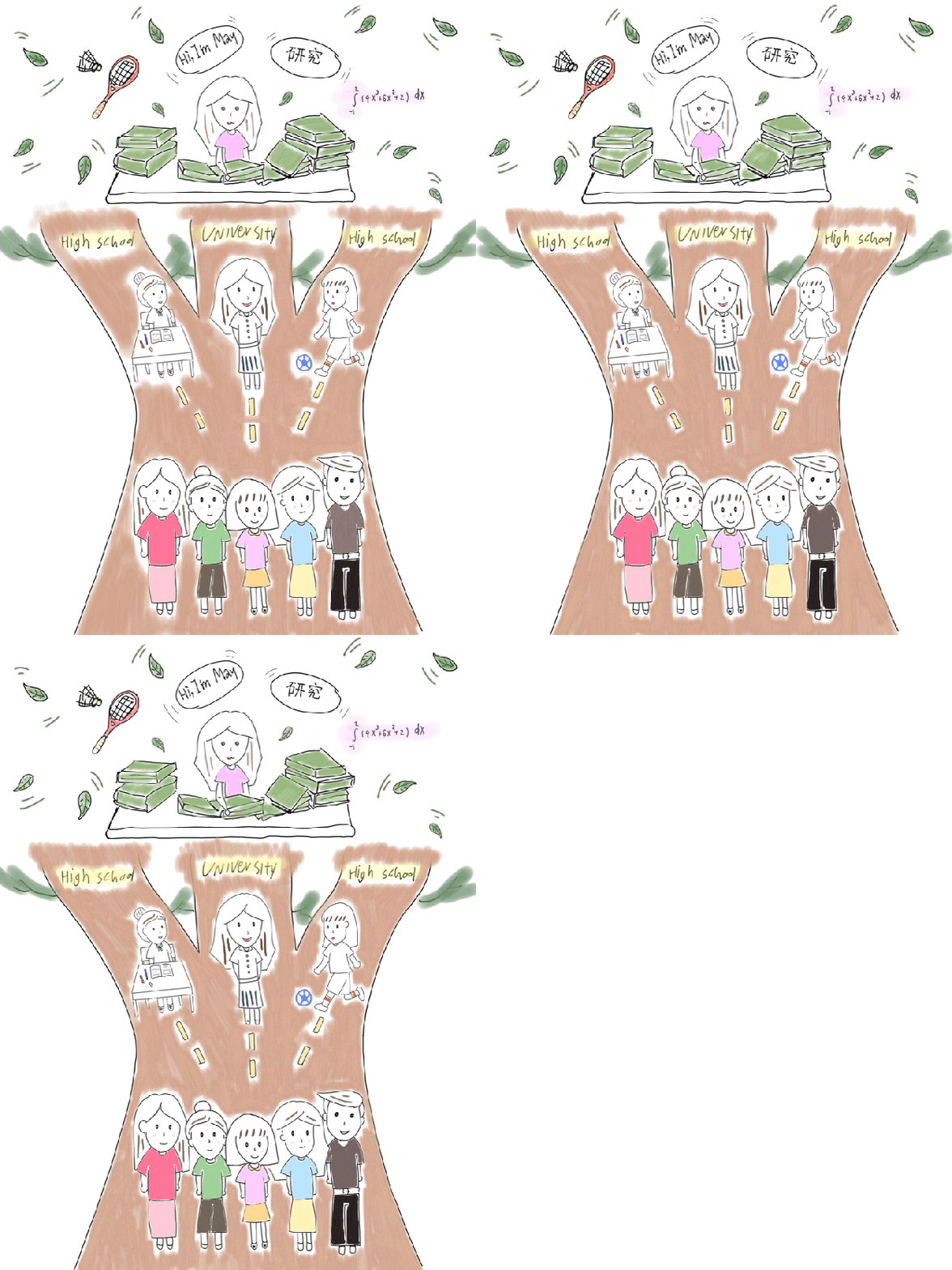
Autobiographic GIF comics by student May

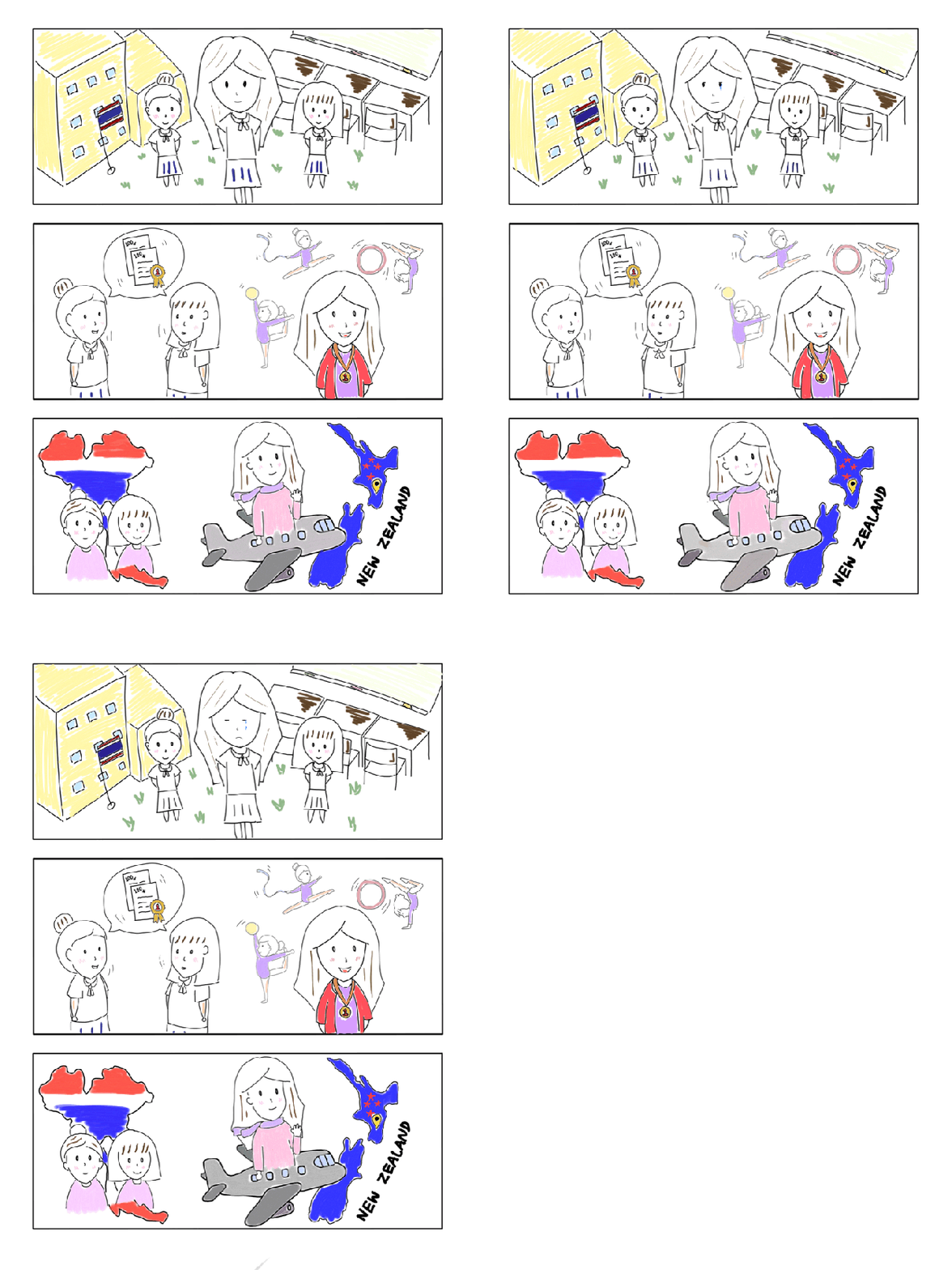
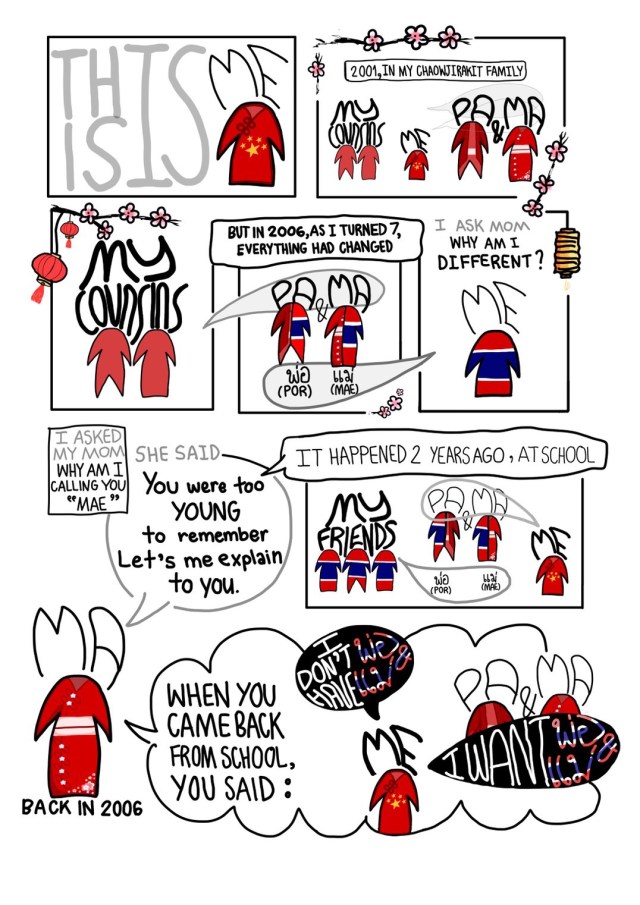
Autobiographic comics by student Por (with some help from Peera Tayanukorn)
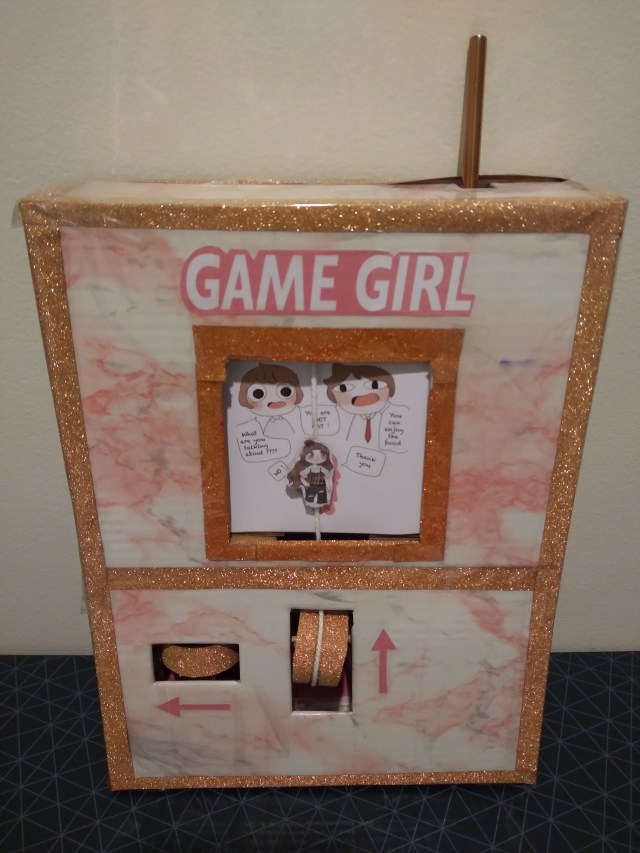
Autobiographic comics by student Pranang (a handheld game console format containing a long comics strip that can be scrolled manually and with a main character -Pranang’s alter ego- which can be moved up and down).

Autobiographic comics by student Jay


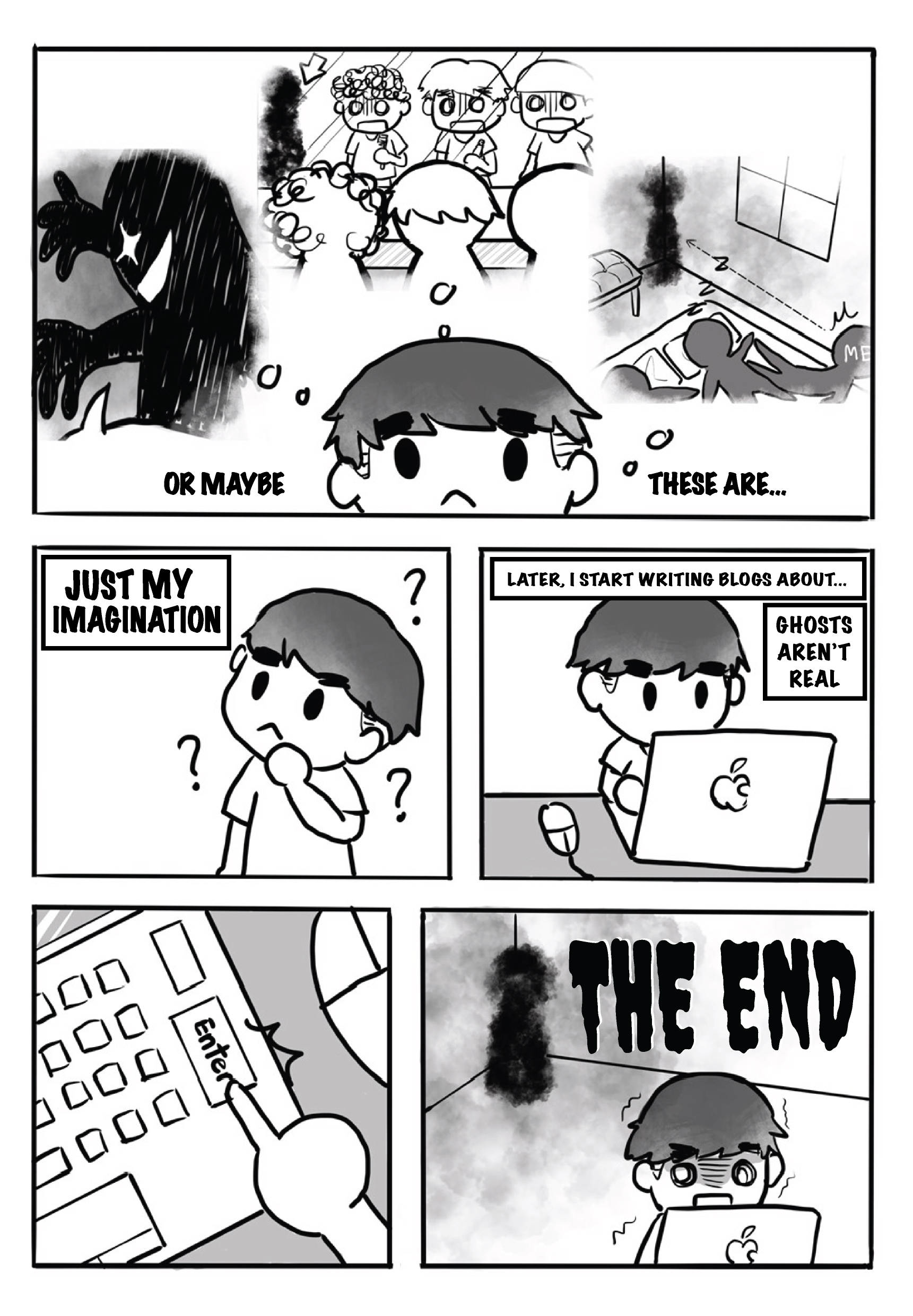
Autobiographic comics by student G.
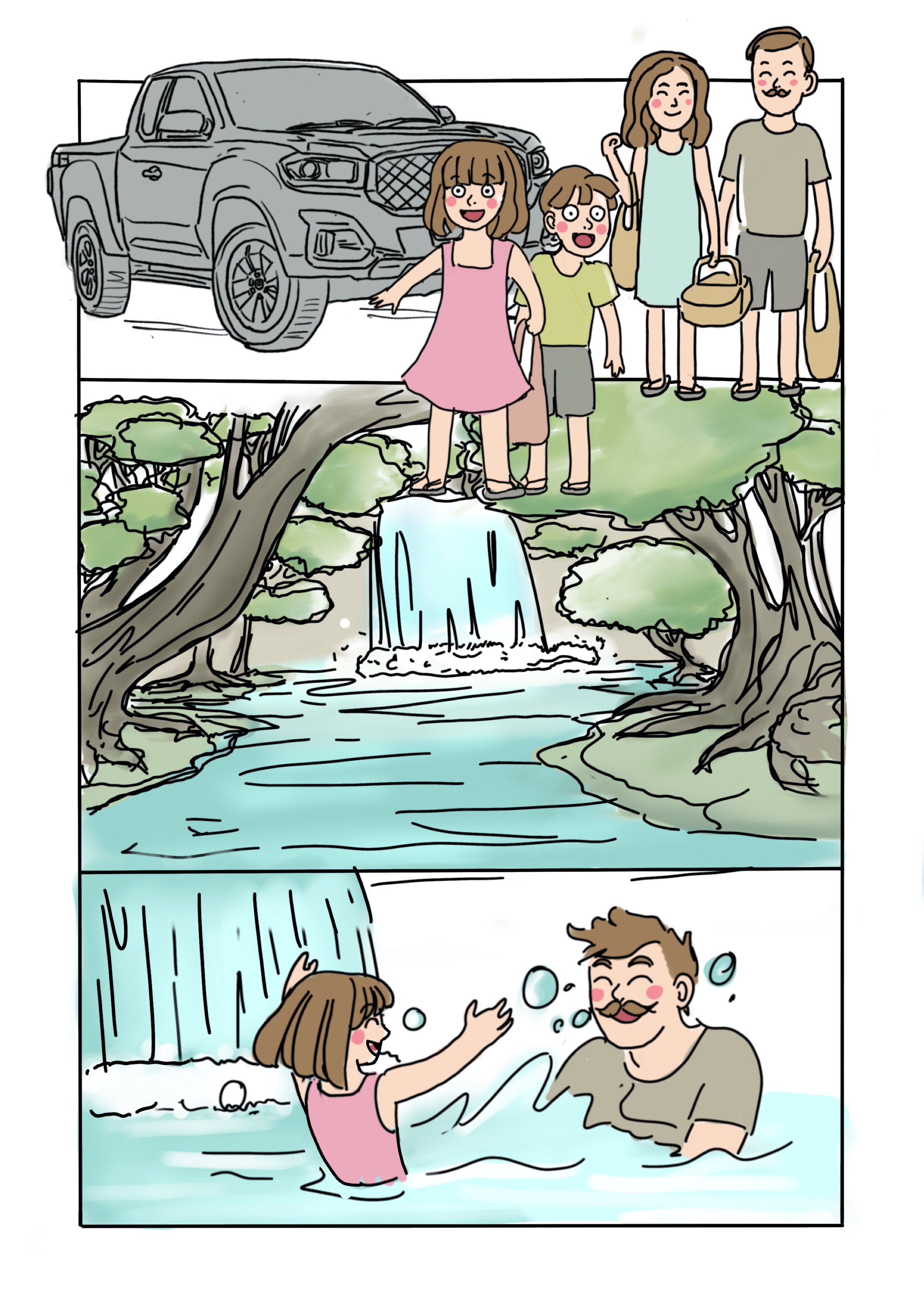
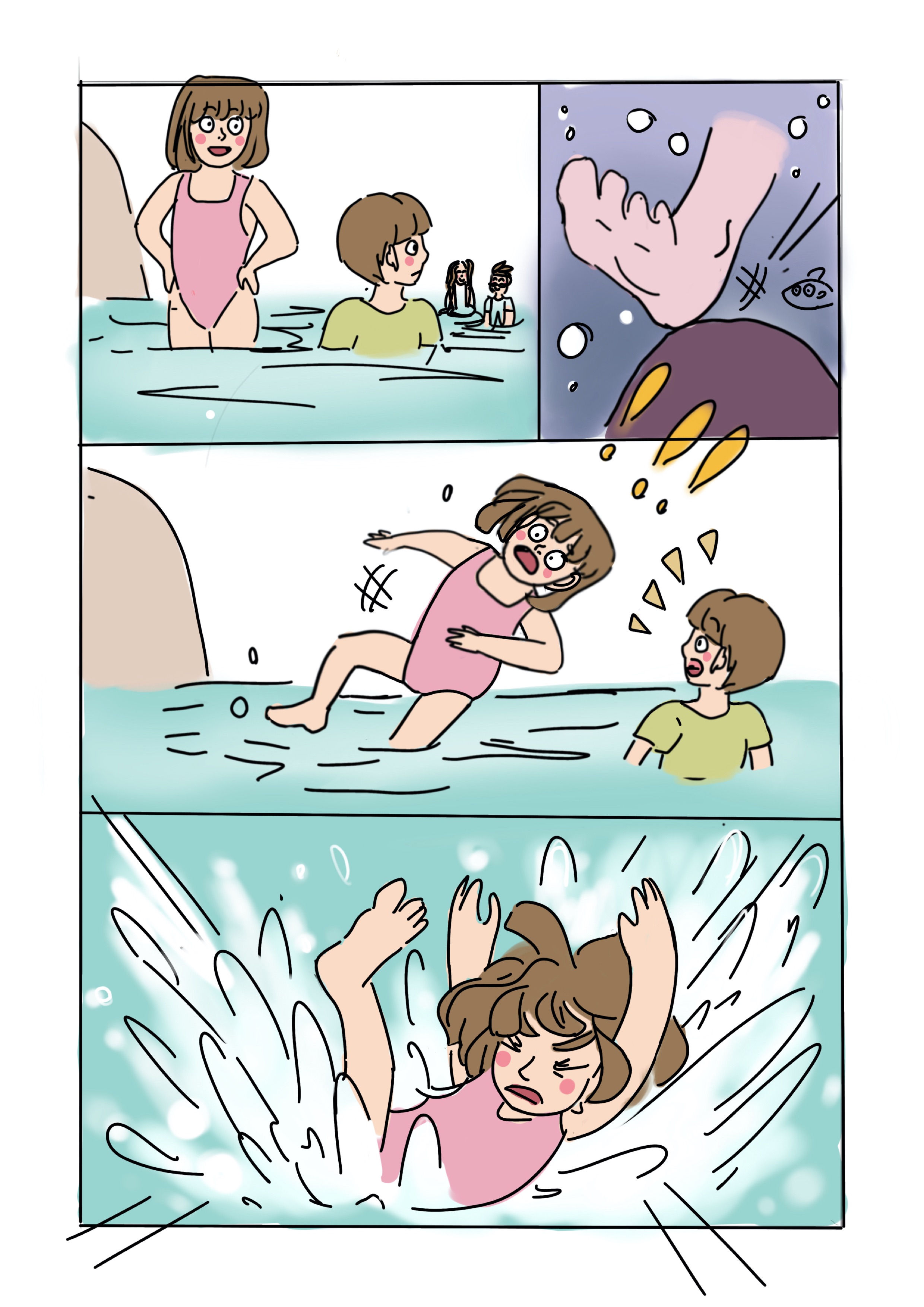
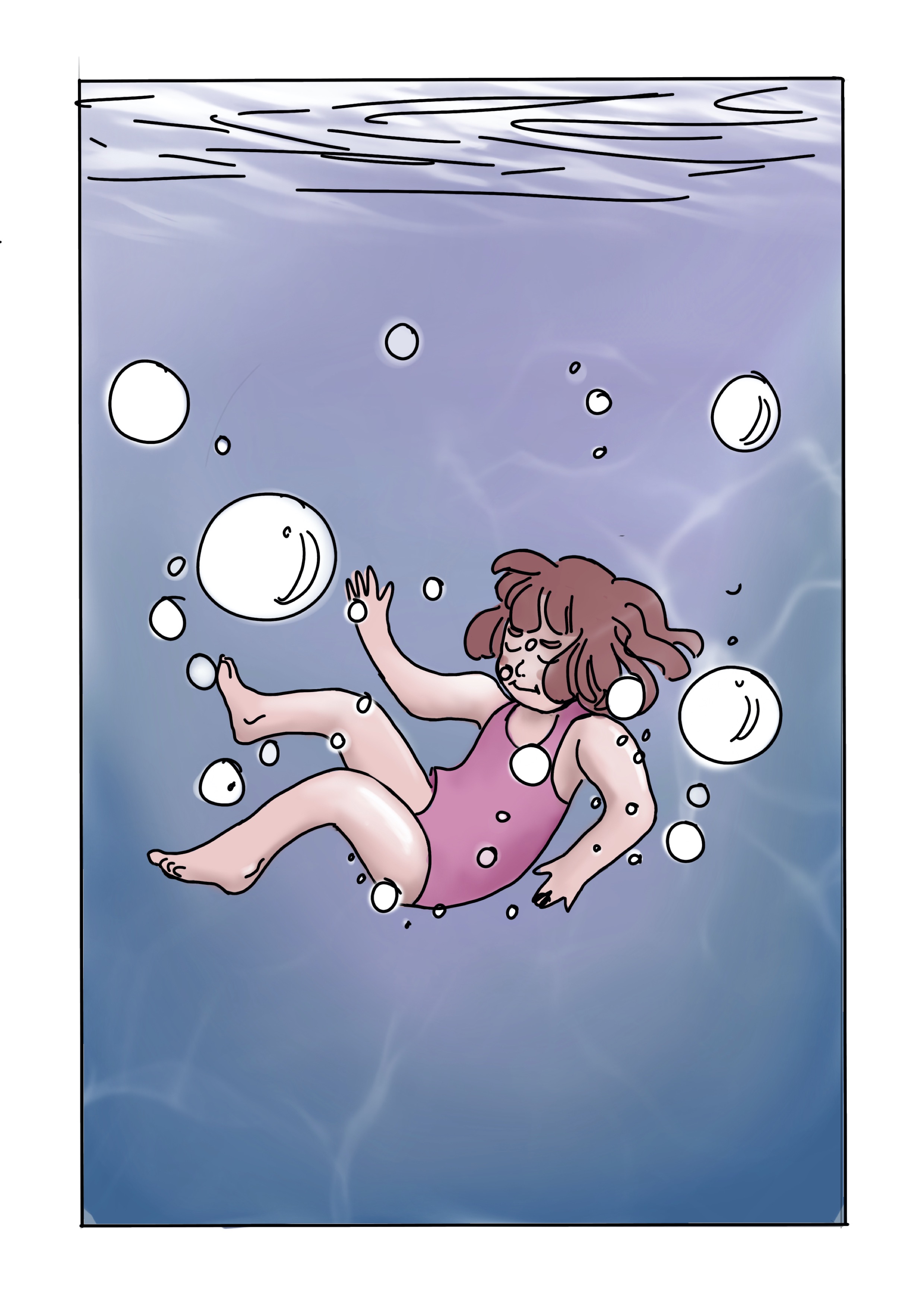

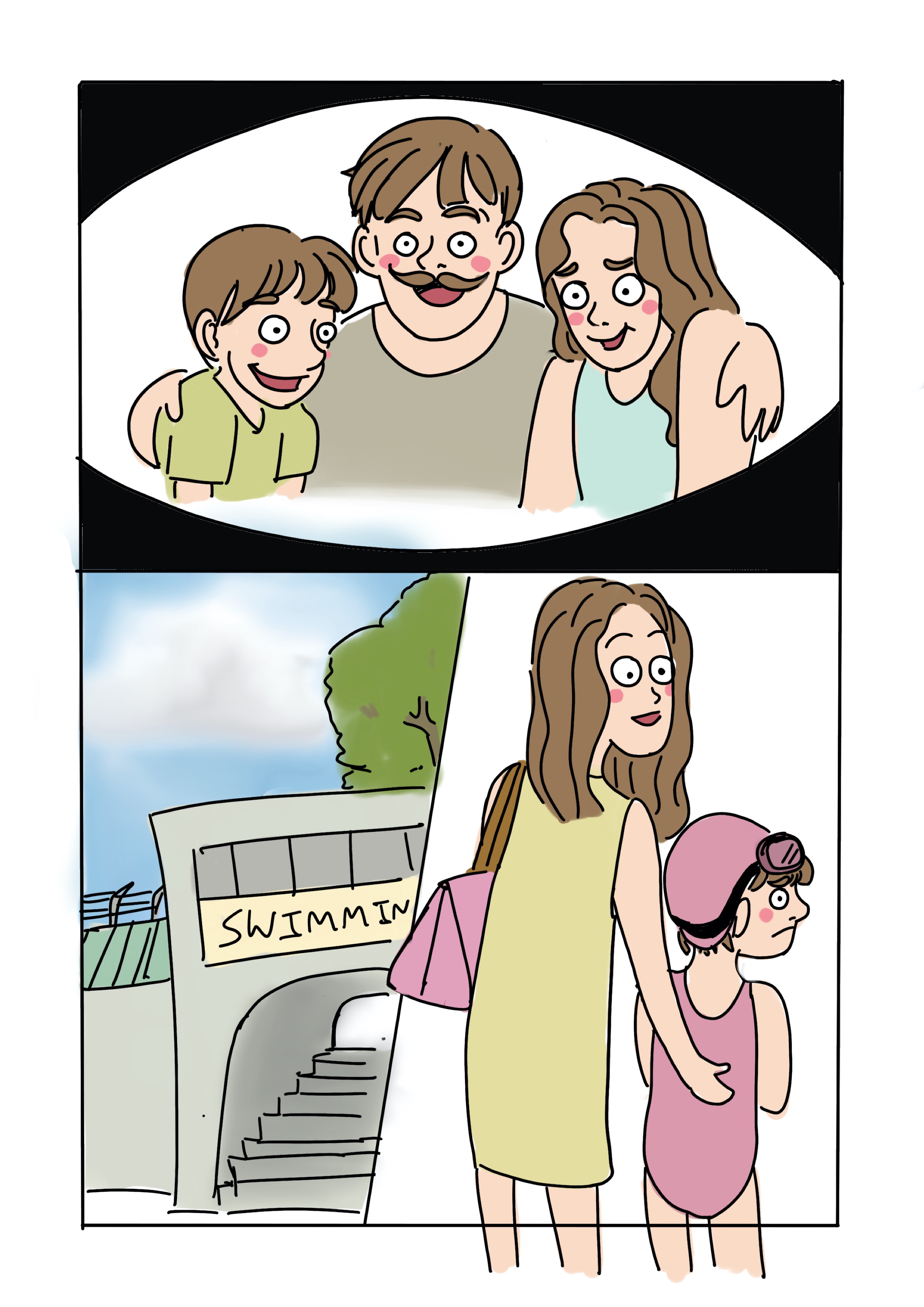


Autobiographic comics by student Pin

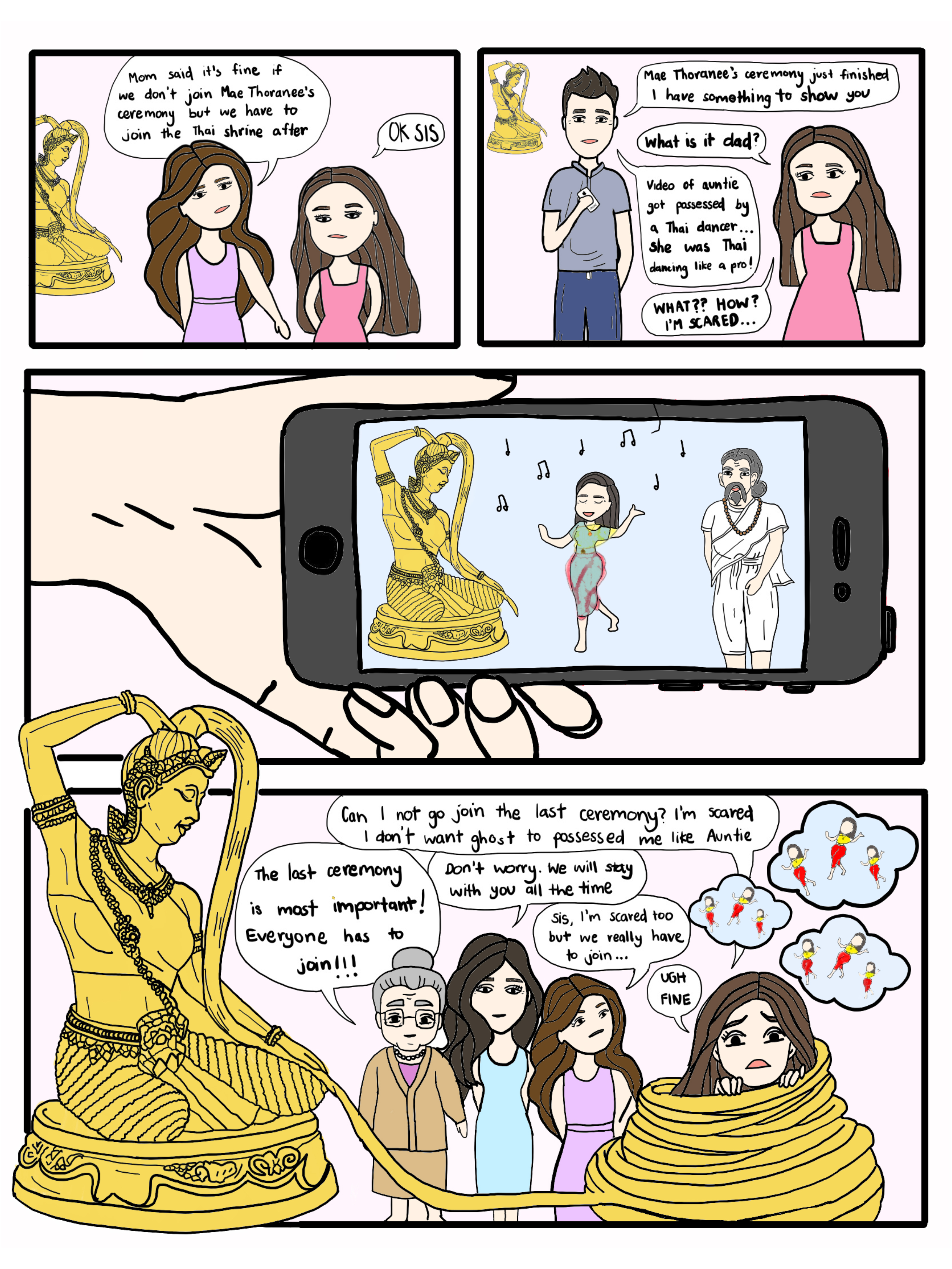
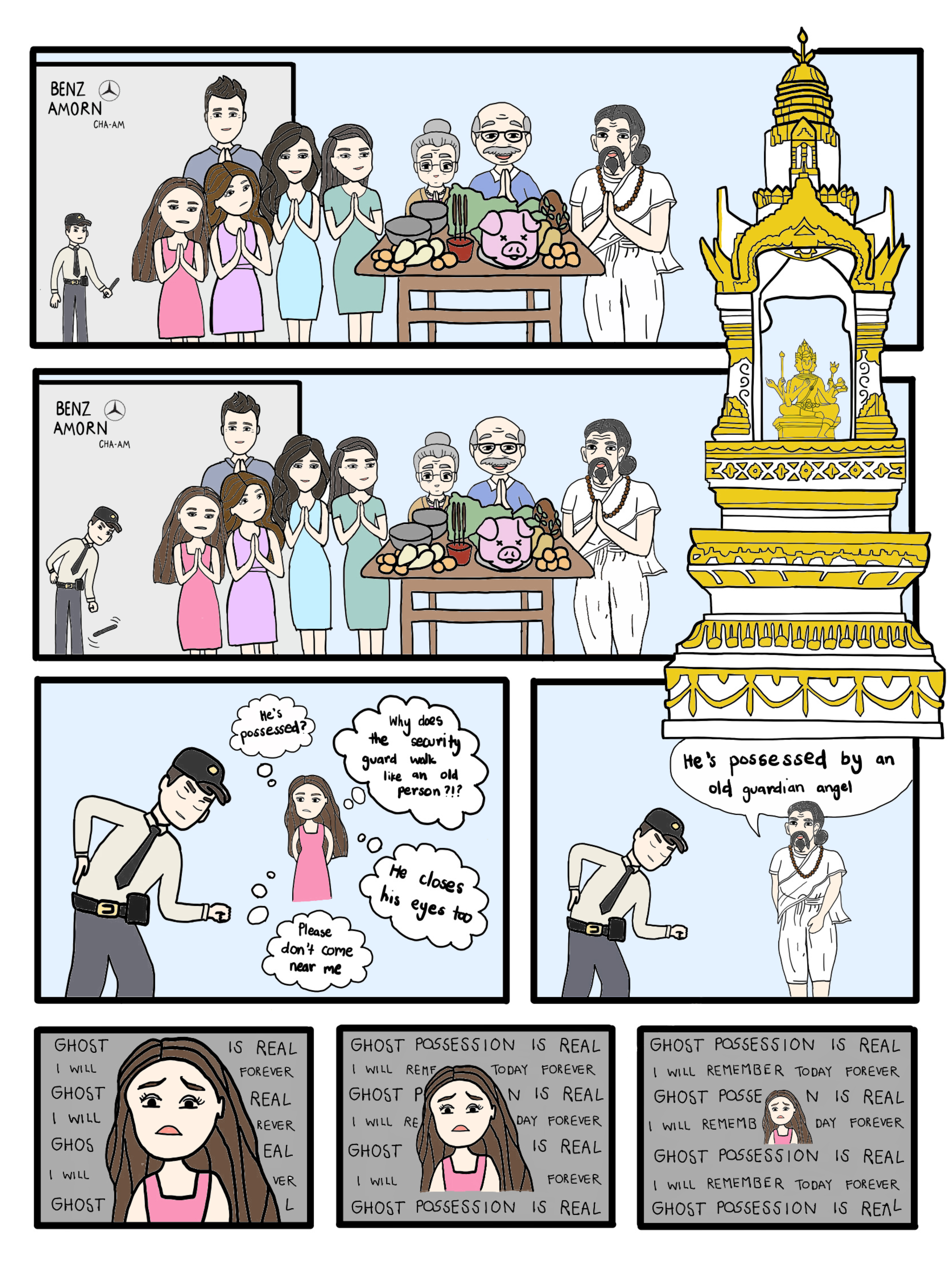
Autobiographic graphic narrative by student Paint

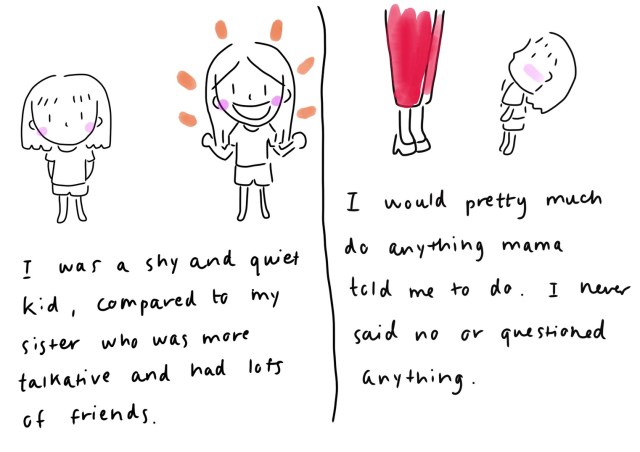
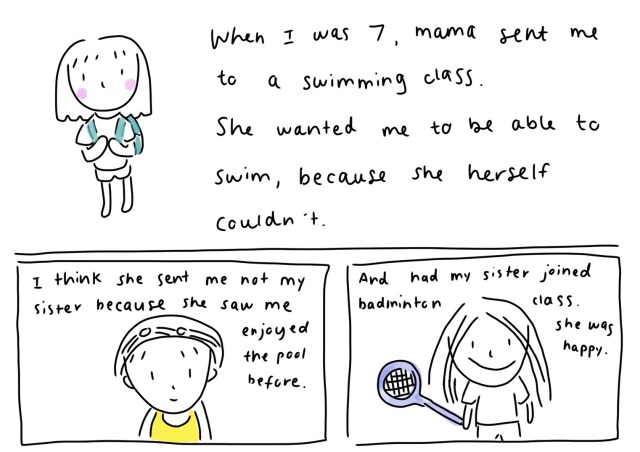
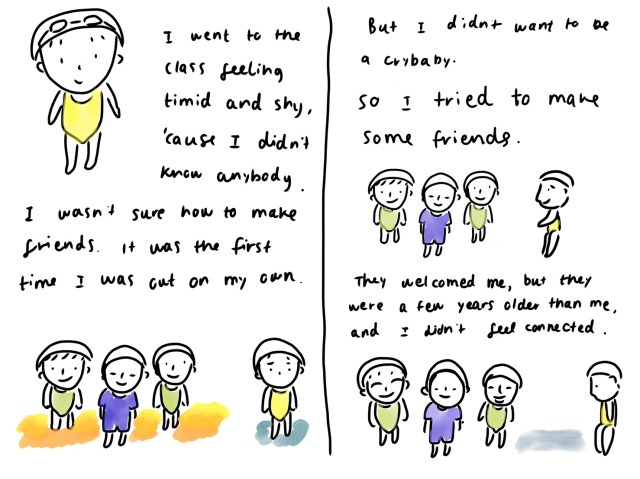
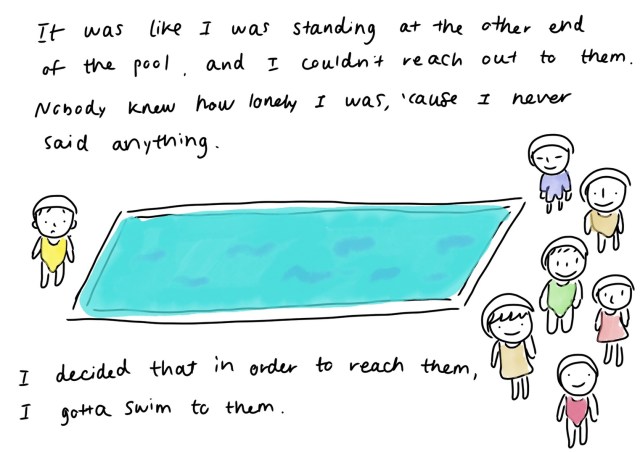

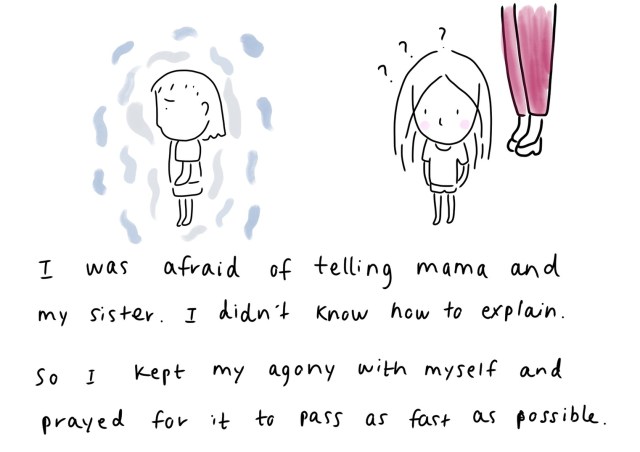
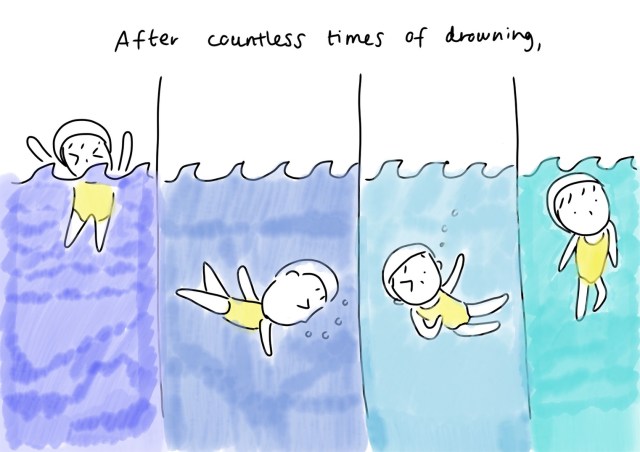

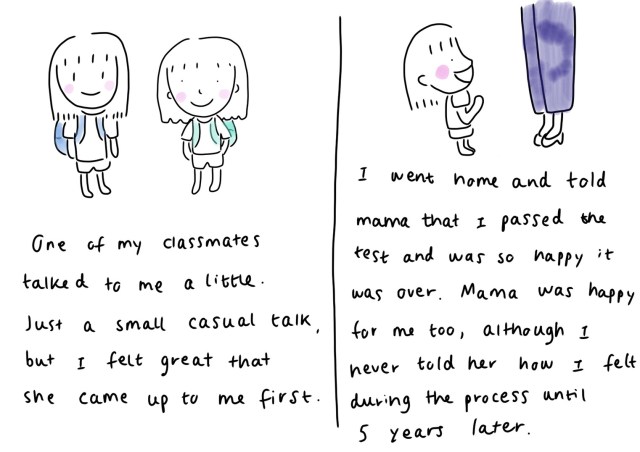
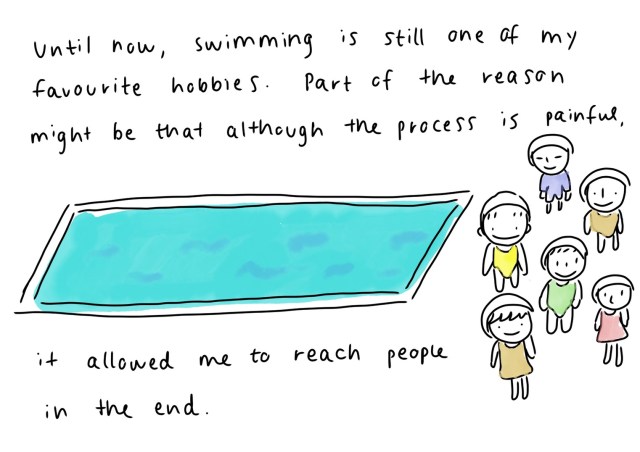

Autobiographic comics by student Plai

Pages from exchange student Meg Hoogendam’s digital comics book on HSP


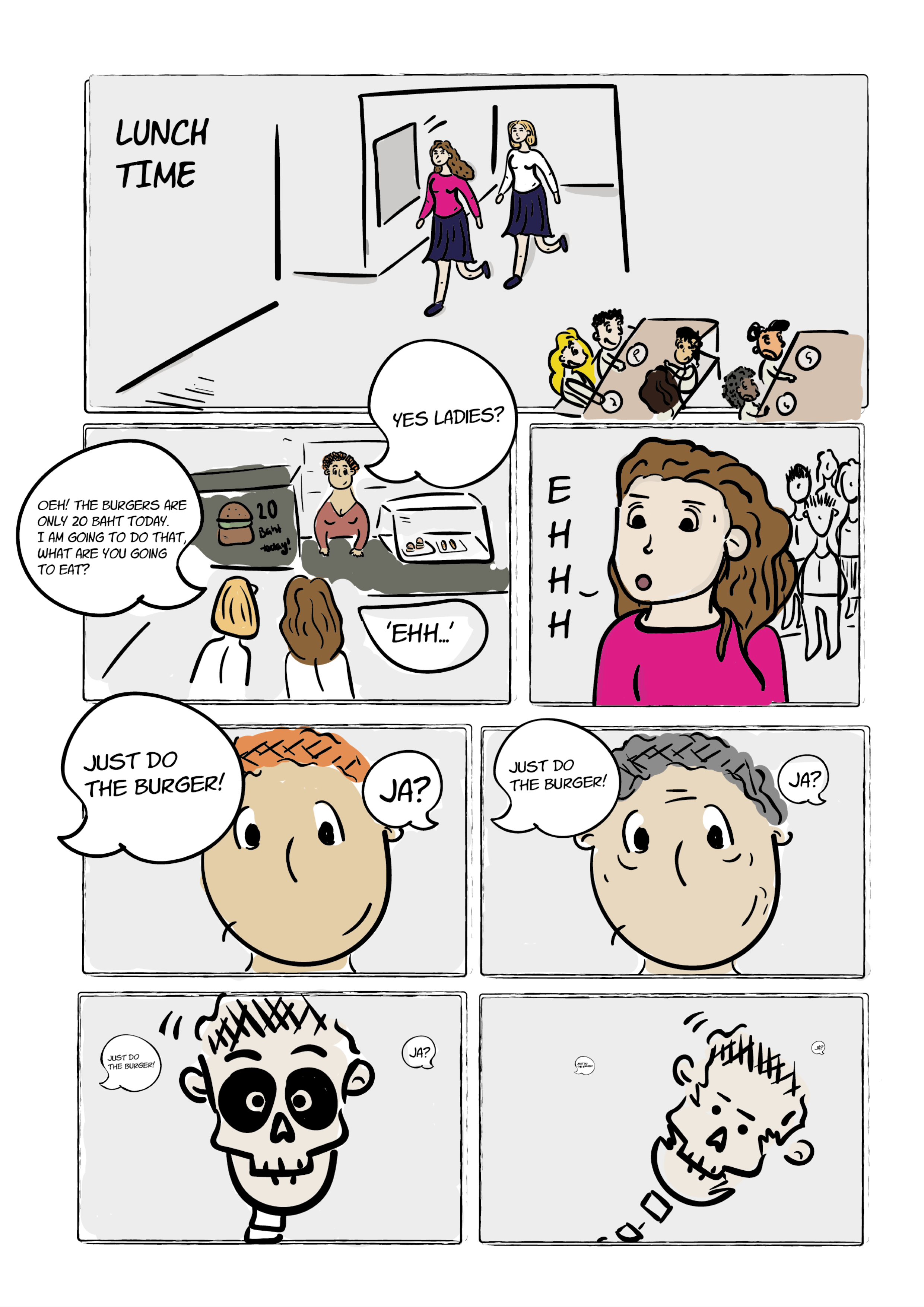

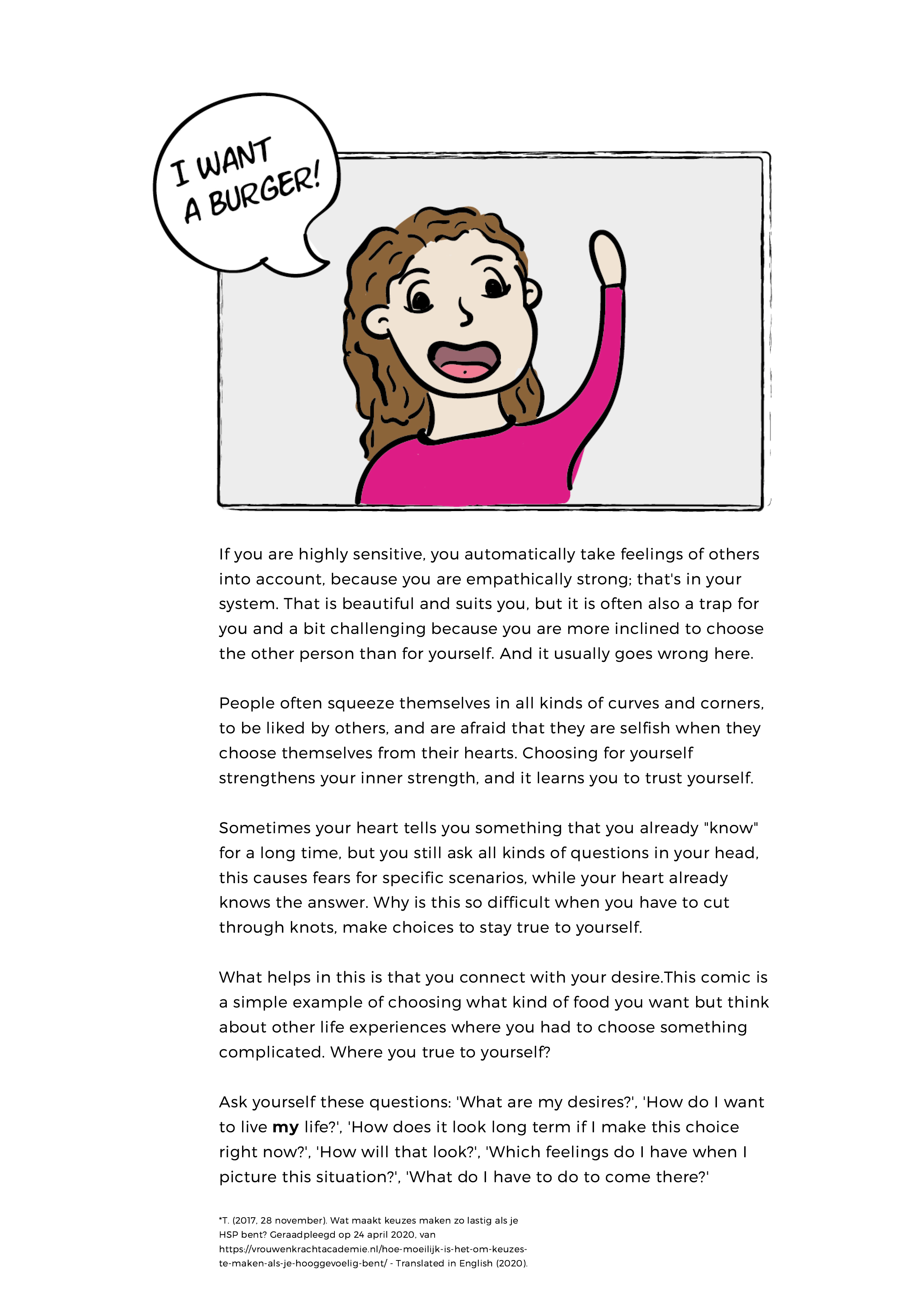


Autobiographic comics by student Eve


Autobiographic comics by student Rika


Autobiographic comics by student Frongki
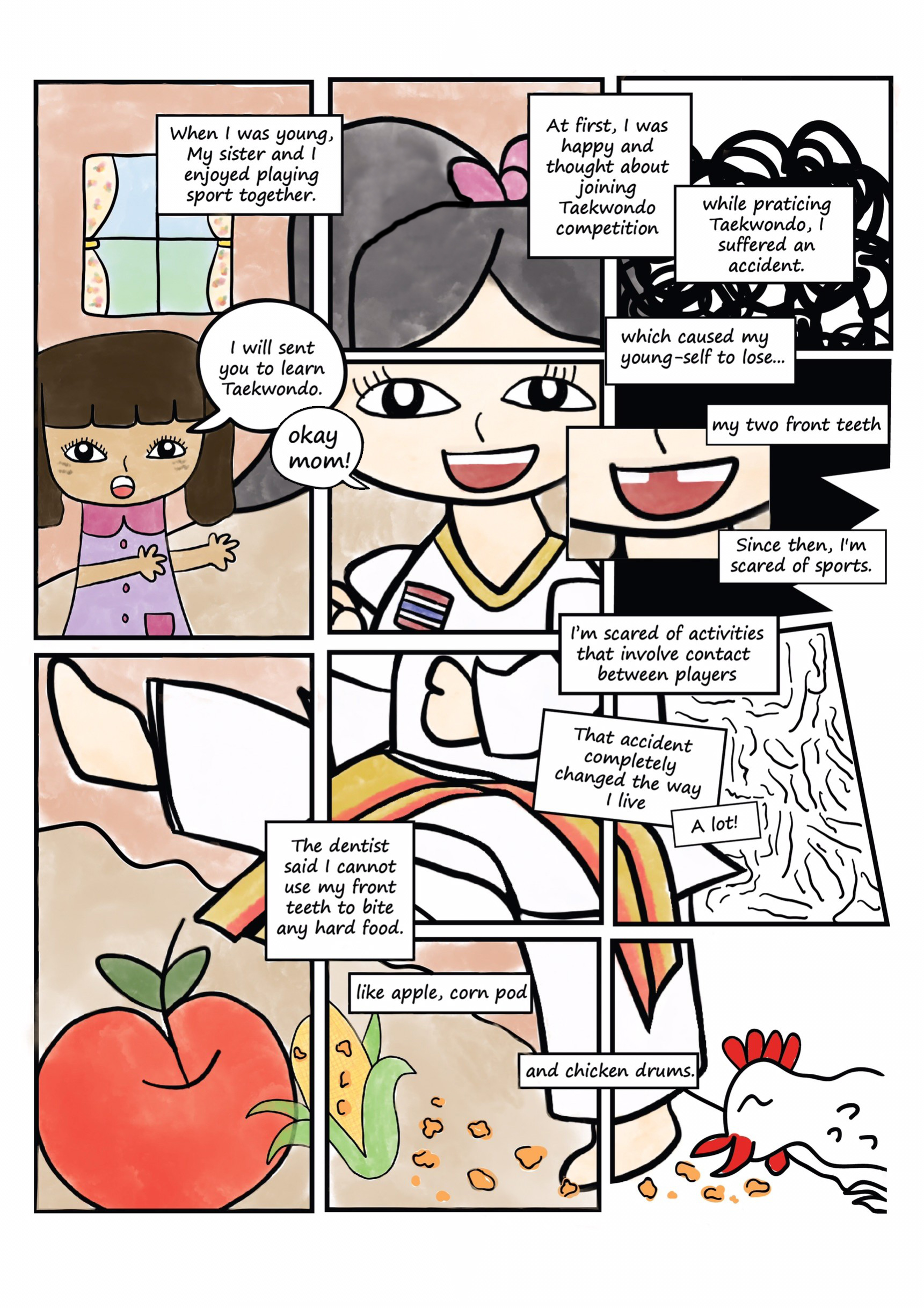
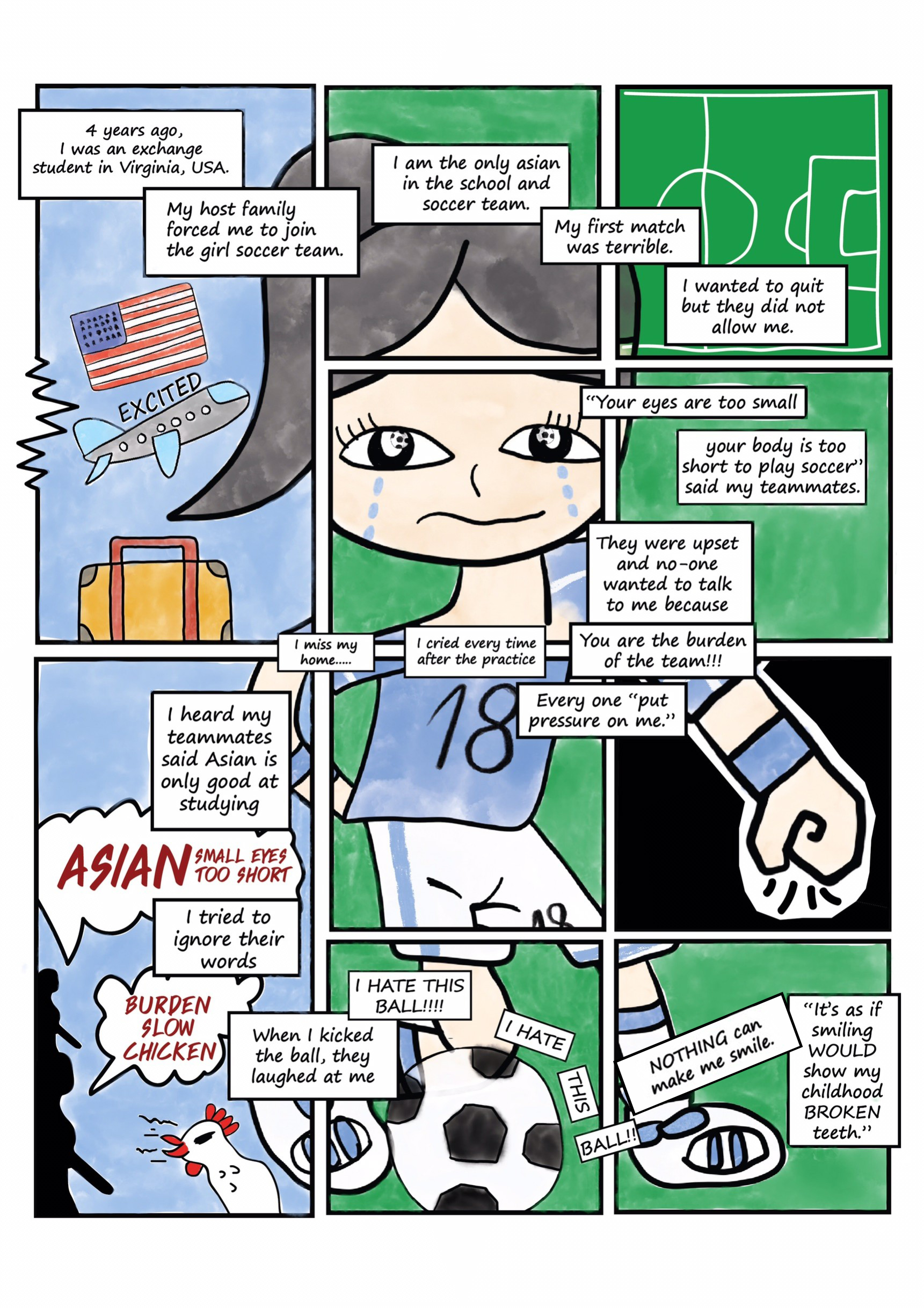
Autobiographic comics by student Pop

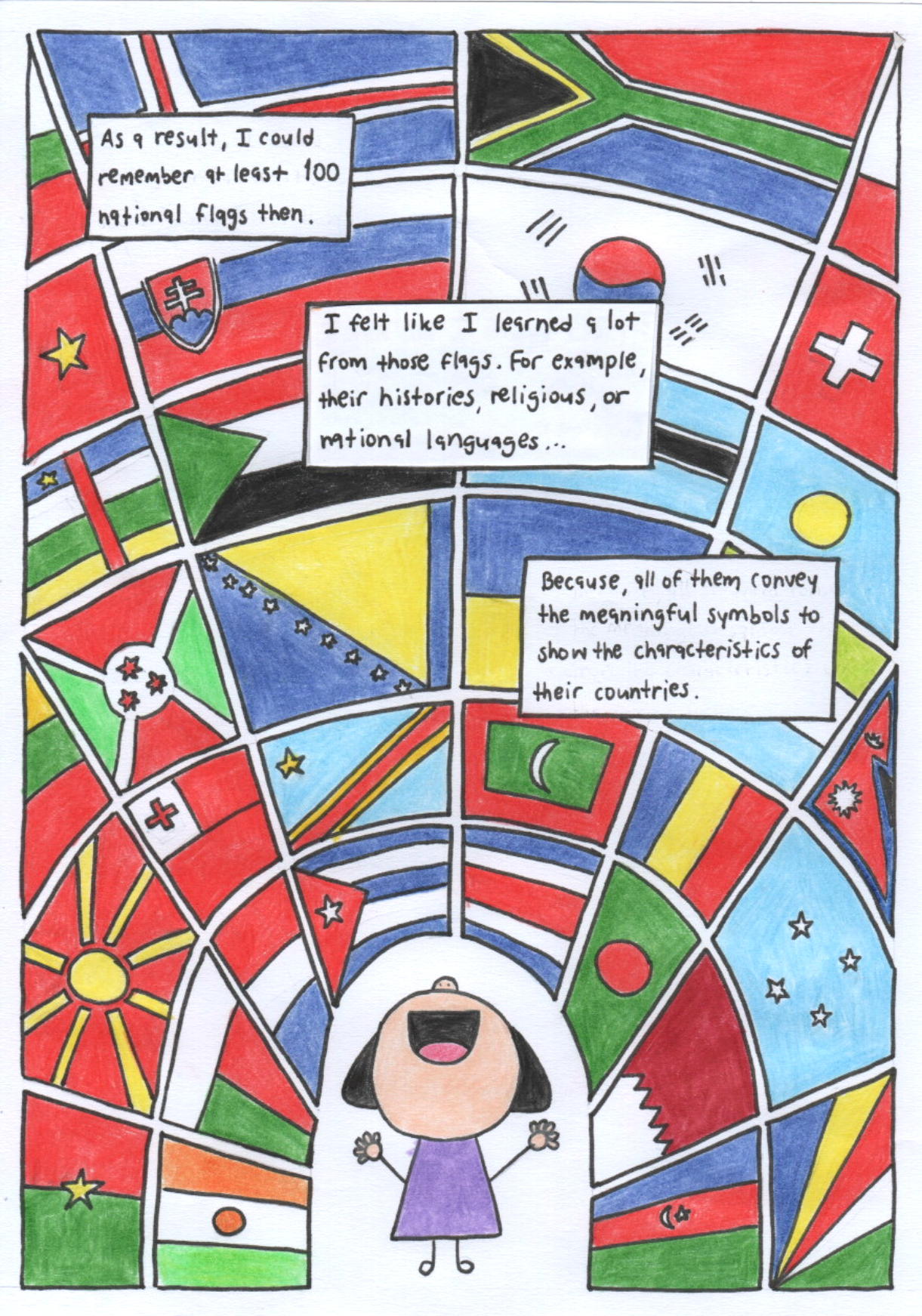
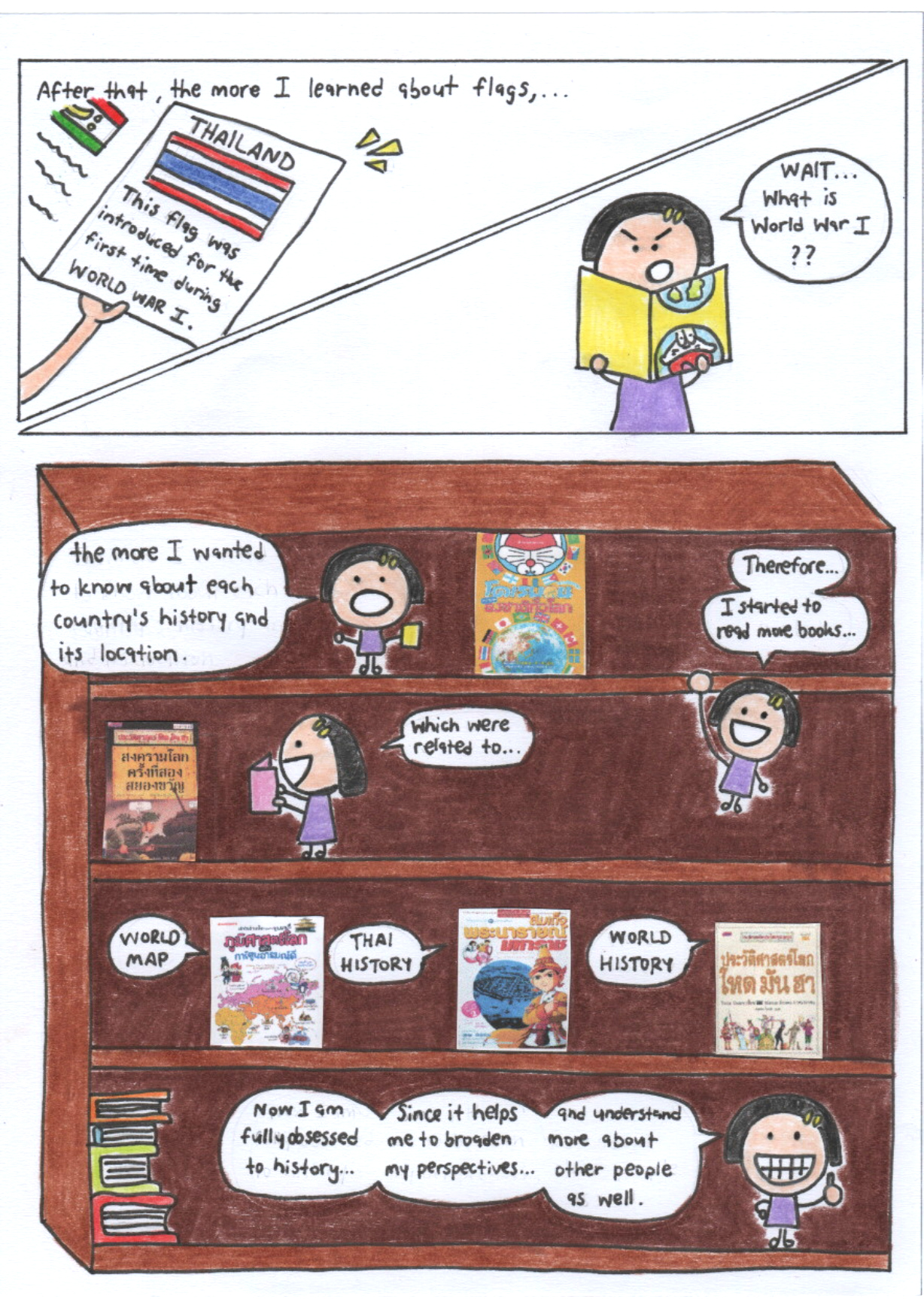
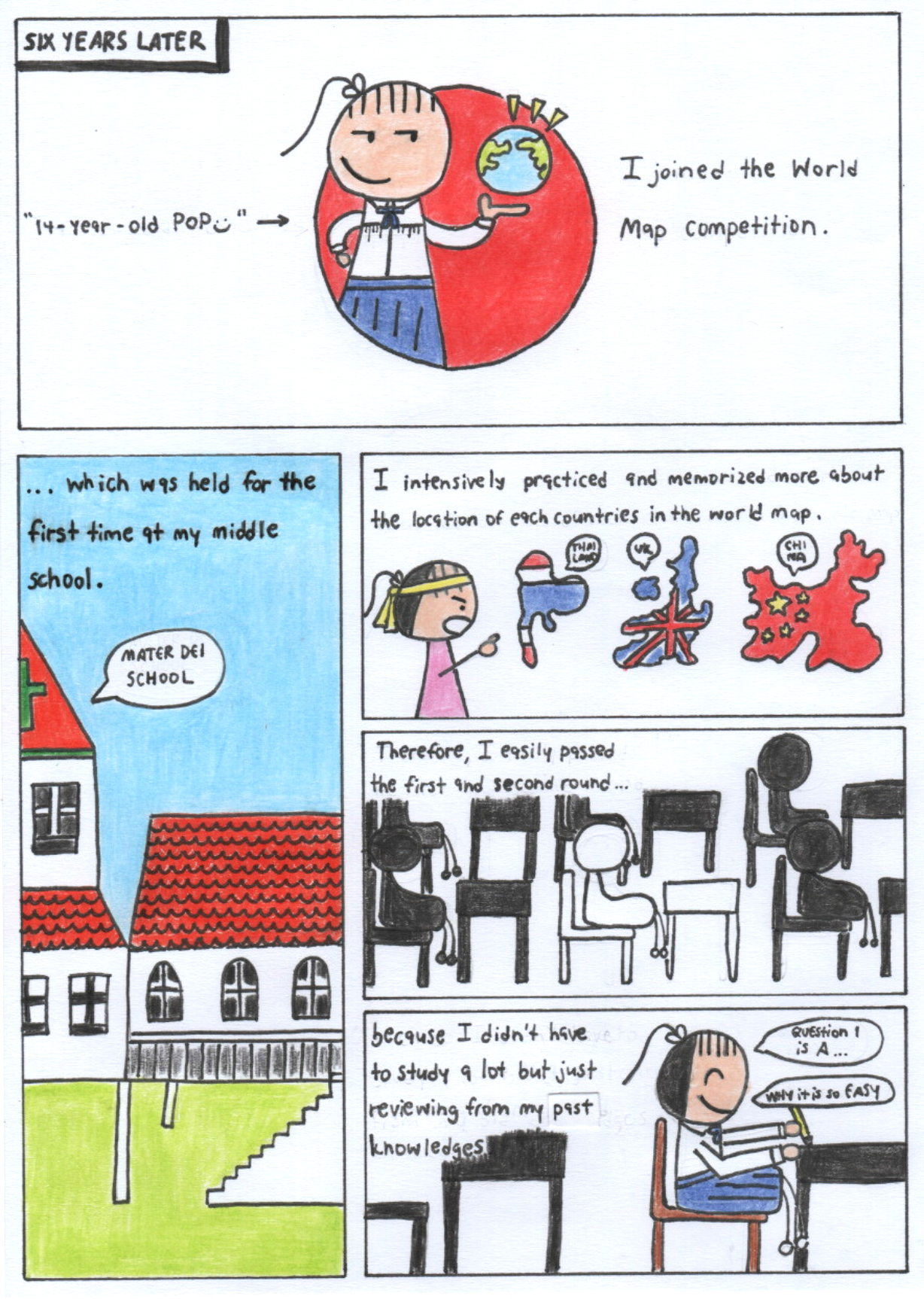

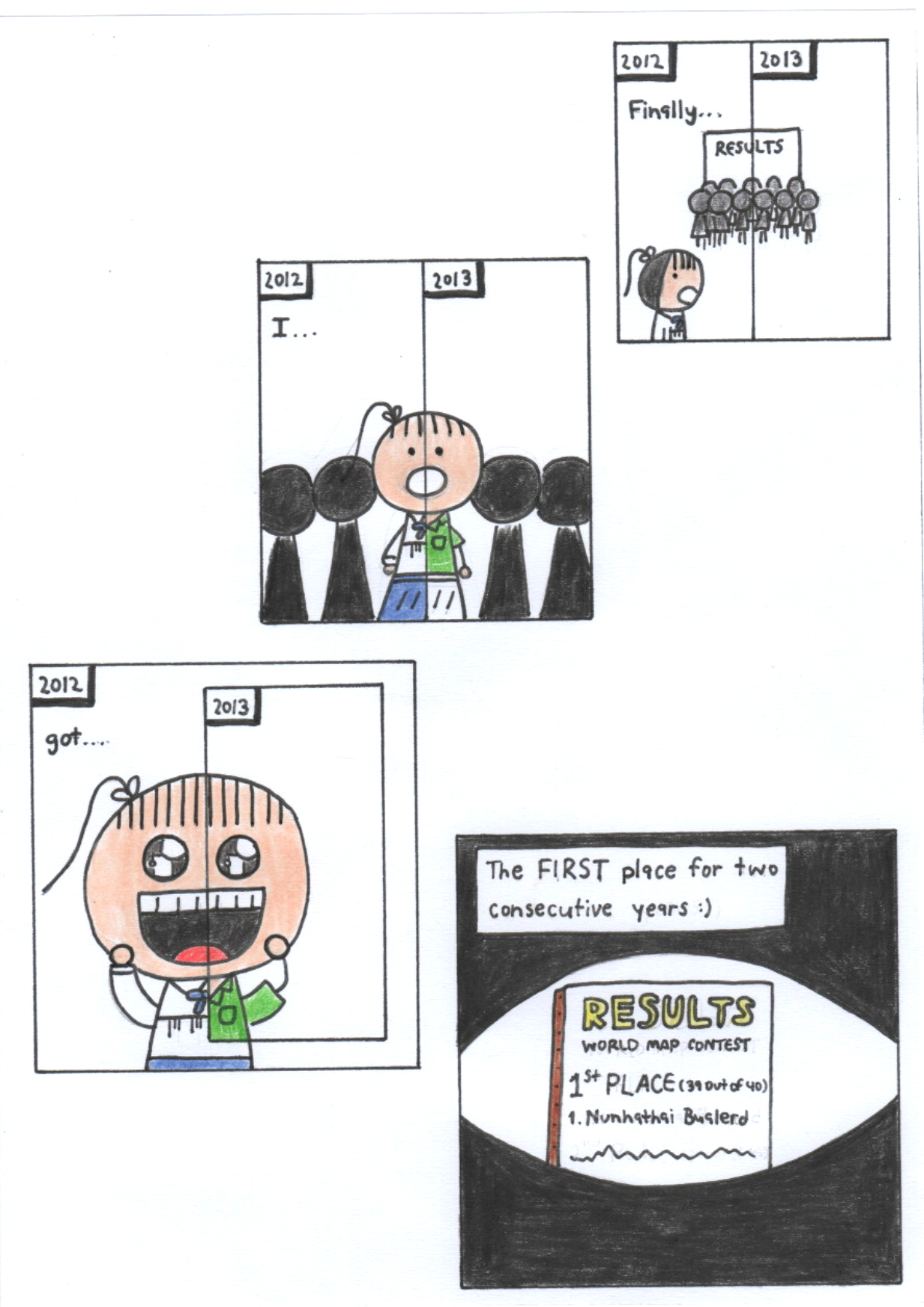

Autobiographic comics by student Namfon

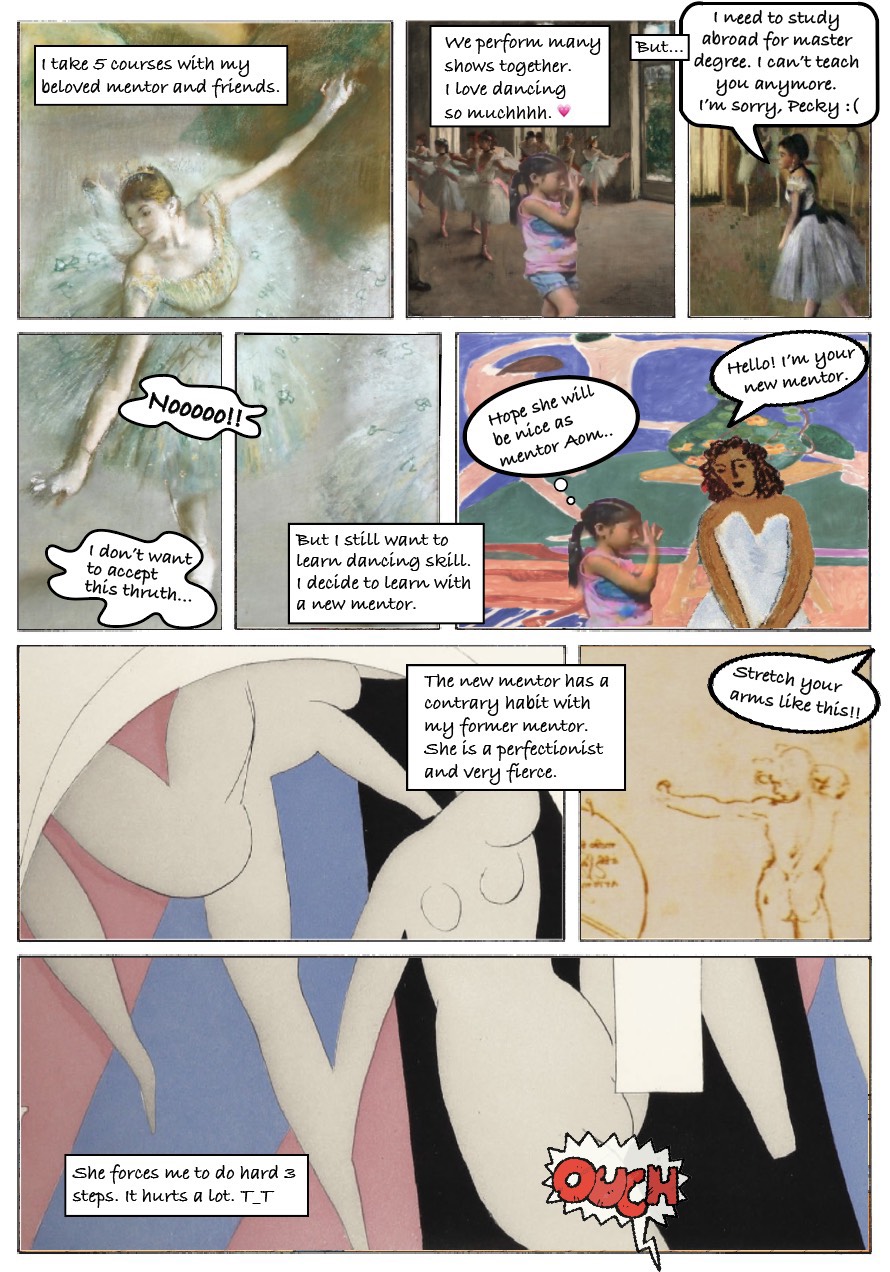
Autobiographic comics by student Pecky


MORE COMING SOON…
PS: I’m so proud of you all ! #ProudAjarnNicolas
As of January 2020, undergraduated students at the International Programme in Communication Management [Faculty of Communication Arts, Chulalongkorn University] are able to choose between two Comics Composition sections as part of their Creative Writing curriculum: experimental/fiction comics composition and non-fiction comics composition. The latter is a new 16-week [3 credits] section open to 30 students without any drawing/art training. I’m introducing in this post the preparatory assignments of the “non-fiction comics” section, meant to facilitate the composition of the semester final project; a short autobiographic comics. The two main challenges were to compose a short comics without prior art training, and to write an autobiographic narrative in a country where the autobiographical genre is almost absent from local literature (and comics) as it is seen as ill-mannered in Thai culture to talk about oneself, and as shortcomings or mishaps are not to be disclosed in a context where [to save (i.e. preserve)] the face or self-image is essential. However, in a globalizing world and because of the “international” nature of the programme and of the students’ education [often in international schools], I considered these challenges worth facing.
The class was composed of 34 students [29 female students and 5 male students], and included 6 exchange students from abroad. All artworks are reprinted with the consent of the students, and remain their property.
ALL-SEMESTER ASSIGNMENT: GRAPHIC DIARY
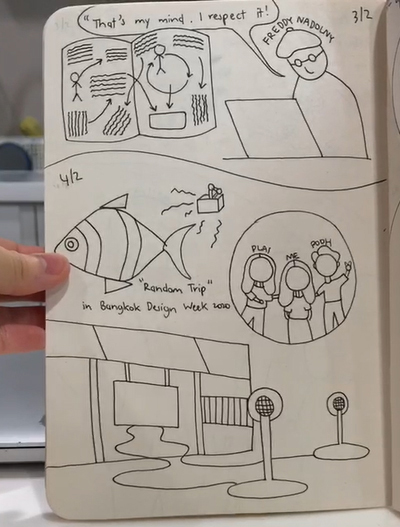
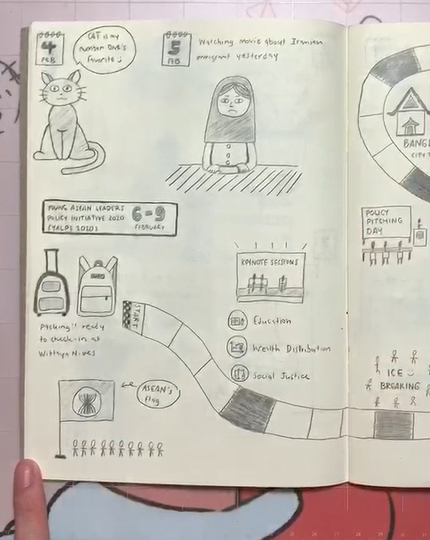
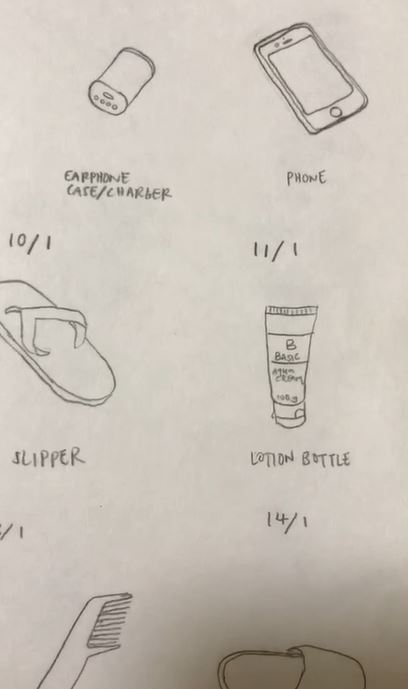
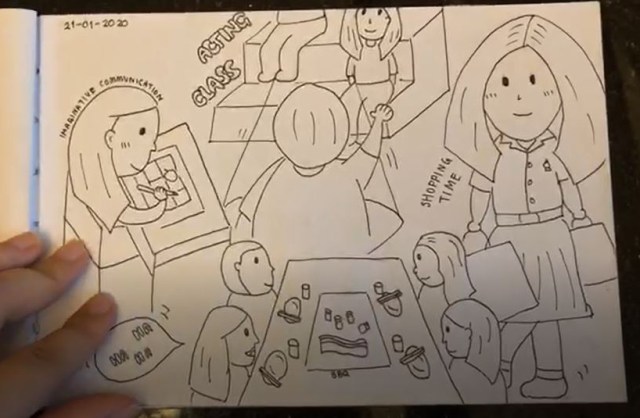
On the first week of class, students were asked to acquire a notebook and draw an entry related to their daily life every day and over the complete 16-week semester. The goal was to help the students to familiarize themselves with the act of drawing and the observation of their surroundings and inner thoughts and feelings. Progress was checked in the classroom every two weeks, then online when the Faculty closed its doors due to the pandemic. At times, the graphic diaries revealed the frustration, the angst and sometimes the isolation experimented by the students during the lockdown.




WEEK 01 ASSIGNMENT: SELF-PORTRAIT
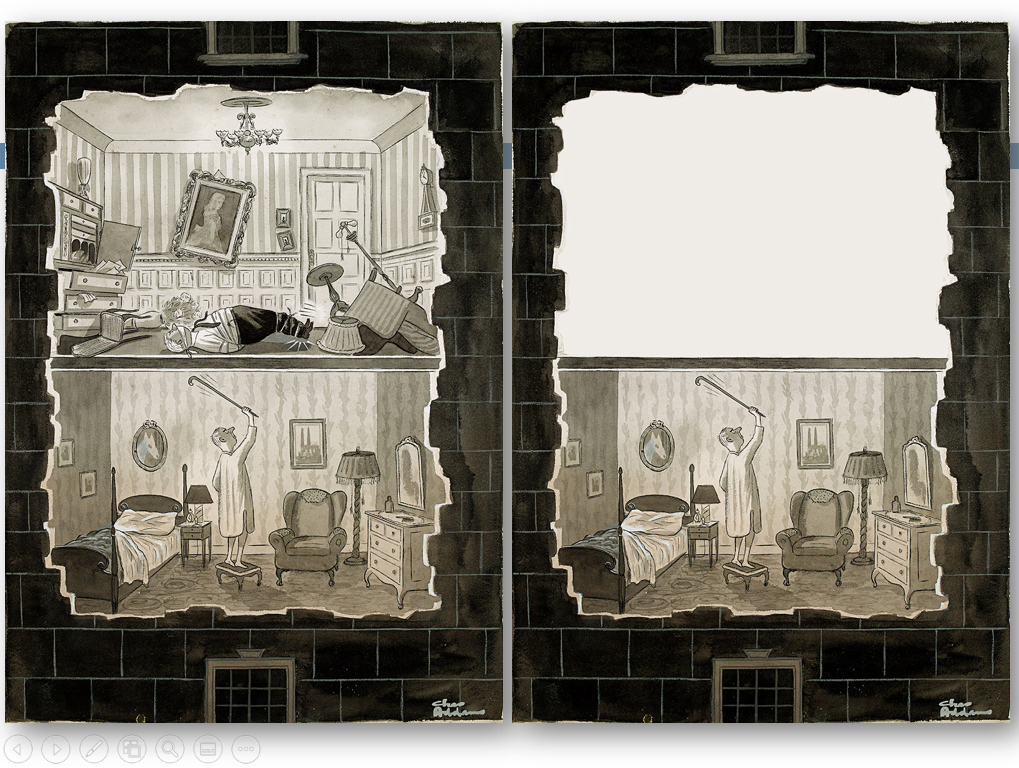
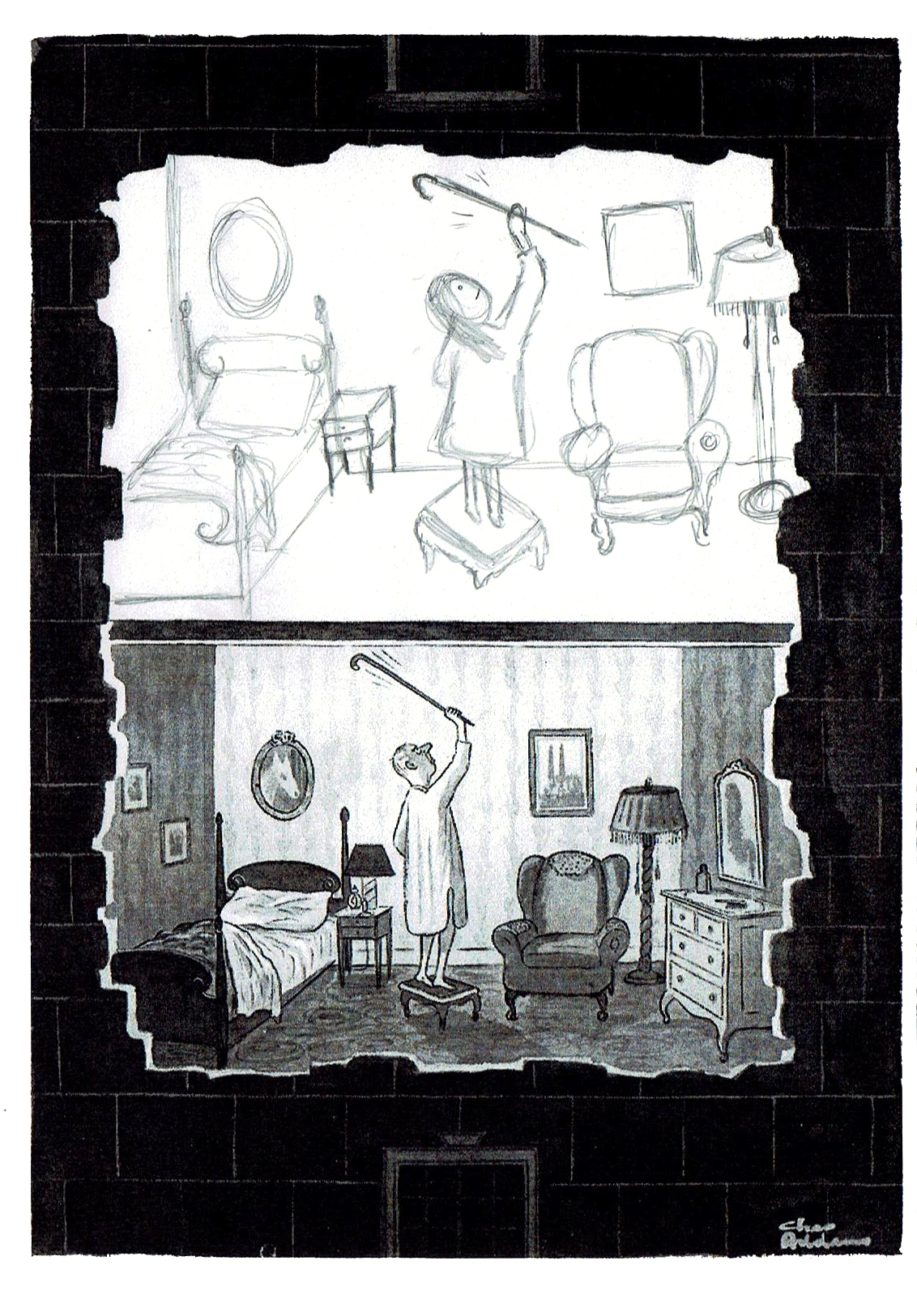
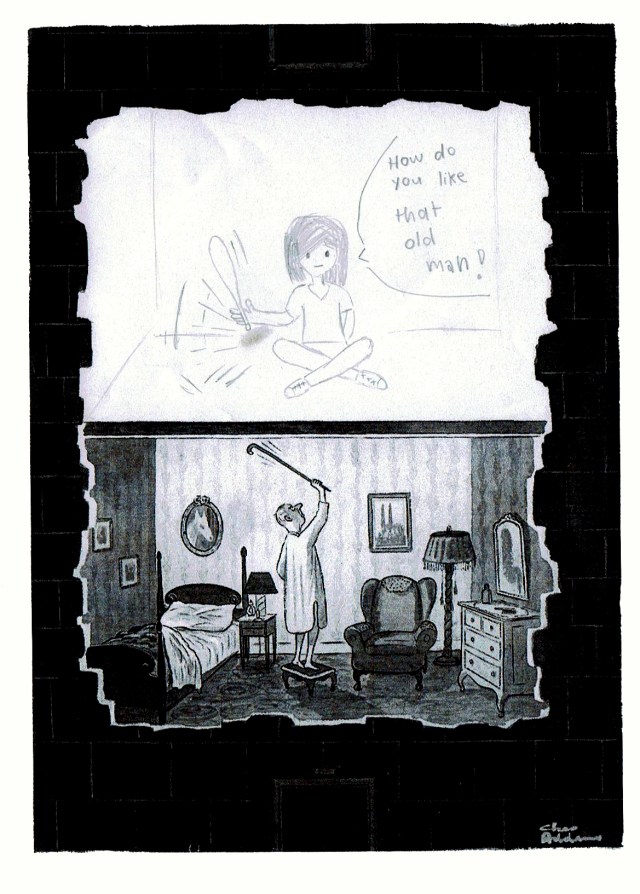
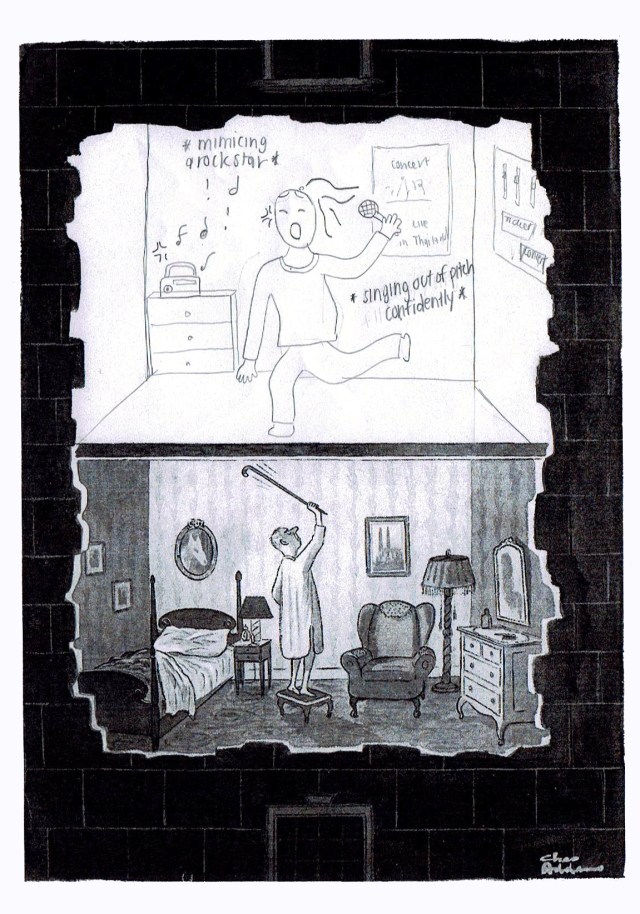
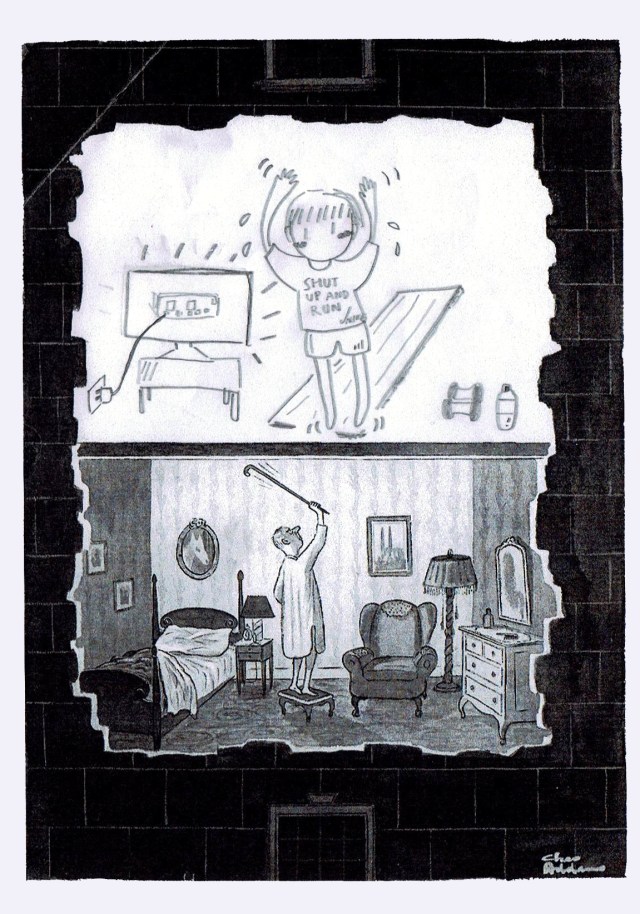
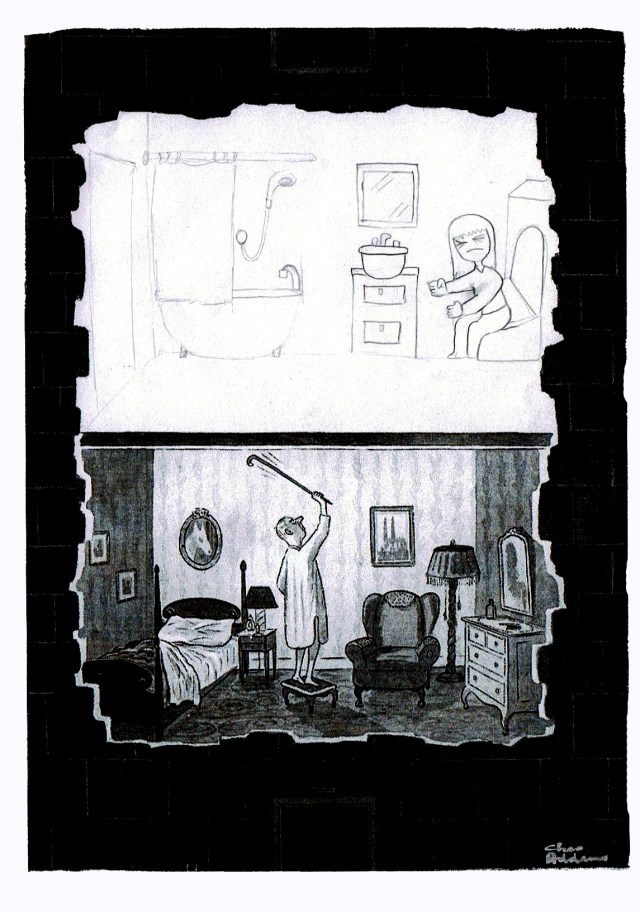
After a first short lecture introducing non-fiction comics [autobiography, confessional comics, graphic medecine and comics journalism; with examples from Julie Doucet, Wimmen’s Comix, Robert Crumb, Joe Matt, Yoshiharu Tsuge, Neeske Alexander, Jennifer Hayden and Joe Sacco), students were asked to draw their self-portrait “in situation” in a Chas Addams’ cartoon from which the upper part had been blanked out.


WEEK 02 ASSIGNMENT: 10 MEMORIES
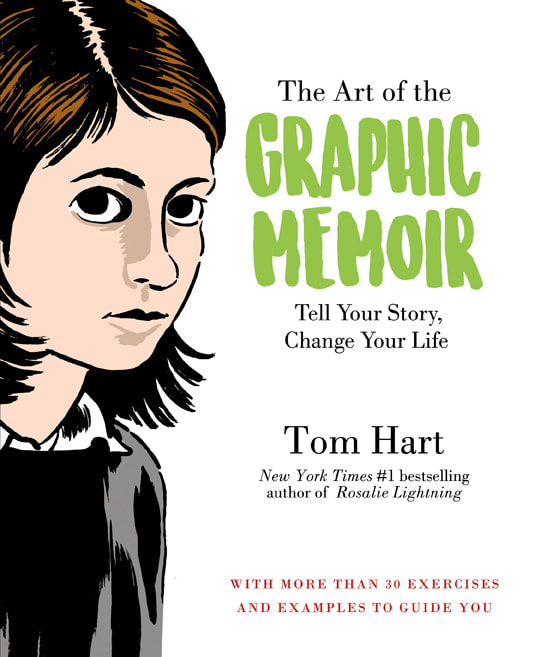
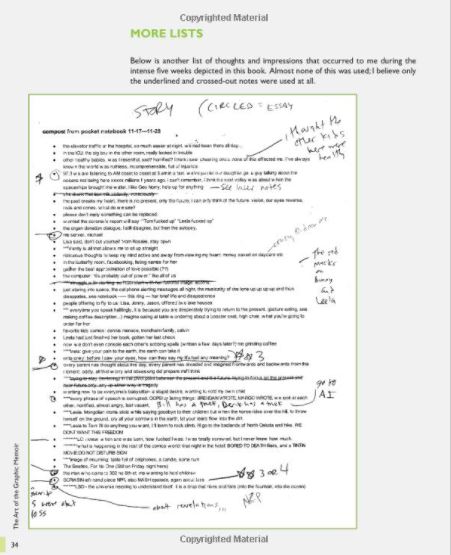
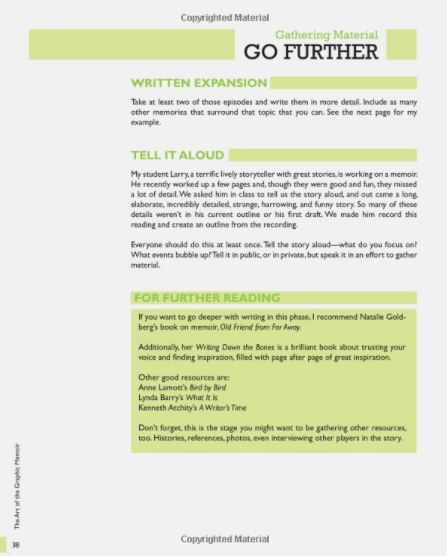
Students were asked to write down 10 memories, 10 crucial moments -positive or negative- that still impact/haunt/enlight their lives up to this day. I discussed individually with each student to know which memory he/she is eager and confortable adapting into a comics narrative [narrative/graphic potential]. Two memories are sometimes related [theme/period/figures] and were selected to be merged into one narrative. This list/thematic approach comes from Tom Hart‘s guide The Art of the Graphic Memoir (St. Martin’s Griffin, 2018). Numerous references and resources were borrowed from his useful book.
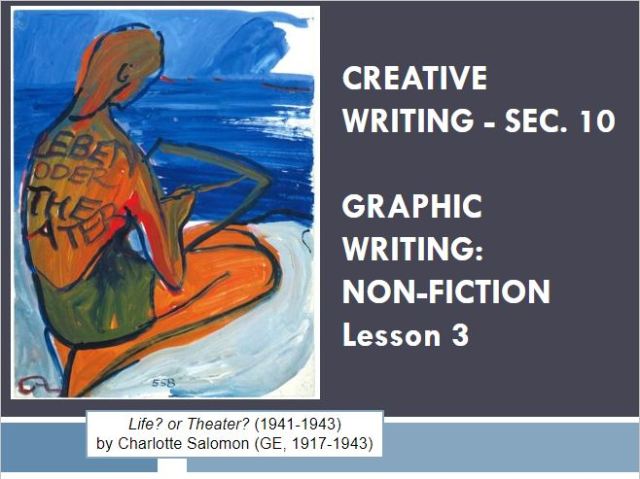
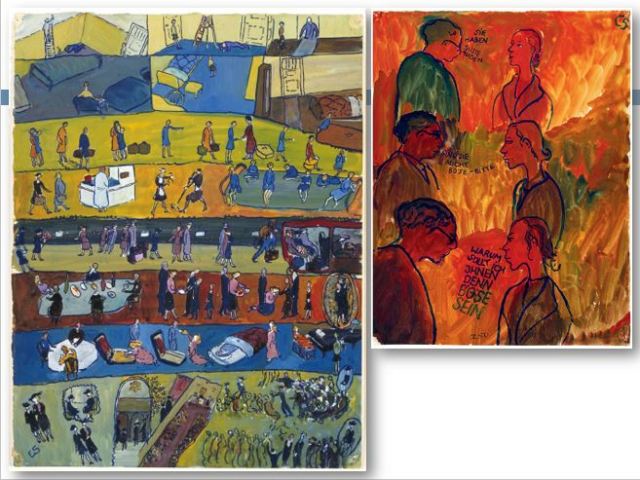
WEEK 03 LECTURE: CHARLOTTE SALOMON
We explored, among others, the work of German artist Charlotte Salomon and her series of nearly 800 goauches Life? Or Theatre? produced between 1940 and 1942.


WEEK 03 ASSIGNMENT: TEXT SUBSTITUTION
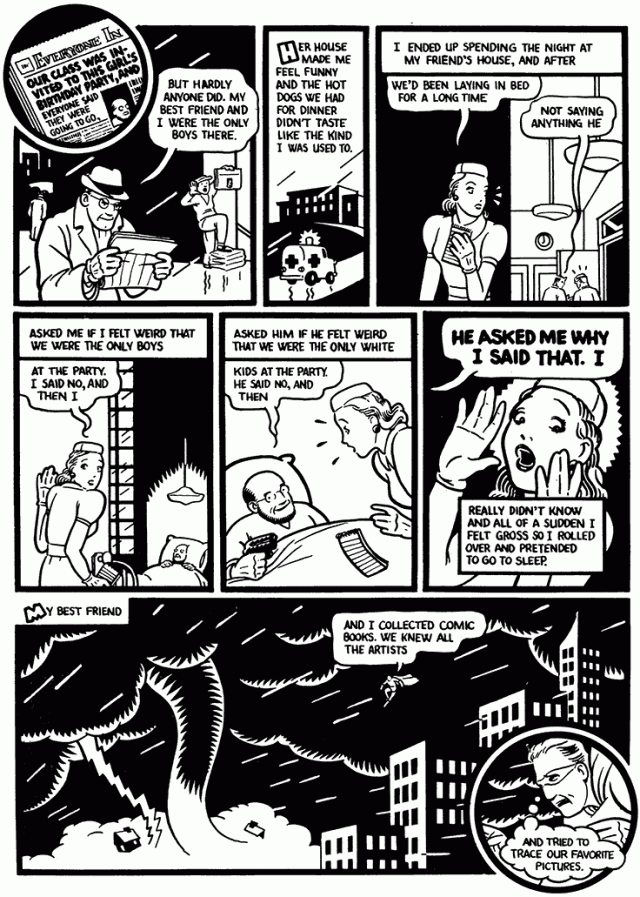
Each student was asked to develop -at home and in written form- his/her selected memory over an A4 page. In class, we analyzed Chris Ware’s short comics I Guess [click on link for full story] in which the written text [the sensitive memories of a child] is imposed -seemingly arbritrarily- in the captions and speech/thought balloons of a six-page Golden-Age-style superhero adventure. However, beyond the “disjunctive form of verbal/visual interplay”, some words or sentences seem to echo drawn elements and to form a braiding of motifs; Chris Ware plays here with the fact that comics readers are drawn to look for meaning in the interaction of the pictorial and the linguistic.


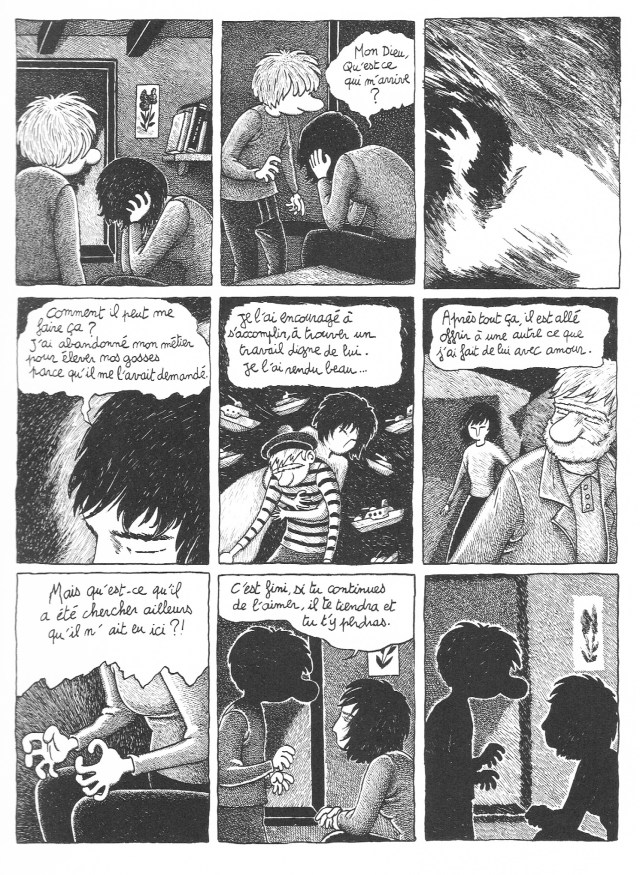
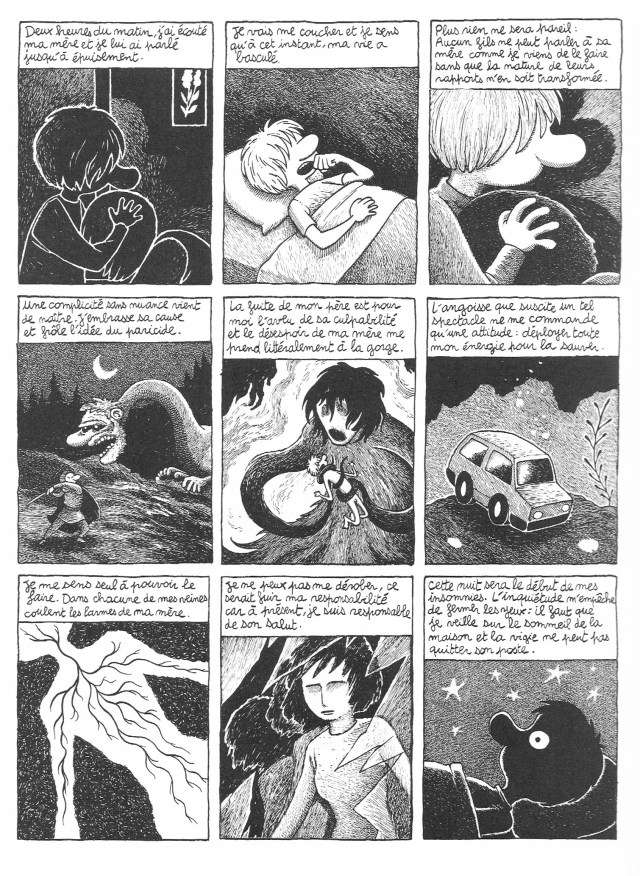
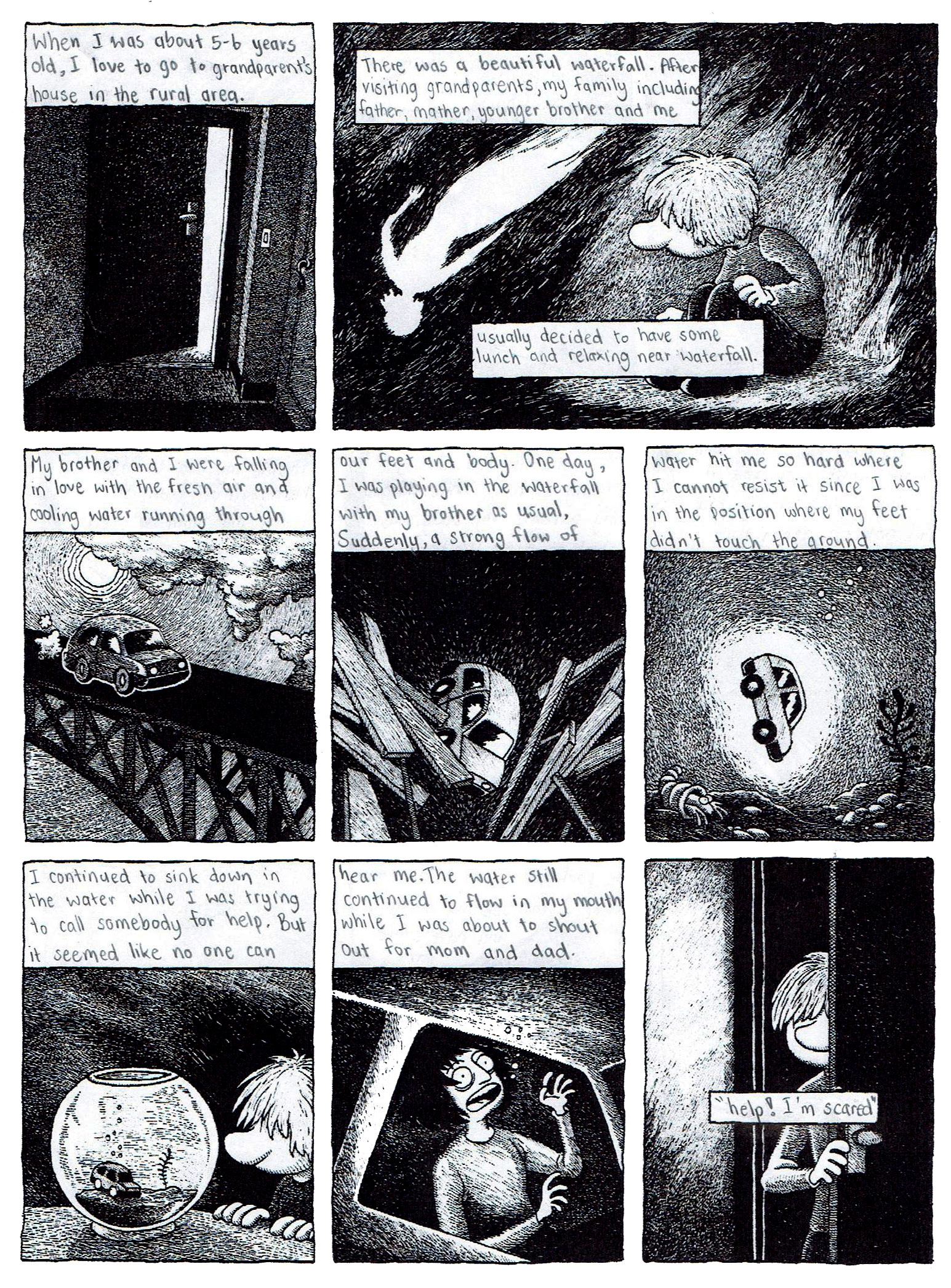
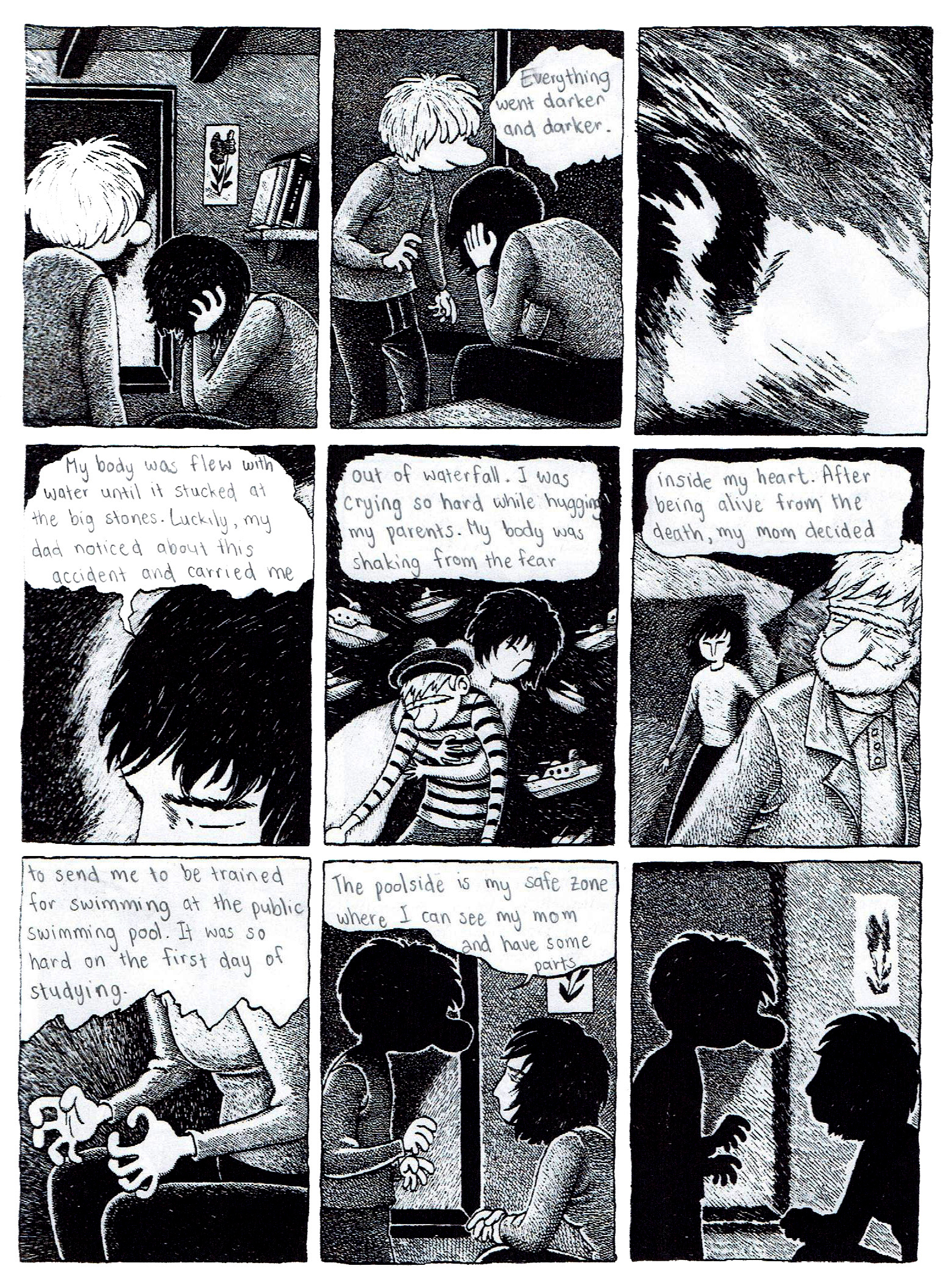
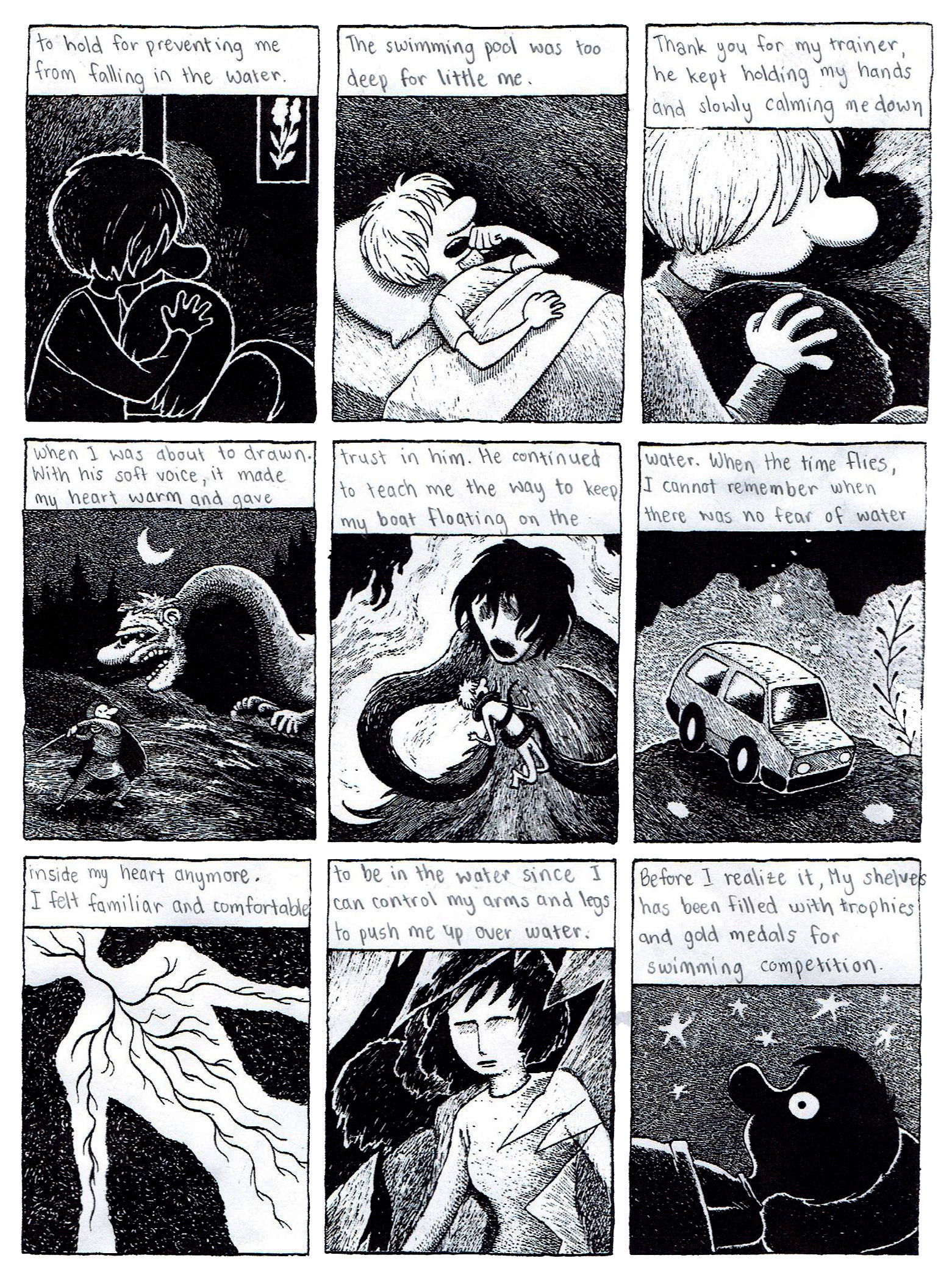
After the analysis of I Guess, students were asked to compose a graphic narrative using the same concept by simply imposing the text of their ‘selected and extended memory’ [A4 page] in the emptied captions and speech balloons from three pages of French cartoonist Xavier Mussat’s autobiographic comics Sainte Famille. The latter book was selected as Xavier Mussat extensively plays with visual metaphors and allegories and because these could become generative of unexpected and accidental resonances with my students’ written memories.


WEEK 04 ASSIGNMENT: DIFFERENT TONE
In order to further explore the memory selected by each student, I asked them rewrite their text but as if written by their younger self -in a personal diary- at the age they were when the chosen event took place. The text was to be written on black and white photocopies of some pages from French-Canadian cartoonist Julie Delporte‘s pencil-color and organic diary Journal (Koyama Press, 2013).
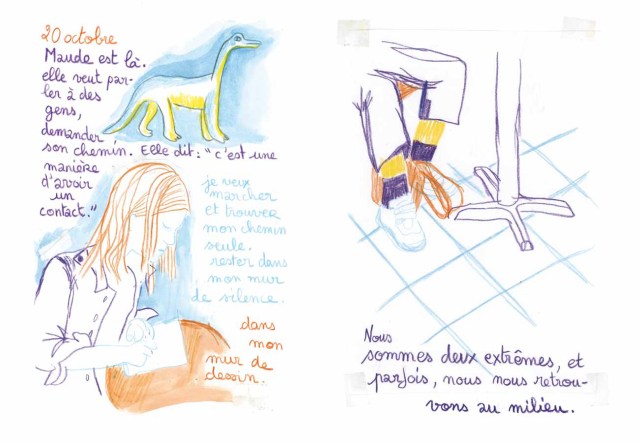
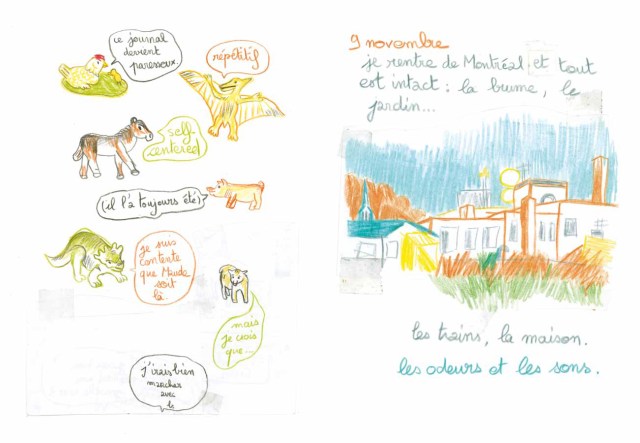
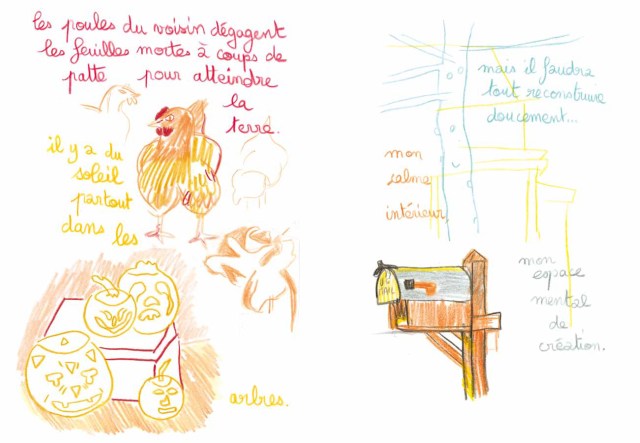
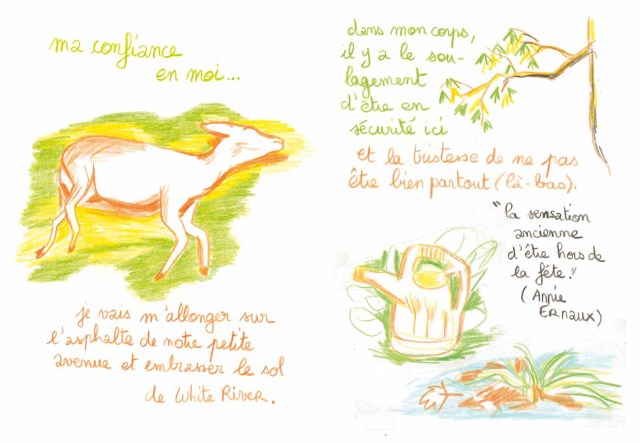
The following pages show student G’s memories [to be compared with her version on Xavier Mussat’s pages above], written down as a personal diary, along with Julie Delporte’s drawings on which G added watercolor.
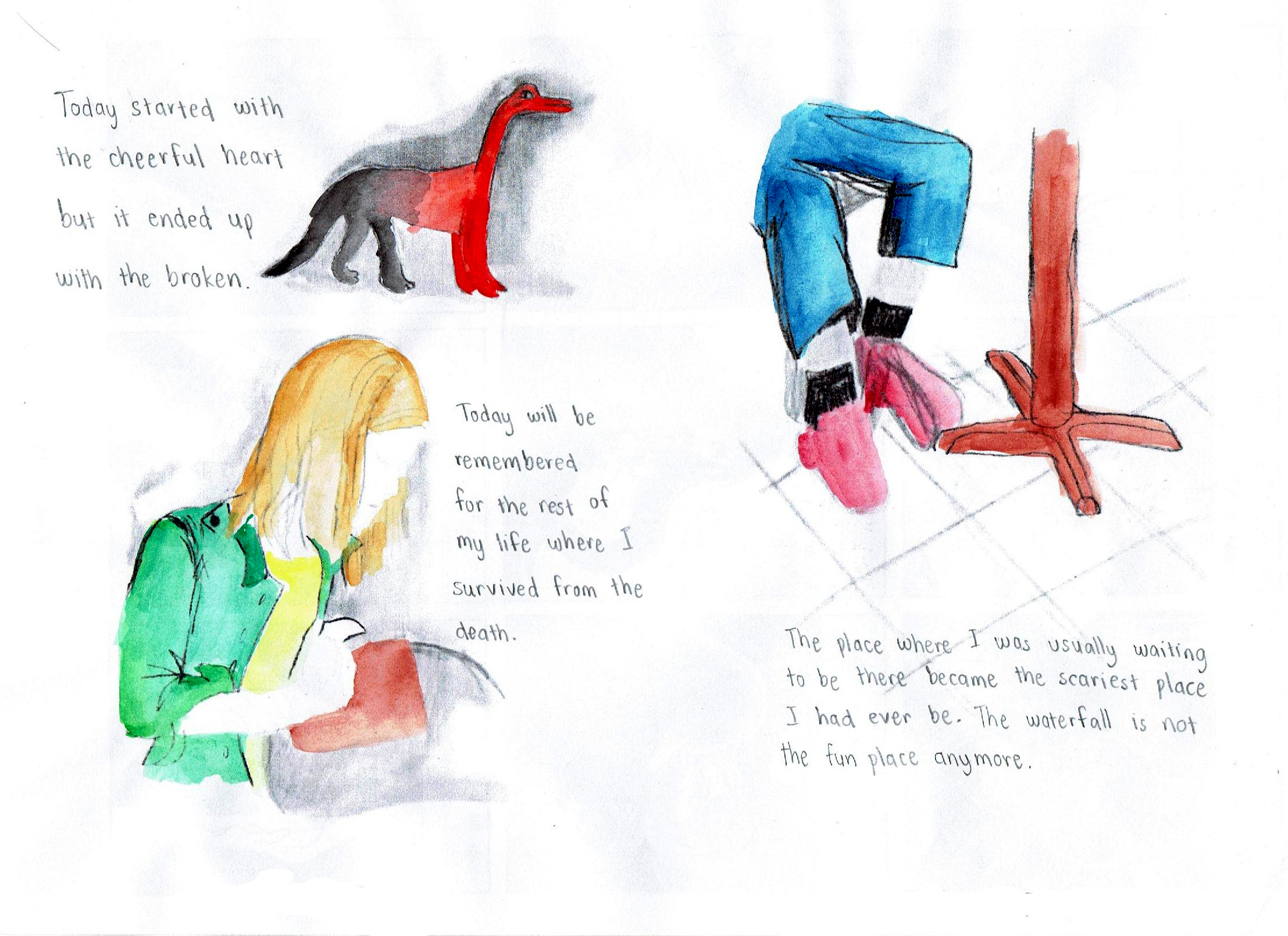
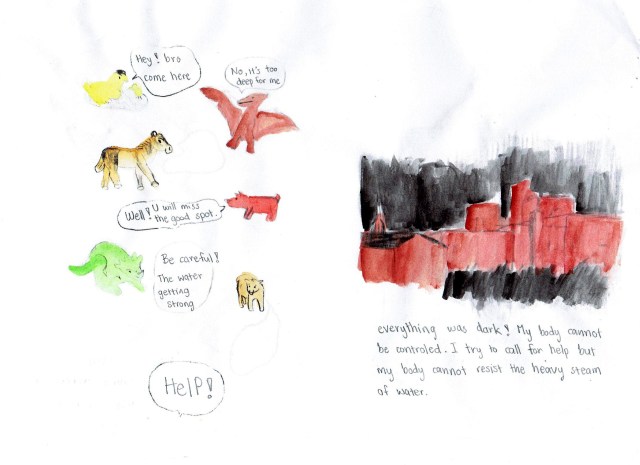


The objective of the “text substitution” and “different tone” assignments is to lead the students -without prior art training- to get a sense of the graphic potential of their stories as a comics narrative, to consider the use of visual metaphors, allegories and motifs, as well as the narrative use of color and ‘voices’, and to trigger new and unexpected (and maybe forgotten) elements to feed their narrative through additional layers.
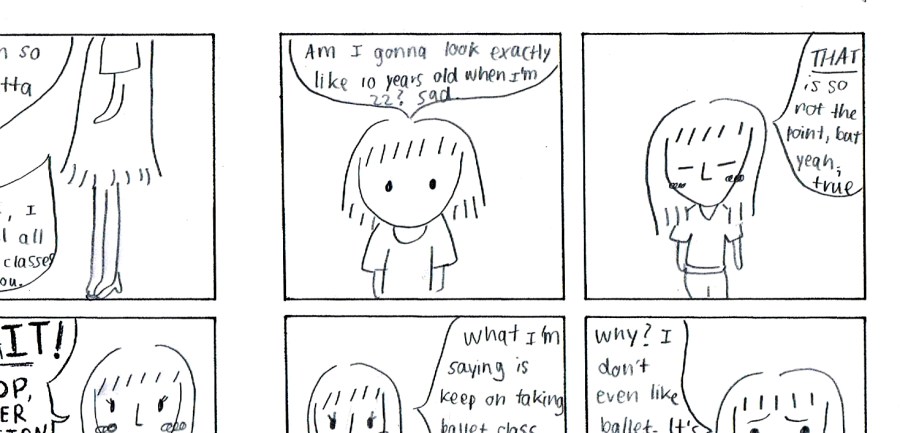
WEEK 05 ASSIGNMENT: WAIT! STOP, YOUNGER VERSION OF ME!
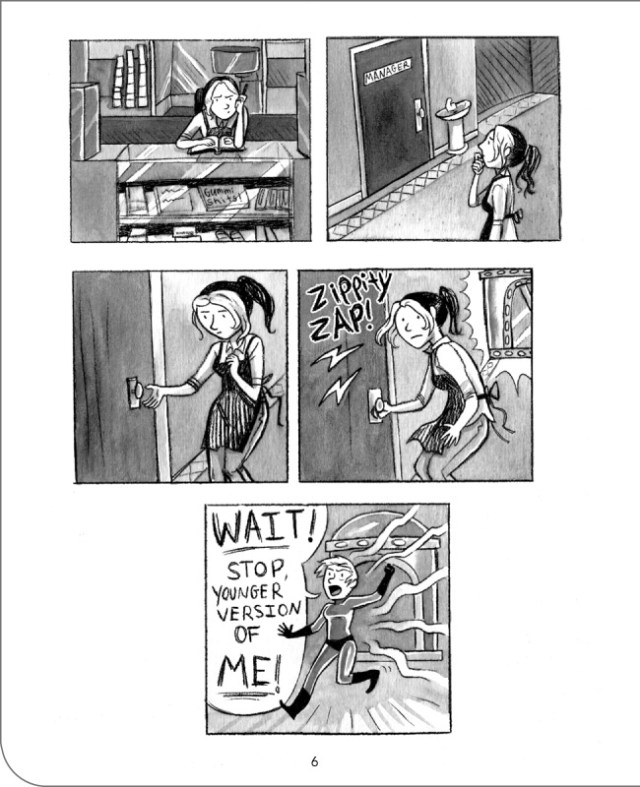
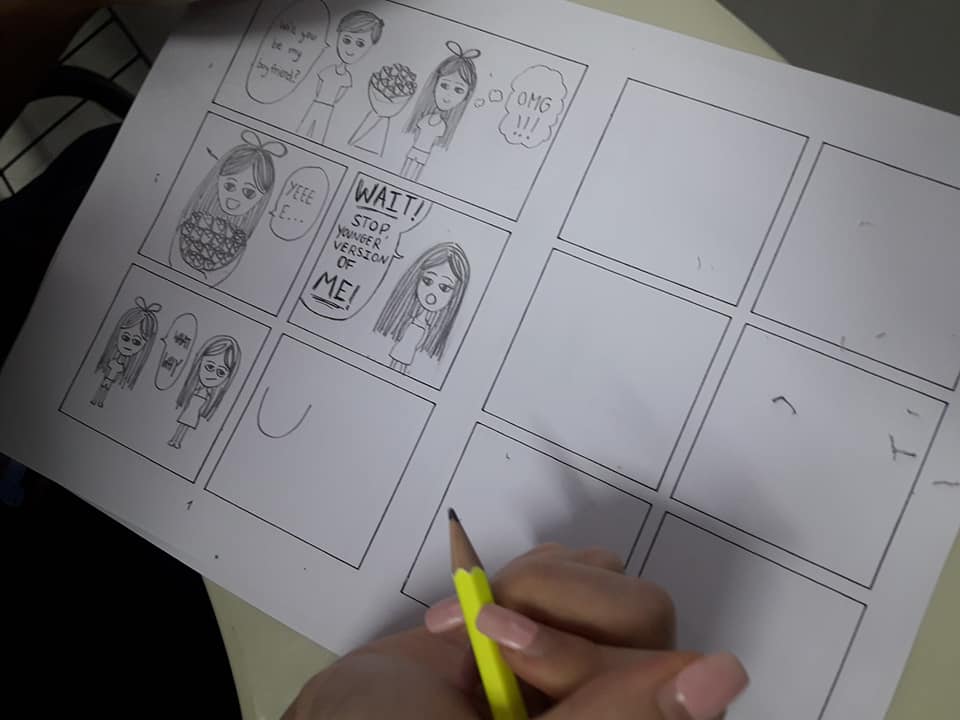
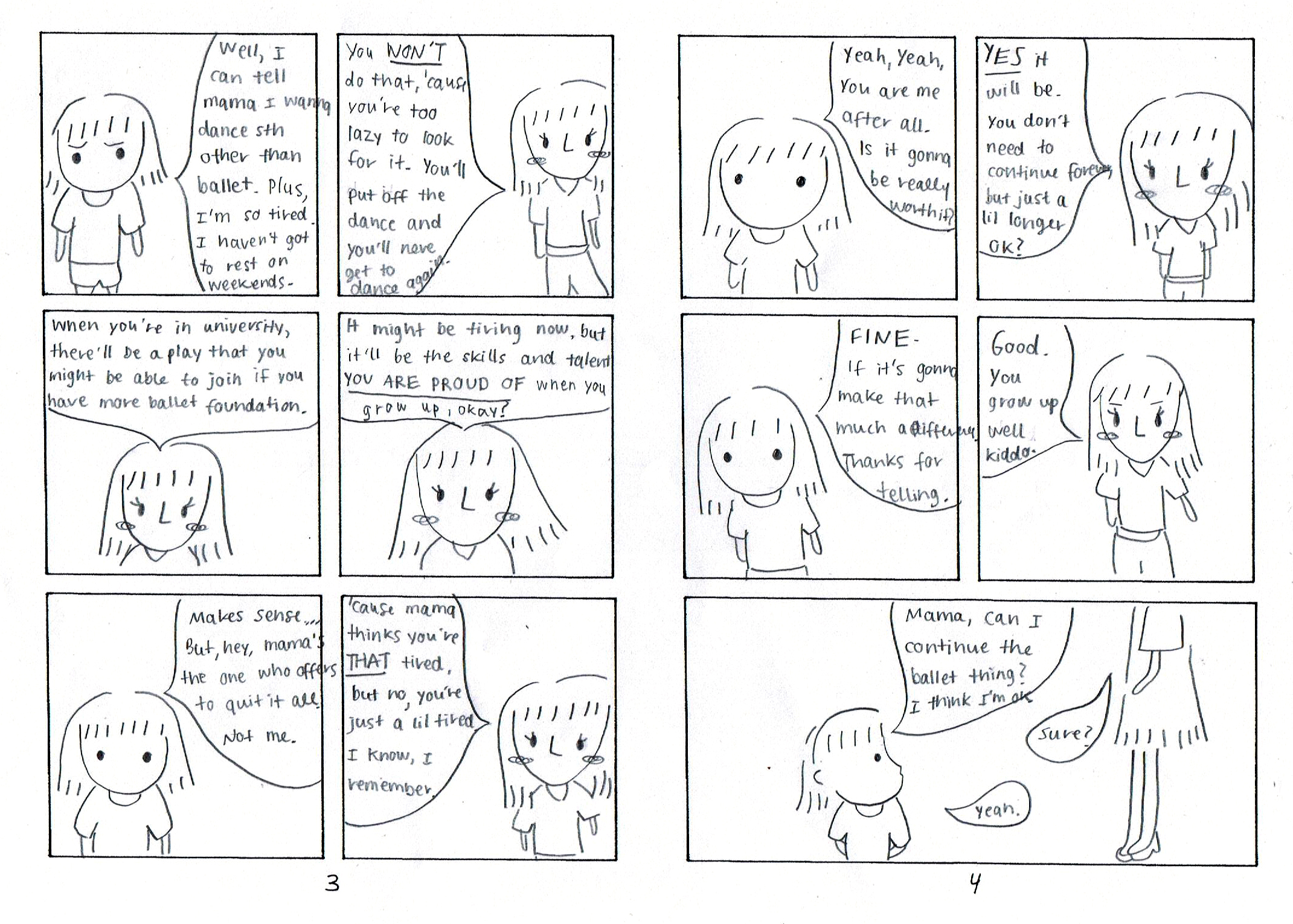
Now that students have been drawing in their daily graphic diary for a few weeks, and that they have played with their written texts in relation to pictures through various substitutions, they were asked to draw their first comics (in the classroom). The assignment is to draw a comics over 4 pages with imposed regular grids, and with an imposed speech balloon (containing the sentence: “Wait! Stop, younger version of me!”) in the third panel of the first page. The balloon was borrowed from American cartoonist Jess Fink’ sci-fi graphic memoir We Can Fix It! (Top Shelf, 2013) where the author goes back in time with a time machine to warn her younger self of -and thus try to avoid- mistakes she made in her past. Students were asked to write such a meeting with their younger selves.





“Like how does something happen, and… how does it reverberate through time? And that act of memory is important, and comics are great for memory. Like even when you have a short comic, like a three-panel comic, you’ve got a past, a present and a future as soon as you look at those three boxes. And that allows you to reflect and compare times.”
Art Spiegelman, in: Conan, N. (2011). MetaMaus: The Story Behind Spiegelman’s Classic; radio interview, Oct 5.
WEEK 05 LECTURE: COMICS, TIME AND SPACE
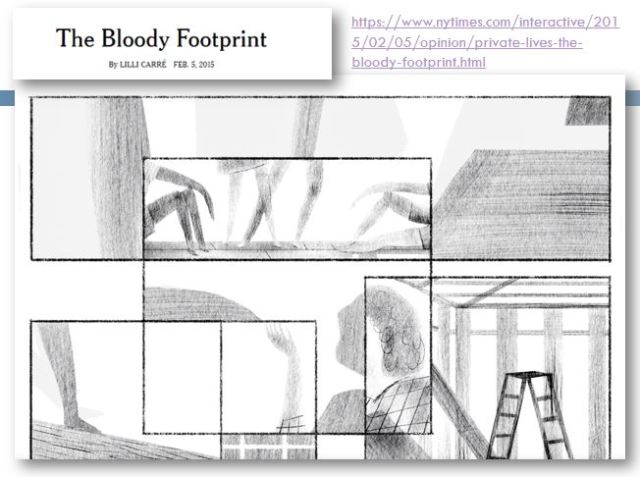
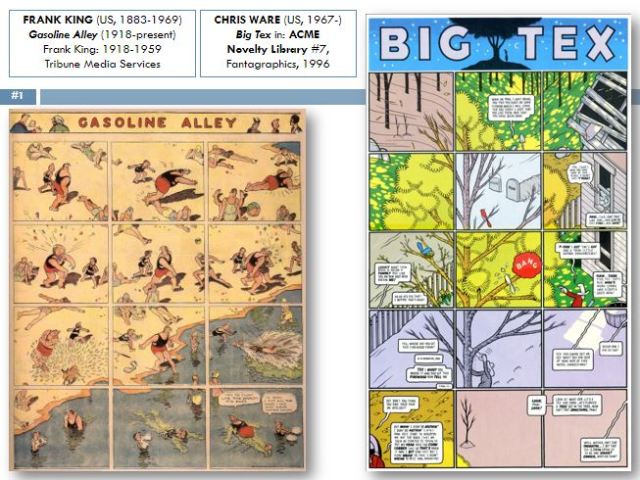
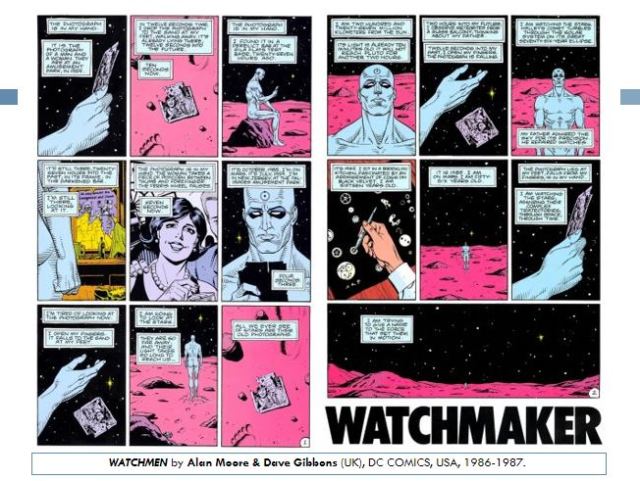
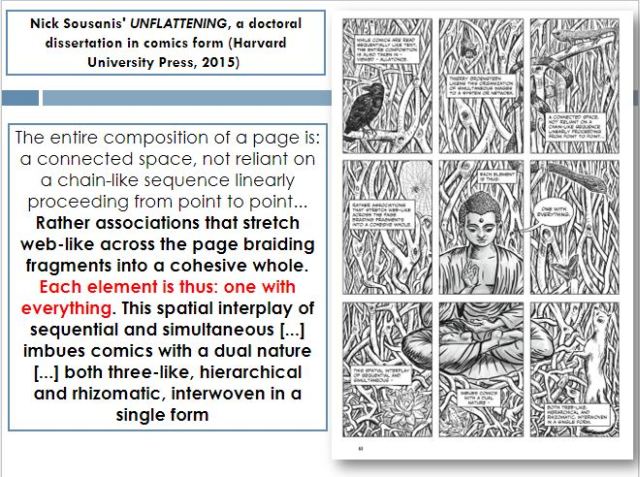
We explored the interplay of Time, Space and Memory in comics narratives by Richard McGuire, Lilli Carré, Alan Moore & Dave Gibbons & Rick Veitch, Frank Miller, Kevin Huizenga, Chris Ware, Art Spiegelman, Matt Madden, Nick Sousanis and Kiriko Nananan.


WEEK 05 – SPECIAL GUEST: FREDDY NADOLNY POUSTOCHKINE
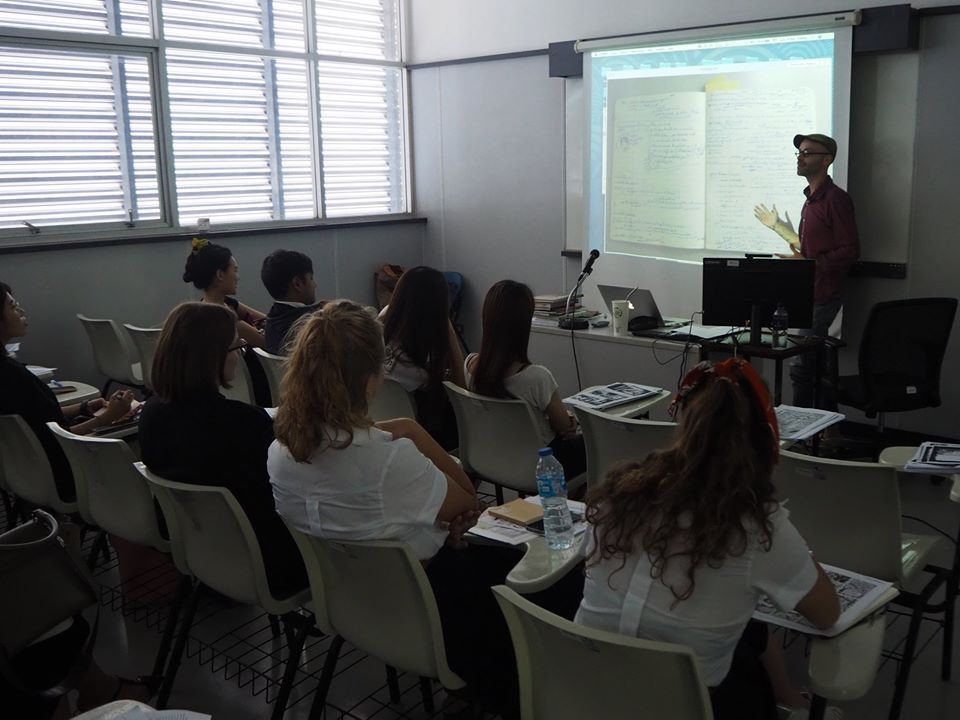
On February 03, we were honoured to welcome French cartoonist Freddy Nadolny Poustochkine as a guest. We talked time, space, the fabric/material of memory and comics art in his creative process from his autobiographical comics La chair des pommes (ego comme x) to his Cambodia-set La colline empoisonnée (Futuropolis) and his ongoing project; and of the seminal importance of (his) sketchbooks. More pictures on this dedicated post.
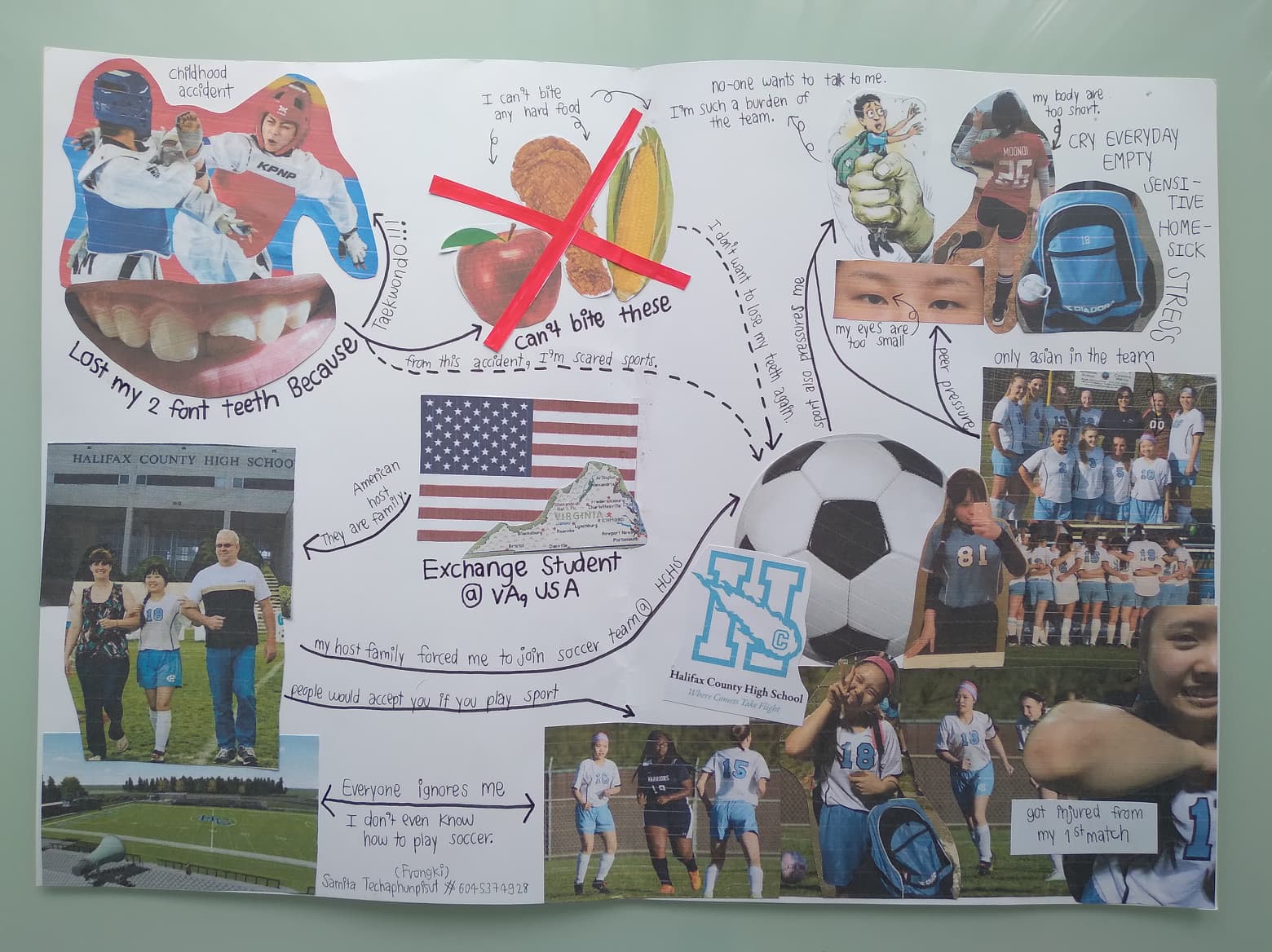
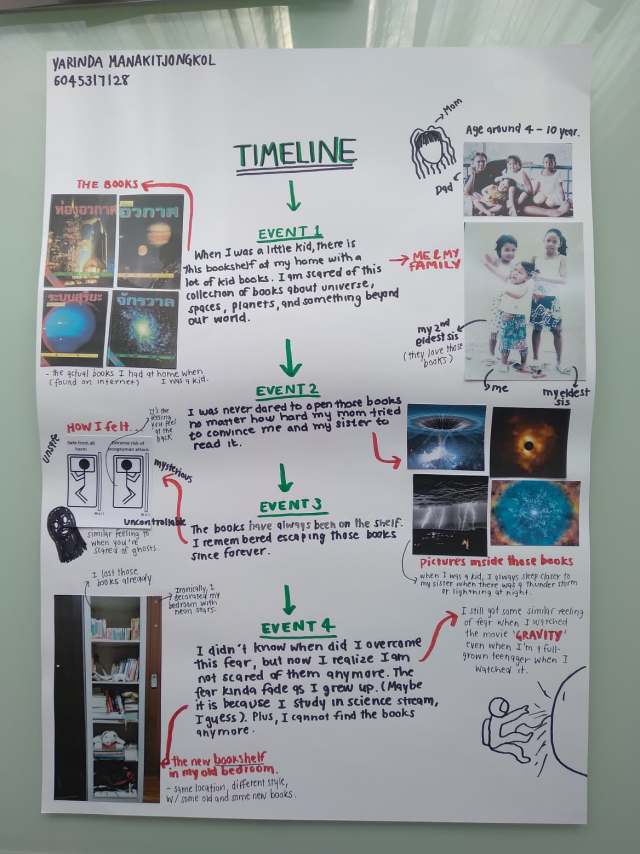
WEEK 06 ASSIGNMENT: THE MEMORY TREE
Based on works by Chris Ware and ideas borrowed from the previous lecture and Freddy’s talk, students were asked to map their memory on an A3 page, adding photographs of themselves, of related places and characters, and of artworks (posters, paintings, quotes…) echoing the emotions they experienced during the ‘life-changing’ event they will tell in comics form as their final project.



WEEK 07: ORAL PRESENTATIONS ON NON-FICTION COMICS
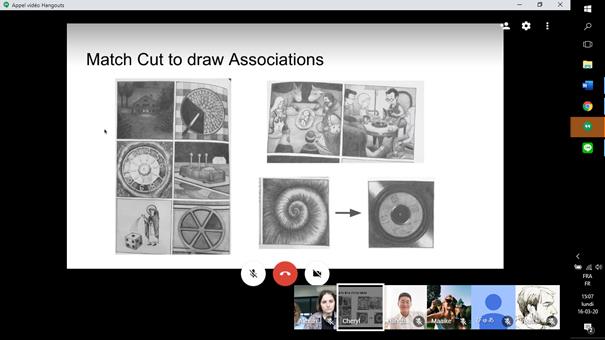
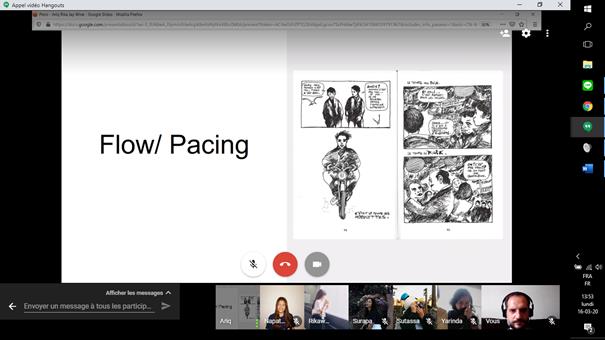
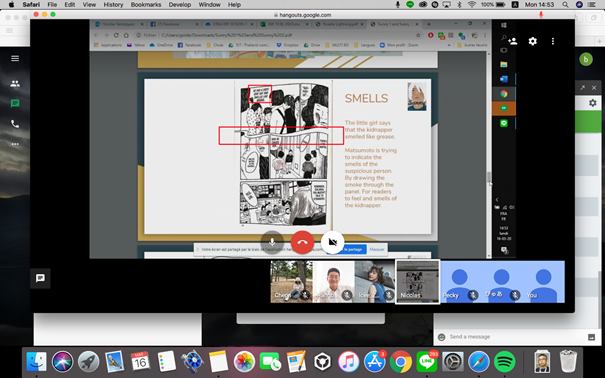
Students were asked to form 10 groups and to read and discuss 10 challenging non-fiction graphic novels [and zines] by introducing their classmates to remarkable features (technique, narrative voice, topic, layouts..). The oral presentations were held online, due the Covid outbreak. The books I proposed them to tackle were: Les Têtards (and zines) by Pascal Matthey and Badaboom Twist (and other zines) by David Libens, Chicken with Plums by Marjane Satrapi, Sunny by Taiyo Matsumoto, Becoming Unbecoming by Una, Piero by Edmond Baudoin, Daddy’s Girl by Debbie Drechler, Pyongyang: A Journey in North Korea by Guy Delisle, Don’t Go Where I Can’t Follow and The End by Anders Nilsen, and Rosalie Lightning by Tom Hart. Diversity of topics, techniques, origins informed my selection to provide students with a large array of references and approaches.


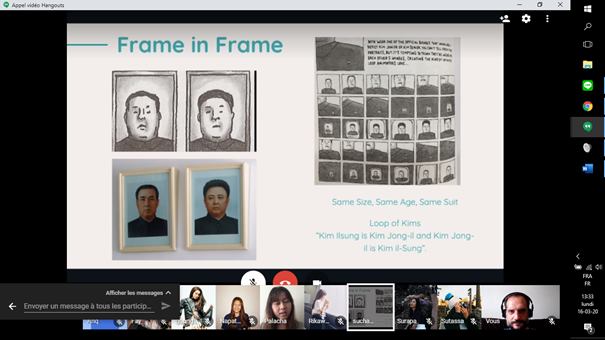
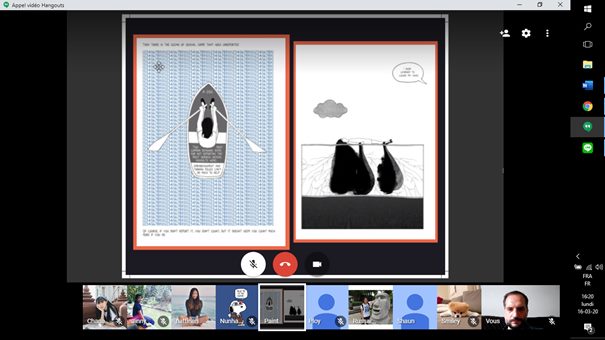
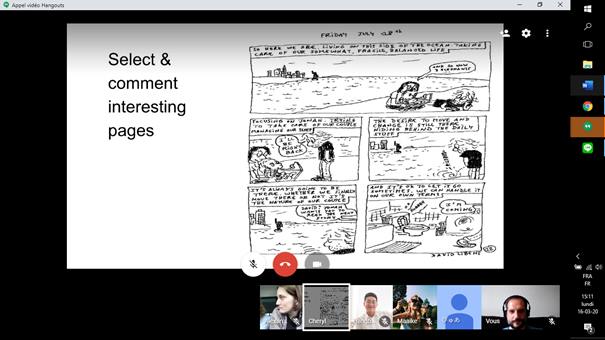
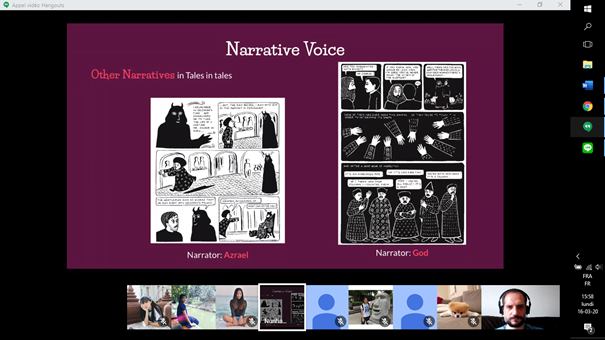


WEEK 08 [MIDTERM] LECTURE: COMICS ESSAY COMPOSITION
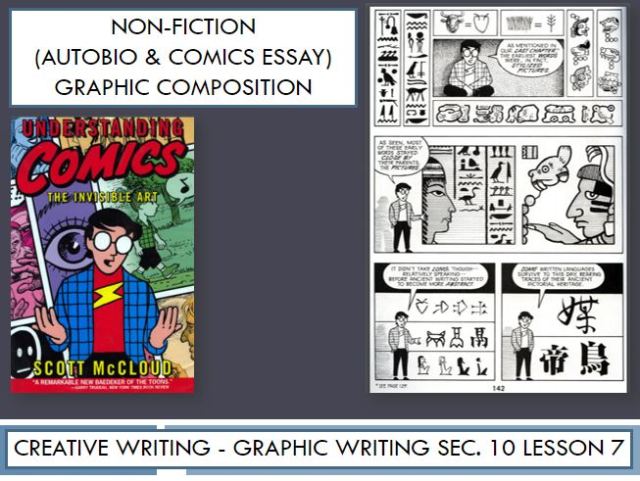
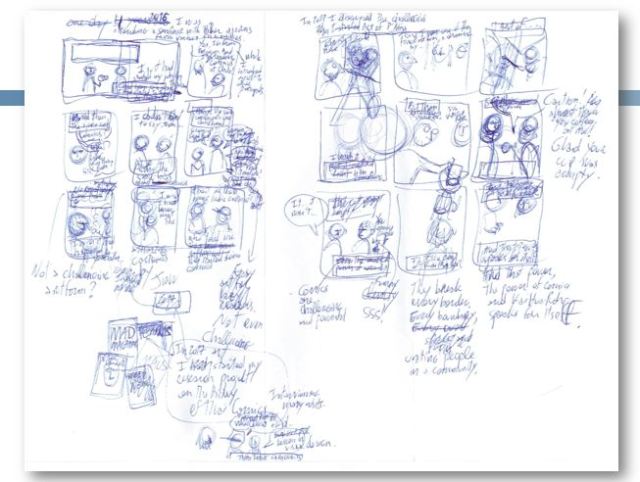
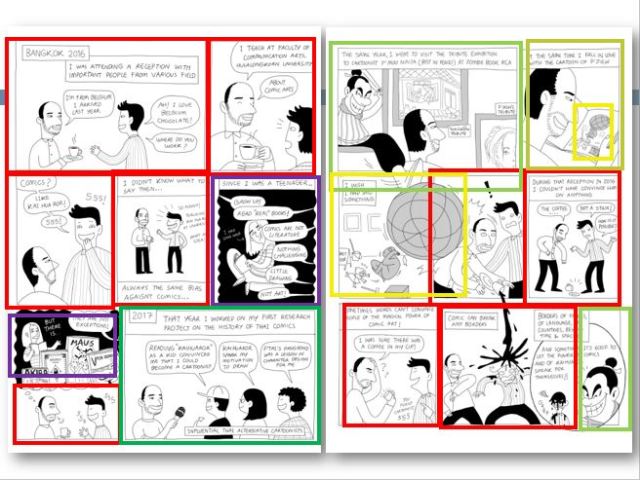
The composition of comics essays in small groups was originally considered as an assignment during the semester. Sadly, due the Covid outbreak, group projects were canceled at midterm. As we weren’t yet aware of that fact, one early lecture was dedicated on [non-fiction] comics essay composition; I explained the process of creating a comics essay based on a two-pager I wrote for a special issue of KaiHuaRoh magazine with art by Ployjaploen “Bamie” Paopanlerd. I went through the various stages of composition, from the first idea [informed by numeorus influences] to thumbnailing and other schaffoldings leading to a clear non-linear narrative (with much help from the artist).



WEEK 08 [MIDTERM]: COMMENTS AND SUGGESTIONS
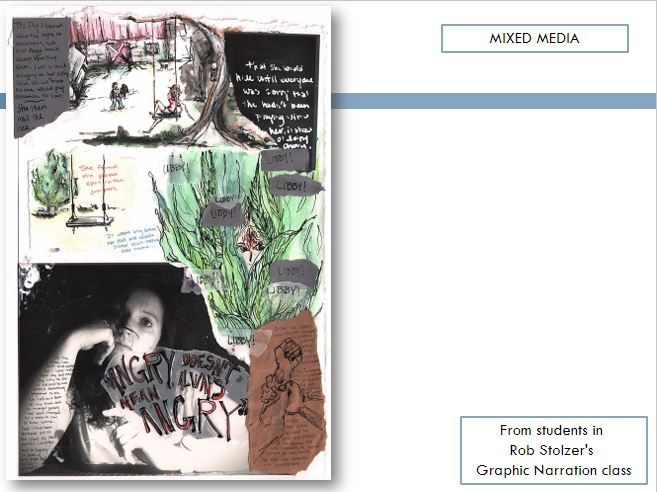
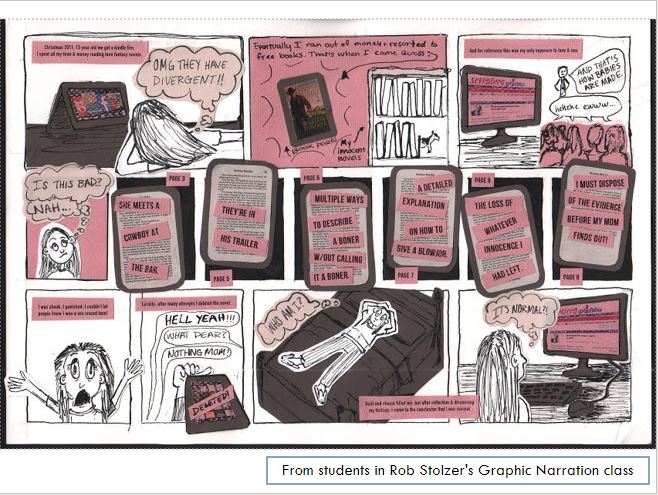
As for examples, a useful reference was Rob Stolzer‘s students work from his Graphic Narration class.

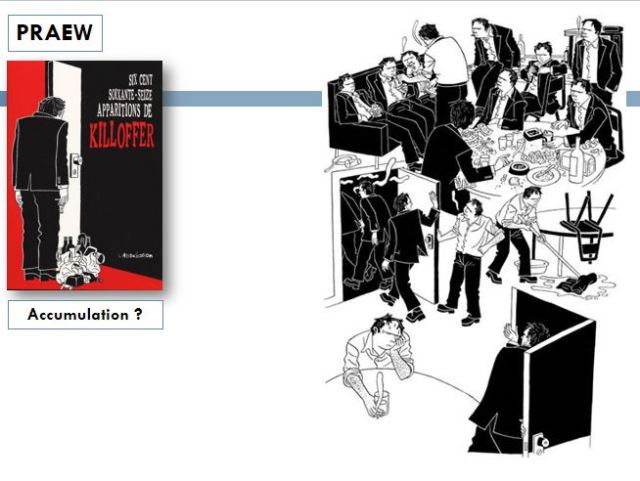
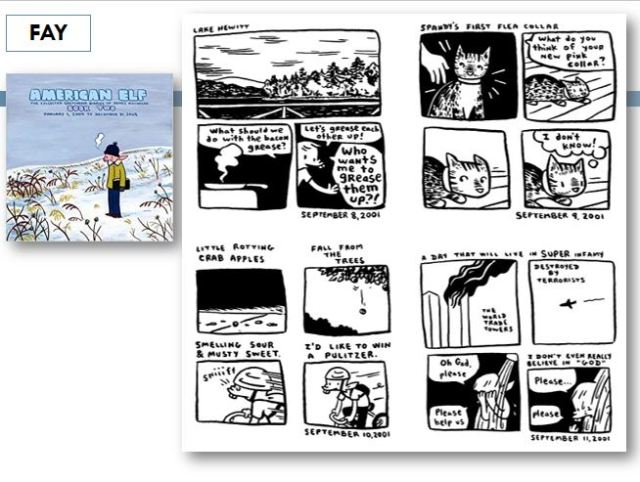
After reading the students ‘memory trees’, I suggested to each student various approaches, comics references or motifs/connections worth exploring before adapting his/her selected memory into a comics narrative.




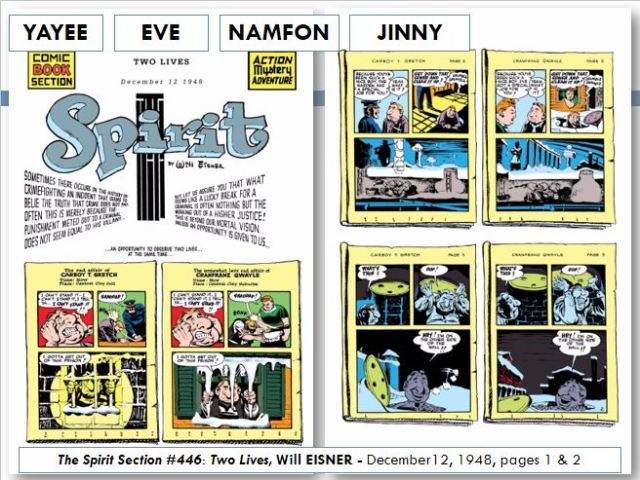
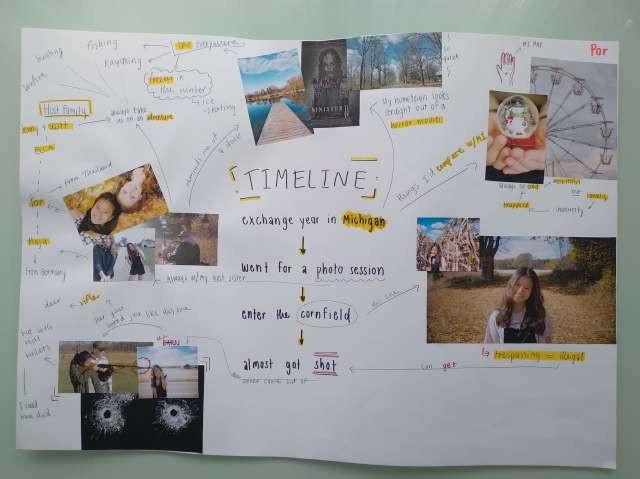


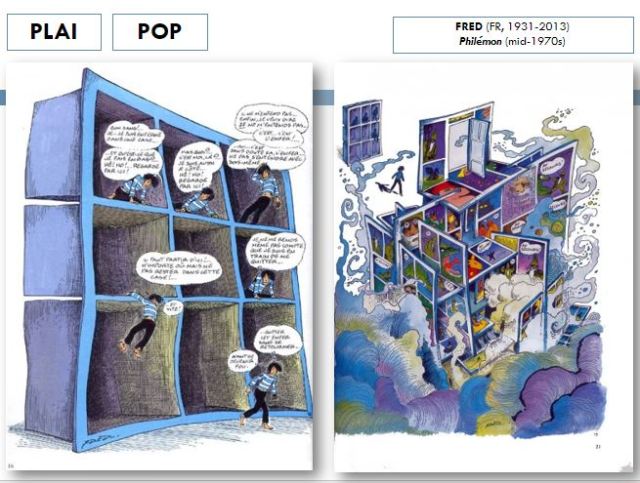
WEEKS 09 TO 16: INDIVIDUAL [ONLINE] CONSULTING AND FINAL RESULTS
The autobiographic comics composed by the students will be published in an upcoming post! [Their final and individual comics projects weren’t limited in size, length or technique; each student had to pick the best fitted format to convey his/her autobiographic narrative]. More soon!


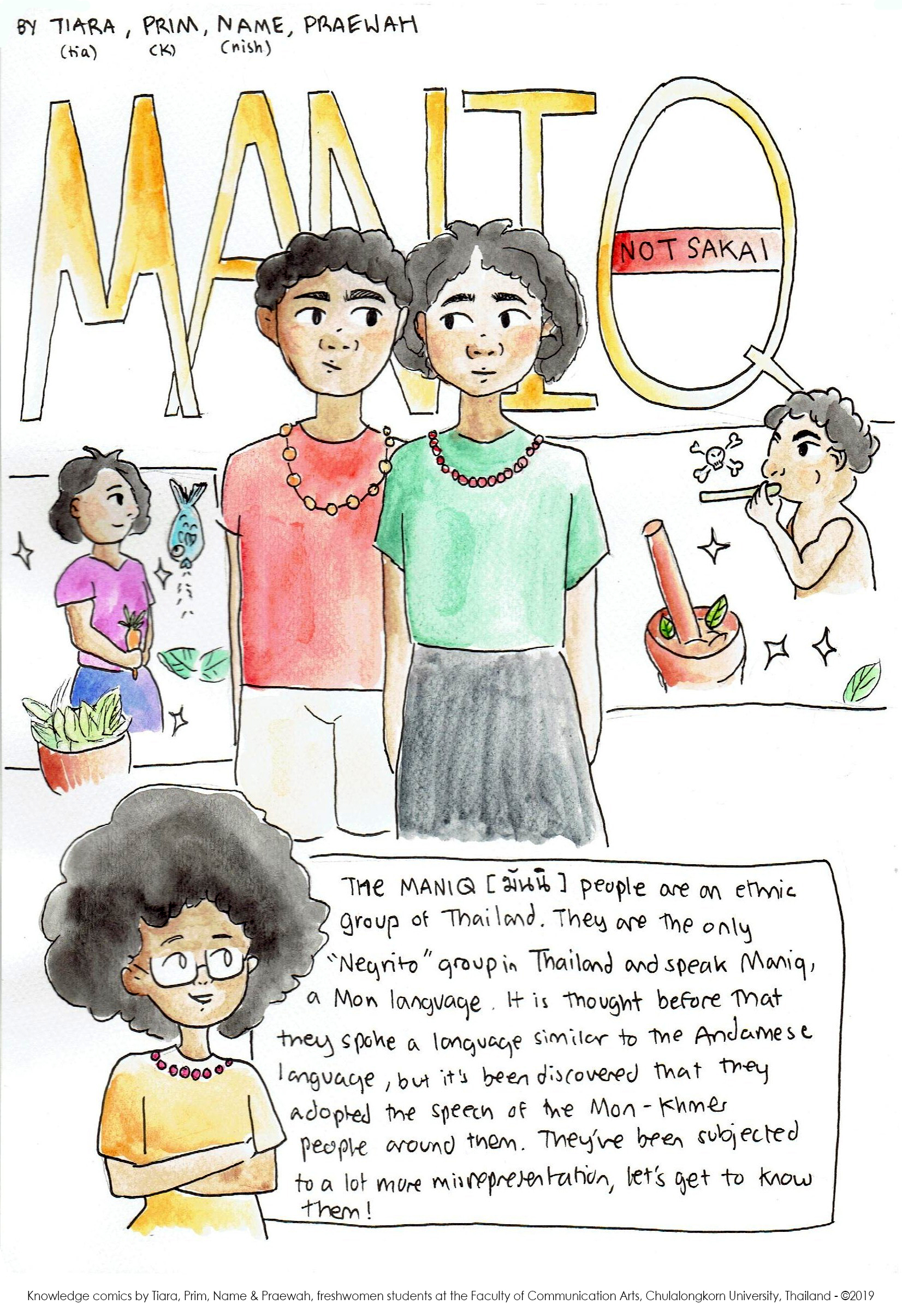
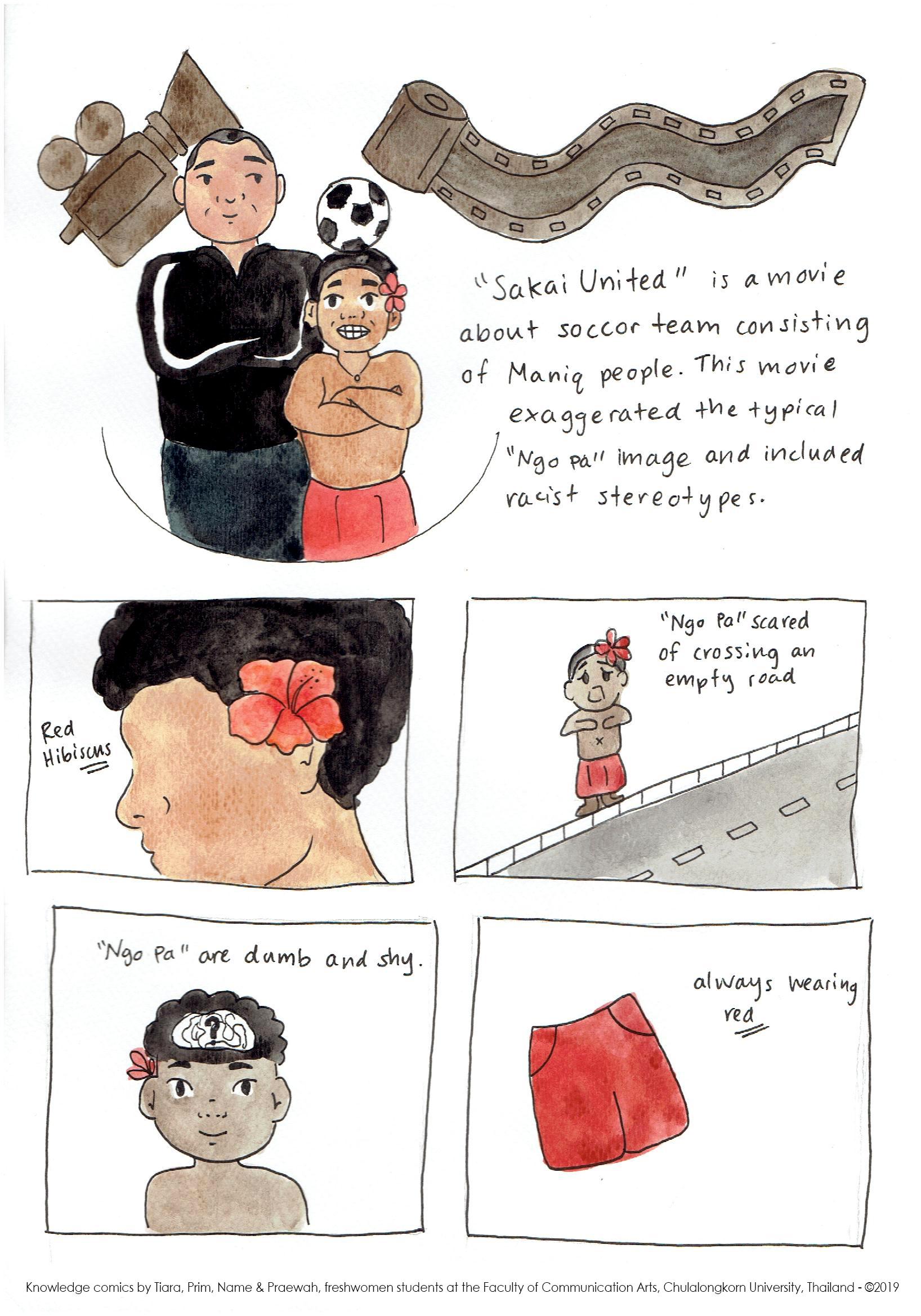
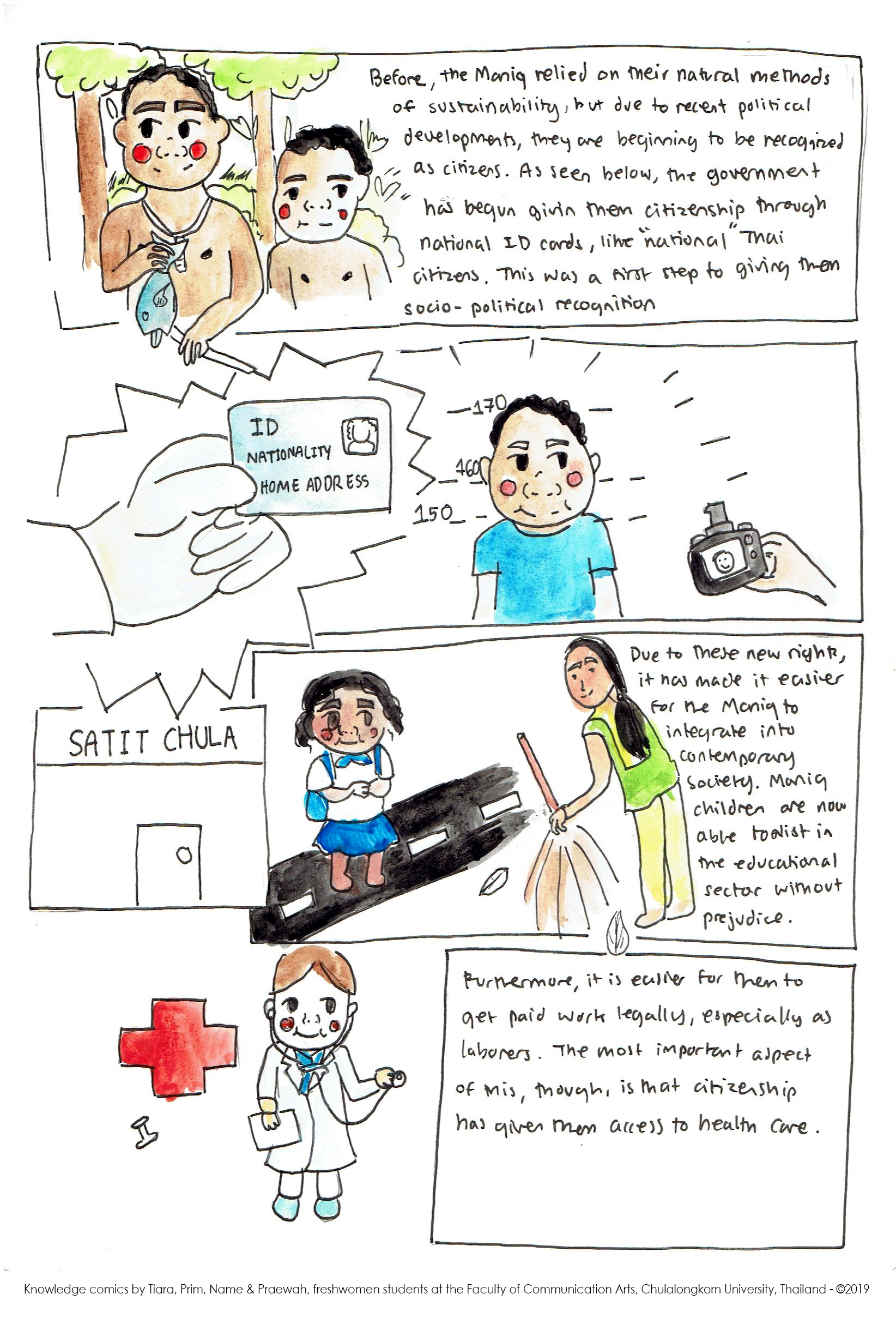
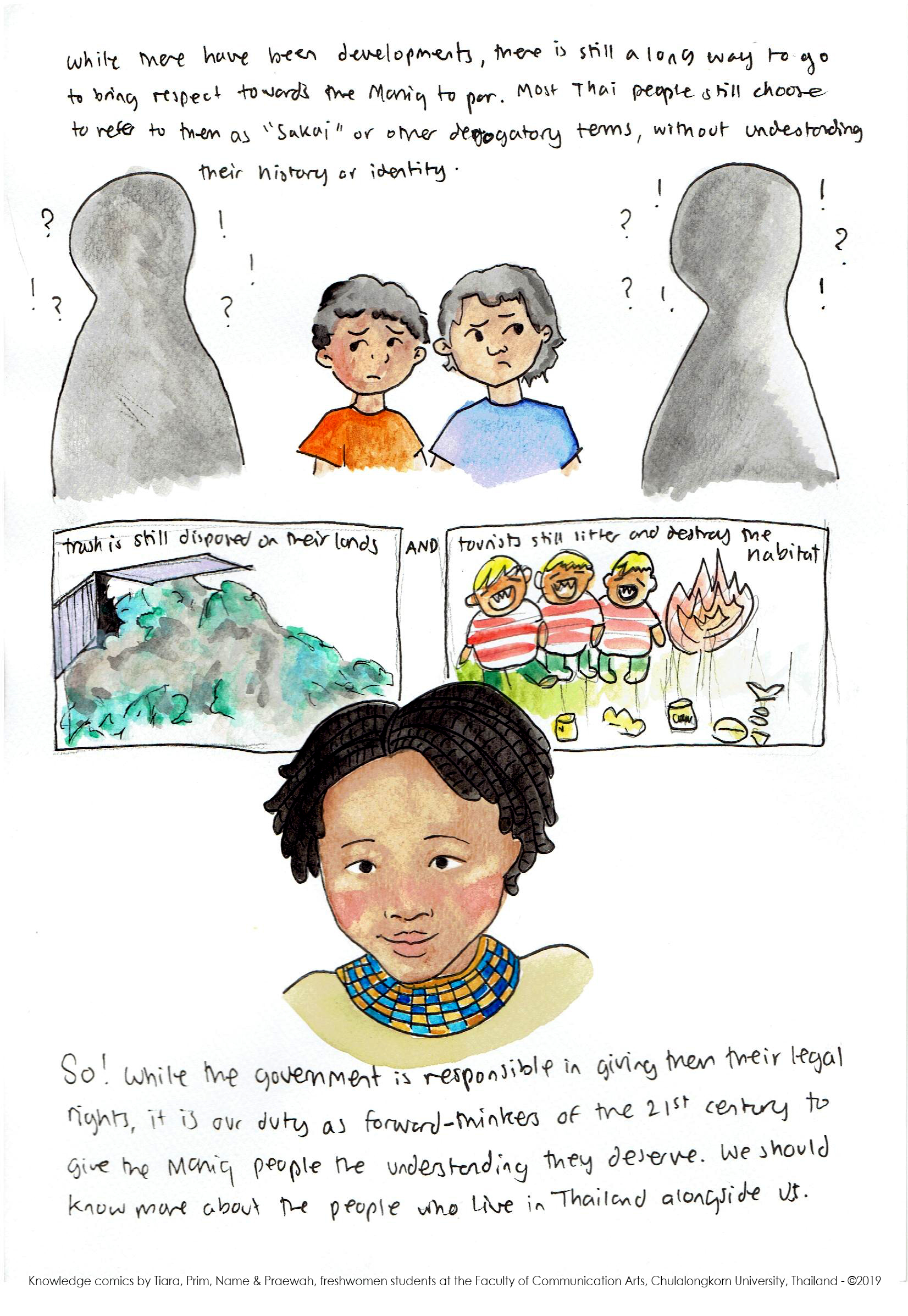
As part of the “Thai Culture for Communication: Graphic Narratives” course, fresh.wo.men at the International Program of the Faculty of Communications Arts (Chulalongkorn University, Thailand) were asked to compose a knowledge comics on the usually-derogatory representation of the indigenous Maniq ethnic group in Thai culture. Known as ‘Ngo Paa’ in Thai (and sometimes referred to as Negritos or Sakai), the MAniq people live in the forests of Southern Thailand and were essentiliazed as a dark-skinned traditional folktale figure. The following graphic narrative -composed by students Tiara, Prim, Name and Praewah- offers an interesting insight on this Thai population, and on the cultural biases and unfair treatments they suffered, as well as a message of understanding and hope. Because #BlackLivesMatter in Thailand too.

“During the period that Kanang lived with King Chulalongkorn, he was generally considered as the King’s adopted son (Duangjan 1988). At the court, Kanang was taught how to dance and play the part of the Negrito in the Sangthong play, and he became the regular actor of this role in performances before the king’s guests. The sensational moment in the drama is when Prince Sangthong takes off his ‘ugly’ Negrito mask to reveal his beautiful noble self. The audience was shocked to see that under the mask was a real live Ngo Paa.” Nathan Porath [“Developing indigenous communities into Sakai in South Thailand and Riau (Indonesia)”, 2003]



A pandemic premonition:
“They were right on the radio. Don’t panic: ‘The authorities will impose all measures necessary’.” (February 1982)
Les Idées Noires [Dark Thoughts] #60, Feb. 1982, by Belgian master & visionary cartoonist André Franquin [1924-1997]. Anthology available from Fantagraphics Books under the title Die Laughing“, or at my office when Faculty reopens…
English translation ©2018 Fantagraphics Books.
Comics ©2018 Editions Audie/Franquin Estate


One of the main creative assignments of the “Imaginative Communication” course [a Comparative Media course in which we explore the theme “How to Tell the Unutterable” by analyzing and comparing the depiction of Psychic Trauma in various visual media, from comics to animated & live-action movies, tv series or choreographies] is for the students to compose and produce a group performance based on refugee narratives. After visualizing refugees’ journeys graphically [see previous assignment “Refugee’s Grid and Gestures“], watching some related footages [Charlie Chaplin’s 1916 The Immigrant, Wilfredo Rivera’s immigration choreography The Golden Bird Cage, or PositiveNegatives’ animated zoom-comics North Star Fading], reading/watching comics and webcomics [Shaun Tan’s The Arrival, Marc Ellison and Didier Kassai’s immersive graphic novel House Without Windows, or our former students’ refugee comics dice], discovering refugee installations [architect Mohamad Hafez’s multi-media installation Unpacked] and analyzing and comparing Marjane Satrapi’s graphic novel and animated feature Persepolis, students were asked to compose a live pantomime performance of 3′ to 5′ [depending on the number of team members]. The constraint was that their refugee characters had to remain silent, voiceless, muted by the trauma, unable to speak the language of their ‘host’ country, or fearing to speak their own language and have their illegal/foreign status revealed.

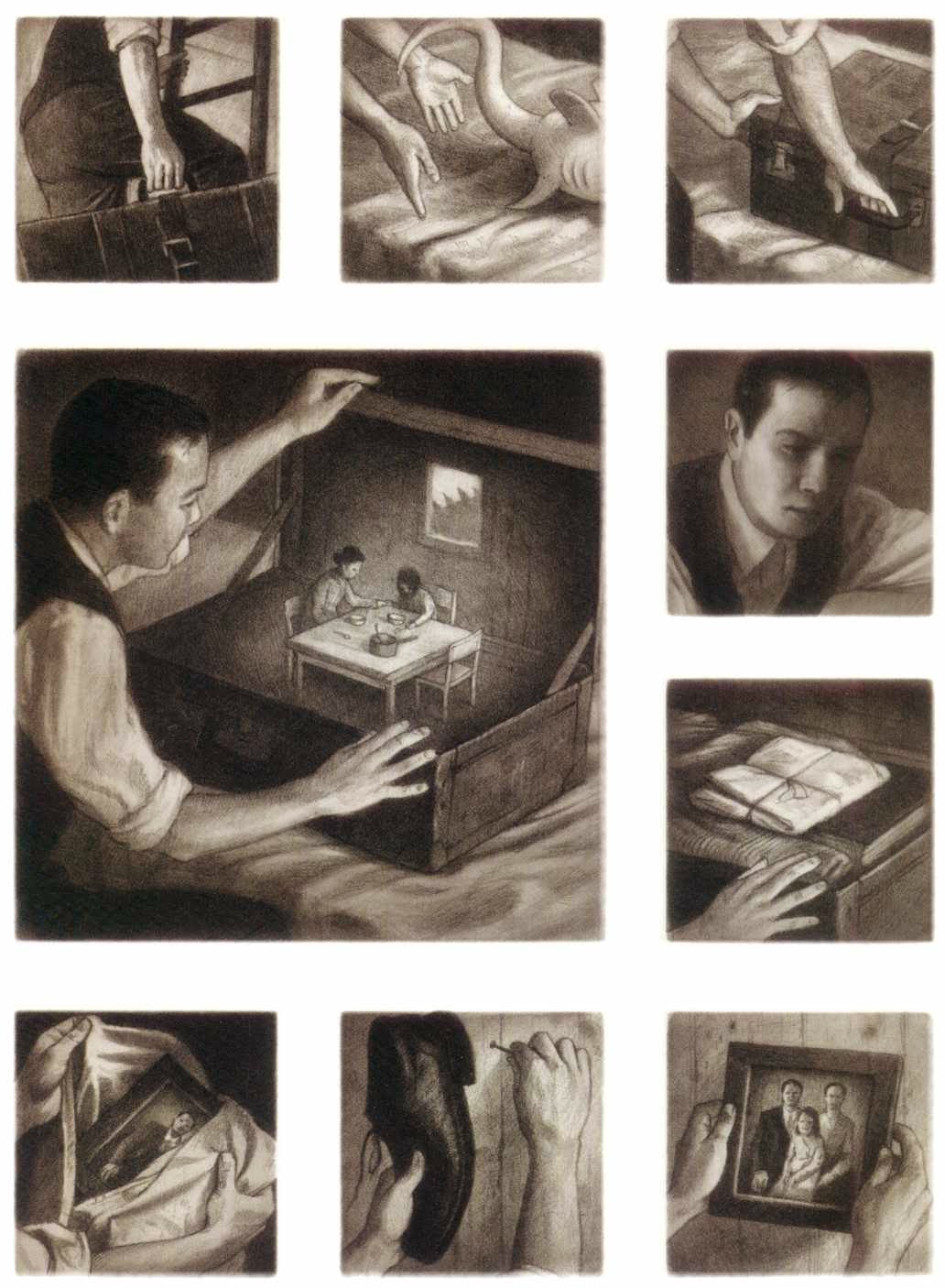
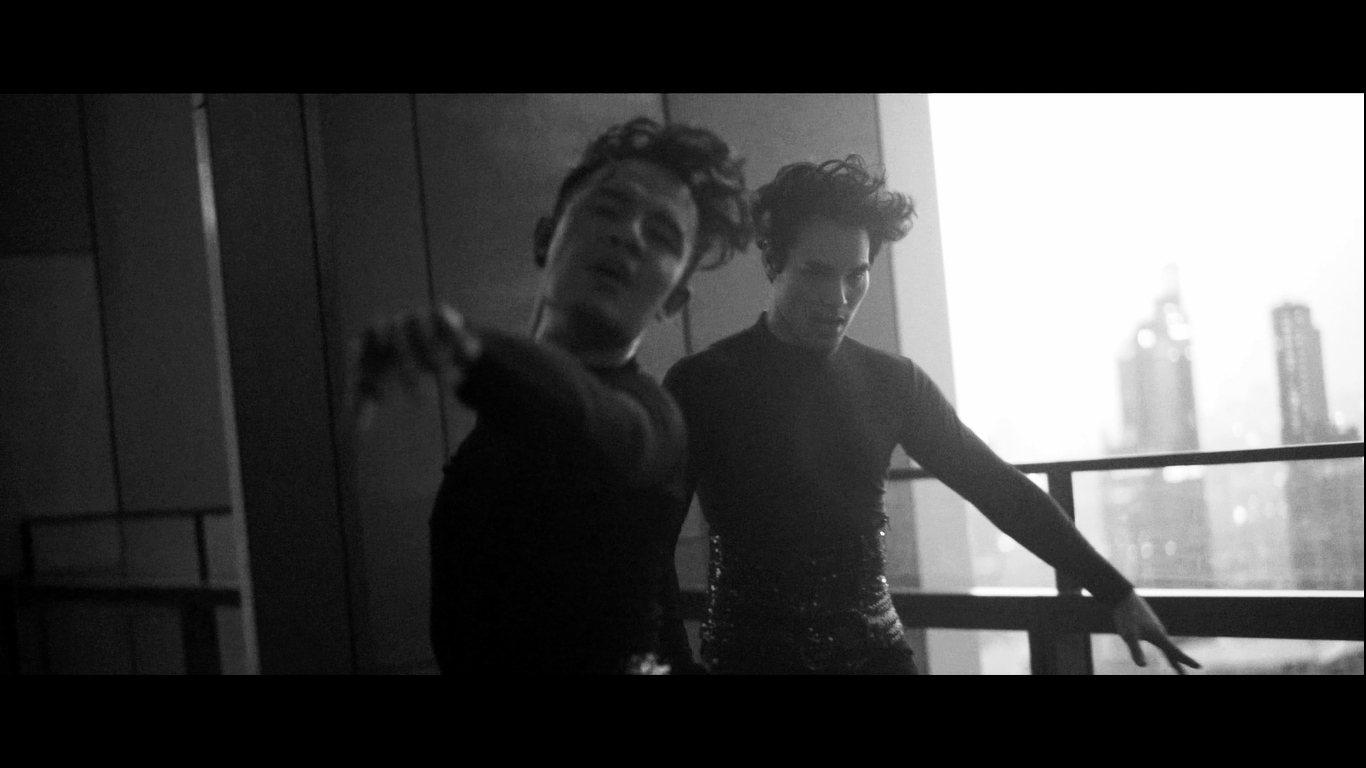
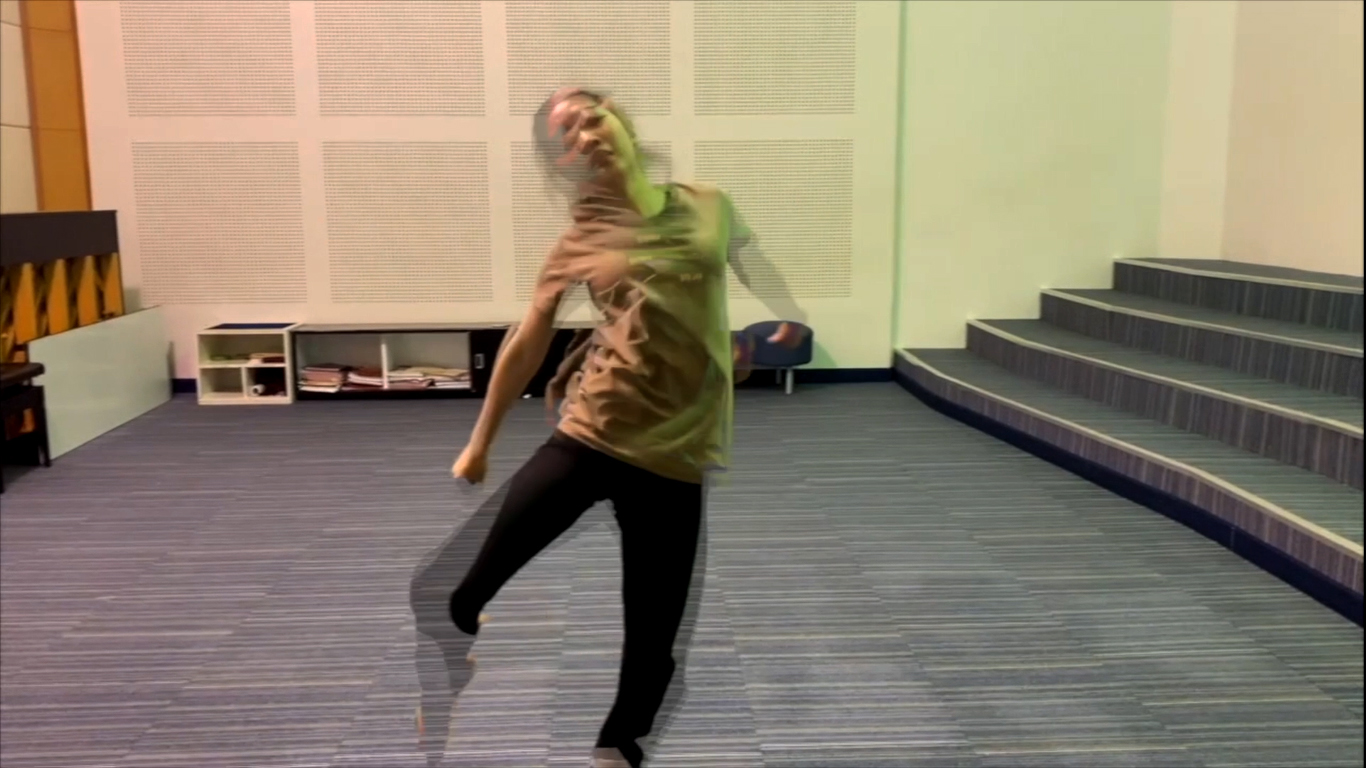
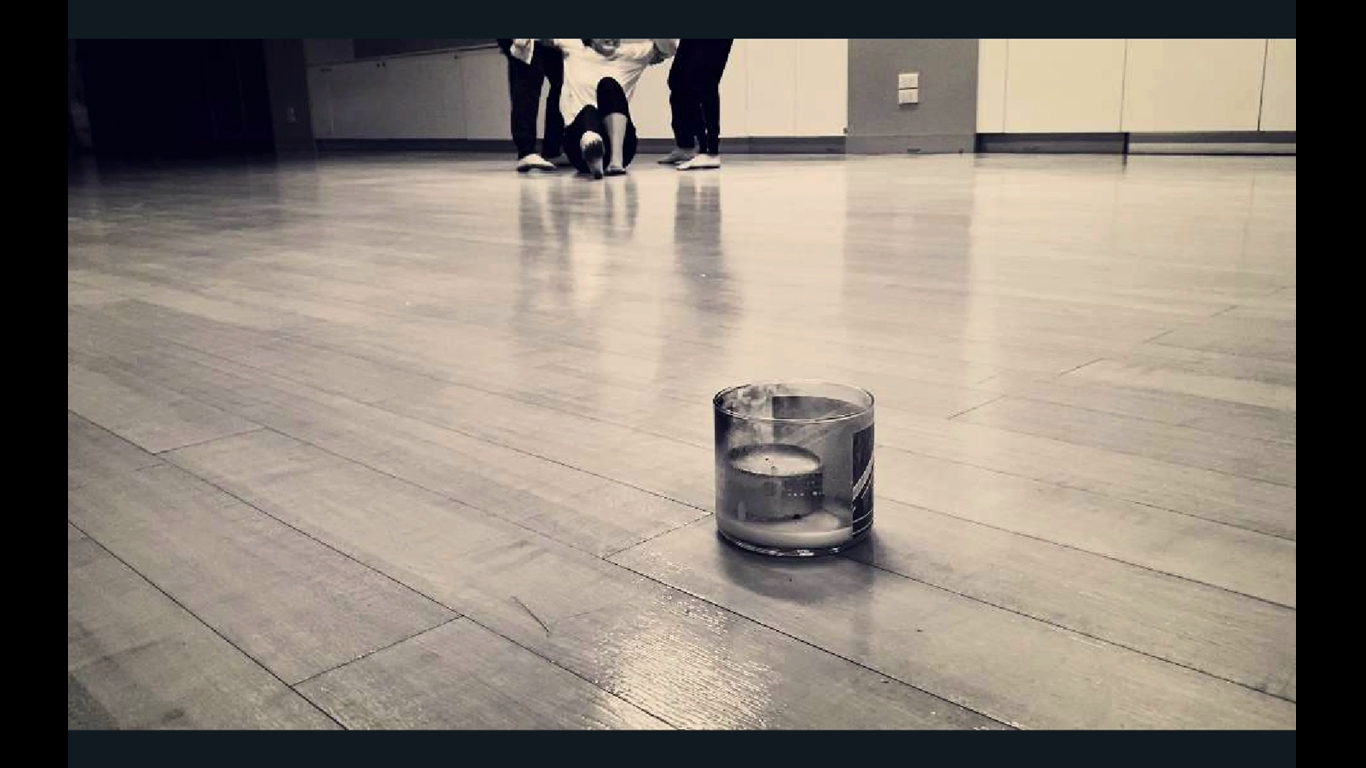
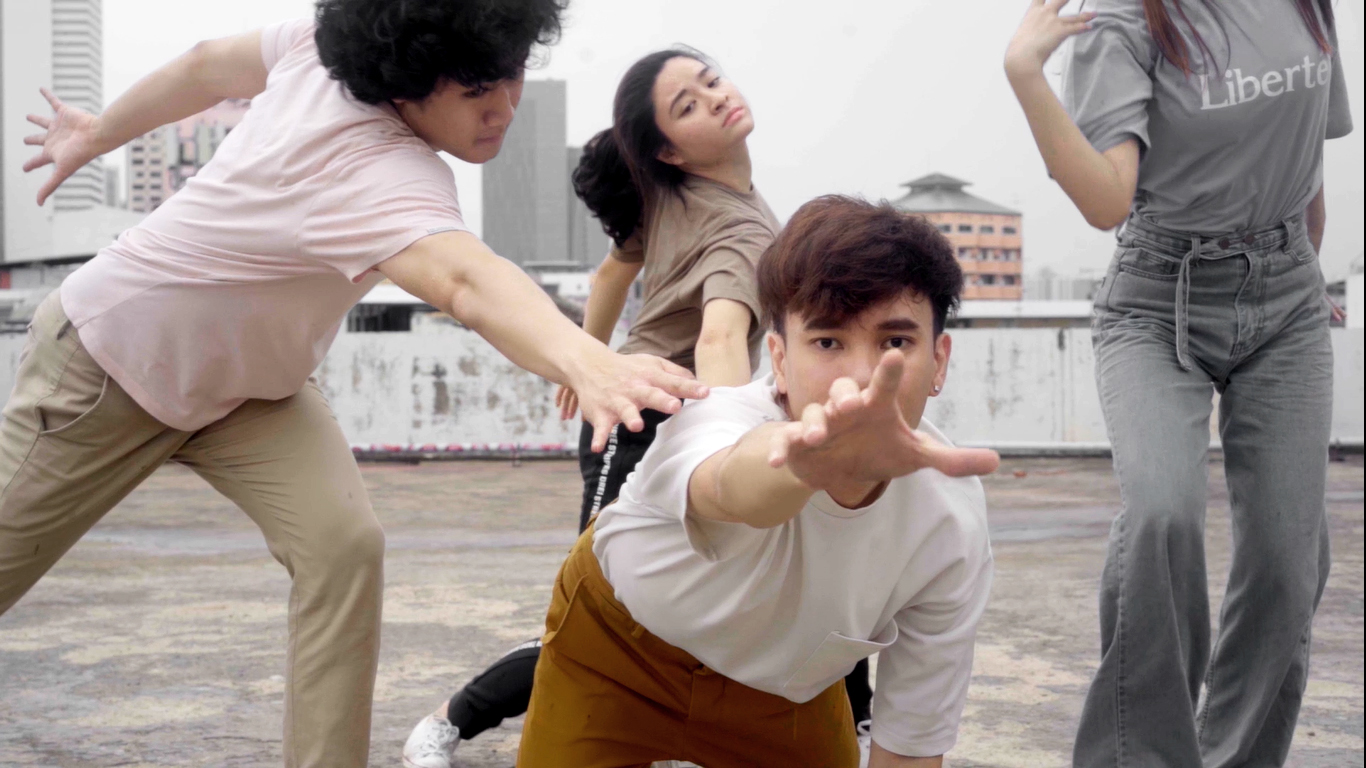
Due to the COVID-19 crisis and while productions were well underway, performances couldn’t be presented live anymore for obvious safety reasons. Early March, students were asked to film and edit their performances as video footages so that their works could be screened online. On Wednesday March 26 in a virtual classroom, our 40 students introduced and displayed their video performances which were evaluated and commented by songwriter, performer and former [Performing Arts] CommArts student, Namtarn Jinwara (KhopKhunKhrap!) and yours truly.
I am really proud of these works, sometimes created under unexpected COVID-related logistic constraints. The brave team of exchange students -while scattered throughout the world to reach safely their native countries- managed to create an imaginative piece on their way home or while held in quarantine facilities… Below, you can discover film stills from the students’ projects, but also some of the actual performance videos. Here are the numerous choreographies, but also some creative short drama films, which sadly -and timely- echo the ongoing and future displacements of refugees caused by Climate Change, COVID-19 and other crises. Ajarn Nicolas Verstappen
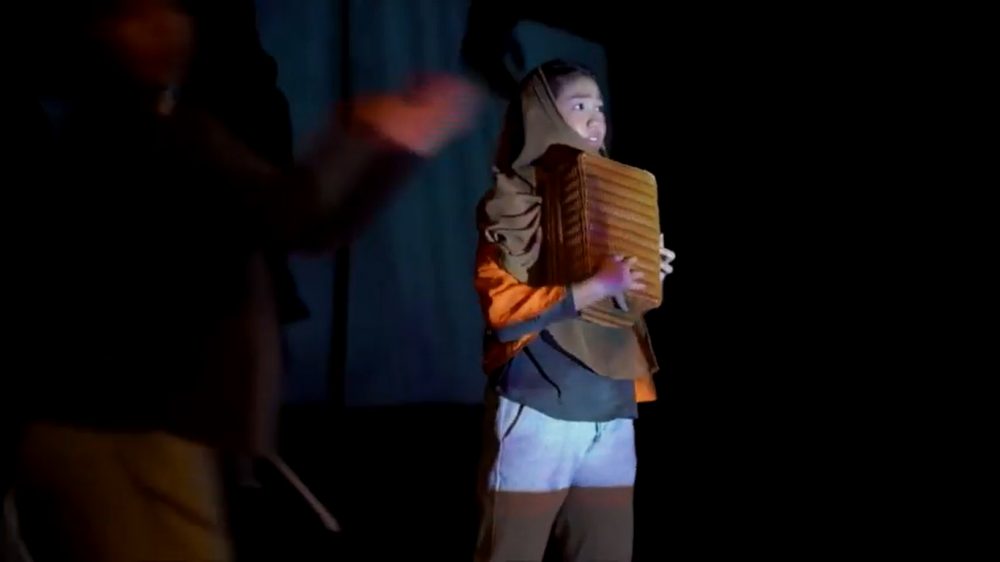




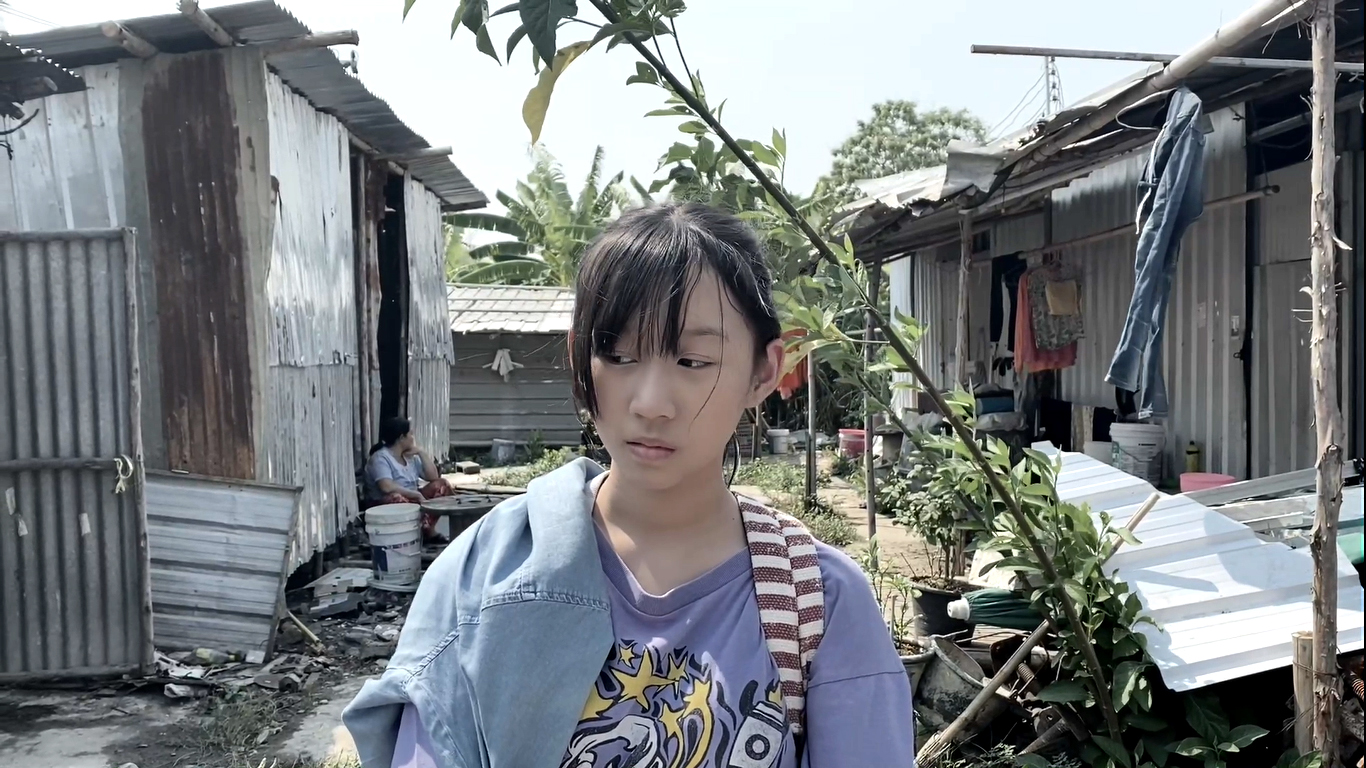





FURTHER COMMENTS
Namtarn’s comments and mine were usually revolving on issues of clarity and meaning. Some performances could have been made more engaging and relatable through the narrative and recurring use of simple objects [as in the Dardenne brothers’ films] or indentifiable gestures developed as motifs. Another point was the lack of “feeling of space” which might be a crucial element in refugee narratives (belonging, borders, in-between…). Most performers move through wide empty rooms and one reason is, of course, related to COVID-19 constraints: most teams couldn’t find a safe, fitting and available location for the shooting. Yet, as we discussed during the session, there were some simple options. I mentioned the German Expressionist films‘ painted set designs which could be emulated with some black and white paints on cardboards.


Another reference provided was the set design of Lars von Trier’s 2003 feature film Dogville. Bold white lines on the floor may end up being quite effective.


Questions were also raised about production as I felt some works were slighlty too slick, sometimes missing the roughness of the refugee experience. On the other hand, some students were concerned that the quality of their videos had been impaired by production problems caused by the COVID crisis. I mentioned that improvisation and DIY approaches actually benefited the production; and I mentioned the DIY aesthetic of French director Michel Gondry on numerous music videos and movies, and mostly his lesser-known 2008 Be Kind Rewind feature film. Some excerpts were screened: The Chemical Brothers’ Let Forever Be MV, The White Stripes’ The Hardest Button to Button MV, Massive Attack’s Protection MV or Björk’s classic Bachelorette MV.
As a conclusion, I mentioned that all performance videos had a grim and dark tone and that other approaches were possible. Thinking about a Martin Parr aesthetic, I mentioned Dario Fau’s colorful and caustic music video Dégueulasse by Caballero and JeanJass. But all in all, I’m a #ProudAjarn, as I was so impressed by the involvement and dedication of my students on this meaningful project in a time where the fate of refugees is even more thrown into jeopardy, and invisibilized in the main news outlets. Ajarn Nicolas Verstappen


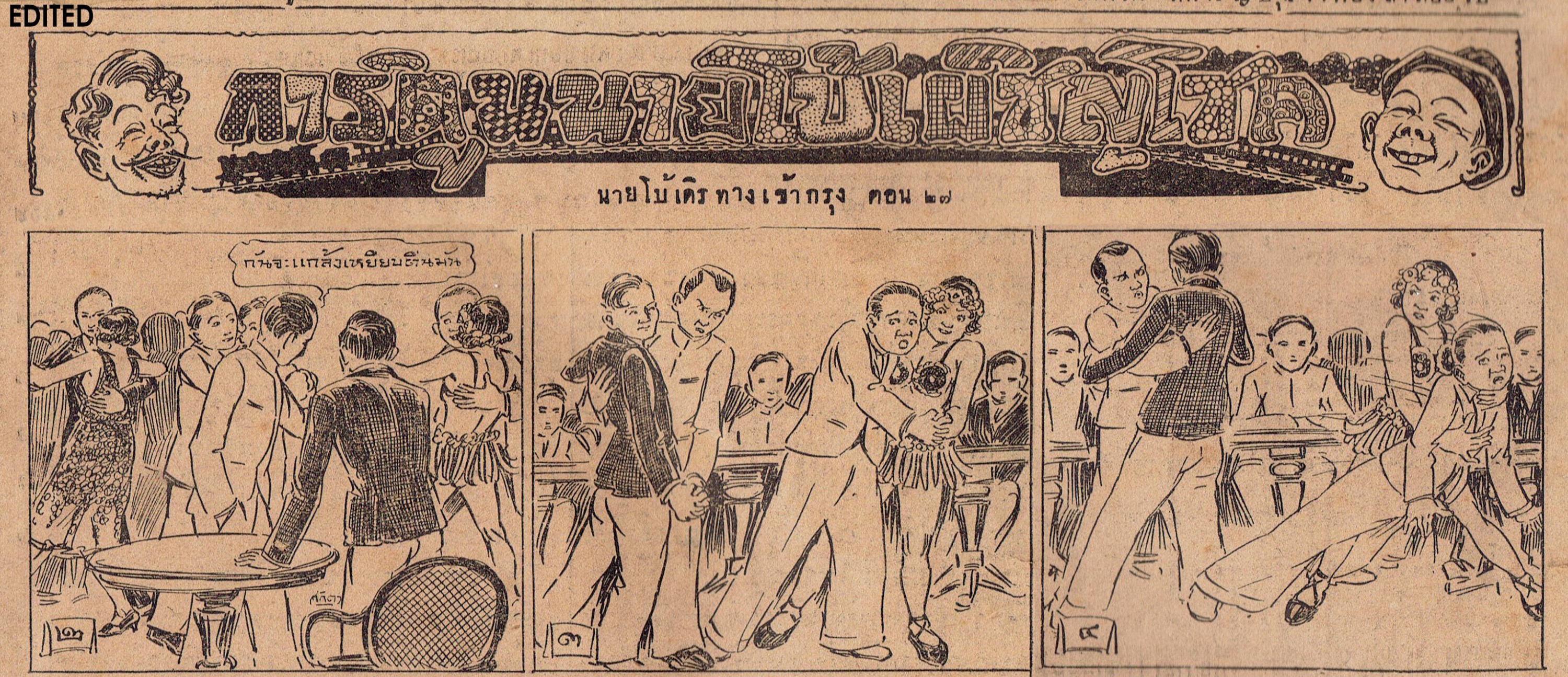
Kingdom of Siam, 1932. If the pre-1960s Thai Comics production is a lost continent, some artists -such as Prayoon Chanyawongse, Sawas Jutharop or Hem Vejakorn– are well-known from local aficionados. To the best of my knowledge and in the literature I’ve been able to access over the past 5 years, only two lines are mentioning Jamnong Rodari (จำนงค์ รอดอริ; brother of best-known illustrator Fuen Rodari), hailed as one of the greatest cartoonists of the 1930s. Not much more on his art; I only saw a fragment of a comics strip at the National Library of Thailand, and two series of beautiful book illustrations. So I was thrilled to get my hands on a collection of comic strips cut from 1932 Siamese newspapers [miraculously unearthed in an attic], and discover his stunning long-form comics which are said to have influenced prominent cartoonists of the late 1930s. Here are two excerpts. First is the upper-tier of his 48(?)-page comics adaptation of then-famous play Raden Lundai; or the Pauper Prince (ระเด่นลันได; a parody of the classic “Inao” play), with additional captions in Klon-16 versification below the panels, probably from late 1932 [there’s an ad for Chaplin’s 1931 City Lights at the back, and American films were usually screened in Siam one year after the US release]. Character design and gestures might be informed by the traditional Nang Talung (หนังตะลุง) shadow puppetry [as was suggested to me by my kick-@ssistant Bird]. Second excerpt [which I edited as I wanted to show the three-panel dance sequence which is allocated over two tiers in the original] is even more interesting as it unveils an example of realist-art long-form comics seven years before Hem Vejakorn’s Sri Thanonchai. Also unusual; the story is set in contemporary Siam -and is a “migrant” narrative- under the title KatunNaiBoPhachoenChok (การ์ตูนนายโบ้เผชิญโชค; The Comics of Mr. Bo who seeks his fortune [in Bangkok]). Drawn in late 1932 [as the newspaper banner was not cut from the first comics installment]. It appears that these two comic strips series -with two different styles and genres- were drawn by Jamnong Rodari in late 1932 or early 1933.
One question is left unanswered. Why was Jamnong Rodari forgotten from Thai Comics History while being hailed as “one of the greatest Siamese cartoonists.” I would venture that, unlike contemporary artists such as Sawas Jutharop and slightly later Prayoon Chanyawongse, Jamnong Rodari didn’t collect his serialized stories in comic book format. Sawas and Prayoon’s comic strips collections are known, and might have helped their names and works to be remembered in the following decades. No trace, so far, of any collected works of Jamnong. Might be a lead. [EDIT: a collection of Raden Lundai was recently sold on internet, so at least one collection of newspaper strips in comic book format was released]. Nicolas Verstappen
PS: These are not my favorite excerpts from the series; the most stunning pieces will come later, in another format [if current COVID-crisis doesn’t shatter this research project].
 from-dusk-till-drawn.com