

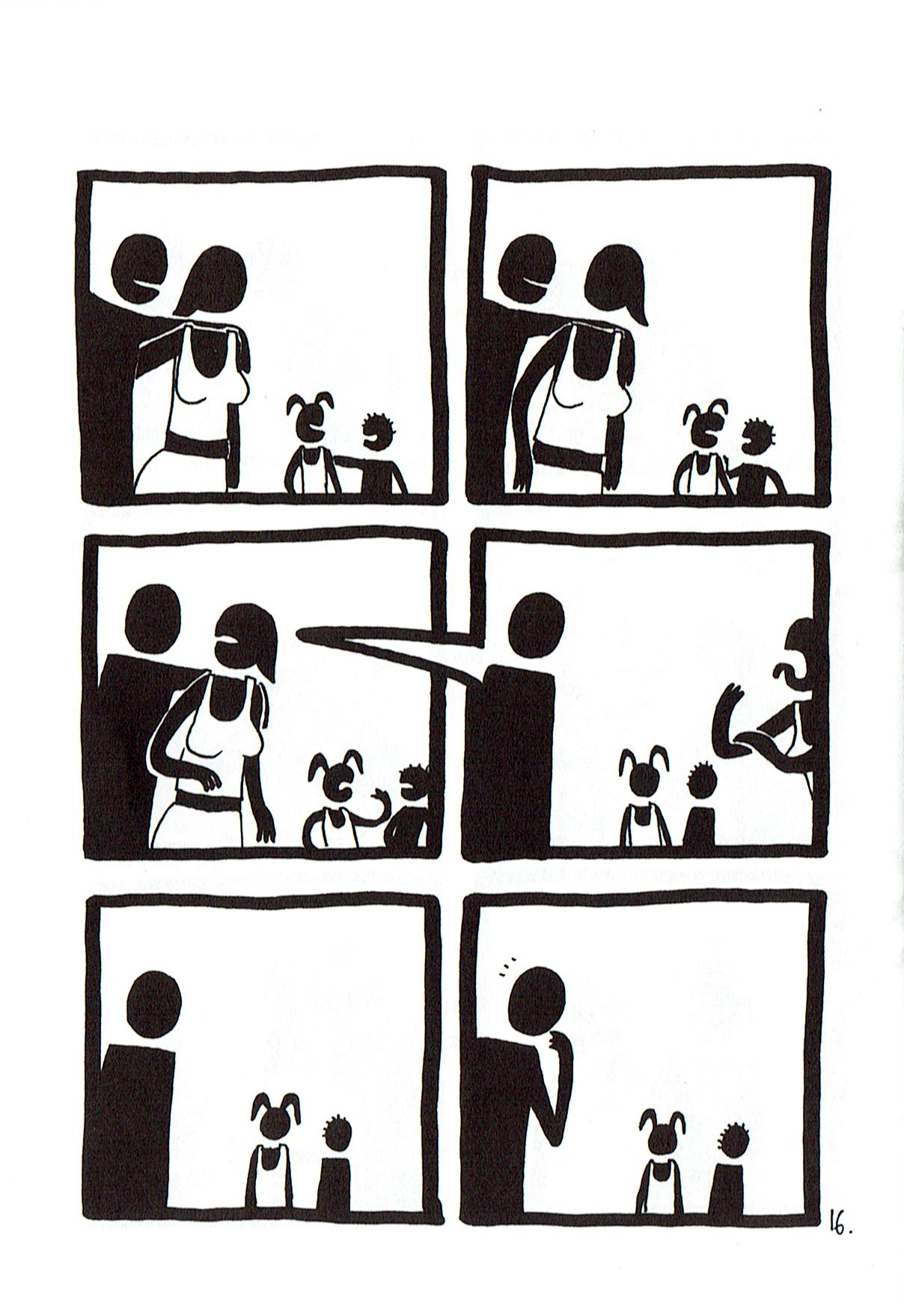
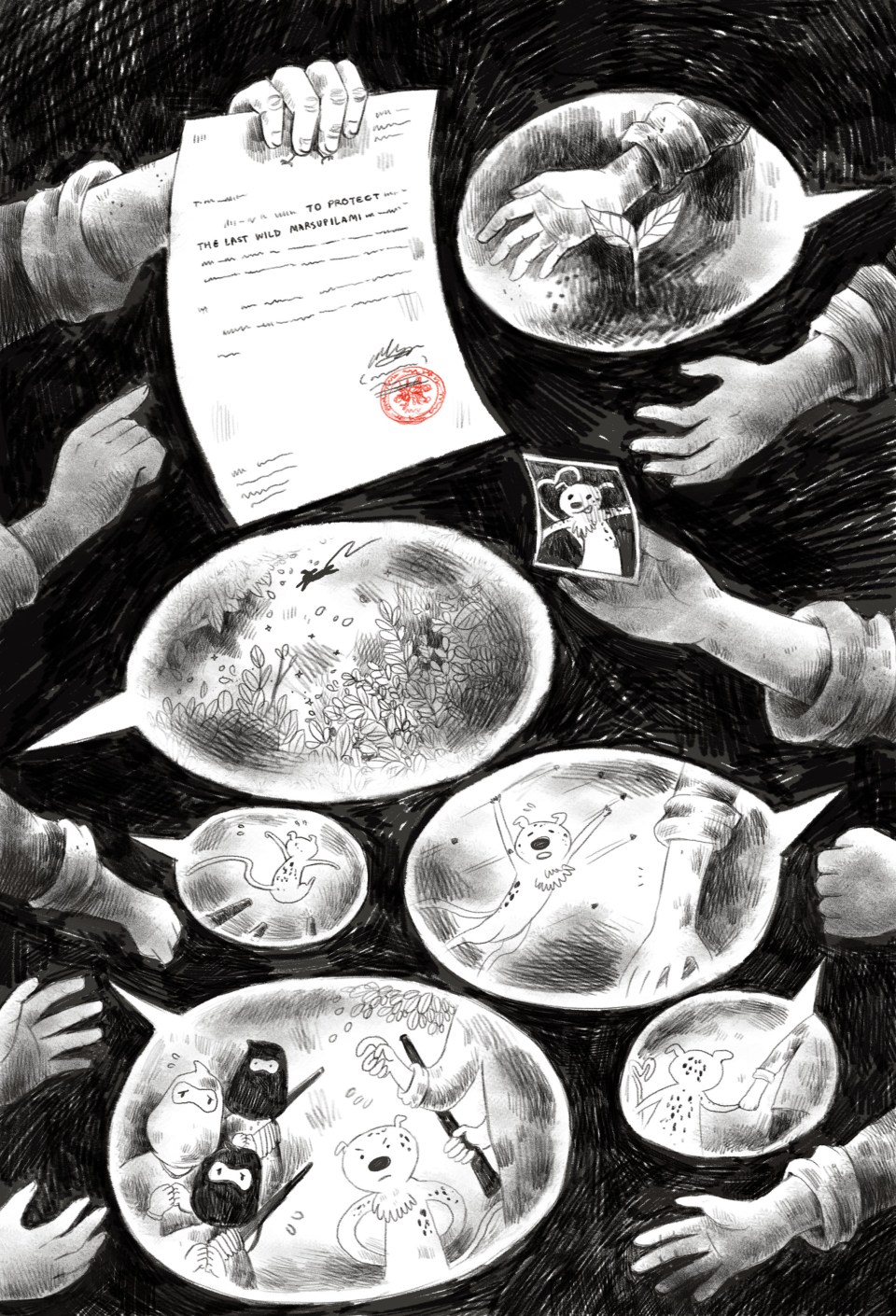
The Prophetic Word (“Le Verbe Prophétique”) by Ibn al Rabin (aka Mathieu Baillif, CH), in SplendeuRs et MisèRes du VeRbe, L’Association, France, 2012. More on Ibn al Rabin over here.
Copyright ©2012 L’Association/Ibn al Rabin


FROM DUSK TILL DRAWN: Comics Art Studies and Graphic Narratives Composition, Workshops, Events & Zine Publishing @ Faculty of Communication Arts, Chulalongkorn University [Bangkok – THAILAND]
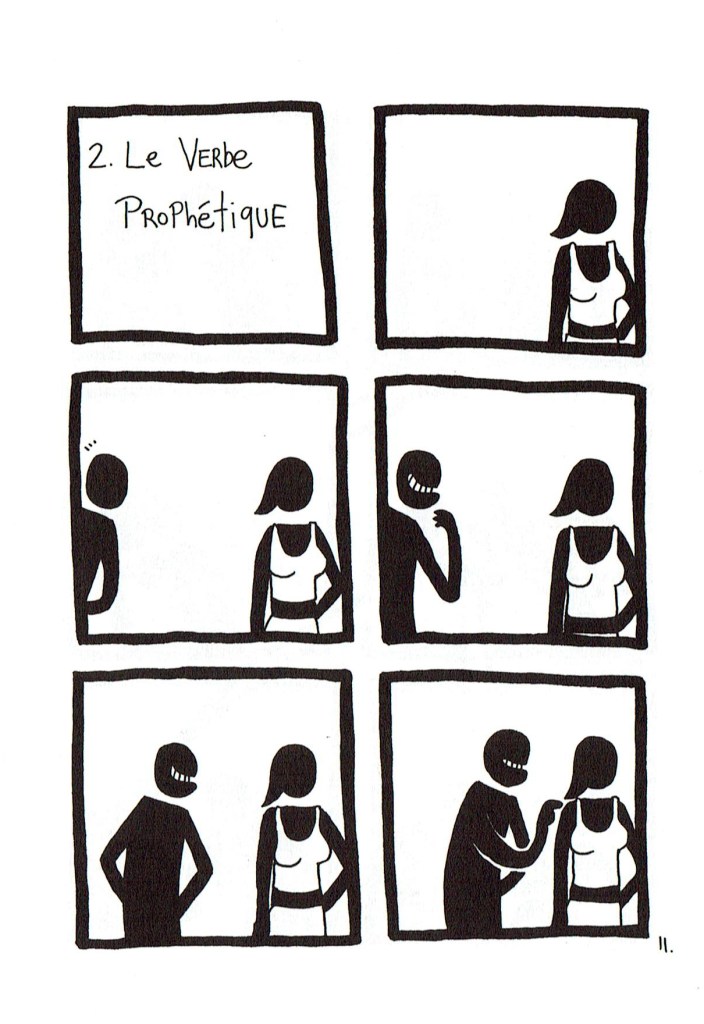
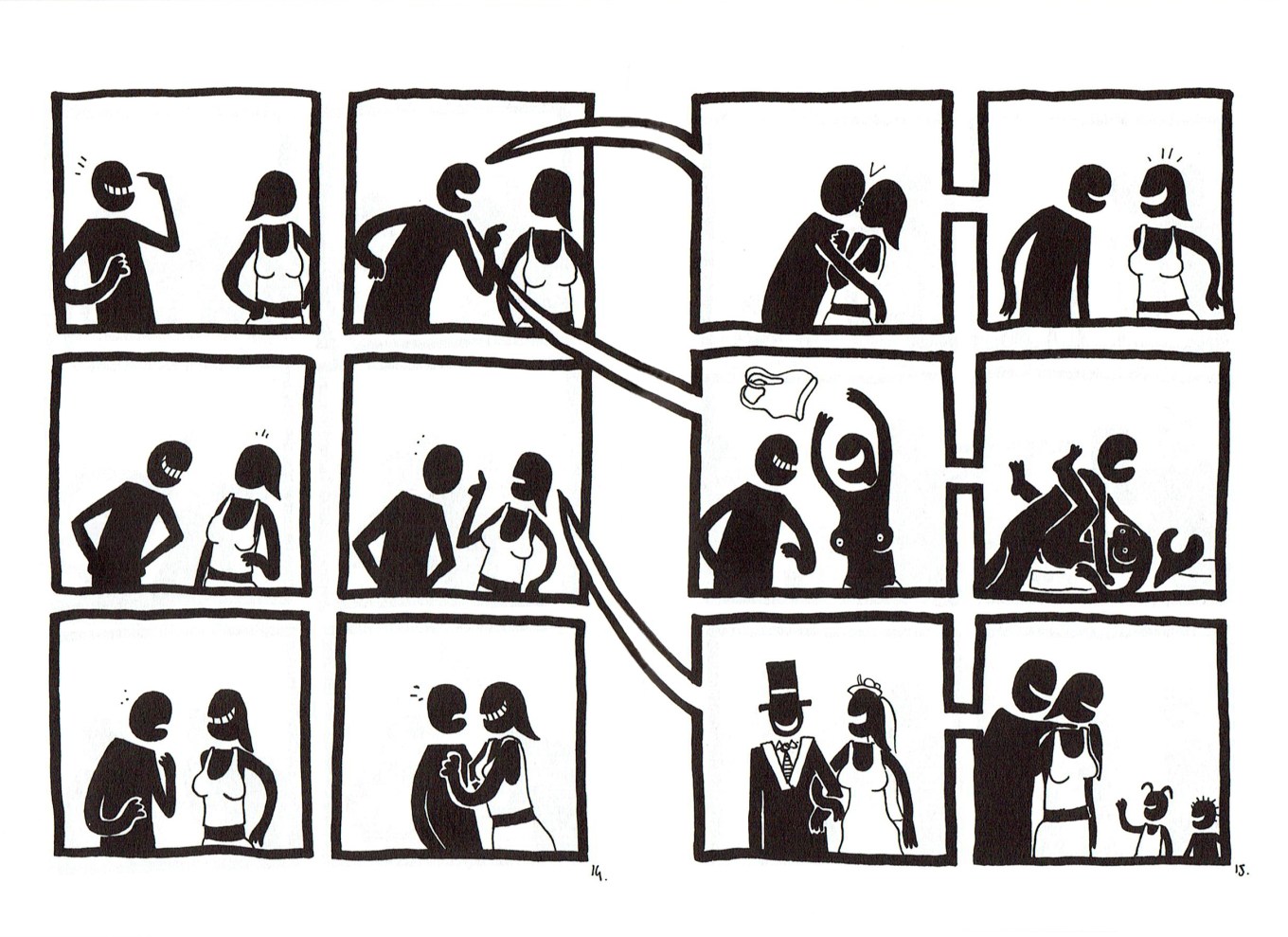
The Prophetic Word (“Le Verbe Prophétique”) by Ibn al Rabin (aka Mathieu Baillif, CH), in SplendeuRs et MisèRes du VeRbe, L’Association, France, 2012. More on Ibn al Rabin over here.
Copyright ©2012 L’Association/Ibn al Rabin

On June 1, 2018, The Comics Grid published my first open-access scholarly paper dedicated to a lost chapter in the History of Comics Art; the creation in 1938 -and 30-year development- of the Cartoon Likay signature comics genre by Thai Comics master khun Prayoon Chanyawongse.
Paper abstract: “By launching in 1938 a series of adaptations of folktales in comics form, Thai cartoonist Prayoon Chanyawongse established the Cartoon Likay genre which places the reader as a member of an audience attending a Likay performance. The local theatrical form frames his graphic narratives where scenes of a play performed on a stage continuously alternate with sequences taking place in the vast realms of epics set in the Ayutthaya period. By introducing key Likay conventions such as recurring humorous interruptions and asides, Chanyawongse could effectively address contemporary social issues and political topics within traditional folktales. This paper explores several Cartoon Likay narratives in the context of the Likay theatrical form and the local folktale repertoire to discuss the nature and development of Chanyawongse’s signature comics genre.”
If I had to compare Prayoon’s Cartoon Likay comics to a better-known comics, it would be to René Goscinny and Albert Uderzo‘s Franco-Belgian series The Adventures of Asterix for their shared humor centered on puns, caricatures, anachronisms and modern-day allusions in period adventurous tales. If Cartoon Likay predates Asterix for about 20 years and if Prayoon’s social & political criticism and aesthetic of disruption (through fascinating fourth-wall breaks yet to be fully explored) are more apparent, Prayoon Chanyawongse and René Goscinny do share a love of language, of often-disregarded ‘common folks’, and such a playful & witty (and kindred) spirit. So much more is to say about the Cartoon Likay comics genre (and about the “Lost Continent” of Thai Comics), as a complete exploration of sophisticated Likay rhymes and play of words is yet to be undertaken, not to mention the dozens of other folktales adapted in comics form by Prayoon Chanyawongse.
My thanks go to The Comics Grid, and the Research Funding Faculty of Communication Arts, Chulalongkorn University. I would also like to take this opportunity to express my heartfelt thanks to my former and wonderful research assistants mesdemoiselles Tanchanok Ruendhawil & Suttiarpa Koomkrong for their invaluable help and commitment, to Dr. Sukanya Sompiboon for introducing me to Likay, to p’Soodrak Chanyavongs for her time and insights, and to my better-half. My thanks also go to Colin Cheney & Dr. Jirayudh Sinthuphan for suggestions to the content of this paper.
Nicolas Verstappen
Full paper is available in open access on this page of The Comics Grid: Journal of Comics Scholarship.


On May 14-17 2018, some 40 students at the International Program in Communication Design (CommDe, Faculty of Architecture, Chulalongkorn University, Bangkok, Thailand) attended in two groups to 4-day parallel “Open Studios” led by Belgian cartoonist and illustrator Ephameron (aka Eva Cardon) and American cartoonist and illustrator Anders Nilsen.
〈Anders Nilsen wrote his own account of the 4-day “Chulalongkorn Comics Workshop Phantasmagoria” on this blog post.〉
“It was a remarkable experience in about a hundred different ways, but in particular the students were amazing.” Anders Nilsen (blog post here)
The current post presents the two first days of the Open Studios, and a second post will soon display pics from the last two days of workshop. Students were able to experience two completely different approaches in comics composition during these Open Studios, as Ephameron focused on capturing the essence of a short story and its breakdown and visual adaptation in comics form while Anders Nilsen explored “non-standard” panel layouts and constrained comics exercises (inspired by OuBaPian experiments from the Pierre Feuille Ciseaux international comics residency-laboratory) in order to generate unexpected characters and plots. I do apologize here for the far too invasive presence of my noisy camera, and thank all participants for the patience and understanding. Nicolas
Here are the presentations of Ephameron and Anders Nilsen’s Open Studios by the CommDe program which invited the two artists and hosted the event.

“Eva Cardon leads CommDe Open Studio on Graphic Narrative. In this open studio on Graphic Narrative each student chooses one of the short stories from American author Raymond Carver collections What We Talk About When We Talk About Love and Cathedral and turns it into a graphic narrative that explores the limits of comics, and experiments with storytelling techniques. Eva works under the pseudonym Ephameron and is based in Flanders. She publishes and exhibits internationally.”

“Anders Nilsen leads CommDe Open Studio ‘Where Do Your Ideas Come From: A Comics Workshop.’ Anders will lead students to explore their own creativity in developing characters and narratives. Anders Nilsen is the award-winning artist and author of nine books of comics and visual narrative including Big Questions, Don’t Go Where I Can’t Follow, The End and Tongues. His work has appeared in the New York Times, The Chicago Reader, Medium, Kramer’s Ergot and elsewhere. His comics have been translated into numerous languages and his artwork has been shown internationally. He lives in Portland, Oregon.”
DAY 1: MONDAY, MAY 14


DAY 1 in Ephameron’s Open Studio. Part 01: story-boarding of a Raymond Carver’s short story. The Belgian artist introduced the life and works of Raymond Carver and proposes a warm-up exercise. All students had to break down an imposed short story Why don’t you dance? (from Raymond Carver’s collection What We Talk About When We Talk About Love) into a storyboard of 10 illustrations.


DAY 1 in Anders Nilsen’s Open Studio. Part 01: the Comics Loop. Meanwhile in the classroom below, the American cartoonist proposes a first exercise to generate imaginative character designs. Each student randomly draws a name card on which a stock character is named (“beggar child”, “drug dealer”, “elephant”, etc.). Each student is then asked to divide an A4 page in four panels and is given a few minutes to create the character design of his/her assigned character in the first panel. When done, students are given a few more minutes to come up with completely different interpretation and graphic rendition of their assigned character, in order to avoid the obvious/common portrayal they might have provided in the first panel. When the second panel is completed, students must redraw their character in the two last panels but in graphic styles different from their personal style in order to leave their confort zone.


When done, the same exercise is repeated but with name cards of objects, then name cards of settings/sceneries. All character/object/setting designs are then separated and taped to a wall. Each student must then designates his/her 3 favorite character designs, then objects, then settings.


After voting, the three favorite character designs, objects and settings are brought together.


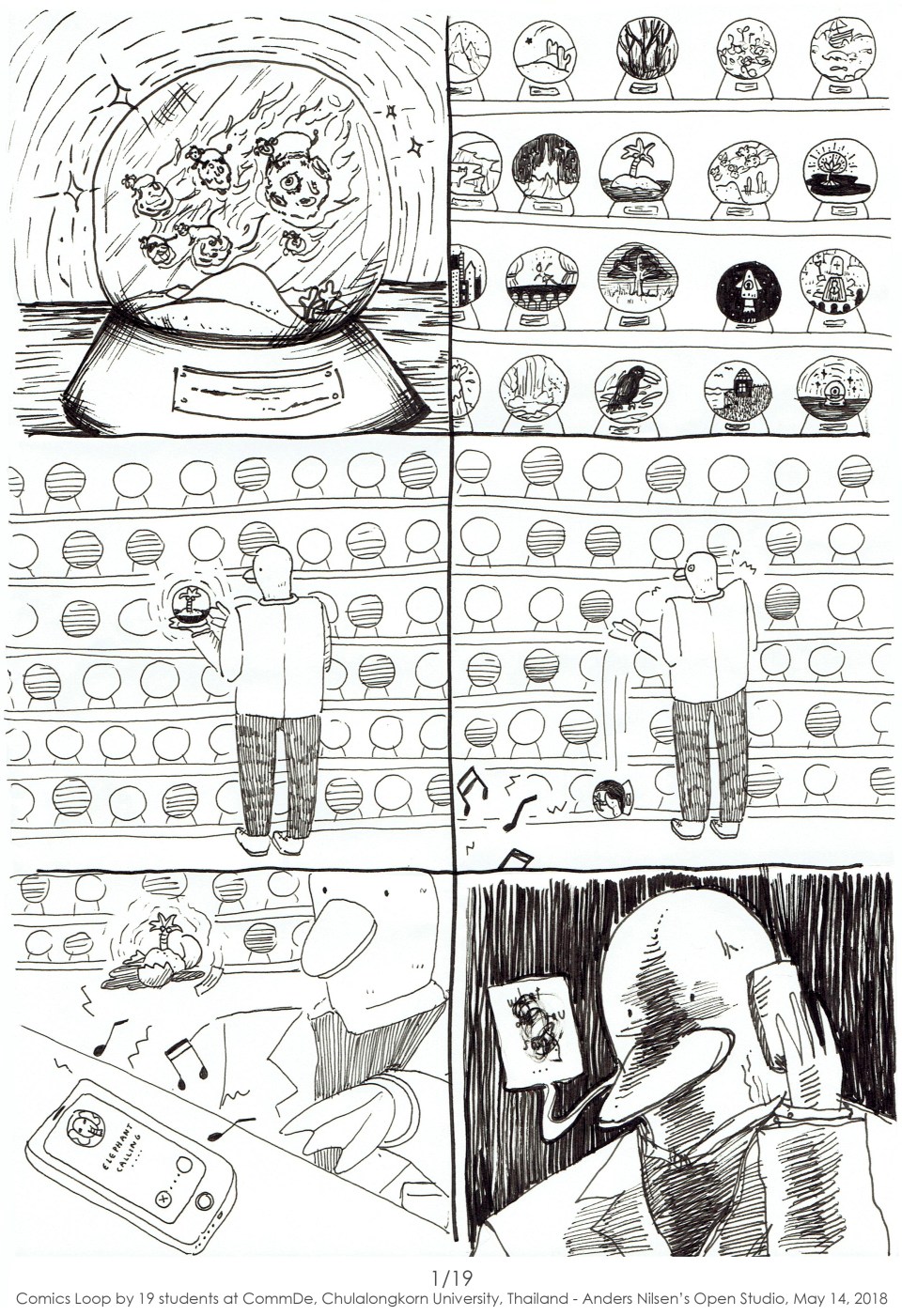
As the three selected objects (like the fish can or the anthropomorphic chair) could be turned into characters and would be redundant with the initially selected characters, Anders and I decided to substitute them for a meteorite (which could also be used as a setting), a “bone trapped in a crystal”. The “top of a building” setting was discarded in favor a snow globe, being an object and holding a potential setting. The 9 definitive elements were then used as references, and limitations to maintain coherence, for a collective comics composition assignment -in the form of an exquisite corpse– based on the constrained exercise La Boucle/The Loop developed by the ChiFouMi Association. This exercise had been already implemented at the Faculty of Communication Arts in 2015 with 17 participants, whether professional Thai cartoonists or enthusiasts (more info on this dedicated post). Here is the “protocol” of the constrained exercise. Let’s note here that the story remains “wordless” to facilitate the development of the narrative, as the presence of dialogues might complicate the action of linking the first and last panels together.
Step one: defining 9 elements (3 characters/ 3 objects/ 3 settings). See above.
Step two: each student draws a 6-panel regular grid on an A4 page. Every student must start the action of his/her story in the sixth (and last) panel using one or several of the 9 imposed elements. When done, he/she gives his/her page to the artist on his/her left. Time limit: 15′.
Step three: in the first panel of the page he/she got from his/her seatmate, the artist must continue the action he/she started on the previous page. Time limit: 15′.

Step four: all pages, with only the first panel filled by an artist and the sixth panel filled by another artist, are gathered together. Each student randomly draws a number and -following order of the numbers- can select a page on which he/she will have to fill the four remaining panels (or panels 2 to 5), and link panels 1 and 6 into a somehow coherent narrative.


Step five: each student must now fill the four empty panels (or panels 2 to 5) on the page he/she picked, and link panels 1 and 6 (each drawn by another student) into a somehow coherent narrative.

The Final Story: As presented by the Association ChiFouMi, “the story that is made through all these joints makes an infinite loop, where all the elements that were produced before gives some kind of common road where each author can intend its own singularities and its own imagination, while following a protocol nearly invisible.”

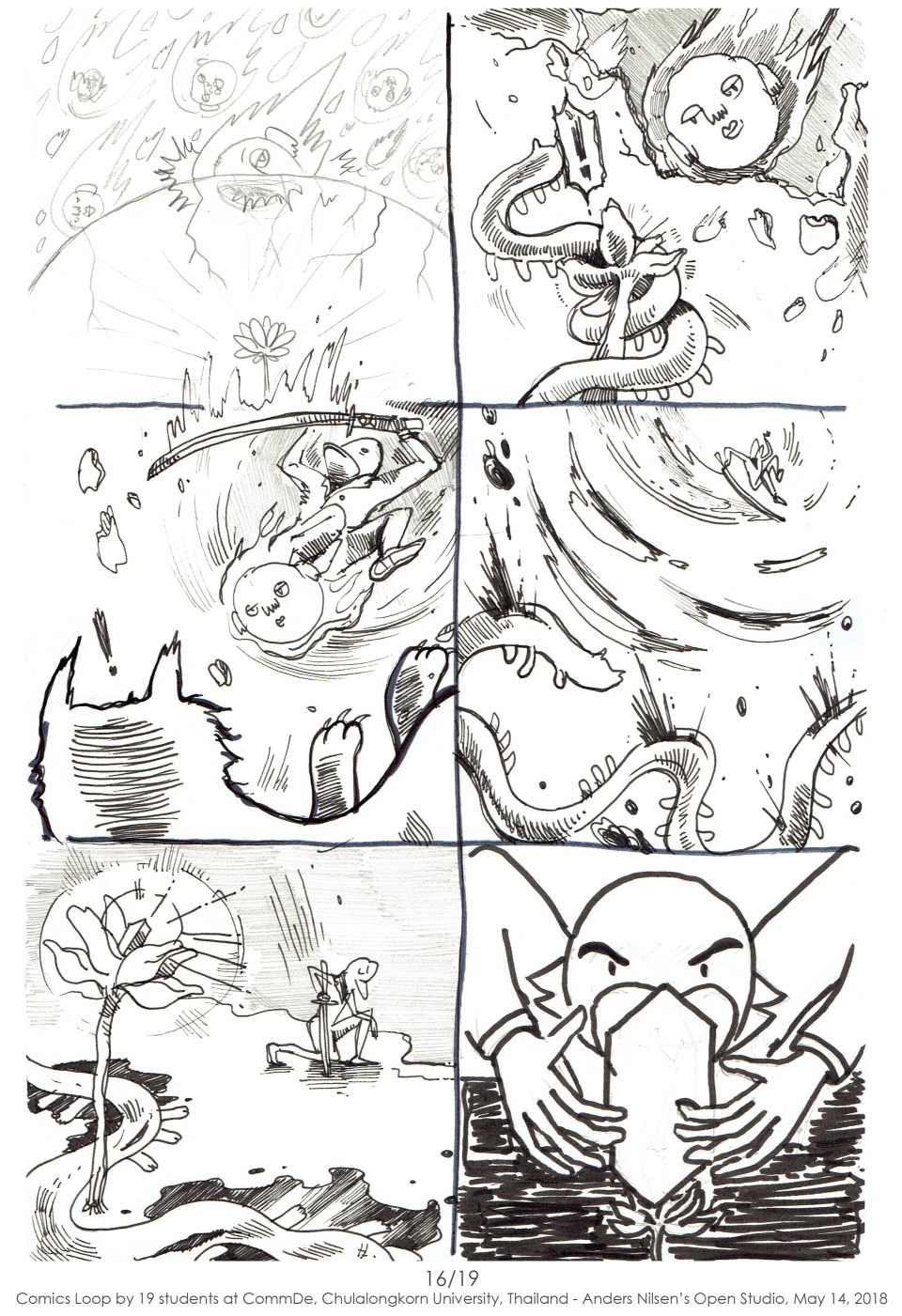
It is interesting to note that a series of recurring motifs appeared throughout the narrative, without any consultation among the students. If “transformations” are obviously to be expected in order to link two disparate panels together, the frequency of “transformations by digestion” was here quite remarkable. Recurring motifs include ingestion, swallowing, vomiting, excretion (maybe in connection with the importance of food in Thai culture, or with gluttonous Brahmin Chuchok whose belly would burst in the Vessantara Jataka, or Krasue spirit with their internal organs hanging down from the neck?), and some related scatological elements, to which -and quite logically in a Buddhist culture- the recurring lotus flower raising from mud would balance. Karmic retribution, and Inception-like worlds inside worlds, were quite present too. The resulting comics was wild, and hilarious at times, as the following pictures show.


The PDF of the complete loop is downloadable on this link: CommDe Comics Loop.
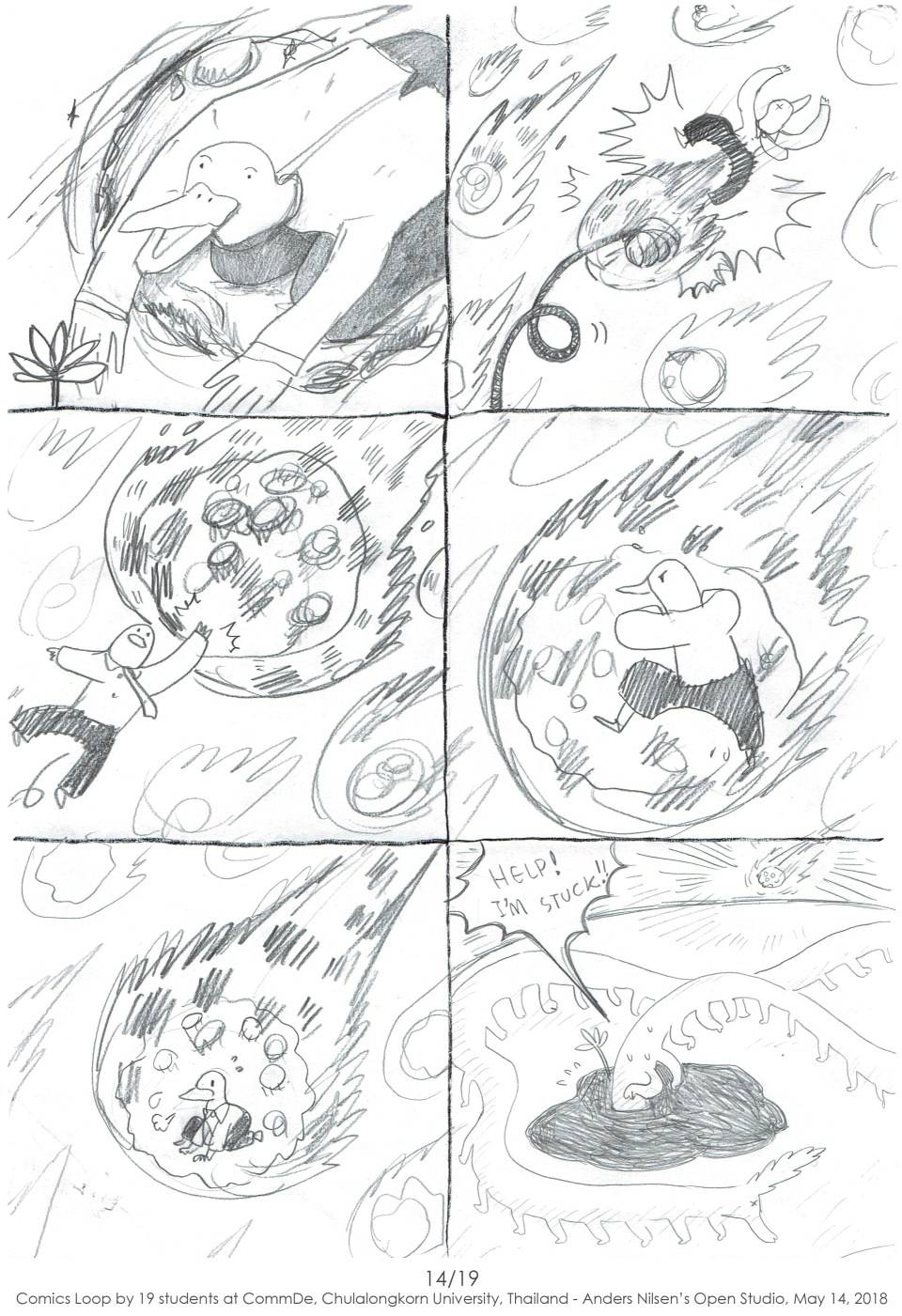

The PDF of the complete loop is downloadable on this link: CommDe Comics Loop.
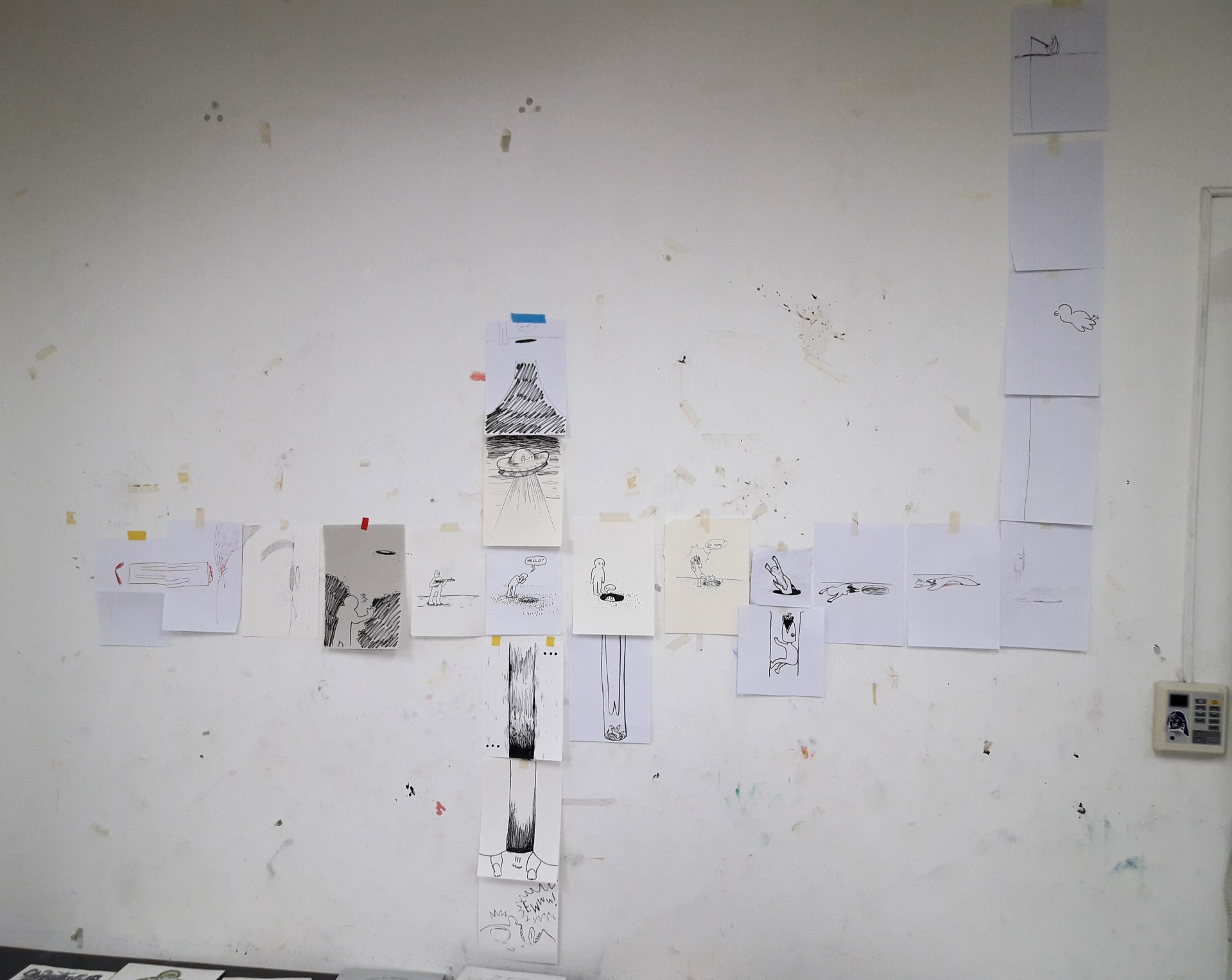
DAY 1 in Anders Nilsen’s Open Studio. Part 02: the comics “scrabble/domino”. Anders Nilsen proposed another exercise to which the students were invited to participate whenever they wanted during the 4-day Open Studio. The American artist scattered some illustrations on different walls and asked the students to add new illustrations after, before, above or below his own in order to generate strips, and narratives which would slowly spread across the walls.



DAY 1 in Ephameron’s Open Studio. Part 02: figure drawing. Meanwhile Belgian artist Ephameron lets her students release some steam, after a challenging and focused day of short story analysis and story-boarding, by proposing a “figure drawing” session. Each student was invited to draw one of his/her classmates, respecting proportions and attitudes, and exploring various facial expressions.


DAY 2 in Ephameron’s Open Studio. Part 01: comics adaptation of various Raymond Carver’s short stories. At the end of previous day, Ephameron provided each of her students with a different short story written by American author Raymond Carver and mainly taken from the collections What We Talk About When We Talk About Love and Cathedral. Each student has the three remaining days to adapt his/her assigned short story into a comics.


DAY 2 in Anders Nilsen’s Open Studio. Part 01: Taming the Beast. As the Comics Loop resulted in a wilder-than-expected exhilarating narrative, the American cartoonist decided to go for an additional exercise in order to “tame the Beast” and channel the energy.
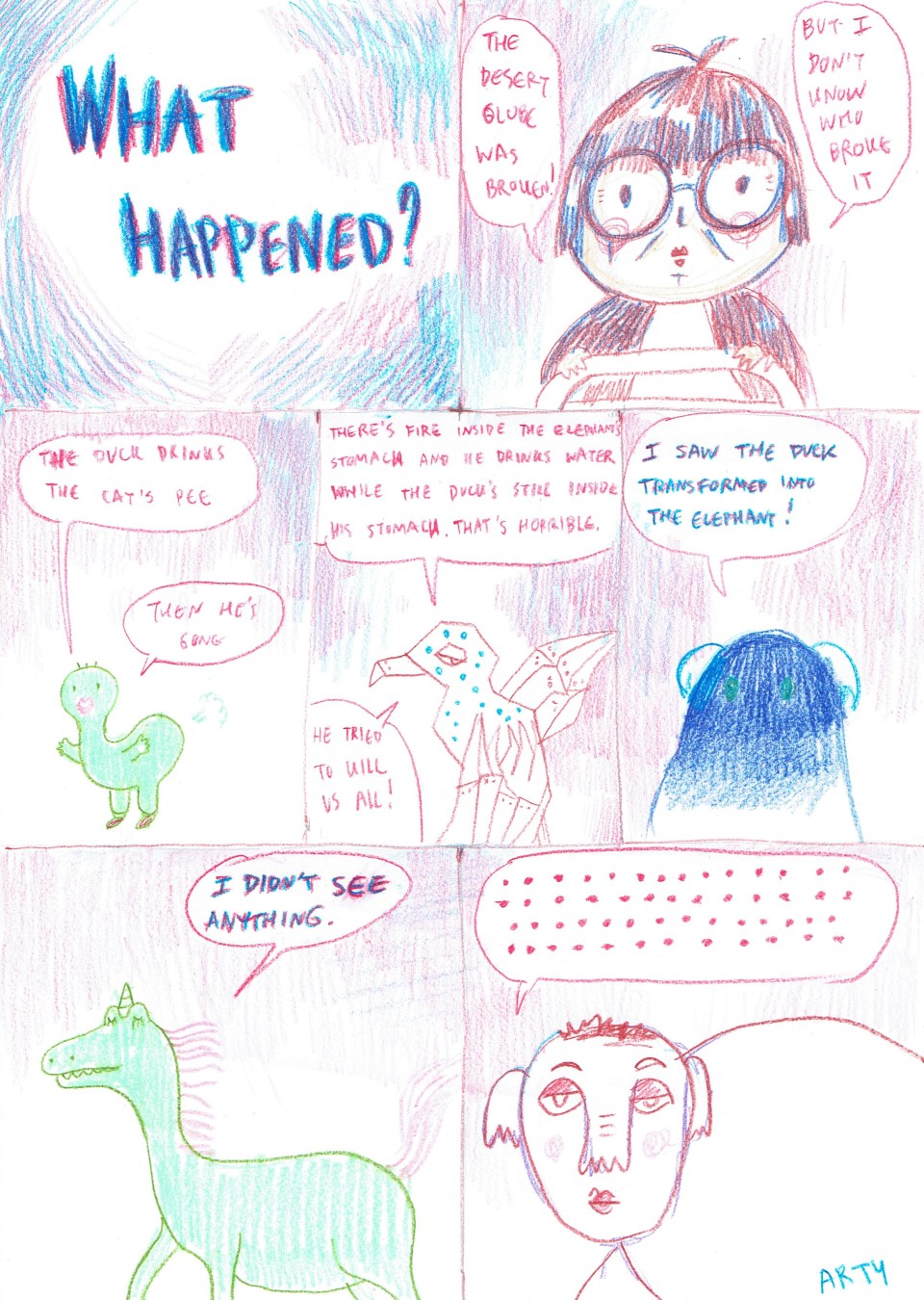
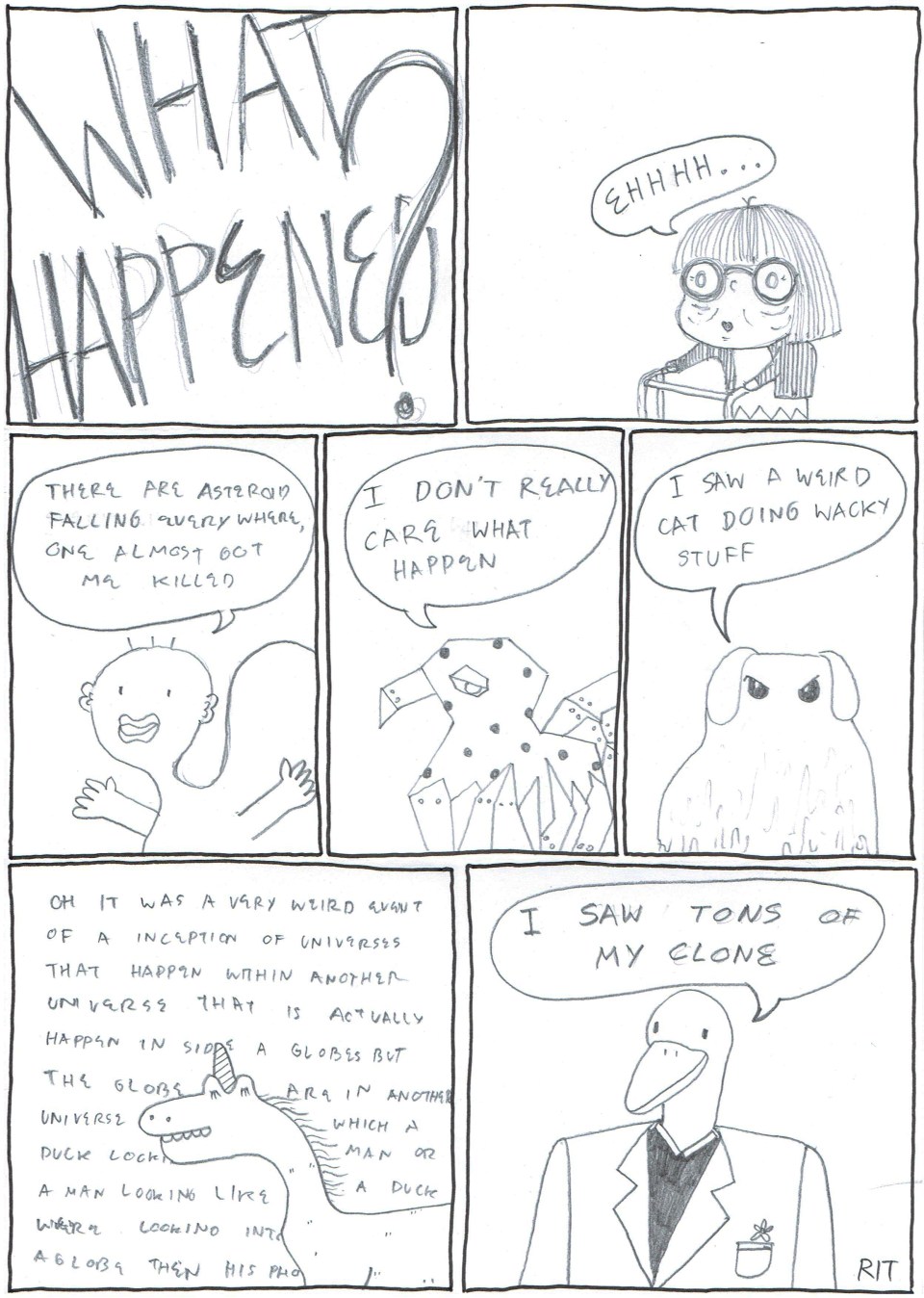
Anders Nilsen presented the students with Daniel Clowes‘ comics page “What Is the Most Important Invention of the 20th Century?” published on October 1989 in the first issue of his comics series Eightball. The page is a visual adaptation of “the work of David Greenberger, who asked questions of nursing home residents and transcribed their answers in his zine The Duplex Planet.” Other Duplex Planet-inspired comics -with each story’s title is the question Greenberger asked, e.g., “Where Do Wiseguys Come From?”- appeared in Eightball #2 to 4, and 6 (see below for pics).


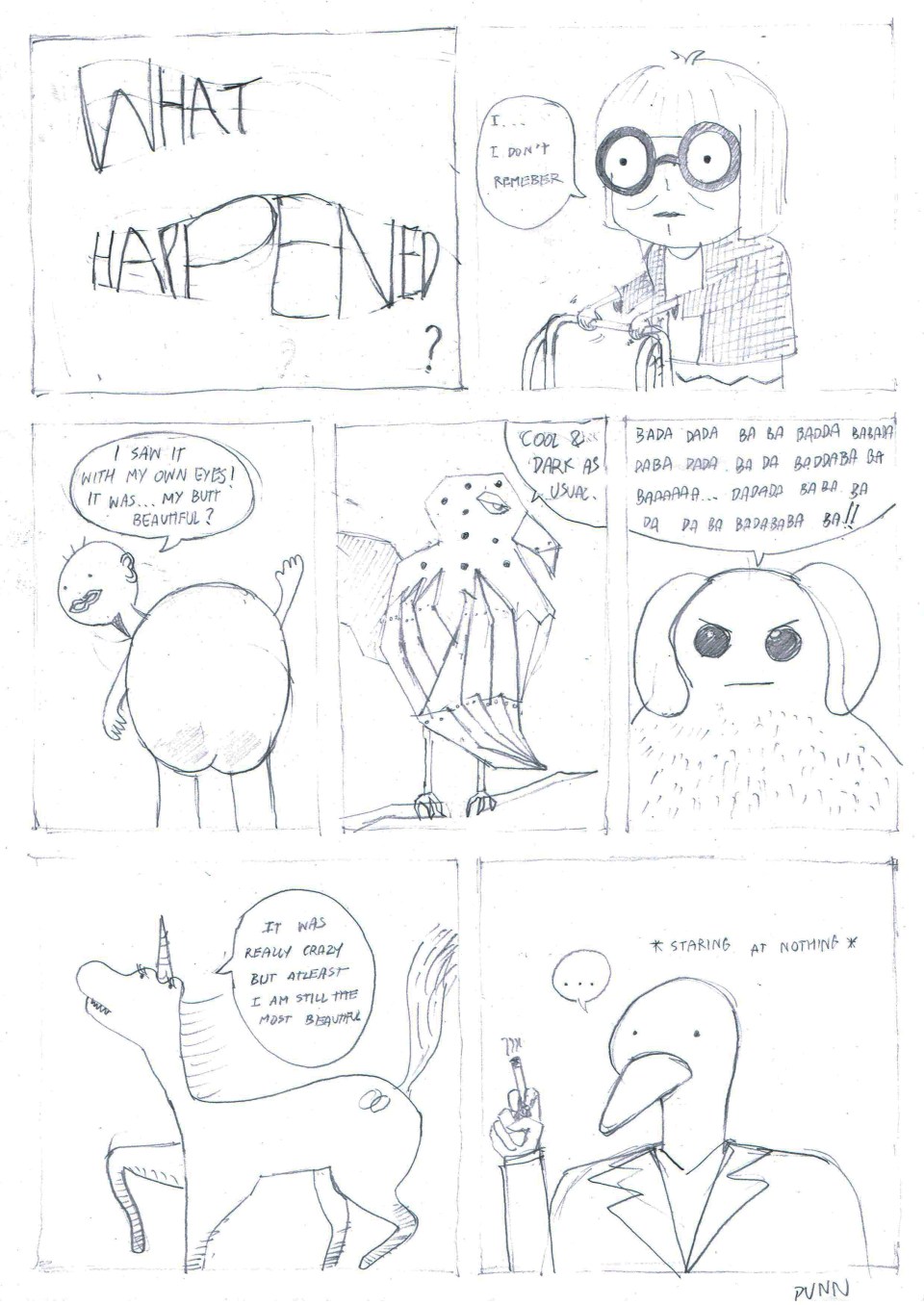
Here are some results from the “What Happened? – Clowes/Greenberger” assignment by the students.




And an extra constrained comics assignment:


DAY 2 in Anders Nilsen’s Open Studio. Part 02: Finding Anders Nilsen. The American cartoonist did a short presentation of his journey as an artist, with the various defining steps and realizations mapping out his career path, such as stressing the importance of his sketchbooks in all aspects of his numerous projects. Some 25 of his books (from zines to graphic novels or collaborative productions) were on display in the classroom for the students to consult.


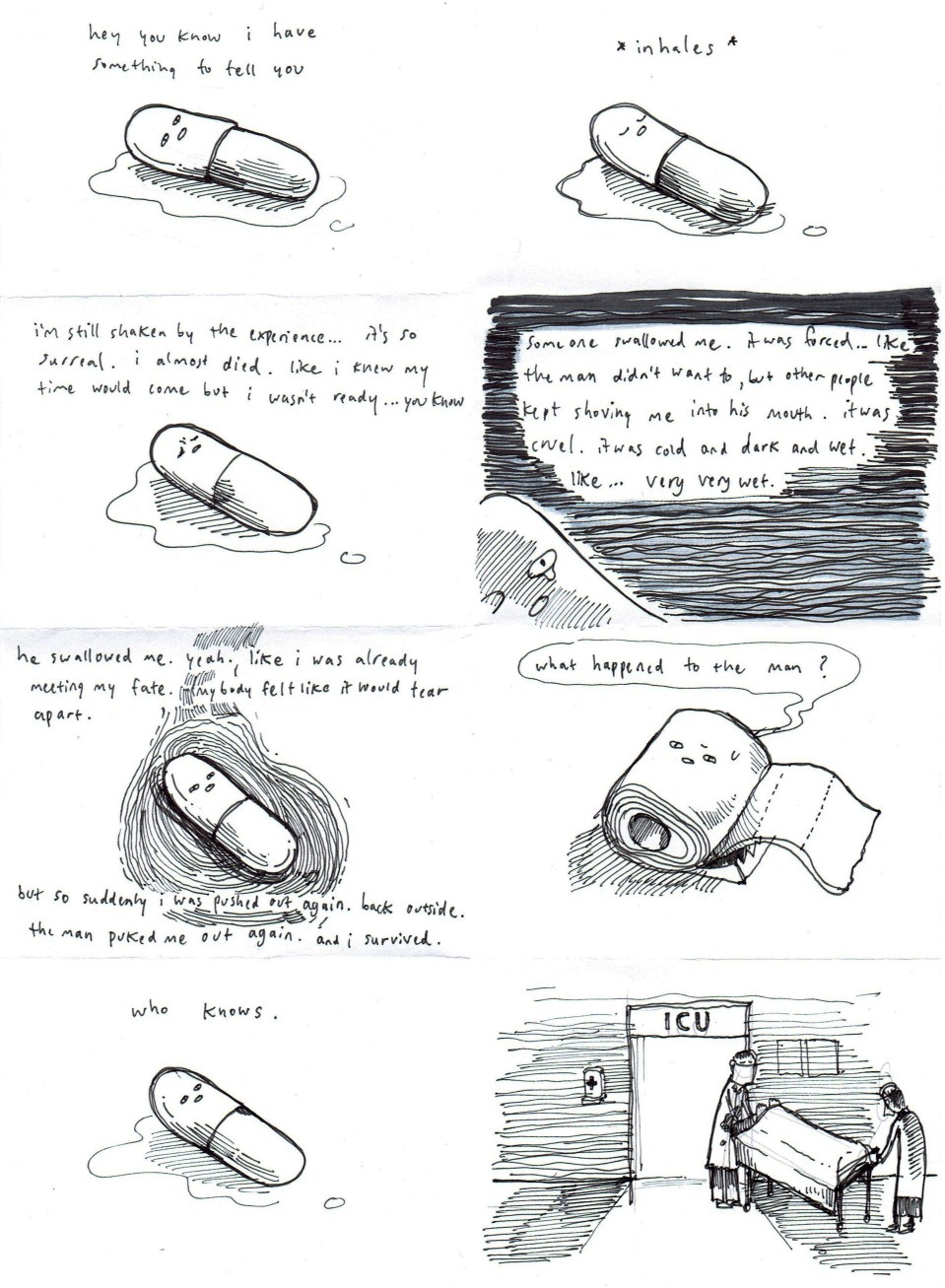
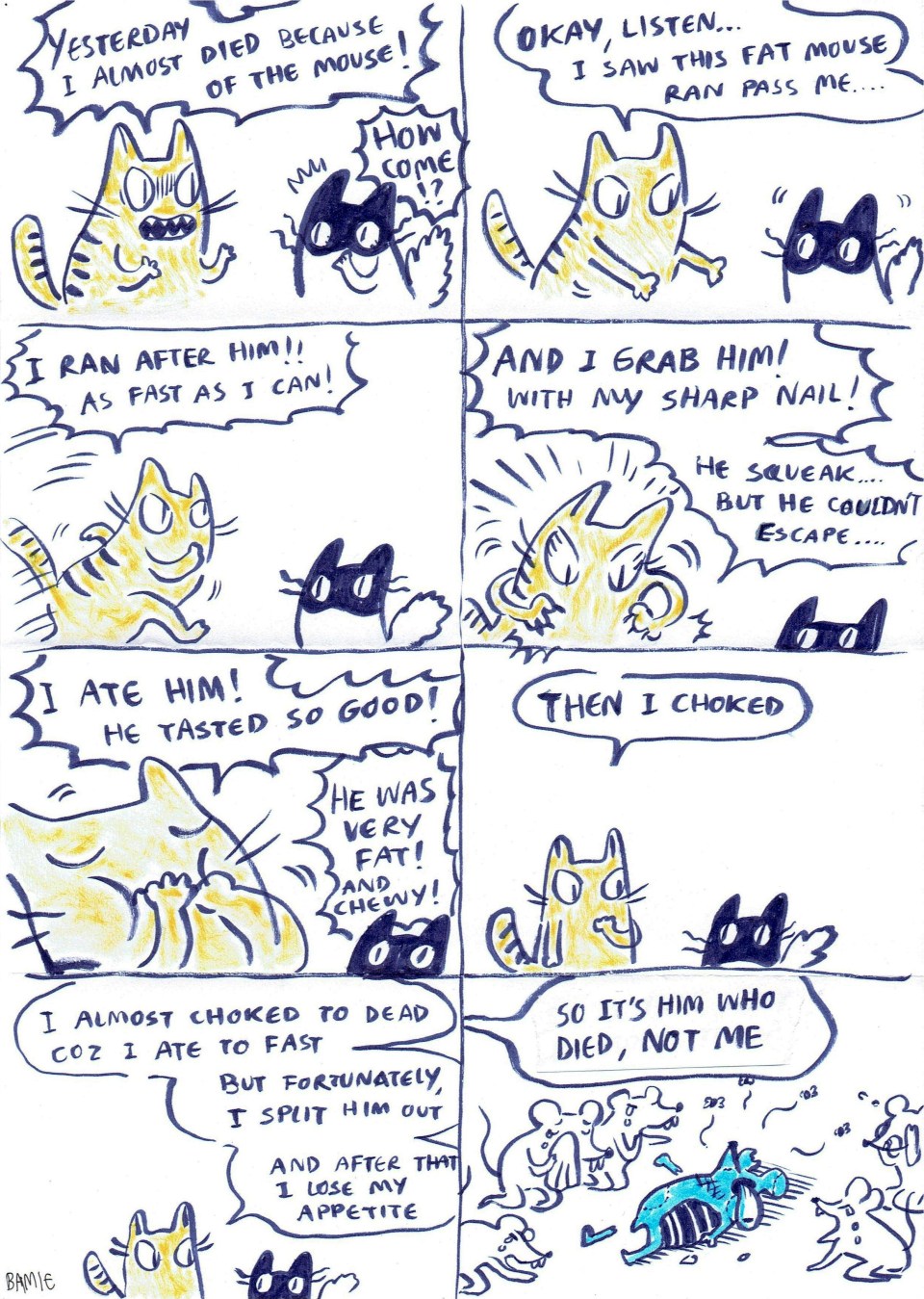
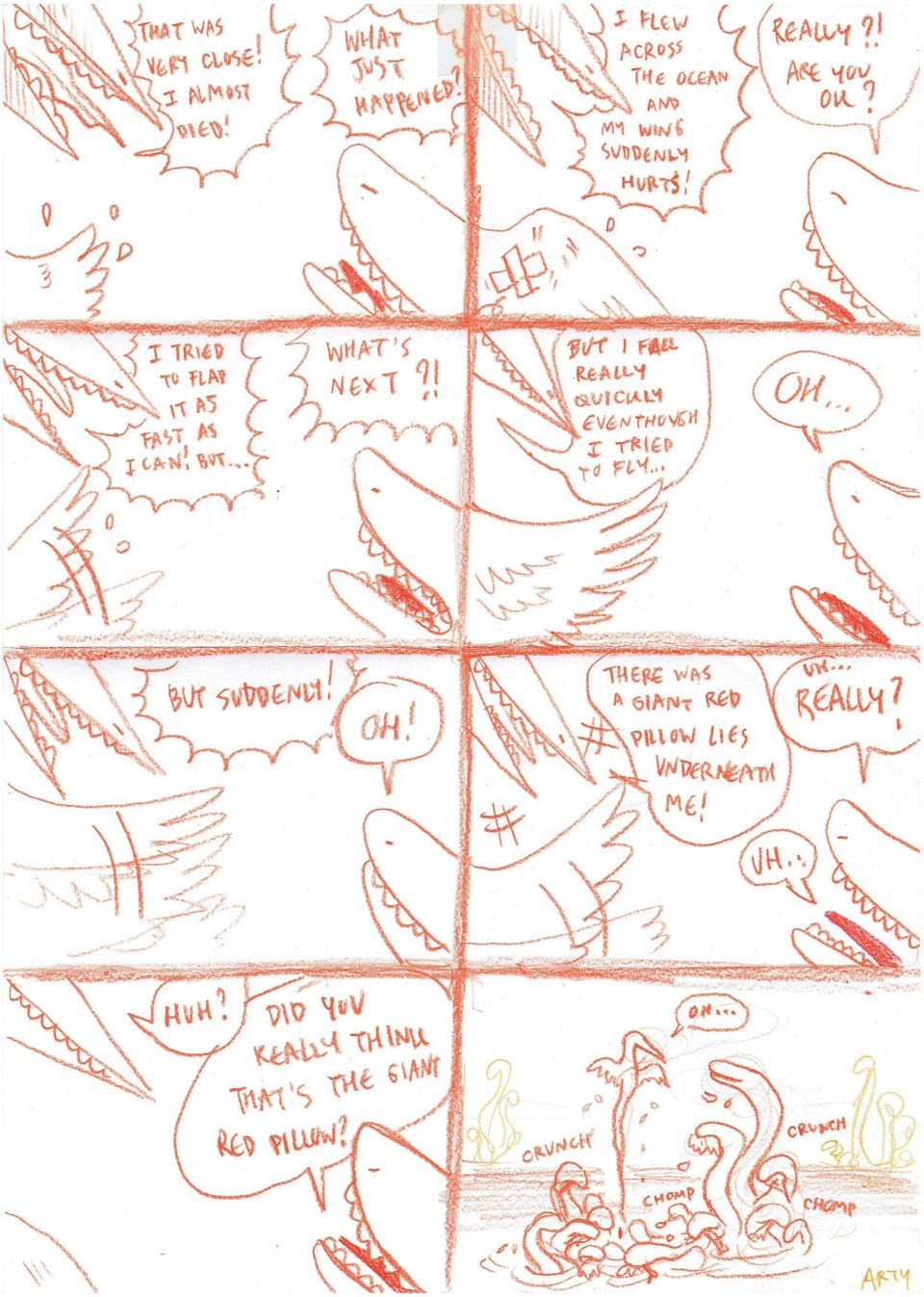
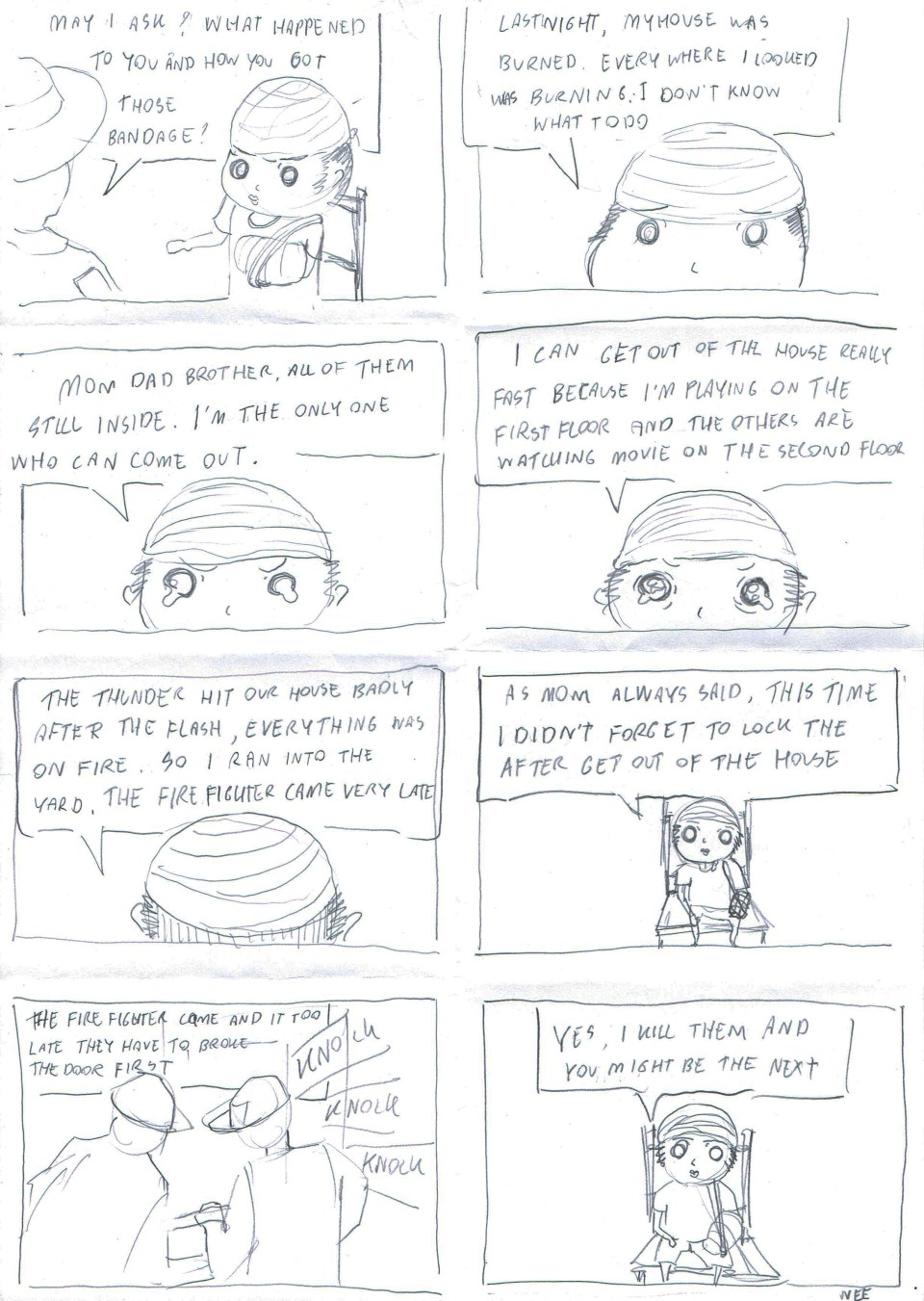
DAY 2 in Anders Nilsen’s Open Studio. Part 03: “I Almost Died!” assignment. After a lot of fun, students were asked to work on a more dramatic and/or intimate (or humorous if preferred) 8-panel comics page starring two characters. The first character would talk about a time that they almost died. The other character only speaks once, to ask a question. Seven panels show the two characters, and one panel (selected by the student) shows something else.





DAY 2 in Ephameron’s Open Studio. Part 02: comics adaptation of various Raymond Carver’s short stories. Students pursue their comics adaptations of assigned short story written by American author Raymond Carver and mainly taken from the collections What We Talk About When We Talk About Love and Cathedral.


PART 2/2 COMING SOON…
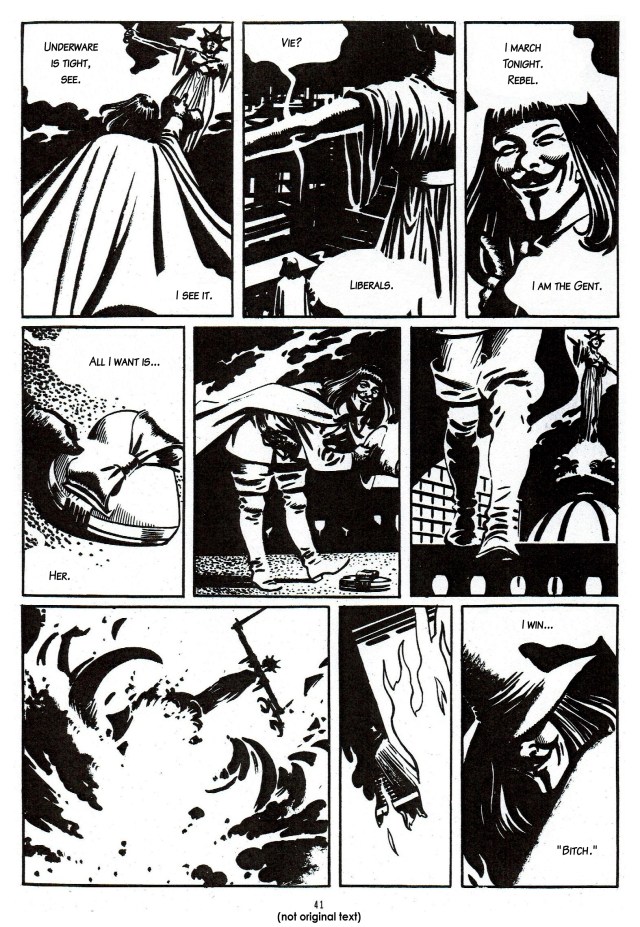
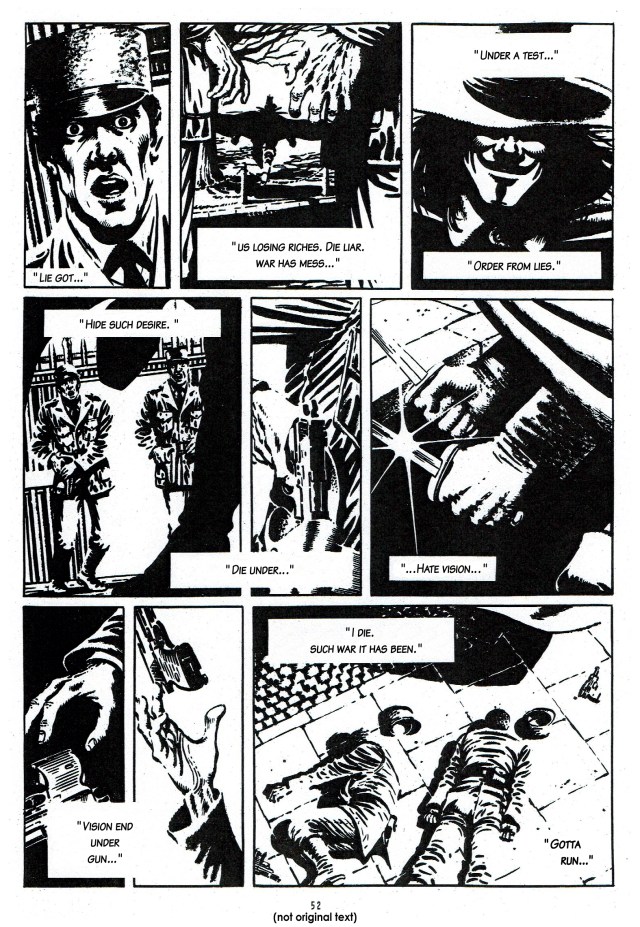
#VforVersion(s); alteration of imposed comics pages in foreign language -to the participants- (German edition of British creators Alan Moore and David Lloyd‘s V for Vendetta, and original edition of French cartoonist Lewis Trondheim‘s Psychanalyse) by partial deletion with white-out liquid of textual elements -such as sentences, words, letters or letter parts- to form a new text in English language which would be consistent with the unaltered pictorial sequence.

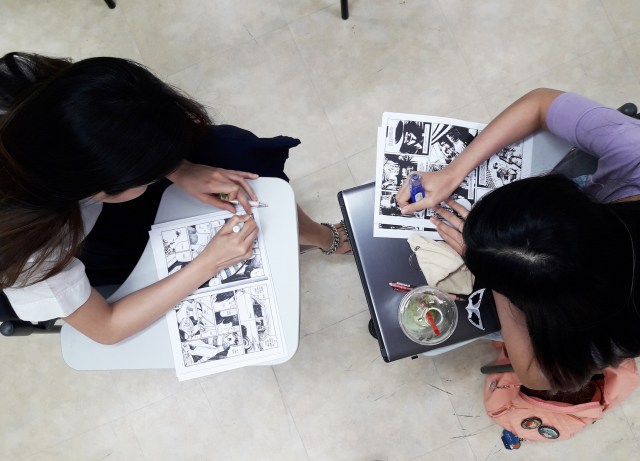
April 2018. The 62 students of the Creative Writing for Printed Matter course (sections 10 and 11; “Graphic Writing”) at the International Program (BA) in Communication Management (Faculty of Communication Arts, Chulalongkorn University, Bangkok , Thailand) were provided with a series of imposed comics pages excerpted from the 2003 German edition of V for Vendetta (1 to 3 pages depending on section), of the 1996 edition of Lewis Trondheim‘s Psychanalyse (2 consecutive pages in French language), and of the American edition of the ongoing manga series Sunny by Japanese cartoonist Taiyō Matsumoto (2 consecutive pages).
“Ajarn [teacher], where do you find all the ideas you torture us with every week?”
Student Gam during the in-class assignment. Answer: Oupus series, OuBapo FB page, and my tortuous mind.
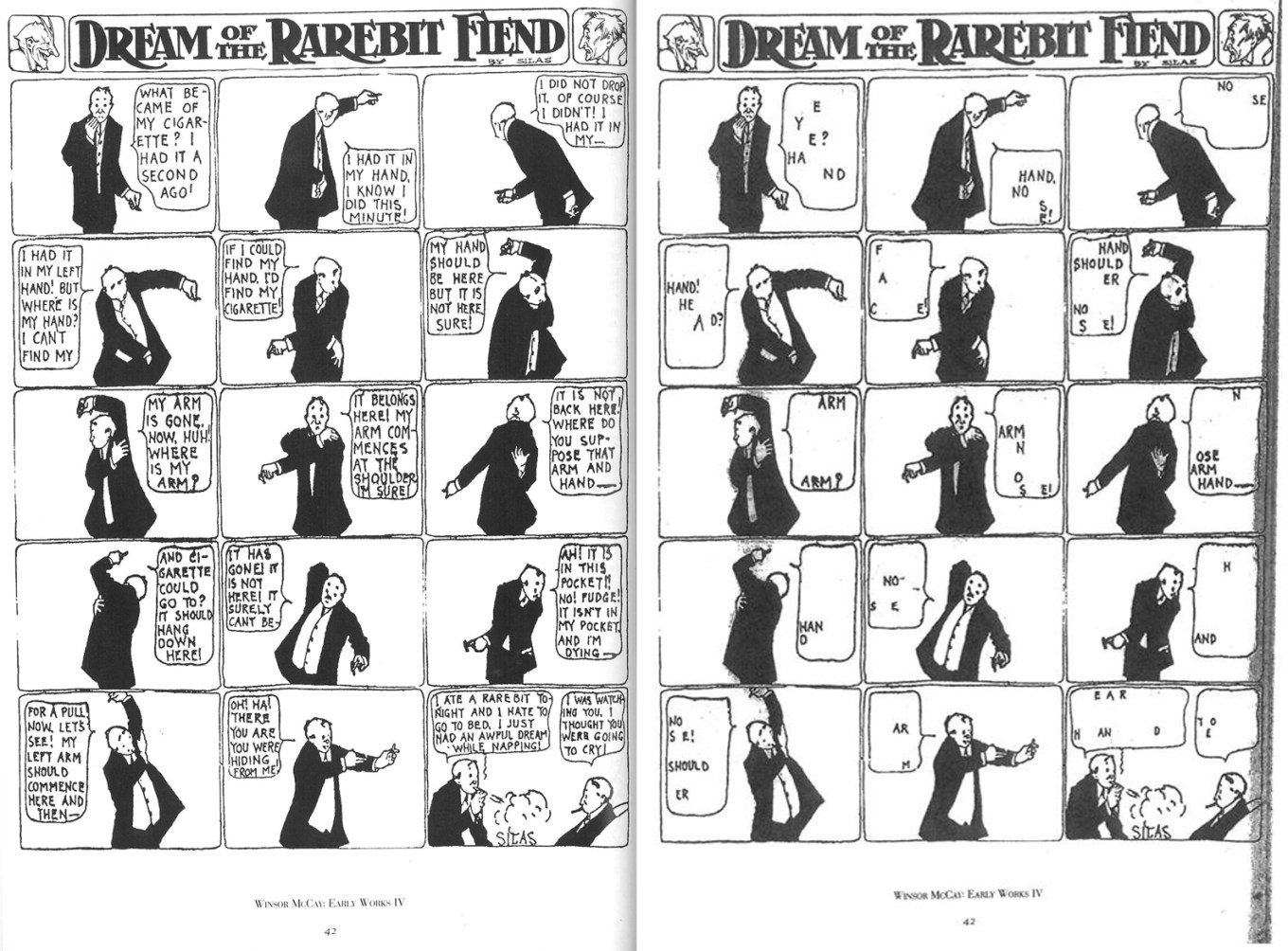
Under a “transformative constraint (which alter existing works)” students -in teams of 2 to 5 participants- were asked to do a partial alteration of the written texts, by erasing/covering with white-out liquid some textual element in order to form new sentences which would be consistent with the unaltered pictorial sequence. Additionally, students had to compose English (words and) sentences by respecting the order of appearance of the selected letters (or groups of letters). The most painstaking -if not painful- aspect of the exercise was related to the pages in German and French languages, two foreign languages that participating Thai and exchange students do not speak. If text alteration constraints aren’t new in Literature or Comics Art (see Lettrism, Tom Phillips, blackout poetry, cut-up technique, TNT en Amérique by Jochen Gerner [Fig 2], OuBaPo), the use of texts written in a language not spoken by the participant(s) seems to me less usual (as far as I know). The inability to understand the content of the foreign text and the constraint to propose an altered text in a mastered language (here English) are indeed quite a radical restrictions.
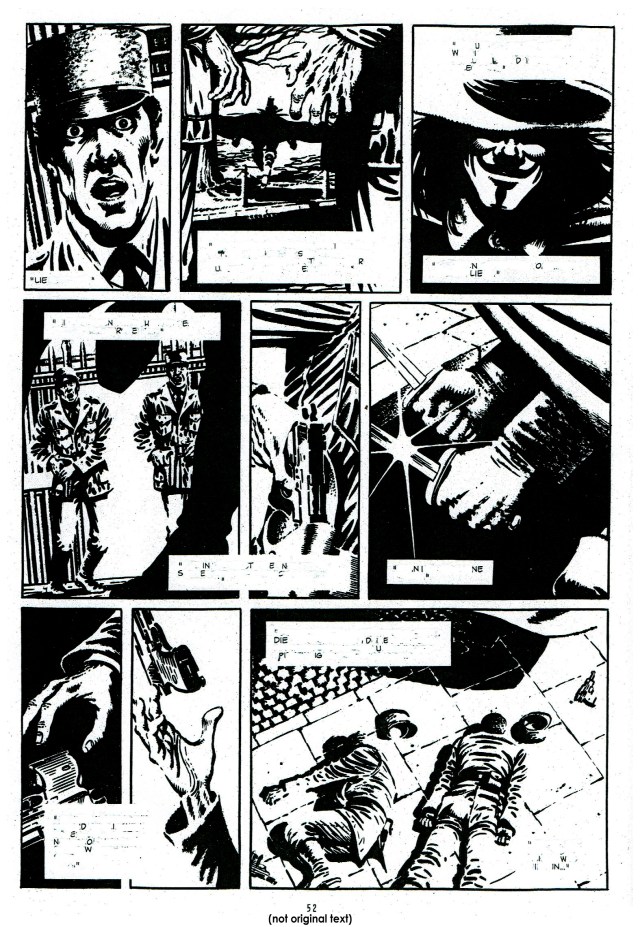
Even if German, French and English languages share the same Roman script (with sometimes additional letters) and if they share numerous cognates (or words with a common etymological origin) as neighboring Indo-European languages, these cognates have taken different forms (such as “colleague” in English, “collègue” in French and “Kollege” in German). Unable to use cognates (or false cognates or false friends) unless sharing identical spellings, participants are thus forced to compose English words (and sentences) with smallest units of writings like graphemes or syllables (or digraphs or larger groups of successive letters). In the first illustration (Fig 1), student Mon was forced to the radical alteration of the German sentence “Den Zorn, der Feuer vom Himmel regnen liess.“(Fig 1B; That Wrath which did rain fire from the Heavens) to compose the English clause “No lie” (Fig 1 C, D). Participants also came to appreciate (sigh) the different ratios of vowels and consonants, as well as the different frequencies of letters and syllables, in German, French and English languages… Students noted the low frequency of the vowel ⟨o⟩ in German (2.594%) compared to French (5.796%) and English (7.507%). Consequently, the newly formed English sentences tended to be quite short. Using V’s theatrical tirades (and Alan Moore’s verbose writing) was truly convenient in this regard. Let’s note here that the high frequency of the vowel ⟨e⟩ and ⟨d⟩, ⟨o⟩, ⟨t⟩) in French language will be put to good use by students Por and Jean in their hilarious story “DOT” altering pages of Lewis Trondheim’s Psychanalyse (see Fig 5). Accidentally and to the delight of the French speakers, the two students ended their narrative on an English-French false friend word (and within the purest Lewis Trondheim tradition). Quite a revealing slip of the pen, would have said Freud and Lacan.

The two main objectives of this exercise under radical restriction were: first, to prevent the participants from relying to much on familiar words and clauses that could be used without much alteration; second: to ensure that the altered text would be a complete creation with a new set of meanings, not influenced by the original content of the written text (as its meaning isn’t understood by the participants who don’t speak the language in which it is written) but mostly by their own interpretation of the visual sequences they are imposed with. The accompanying visual sequence is an additional productive constraint which led to the selection of possible themes and story-lines. The alteration of the comics pages excerpted from Lewis Trondheim’s Psychanalyse -a proto-OuBaPian comics itself using the constraint of iconic iteration applied to only two different panels (see below)- was in this respect less productive; the minimal visual “context” complicated the selection of a theme or concept (within the allocated time). However, it led to the brilliant “DOT” story by students Por and Jean (see Fig 5). The challenge was, as I said, painstaking -if not painful at times (sorry, kiddos!)- but the resulting pages were worth the effort, filled with comics poetry -if not Poetic Justice- and concert tickets for AC/DC (see Fig 20)…


Additional comments on the constraints:

“The main interest for me of the comic strip is the infinite possible links between text and image : a system of representation continually confronting , in a kind of alchemy, text and picture . This is the field I endeavour to explore on my own or with OuBaPo (Ouvroir de Bande dessinée Potentielle).
The idea ‘TNT en Amérique’ sprang from these remarks with OuBaPo, from exercises, experiments. I try to find new reading perspectives. I dismantle a given material to make something else of it.” Jochen Gerner (source).

Note on Psychanalyse. In the pages of his minicomic series ACCI H3319 self-published between 1988 and 1990, then-debuting French cartoonist Lewis Trondheim produced comic strips and single-page comics narratives relying only on the repetition of a photocopied single panel or a highly limited set of different panels. For instance, in the series of strips collected under the title Psychanalyse [Psychoanalysis] (by Le Lézard Noir, and later by L’Association), each comics page is built only with 4 different panels -but duplicated and arranged following the constraint of “iconic iteration”- presenting, in close-up, the minimalist depiction of a patient discussing with his psychiatrist (kept off-panel). Our transformative constrained exercise is thus applied to comics pages built themselves on proto-OuBaPian productive constraints.




NOTE: more resulting altered pages of this first excerpt are displayed at the end of this post.
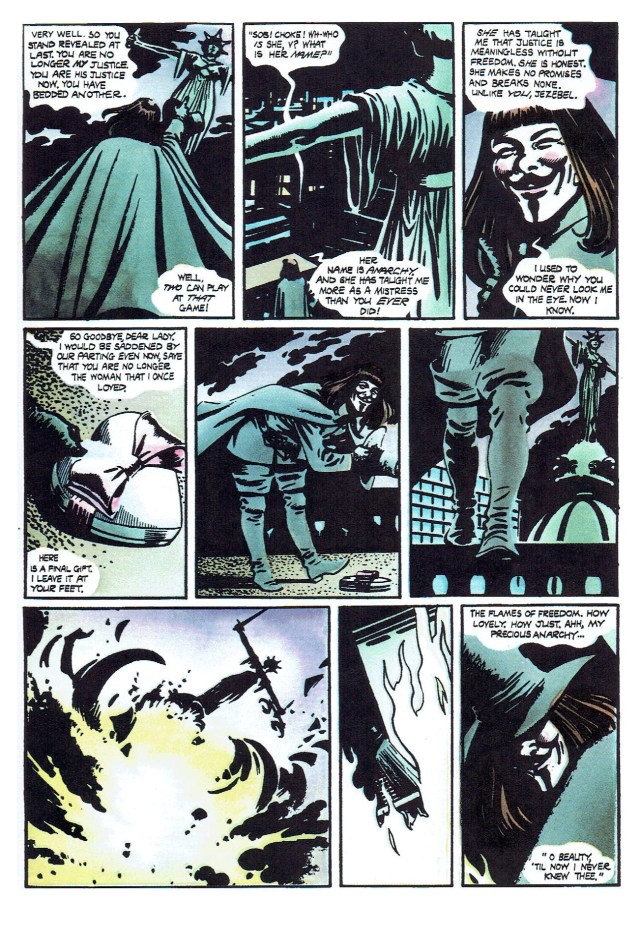


“[V trying to get tickets for] an AC/DC concert: believable. Convincing scenario is essential in any storytelling…”
David Lloyd, V for Vendetta co-creator and artist, commenting on the previous page altered by student French Fries.



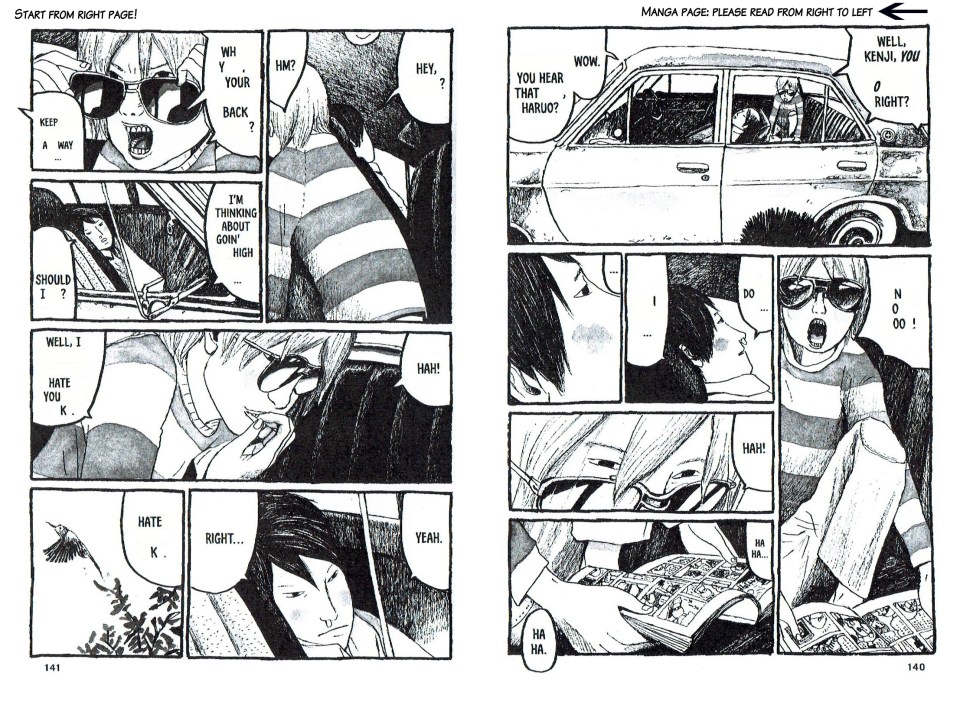


“When Por told me her concept, I said: ‘Por, this is an idea to get us a F’.”
Student Jean about the following altered narrative; a bold move indeed…
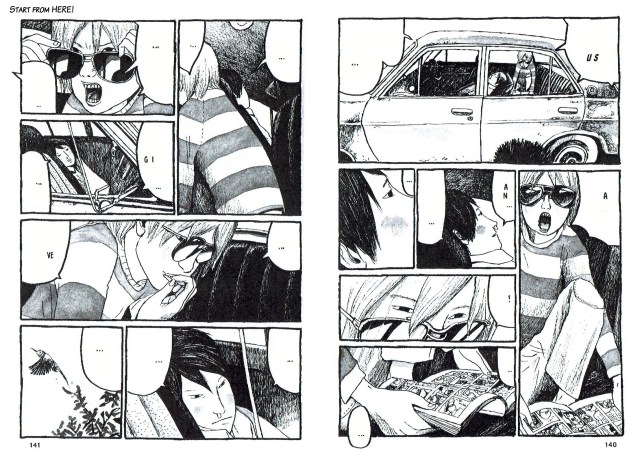



“I’m gonna die. I’m gonna die. This is too complicated, Ajarn [teacher]. I’m gonna die.”
Student Noinae during the in-class assignment.


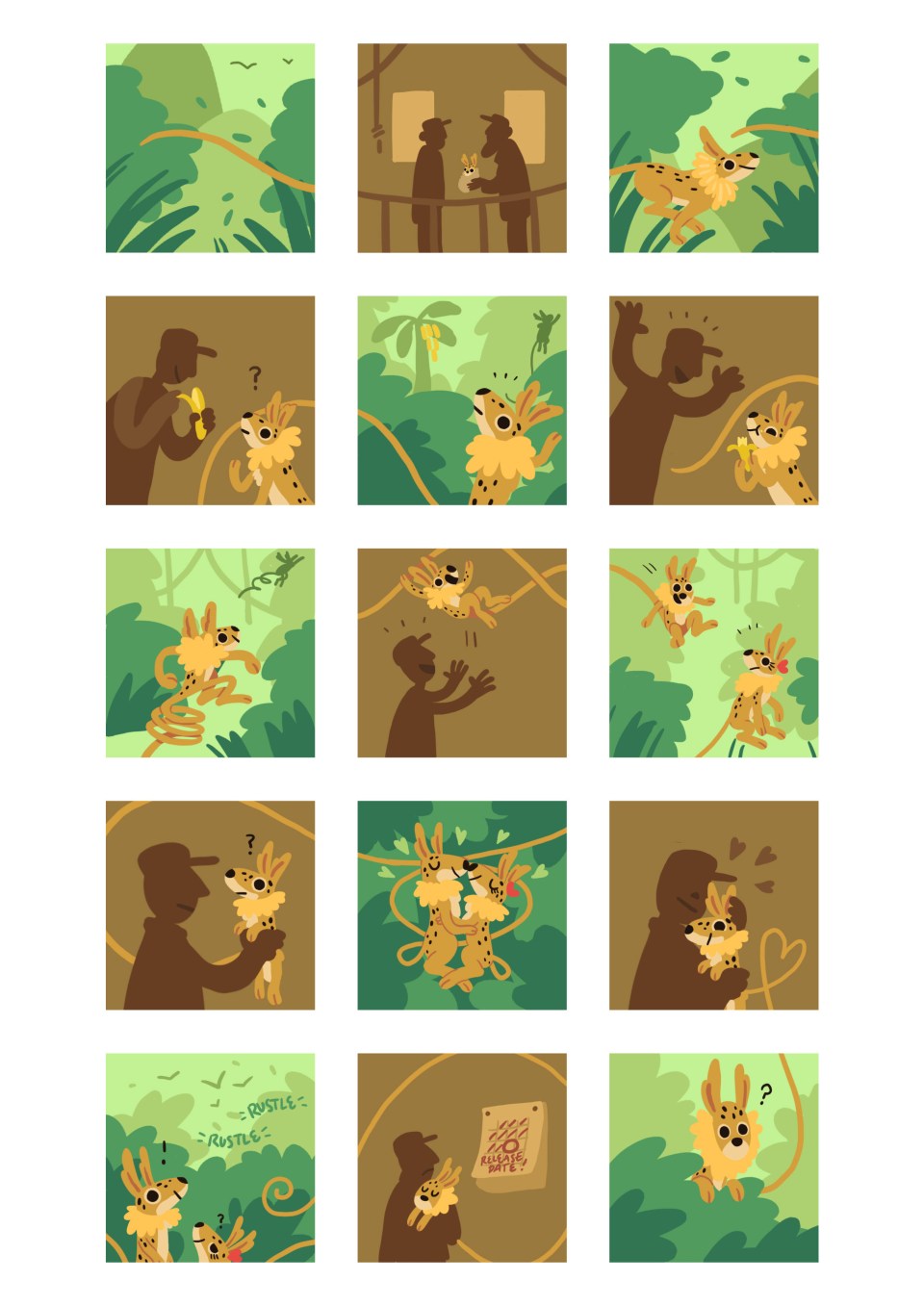
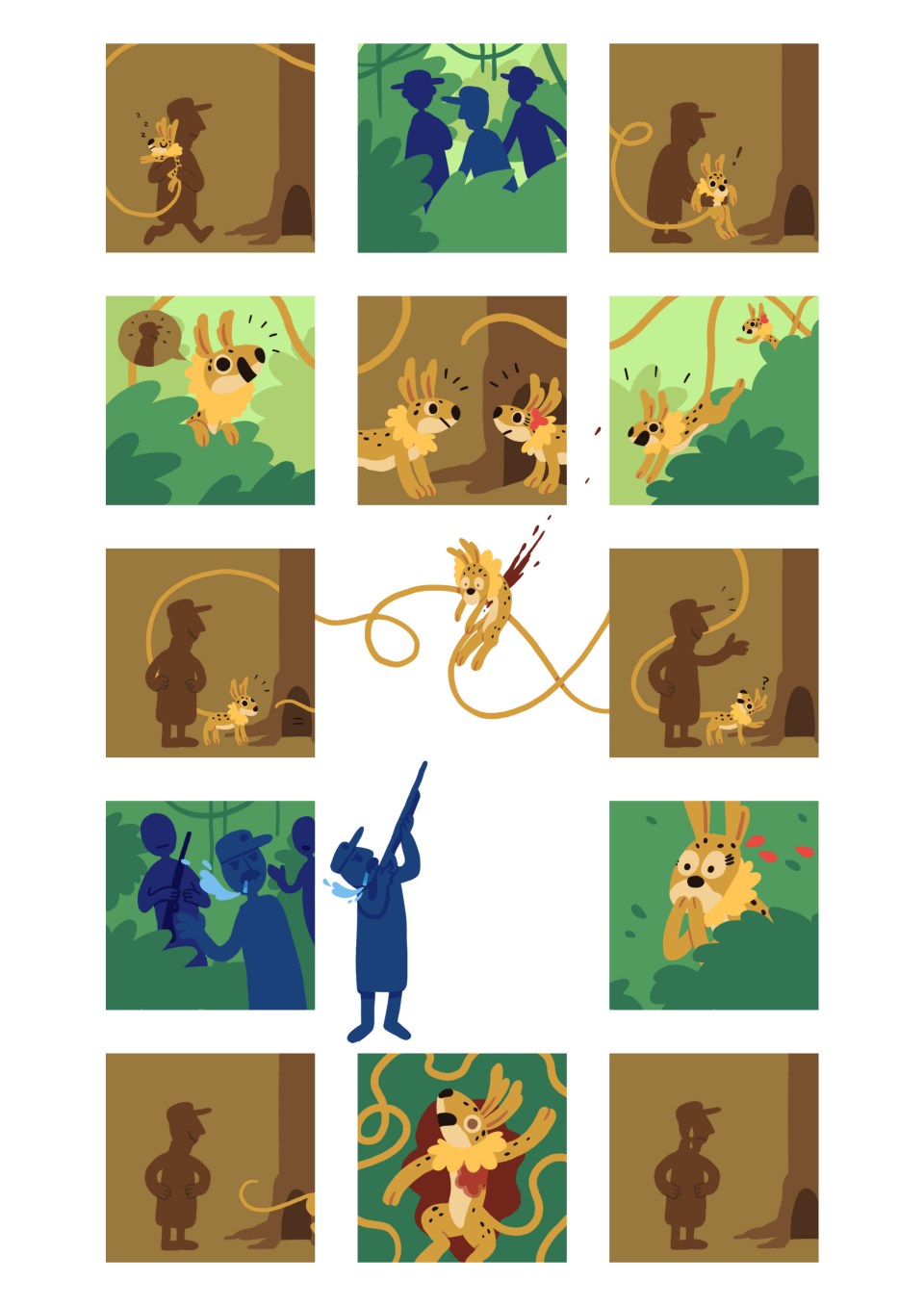
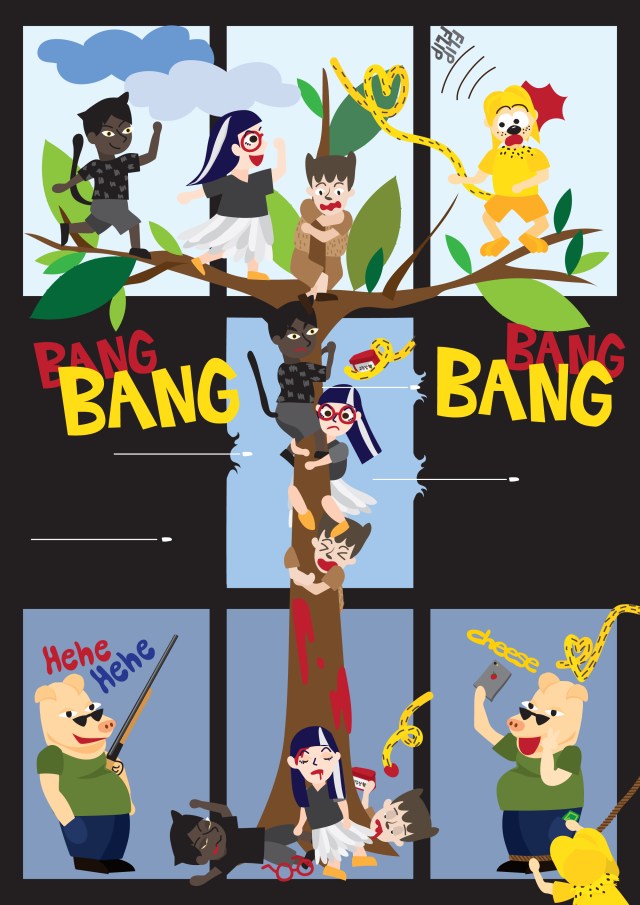
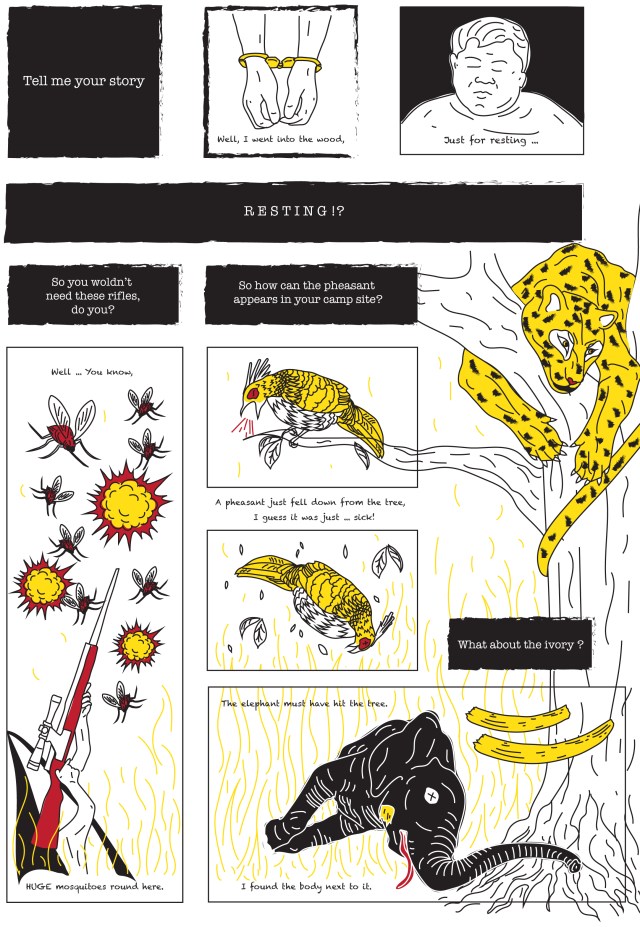
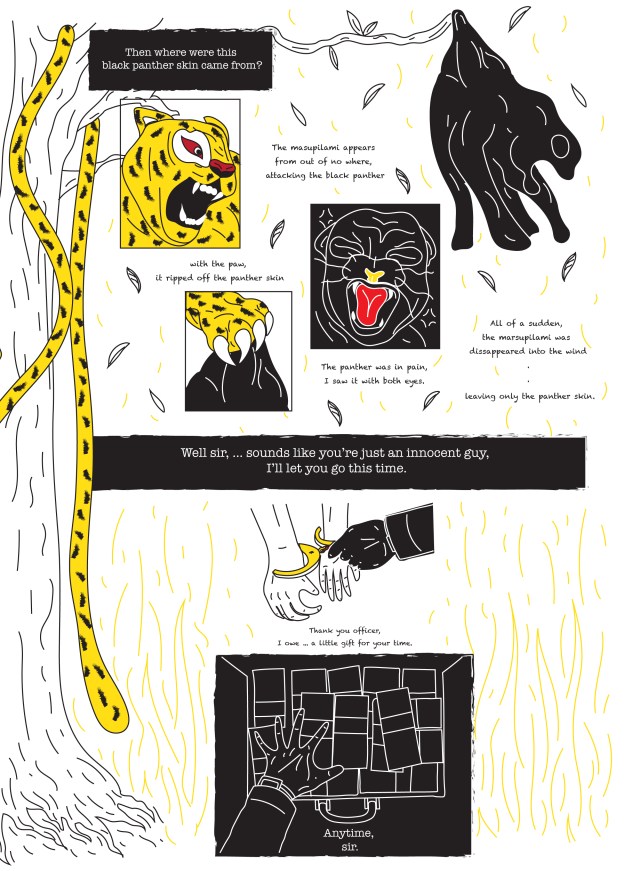
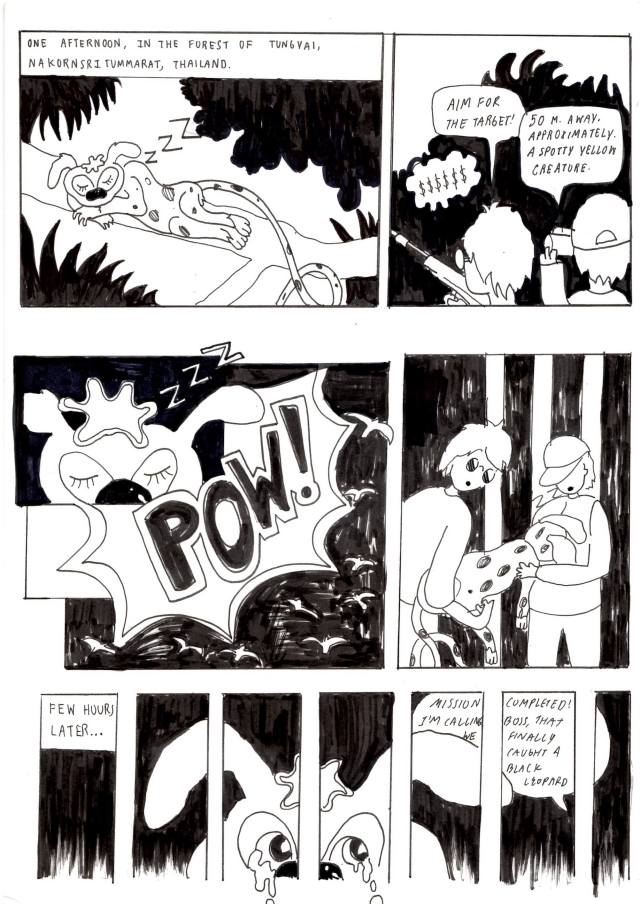
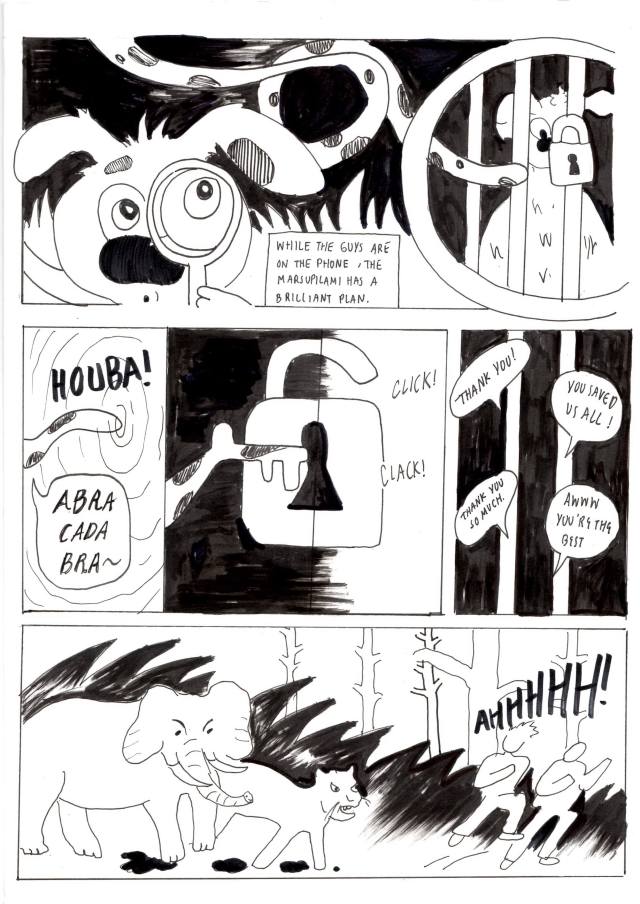
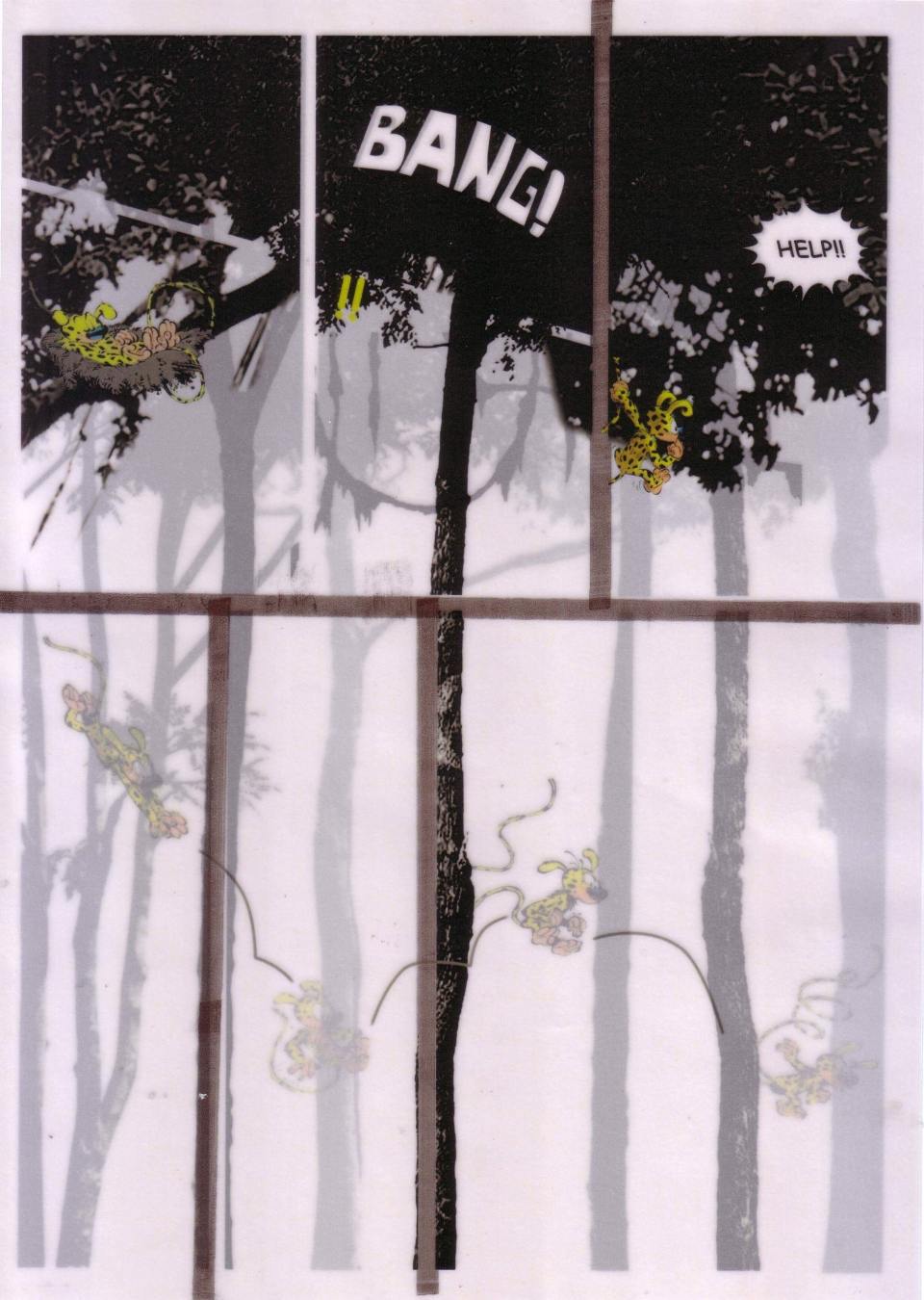
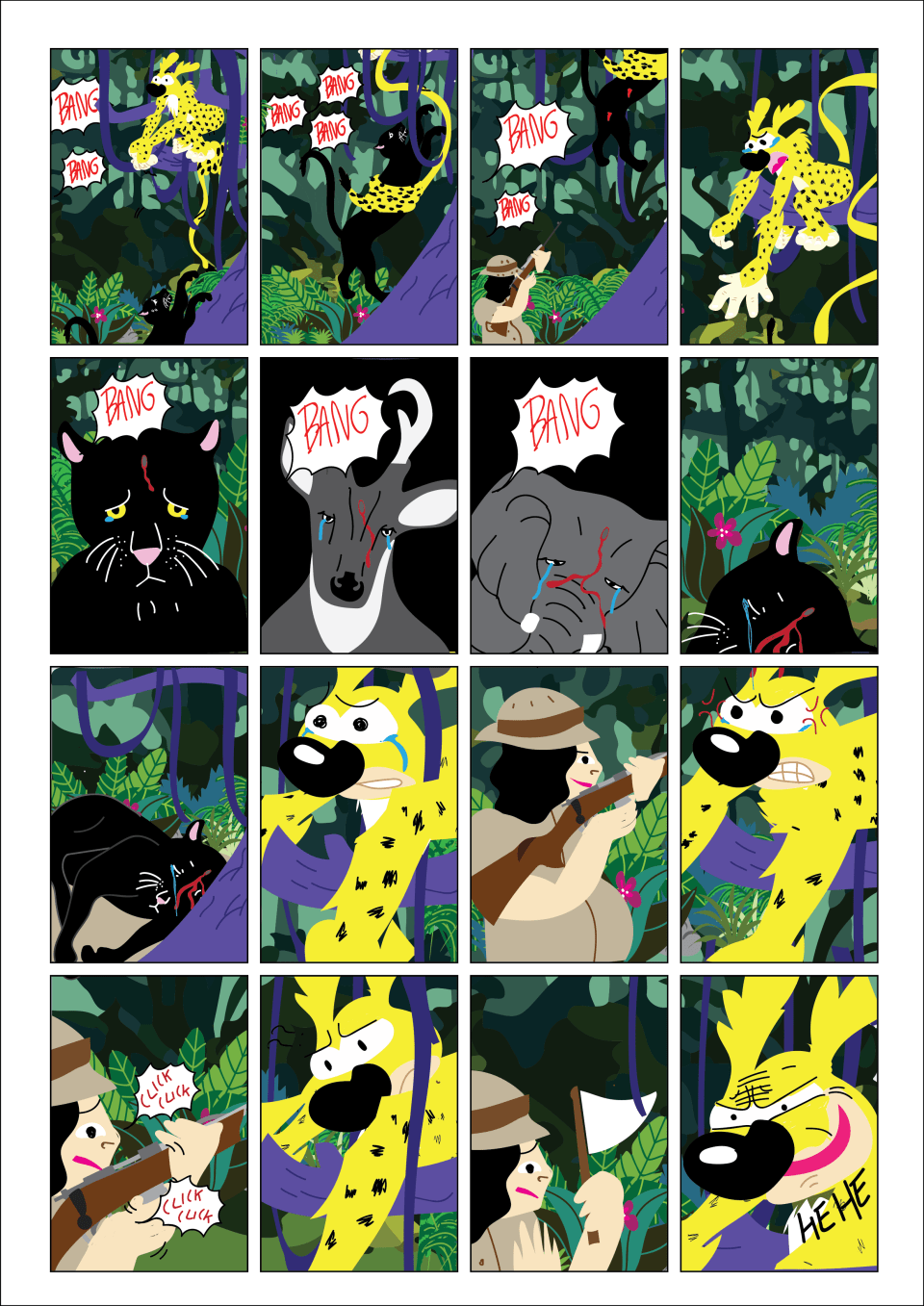
On the occasion of the 150th Anniversary of Friendship between Belgium and Thailand, and to explore the ability of comics to tackle social and political issues with much effectiveness and immediacy, 8 students at the International Program in Communication Design (CommDe, Department of Industrial Design, Faculty of Architecture, Chulalongkorn University, Bangkok, Thailand) were asked to create 2-page comics starring the Marsupilami -an imaginary animal created by Belgian cartoonist André Franquin (for Belgian publishing house Dupuis in 1952)- and addressing the recent story of a construction company mogul charged with six poaching-related crimes (including the killing of a black Indochinese leopard/panther) in a Thai Wildlife Sanctuary. High-resolution pages are displayed at the end of this post, after an introduction to the historical context and the guest-lecture on André Franquin.


The Secret Chronicles of Thungyai [Naresuan Wildlife Sanctuary] (in Thai: บันทึกลับจากทุ่งใหญ่) is a journal published in 1973 by a group of students against elephant hunting (and other animal poaching) in Thailand in the aftermath of the crash of a military helicopter in the Thung Yai forest revealing an illegal hunting party of senior military officers, businessmen, family members, and a filmstar. The ‘zine’ documented “the ecological value of the area as well as the incident” (The Nation, 2018), and was accompanied by satirical illustrations from various influential cartoonists (with an introduction, and two illustrations, by the “King of Thai Cartoon” Prayoon Chanyawongse; see figure above). 200,000 copies of the student journal were sold in 2 weeks (Eawsakul, 2015), fuelling nationwide public outrage. “In a time of great political unrest the incident became a focus for the prevailing discontent with the military rule” and “a rallying cry for the pro-democracy movement” (Seub/Stewart-Cox 1990:34), triggering public protest and demonstrations. “The protests were suppressed on October 14, with scores of killed, followed by a great number of students fleeing to the forest to join communist groups” (The Nation, 2018). The bloody crackdown ultimately led to the fall of the Thanom-Prapas regime. “The area finally was declared a Wildlife Sanctuary in 1974 under a new democratic government” (Buergin, 2001).


44 years later (on February 5, 2018) in the same Wildlife Sanctuary, construction company mogul Premchai Karnasuta -the 63-year-old president of Italian-Thai Development- and three other men were charged with six poaching-related crimes after they were caught with “two rifles, a double-barrelled shotgun, various bullets, the body of a Kalij pheasant, a muntiacini deer carcass, a skinned and salted black leopard and a black panther skull”. (Thaitrakulpanich, Khaosod English, 2018a). “Investigators examining Premchai’s camp site found cooking equipment they believe the rotund CEO used to consume the animal. The black leopard, commonly called a black panther in Asia and considered a vulnerable species, was killed by gunfire” (Thaitrakulpanich, Khaosod English, 2018b). Mr Premchai and other suspects still deny the charges against them, which include illegal hunting and possessing firearms in a sanctuary.” A ranger and his coworkers have told police that the powerful construction magnate they arrested on suspicion of poaching a rare black panther tried to bribe them” (Thaitrakulpanich, Khaosod English, 2018c). “The case has sparked a fierce outcry from environmental groups, celebrities and the public in general” (Bangkok Post, 2018). “As people following the case have shown dissatisfaction with the slow pace of the investigation, many have expressed their feelings regarding the case, and the hunting of endangered big cats in general, in many ways.” A campaign calling for the prosecution of a construction tycoon over “his alleged killing of a black leopard and other protected animals has expanded, with people expressing their grief and anger in essays, poems, paintings and, in the latest development, street art” (Chimprabha, The Nation, 2018). It was just about time to address the issue in #ArtOfThePanther comics form…
(Note: sources at the end of this post).


On Wedneday February 7, I had the pleasure to be invited to hold a guest lecture for ajarn Oat Montien’s Visual Narrative course at the International Program in Communication Design (CommDe, Department of Industrial Design, Faculty of Architecture, Chulalongkorn University). My topic was the evolution of Comics Art from American cartoonist Harvey Kurtzman (1924-1993), with complete analyses of his classic short comics BIG ‘IF’! (Frontline Combat #5, March 1952) and 3-DIMENSIONS! (art by Wally Wood, MAD #12, June 1954), to Belgian cartoonist André Franquin‘s (1924-1997) creations such as Gaston Lagaffe and the Marsupilami, and Les Idées Noires (Die Laughing, soon in English by Fantagraphics).


The lecture also included an analysis of the comics masterpiece Master Race by (Al Feldstein &) Bernie Krigstein (Impact #1, EC Comics, April 1955), and a presentation of the seminal role of French comics writer René Goscinny (The Adventures of Asterix) and Belgian cartoonist Jijé (figurehead of the Marcinelle School, author of seminal semi-realistic comics series Jerry Spring and mentor of André Franquin, Smurfs‘creator Peyo, or Jean Giraud/Moebius) in the development of humour, realism, and more adult content in Franco-Belgian comics (influenced partly by American cartoonists such as Harvey Kurtzman and Milton Caniff).


Belgian cartoonist Hergé, creator of the Adventures of Tintin, stated: “Franquin is a great artist. Next to him, I’m only a mediocre pen-pusher”. Fantagraphics’ Kim Thompson agreed with Tintin’s creator, writing that “in terms of ultra-classic greatness, Hergé has that abstract line but Franquin has something else. He created the most complete, the most alive, the most absolute cartooniness in comics history” (source: The Comics Journal).


On 31 January 1952, the first appearance of the Marsupilami in the adventure of Spirou et les Héritiers (Spirou and the Heirs) in the weekly Spirou magazine marked a generation of readers. The myth did not need decades to settle permanently (MarsuPro). The original Marsupilami was found from the jungle of Palombia, a fictitious South American country, by adventurous journalists Spirou and Fantasio and their squirrel Spip. The marsupial was taken to Belgium, where he was shortly kept in a zoo (Comic Vine). The Marsupilami will later accompany Spirou and Fantasio in many adventures, before returning to Palombia and have adventures of its own. The Spirou et Fantasio album Le nid des Marsupilamis (1956) is mostly concerned with female reporter Seccotine‘s documentary-within-the-comic about the life of a family of Marsupilamis still living in the wild in Palombia. Marsupilamis have a long, strong, flexible, prehensile tail, used for almost any task. They are able to use their tail as a weapon, by tightening the end into a fist and the remainder of the tail into a spring-like spiral for maximal force (see figure above). Marsupilamis must regularly defend themselves against poacher Bring M. Backalive and his associates…


For those interested, comic books of Spirou and Fantasio (with the Marsupilami) and Marsupilami adventures are available in English from Cinebook.


After the lecture, CommDe students had the opportunity to flip through a collection of 1940s-1970s classic and rare issues of the Franco-Belgian Spirou magazine (with Spirou/Marsupilami pages by André Franquin, Jerry Spring pages by Jijé, Johan and Peewit pages by Smurfs creator Peyo, etc.), and issues of the Spirou magazine mythic supplement Le Trombone Illustré. I would like to thank warmly Philippe Capart, owner of the bookstore La Crypte Tonique in Brussels, who helped me to select and acquire the issues of this invaluable collection used for my comics courses in Thailand.
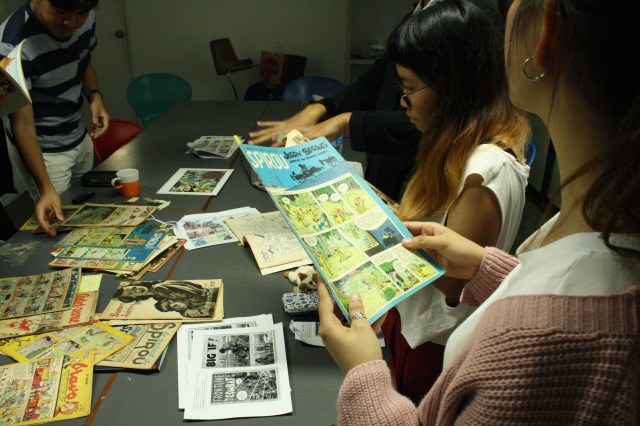


Students were given one week to develop the layouts of their Marsupilami and the Black Panther two-page comics. During the following lesson, ajarn Oat Montien -with the assistance of yours truly- gave comment and advice on the comics layouts (see figures below).


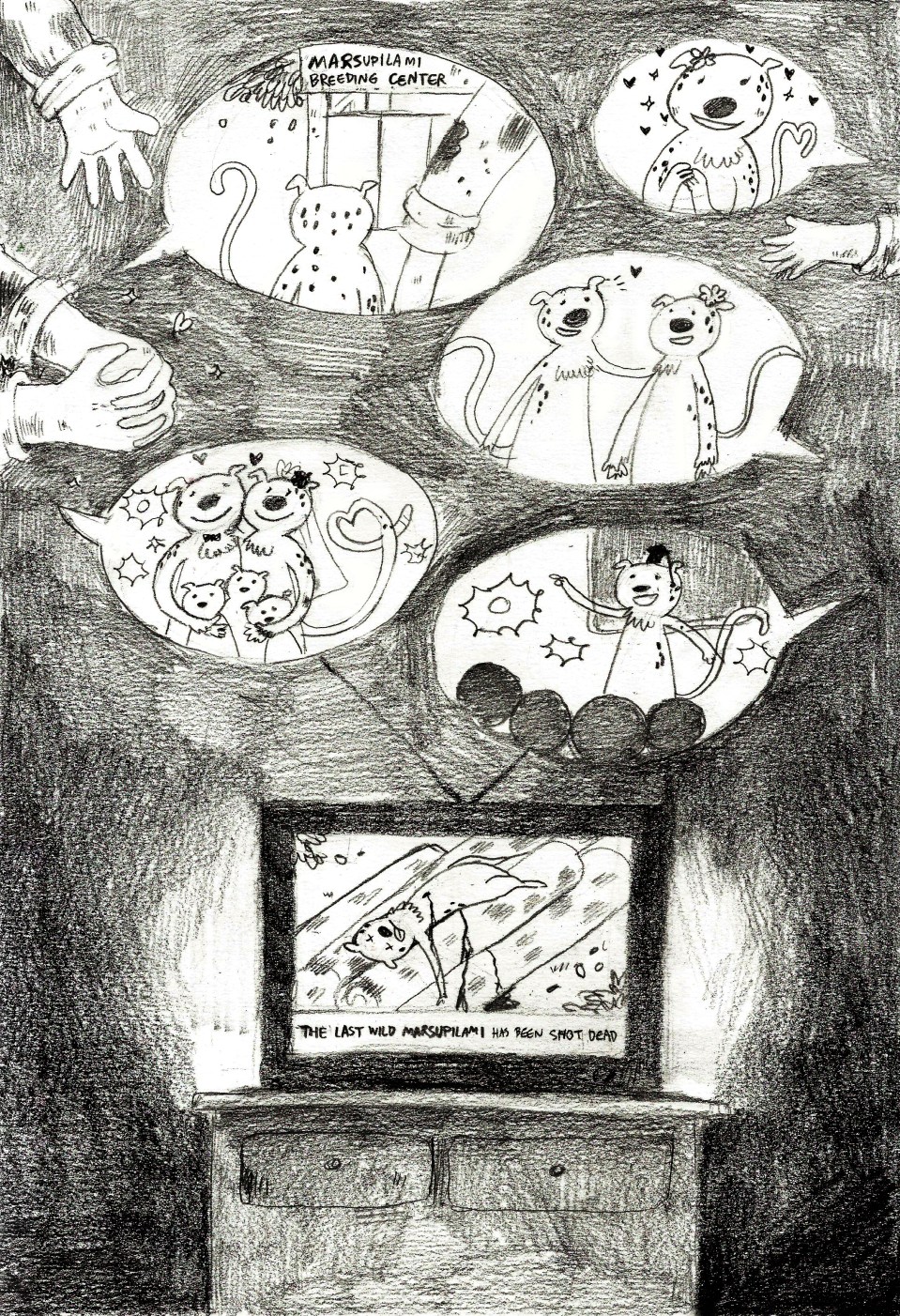
One week after presenting their layouts, the 8 students of the Visual Narrative courses submitted the final version of their comics! Enjoy!








Sources
Bangkok Post (2018, March 7). Black leopard soup confirmed in poaching case. Bangkok Post.
Buergin, R. (2001). Contested Heritages: Disputes on People, Forests, and a World Heritage Site in Globalizing Thailand, SEFUT Working Paper No. 9, University of Freiburg, p.5.
Chimprabha, M. (2018, March 8). Art breathes life into black leopard campaign – despite repeated attempts at suppression. The Nation.
Eawsakul, T. (2015), Cartoon Thai Tai Laew (catalogue expo, “การ์ตูนไทยตายแล้ว”, “Is Thai Cartoon Dead?”). Bangkok: PUBAT, The Publishers and Booksellers Association of Thailand, n.p.
Seub N., Stewart-Cox, B. (1990). Nomination of the Thung Yai – Huai Kha Khaeng Wildlife Sanctuary to be a U.N.E.S.C.O. World Heritage Site. Bangkok: Royal Forest Department.
Thaitrakulpanich, A. (2018a, Feb 6). Italian-Thai President Charged with Poaching Wild Animals. Khaosod English.
Thaitrakulpanich, A. (2018b, Feb 8). Rangers: Premchai ate the Leopard in a Soup. Khaosod English.
Thaitrakulpanich, A. (2018c, Feb 8). Forest Ranger: Poacher Premchai Offered Bribe. Khaosod English.
The Nation (2018, Feb 7). Hunting arrests recall events leading to 1973 uprising crisis. The Nation.
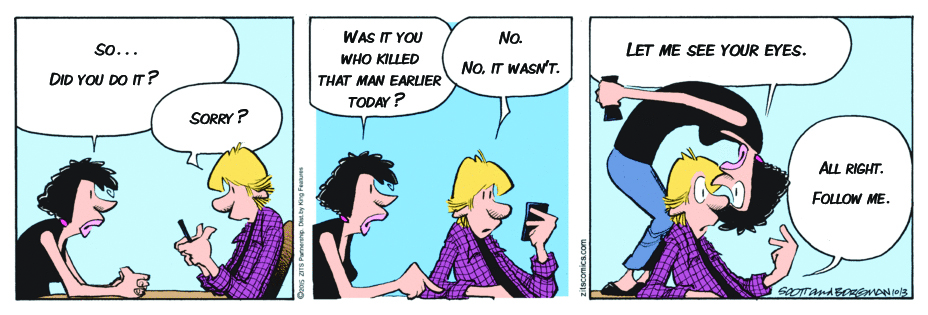
#LetMeSeeYourEyes; substituting the dialogue of a comics/manga page with imposed lines excerpted from Norwegian cartoonist Jason‘s Why Are You Doing This? (Fantagraphics, 2005; Editions Carabas, 2004, for original French version).
BLURB!
“Great idea for an exercise (the source is impeccable, of course!). The examples work really well, and the Peanuts page shows how this principle can be expanded on and could even be used for a book-length work made up of quotes, borrowed page layouts, mash-ups, etc.” Matt Madden (February 17, 2018), cartoonist and teacher best known for his book 99 Ways to Tell a Story: Exercises in Style (Penguin), as well as a member of Oubapo (Workshop for Potential Comics), and later a French knight in the Order of Arts and Letters.
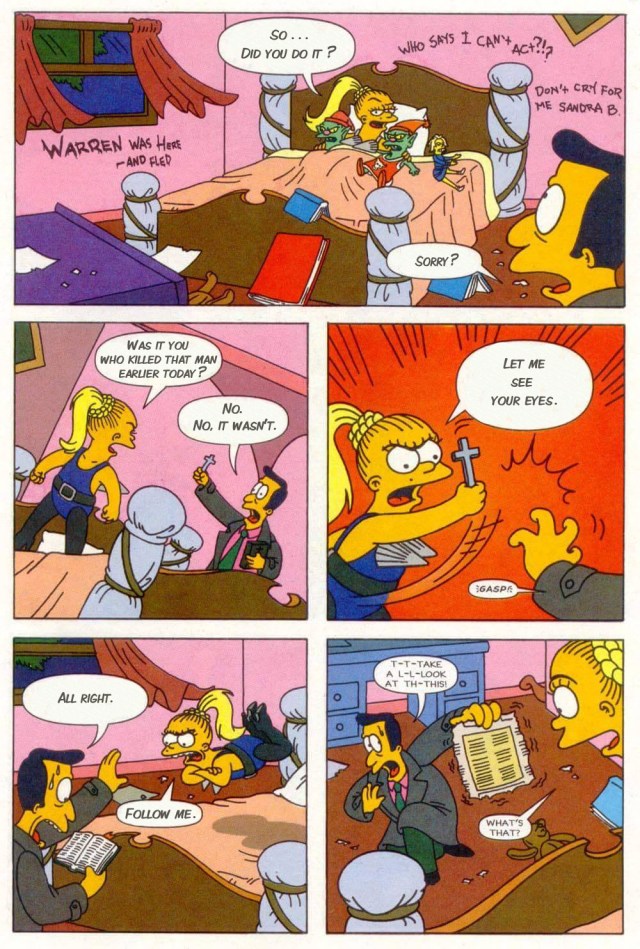
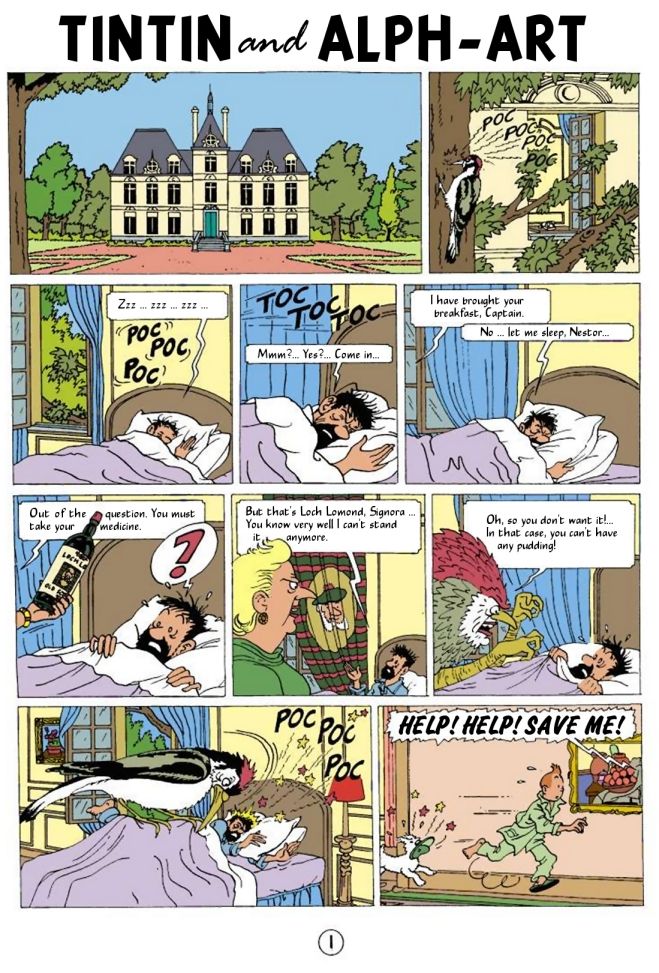
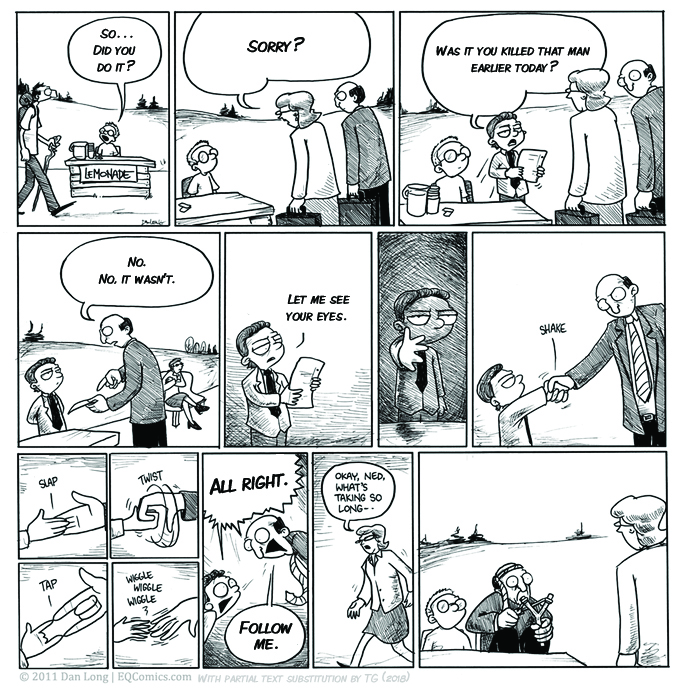
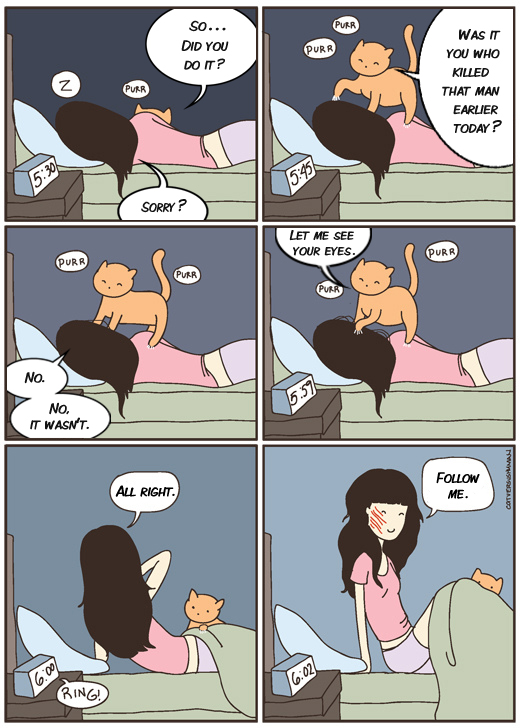
January 2018. The sixty-two (3rd and 4th year) students in the Creative Writing for Printed Matter course (sections 10 and 11; “Graphic Writing”) at the International Program (BA) in Communication Management (Faculty of Communication Arts, Chulalongkorn University, Bangkok , Thailand) were provided with a series of imposed lines excerpted from Jason’s comics Why Are You Doing This?: “So… Did you do it? / Sorry? / Was it you who killed that man earlier today? / No. No, it wasn’t. / Let me see your eyes. / All right. Follow me.” After being shown an example (Tintin in Tibet; see below) and as a home assignment, students were given one week to find a comics/manga page in which the dialogue might fit -with the least possible alteration- by substitution.
“The function of relay is less common (at least as far as the fixed image is concerned); it can be seen particularly in cartoons and comic strips. Here text (most often a snatch of dialogue) and image stand in a complementary relationship; the words, in the same way as the images, are fragments of a more general syntagm [sequence of linguistic units] and the unity of the message is realized at a higher level, that of the story, the anecdote, the diegesis […].” Roland Barthes, Rhetoric of the Image (translation S. Heath), in: Image, Music, Text, 1977.
Goals of this warm-up exercise; production of new comics pages by students without any particular artistic training; browsing of dozens of comics pages, and development of the “image reading” skill by focusing students’ attention on visual motifs in pictures and sequences; development of multimodal literacy through the combination/confrontation of visual (drawings), aural (speech, tone), linguistic (delivery of both “written and spoken” text), gestural (facial expressions/body language/postures) and spatial (spatialisation of text & sequences of adjacent panels) modes; exploration of text/image relationship (anchorage/relay); to stress out the importance of eye contact in drama.
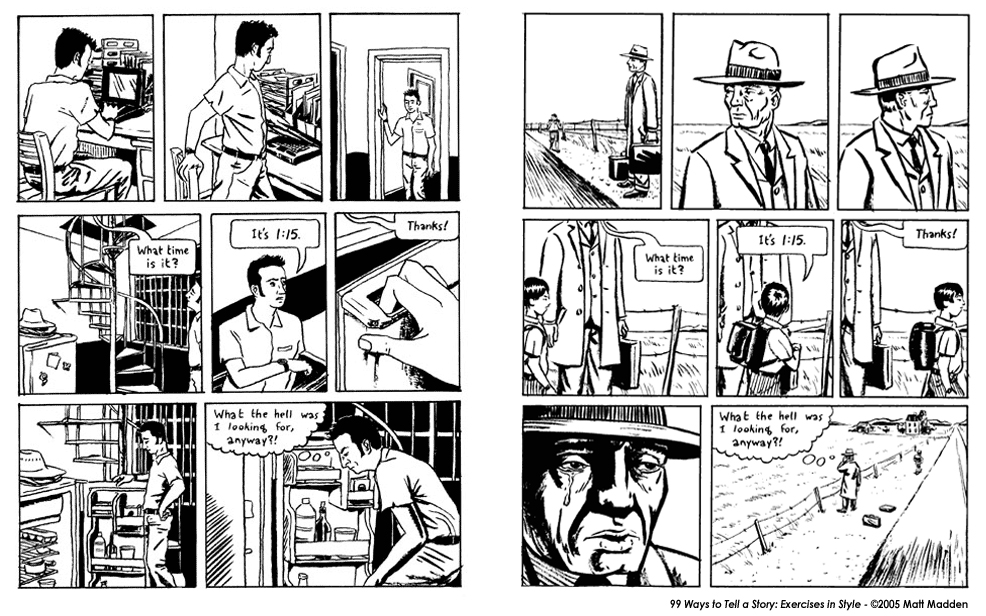
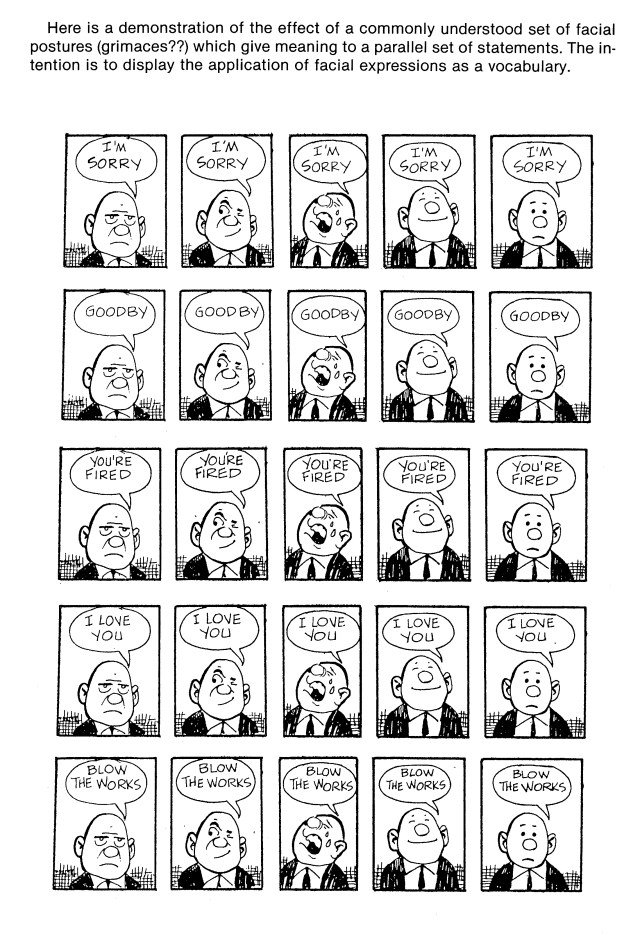
Inspired by a constrained comics page from American cartoonist Matt Madden‘s 99 Ways to Tell a Story: Exercises in Style (2005). And from Will Eisner‘s illustration of “facial postures with a parallel set of statements” (in Comics and Sequential Art). See below.
“[Comics] doesn’t blend the visual and the verbal – or use one simply to illustrate the other – but is rather prone to present the two non-synchronously; a reader of comics not only fills in the gaps between panels but also works with the often disjunctive back-and-forth of reading and looking for meaning.” Hillary Chute, “Comics as Literature? Reading Graphic Narrative”, in: PMLA, 123(2), 2008


Commenting on Gunther Kress’s Multimodality, Jacobs notes that linguistic, visual, audio, gestural, and spatial elements combine in comics narratives and that, “[taken] together, these elements form a multimodal system of meaning making.” (“More than Words: Comics as a Means of Teaching Multiple Literacies”, in: The English Journal, 96(3), 2007.
1. Text substitutions by CommArts students; without any order/speech balloon alteration (except for an additional ellipsis, or “…”, in a couple of pages)




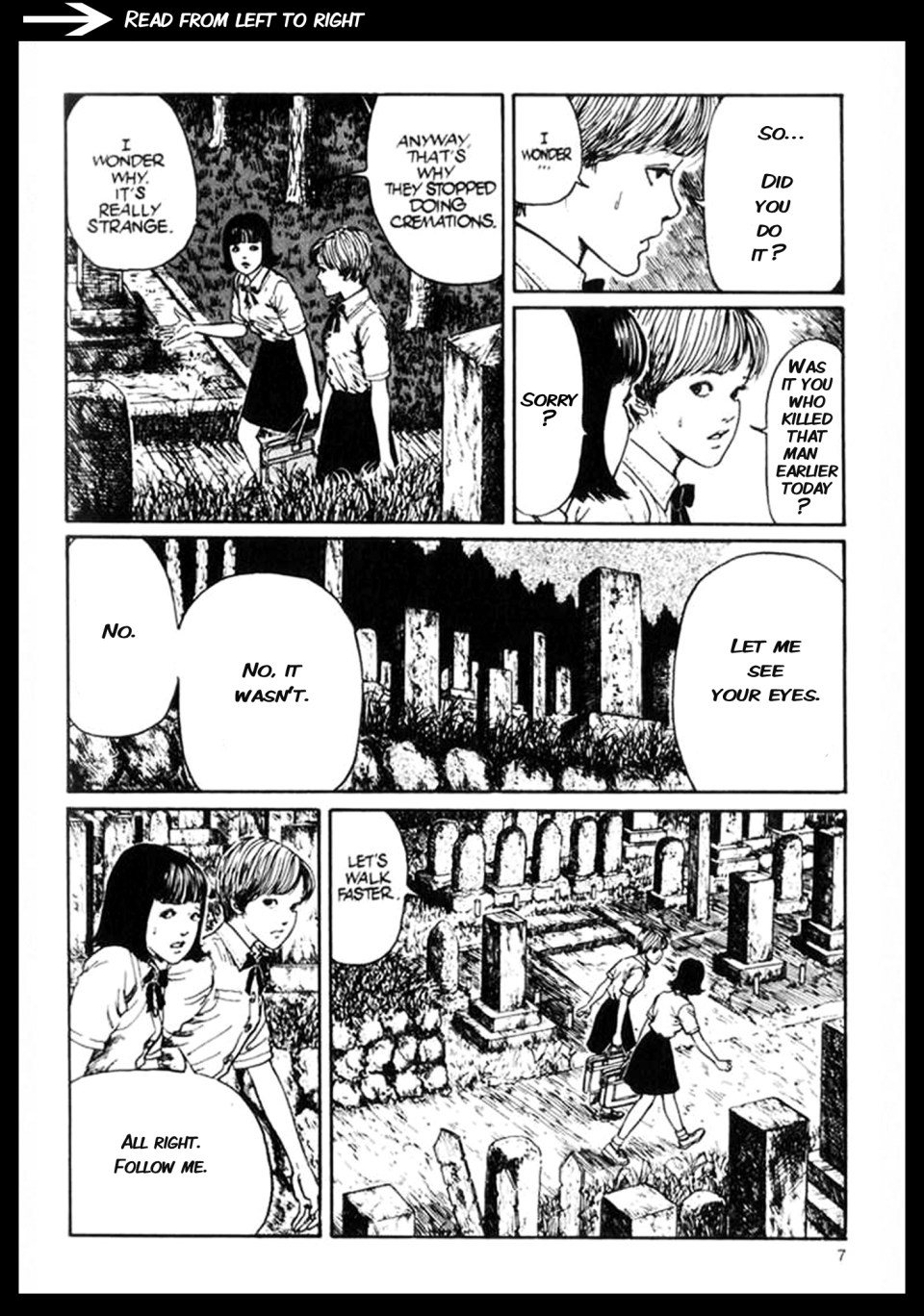
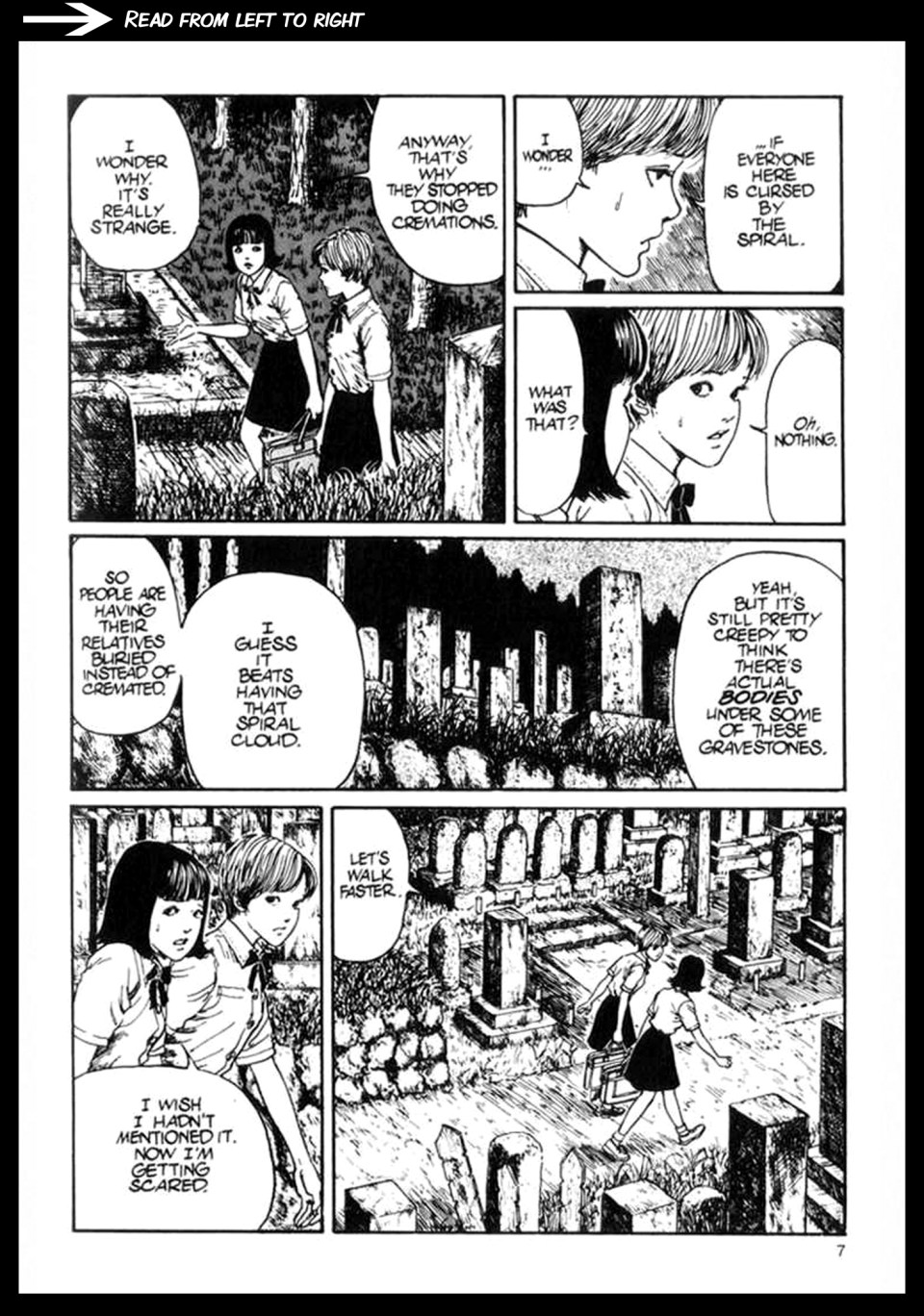
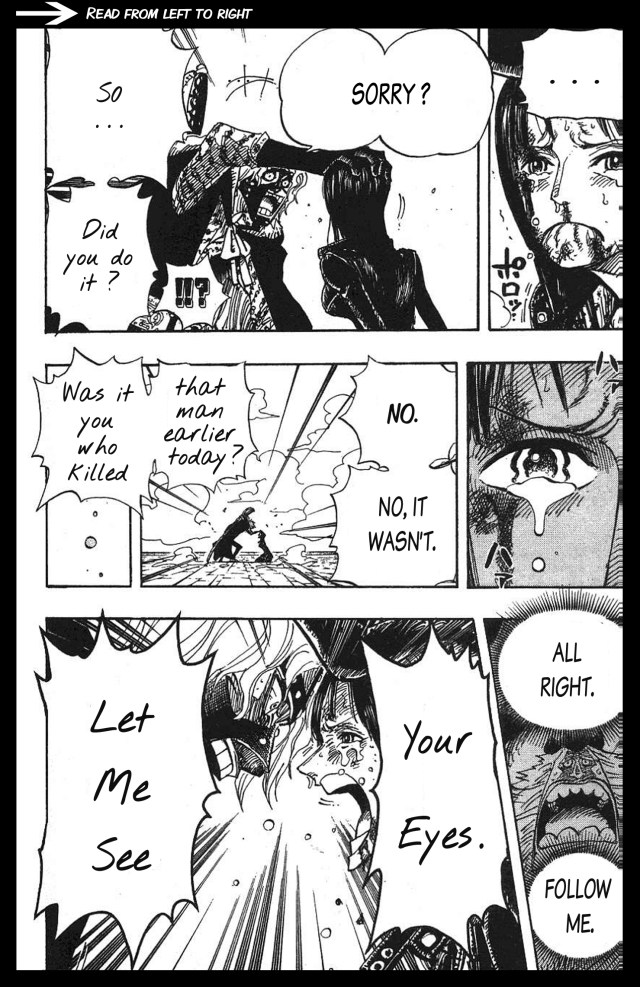
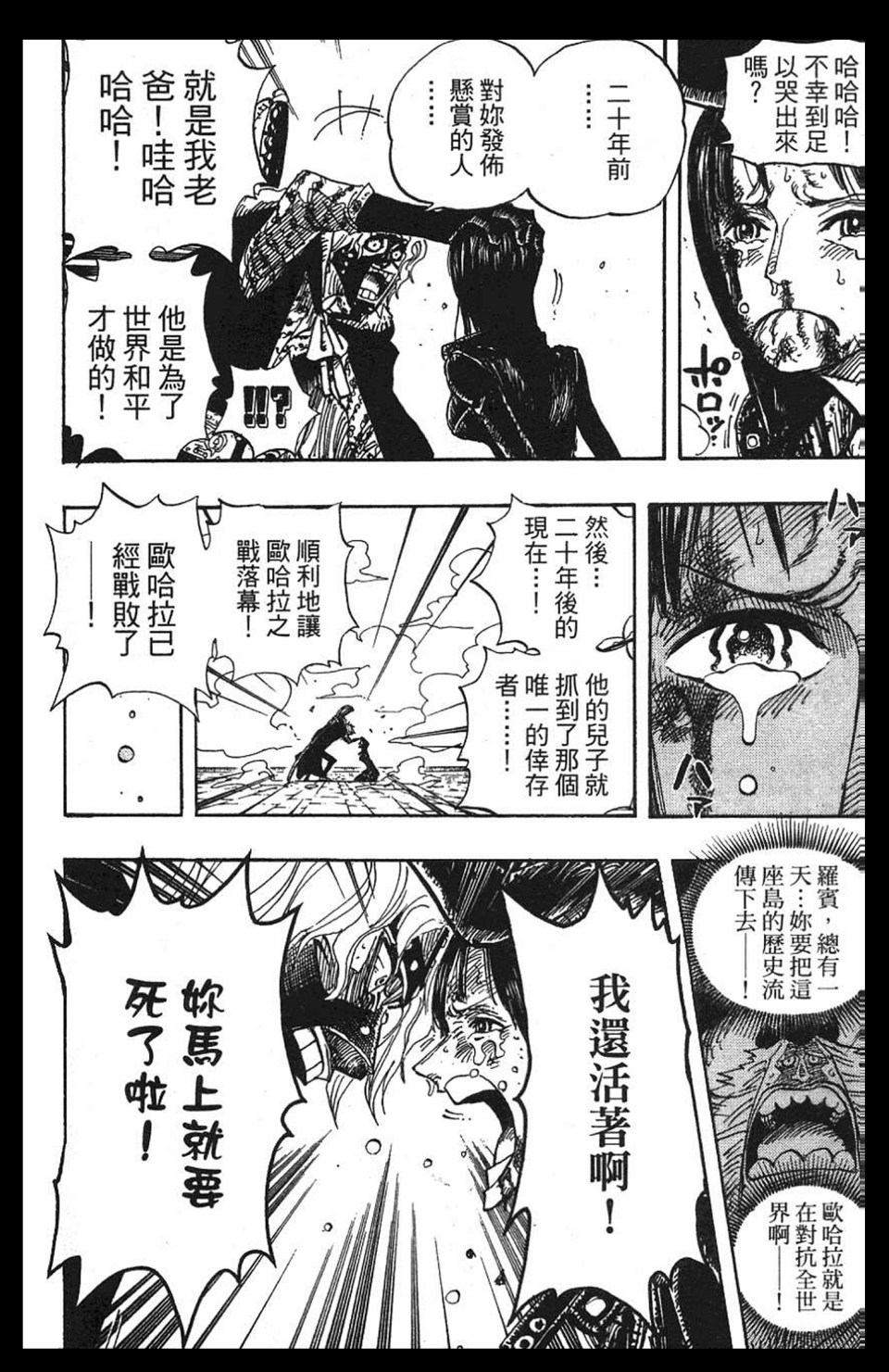

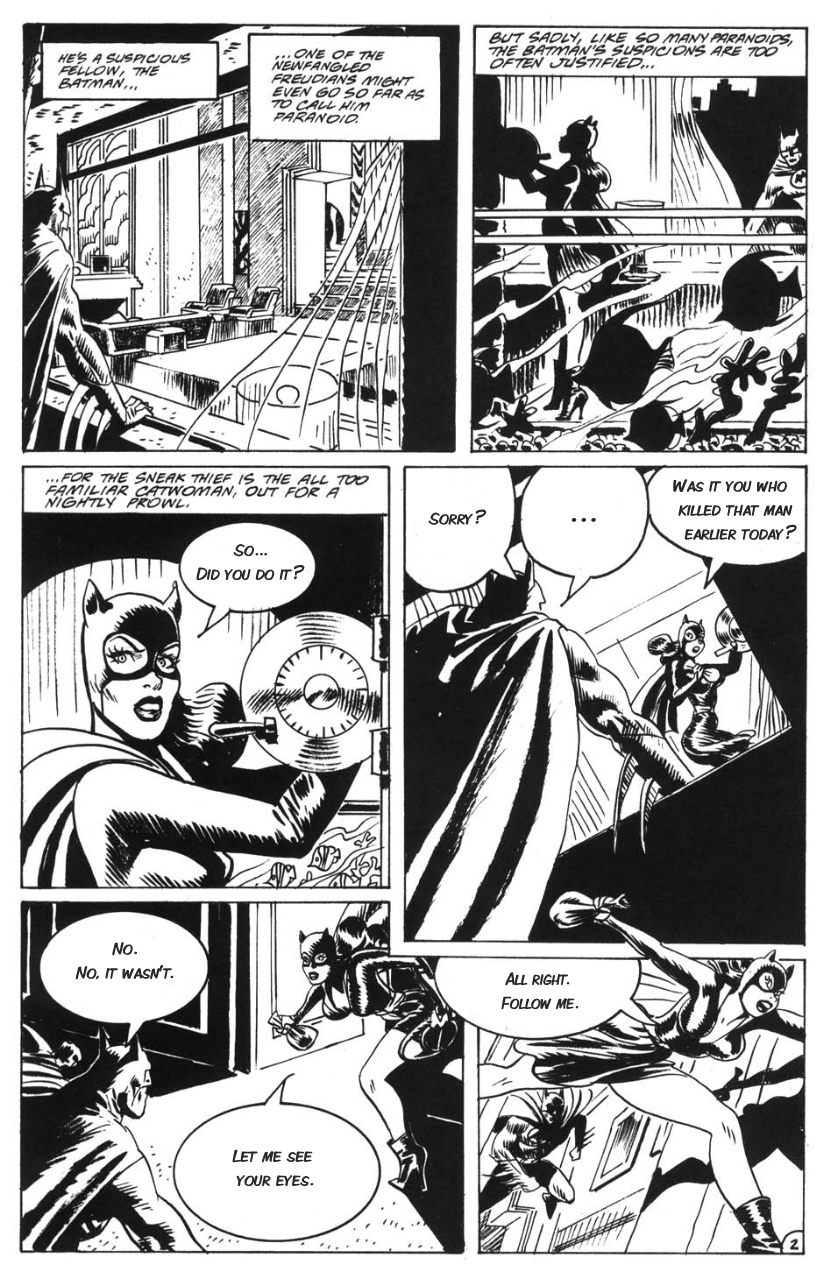


2. Text substitutions by CommArts students; respecting the order of the imposed lines but not their strict succession (distribution of the imposed lines before and after text retained from the original comics page).
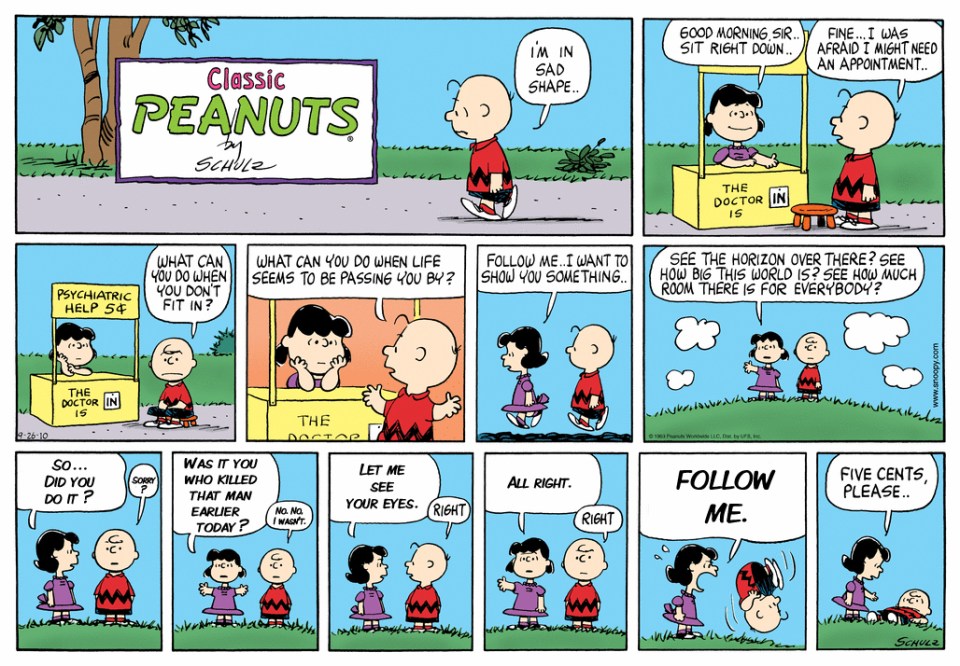


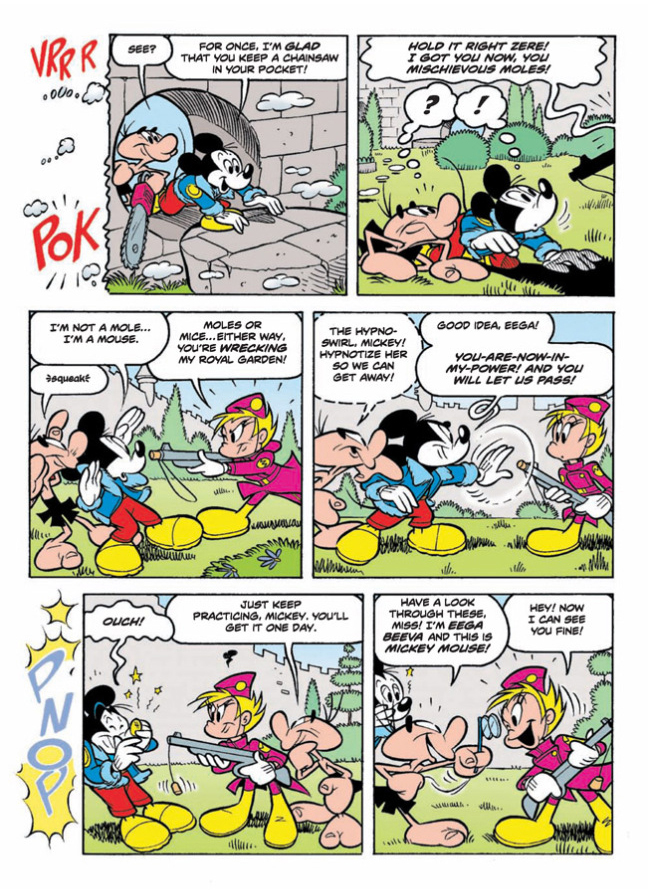
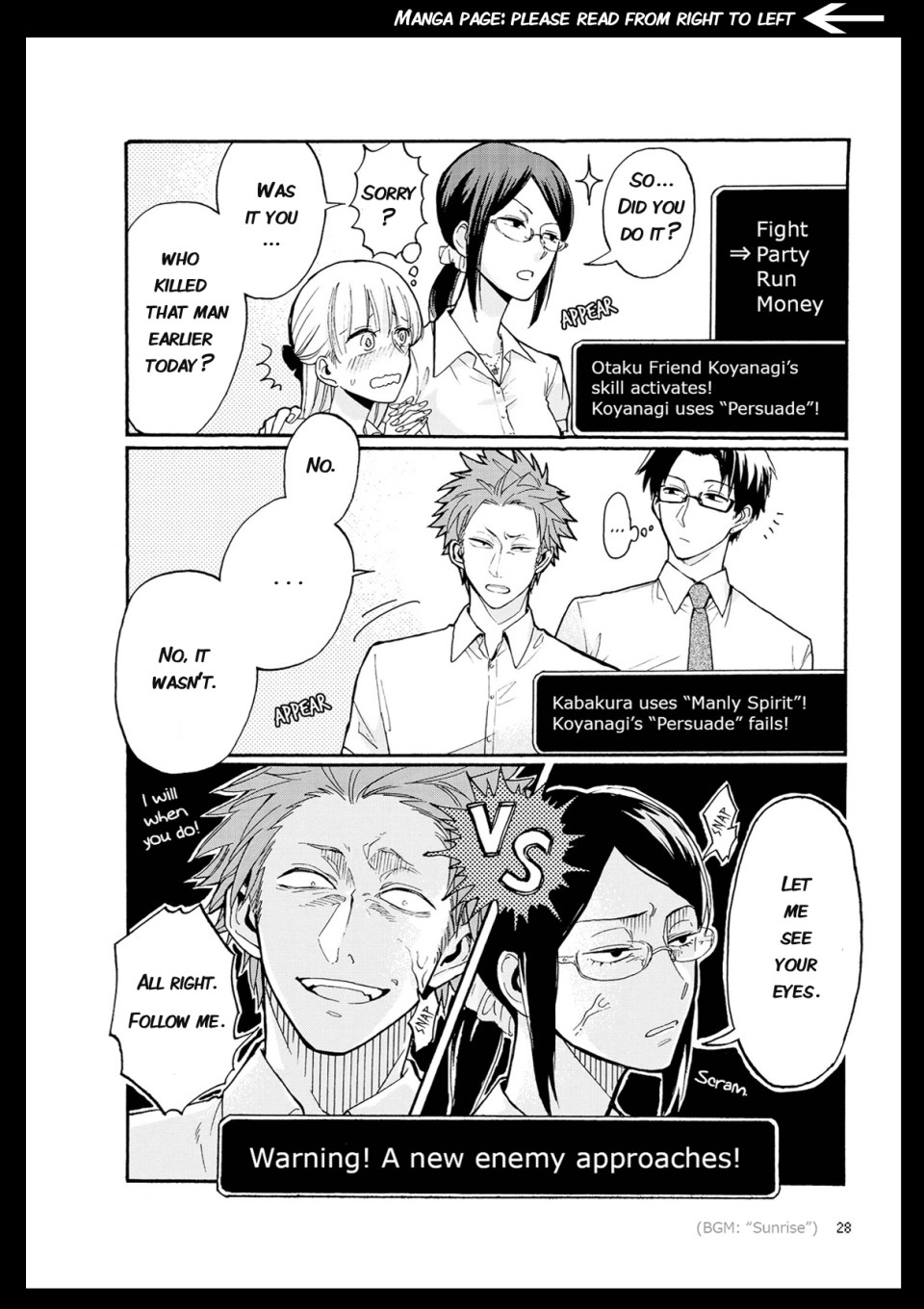


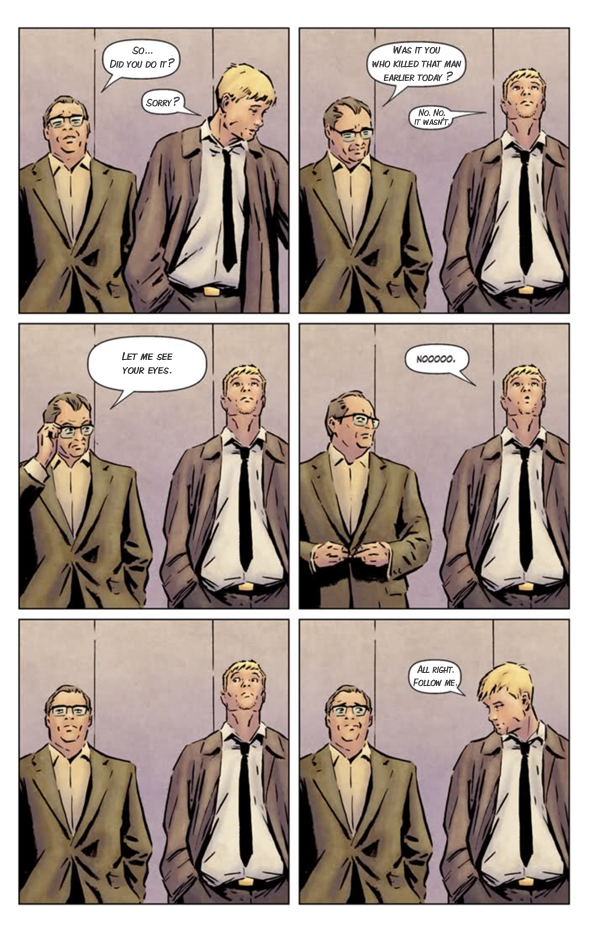
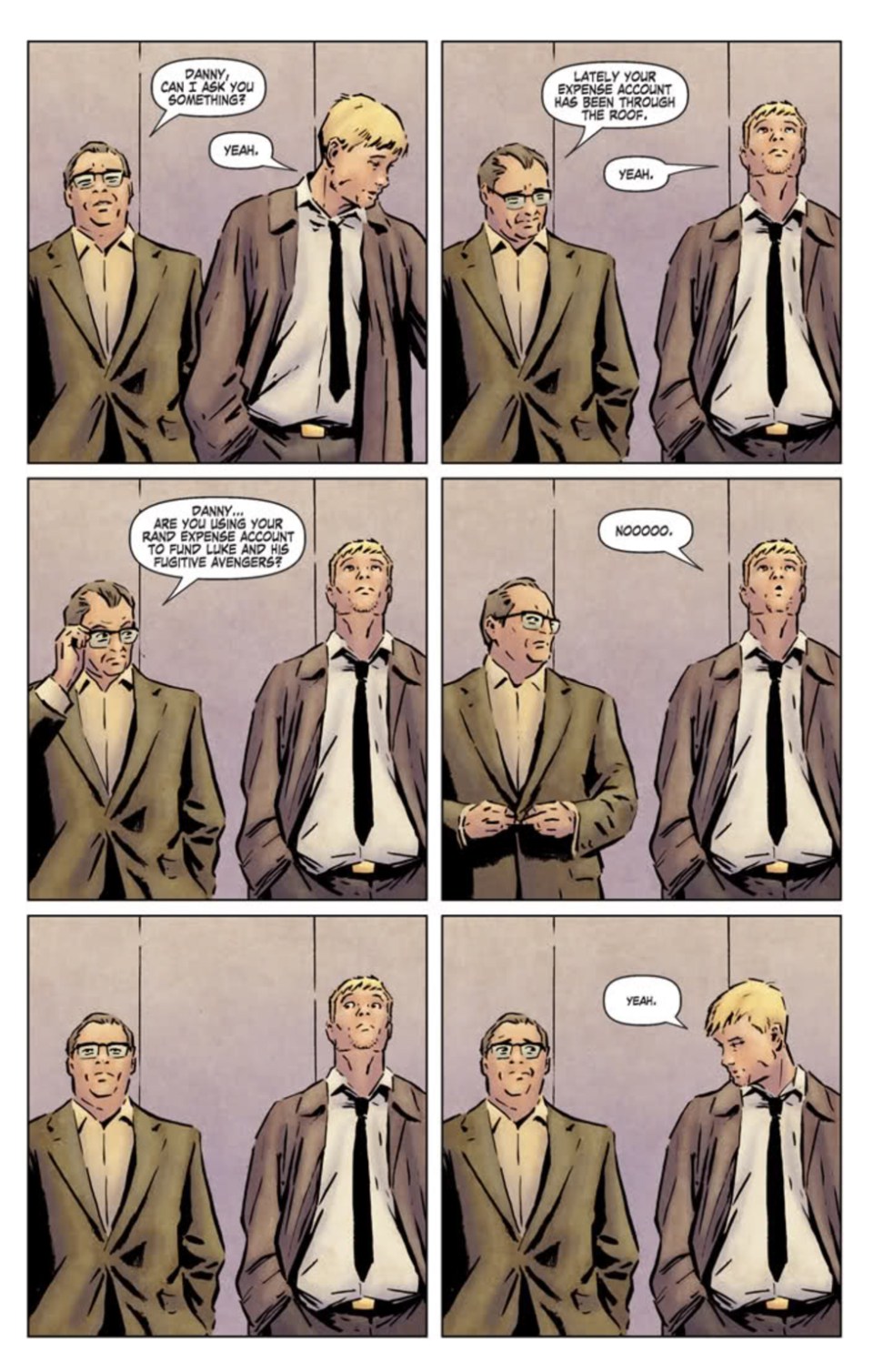
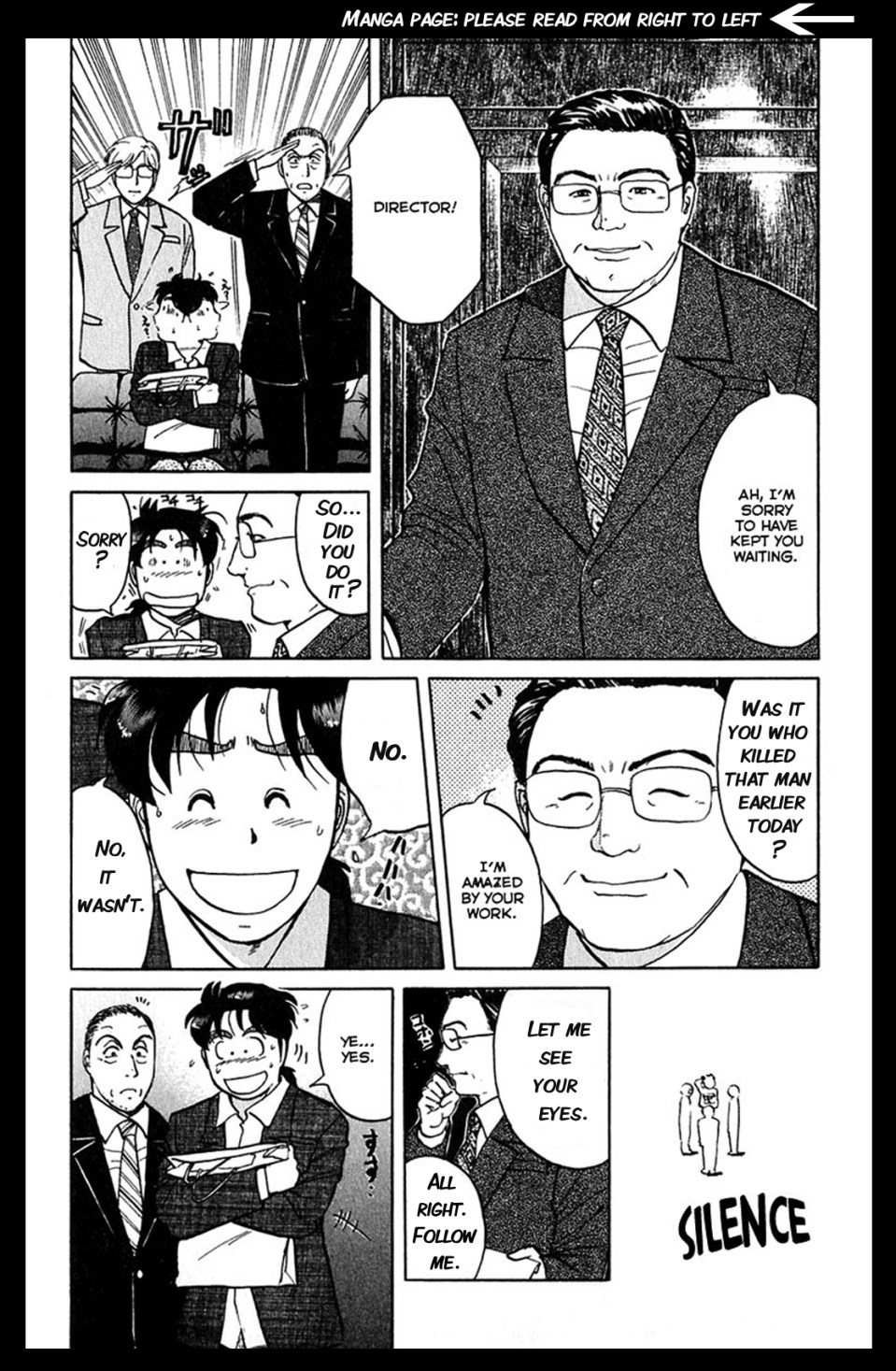
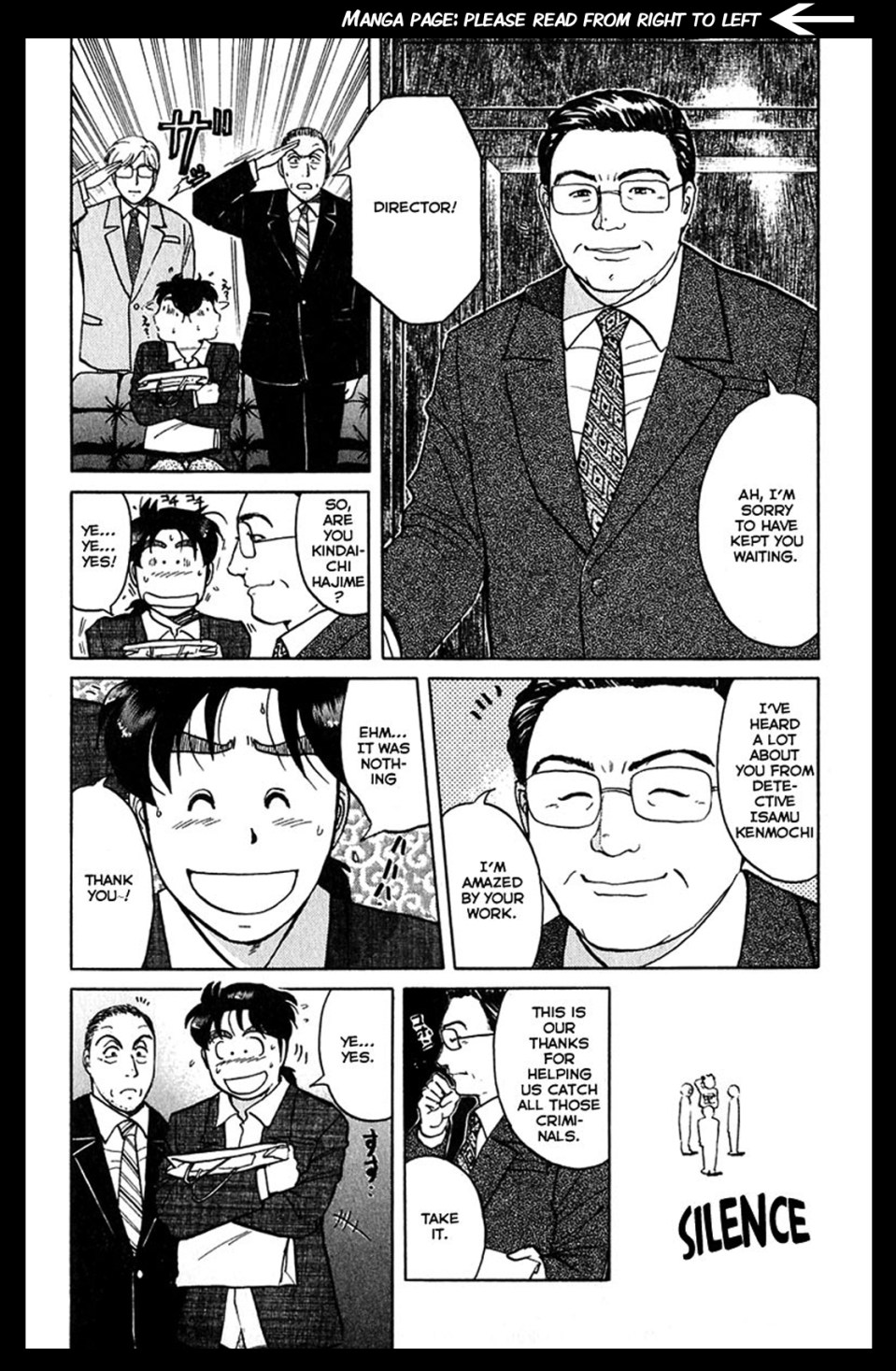
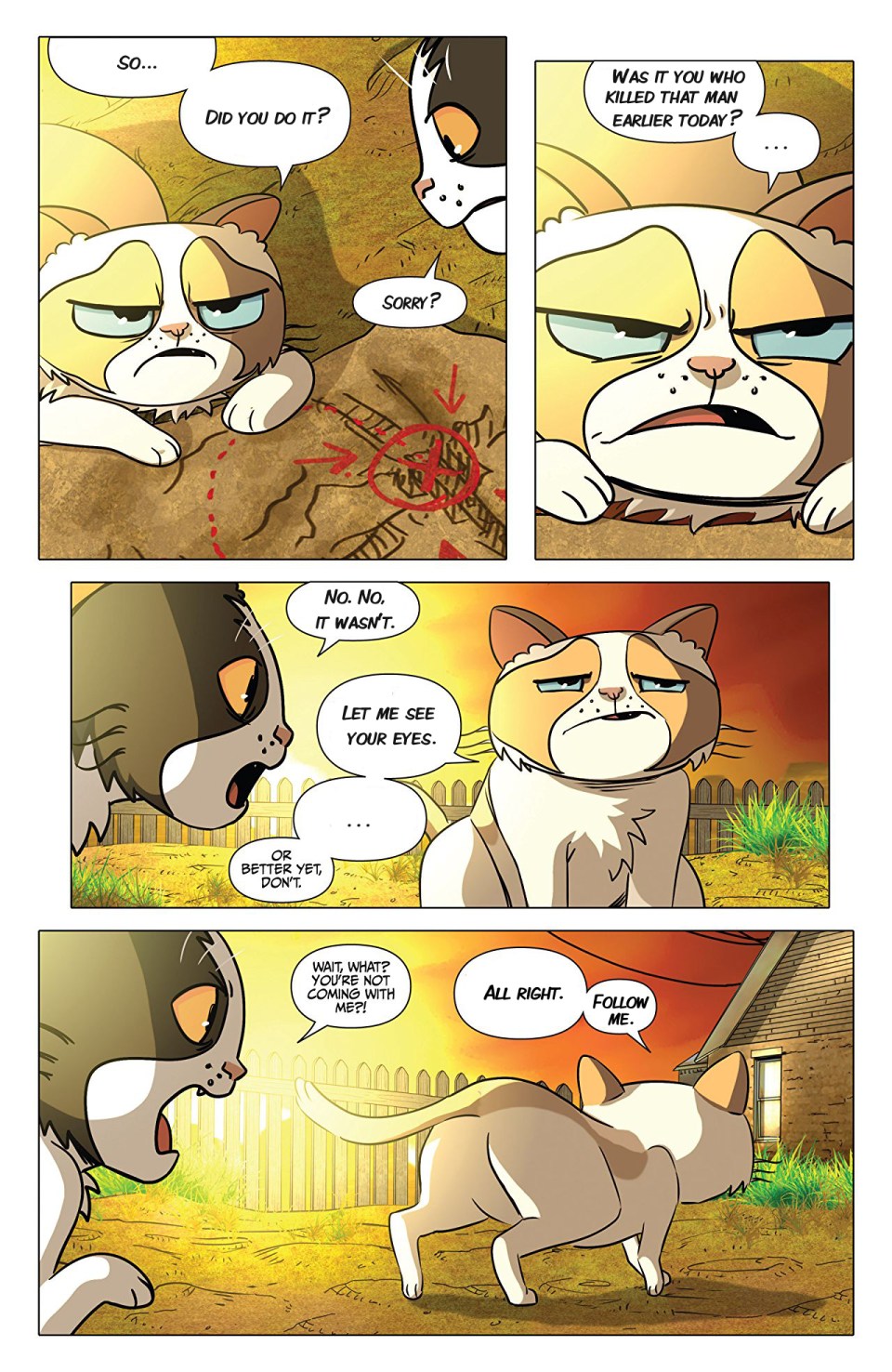


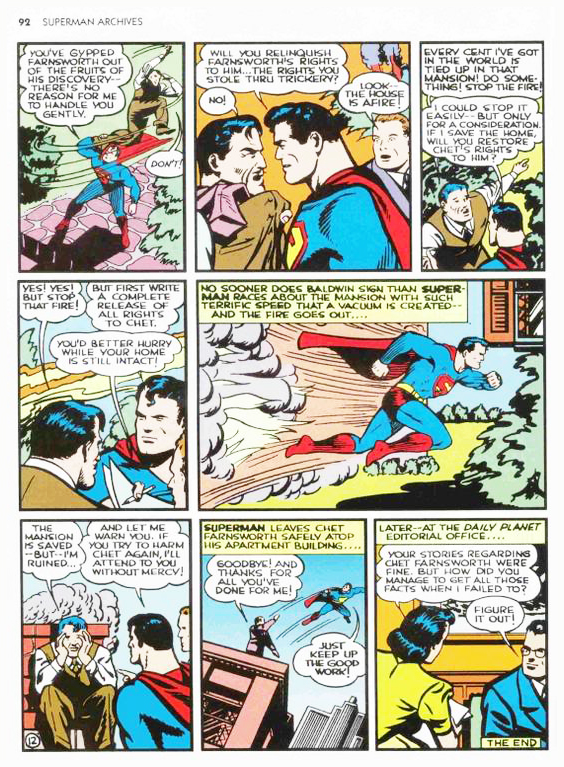

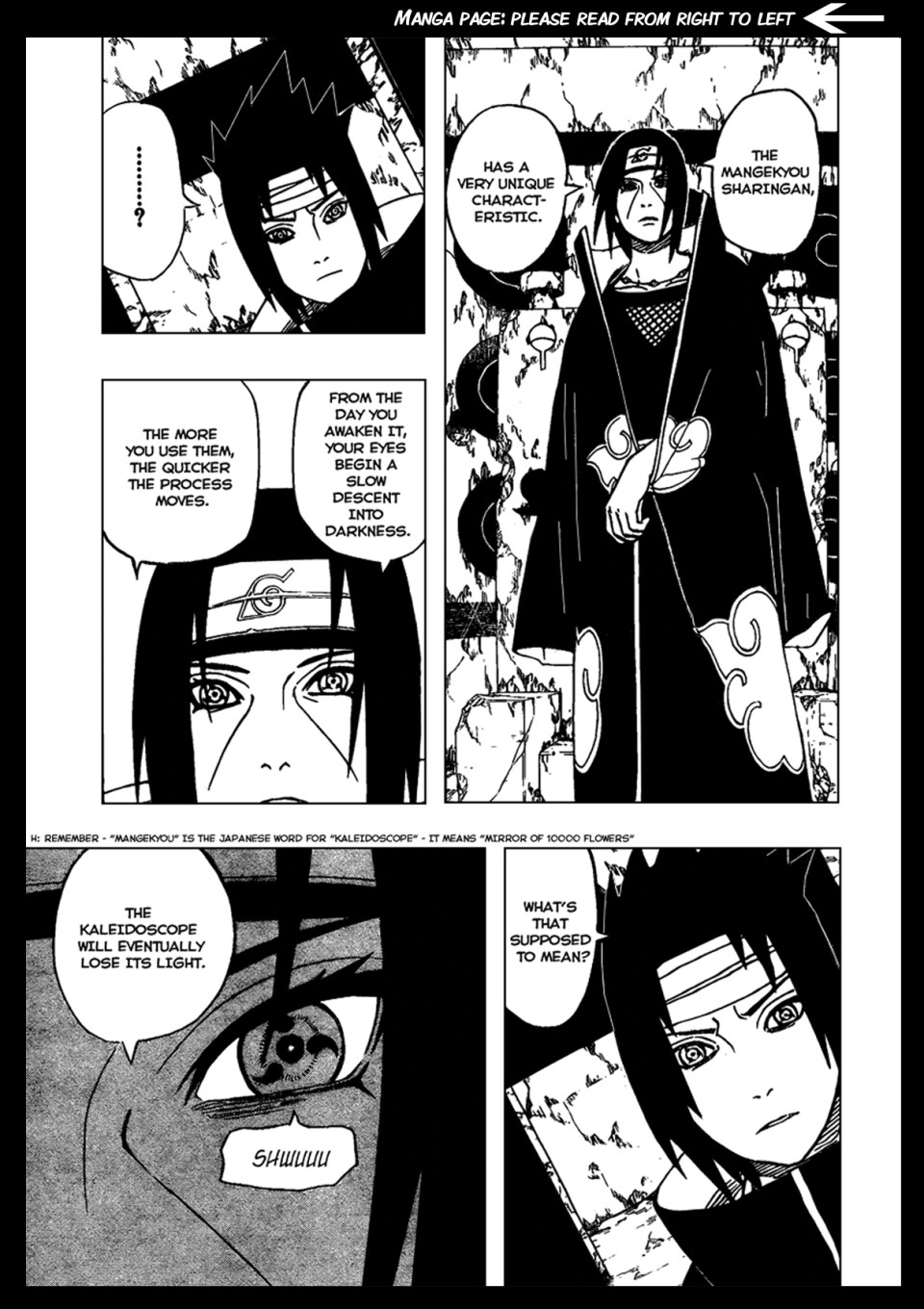

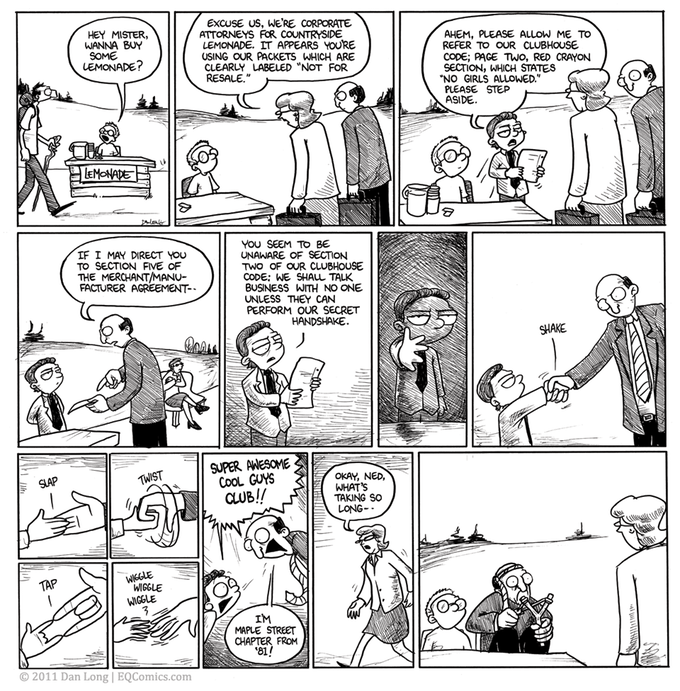
3. Text substitutions by CommArts students; without order alteration, but with additional bubbles.


#BiggerQuestions: in-class creative assignment (Intro Comm course developed by the Faculty of Communication Arts; Interpersonal Communication chapter); weaving 7 scattered wordless panels (taken from Anders Nilsen‘s Big Questions) into a 2-page graphic narrative.
BLURB!
“Great exercise!” Matt Madden (February 9, 2018), cartoonist and teacher best known for his book 99 Ways to Tell a Story: Exercises in Style (Penguin), as well as a member of OuBaPo (Workshop for Potential Comics), and later a French knight in the Order of Arts and Letters.
“More good stuff from [Bangkok], thanks for sharing!” Nick Sousanis (February 9, 2018), assistant professor of Humanities & Liberal Studies at San Francisco State University. He received his doctorate in education at Teachers College, Columbia University in 2014, where he wrote and drew his dissertation entirely in comic book form. Titled Unflattening, it argues for the importance of visual thinking in teaching and learning, and was published by Harvard University Press in 2015.
January 2018. Fifty (1st year) Thai students at the International Program in Communication Design (CommDe, Department of Industrial Design, Faculty of Architecture, Chulalongkorn University) received 2 pages displaying 7 scattered panels (with erased text) taken from various pages of the graphic novel Big Questions by American cartoonist Anders Nilsen. Within 90 minutes, they had to produce additional panels (if necessary) -and add dialogues- in order to bridge the imposed panels and weave a cohesive and convincing graphic narrative. Following brief comments provided on their comprehensive layouts, students finalized the artwork at home. See below for 20+ of their #BiggerQuestions constrained comics.
Inspired by on a constrained comics exercise used at Pierre Feuille Ciseaux international comics residency-lab.


![20180108_233504[1]](https://from-dusk-till-drawn.com/wp-content/uploads/2018/02/20180108_2335041.jpg?w=640)


Click on the 2-pagers below for larger size.
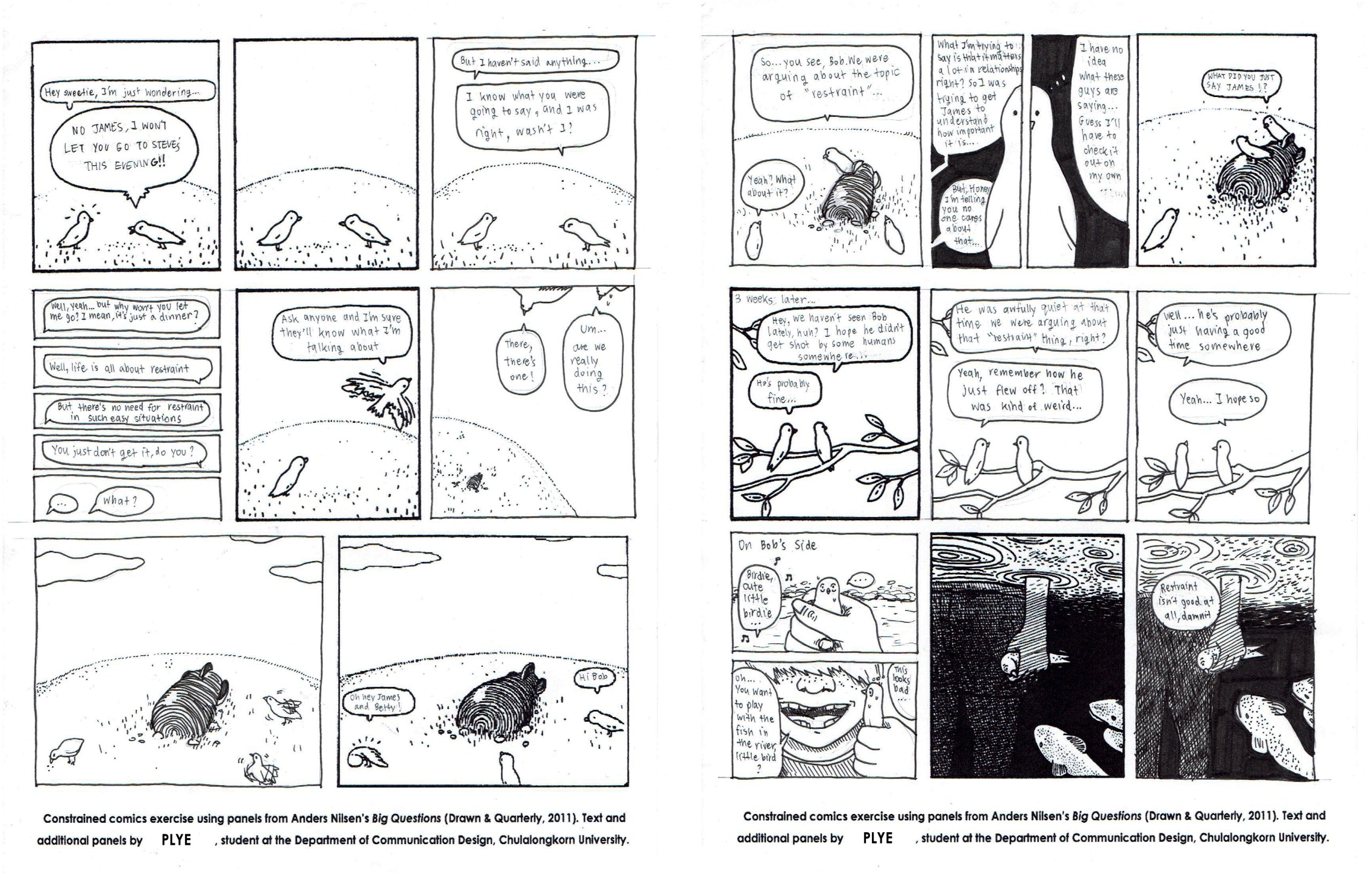
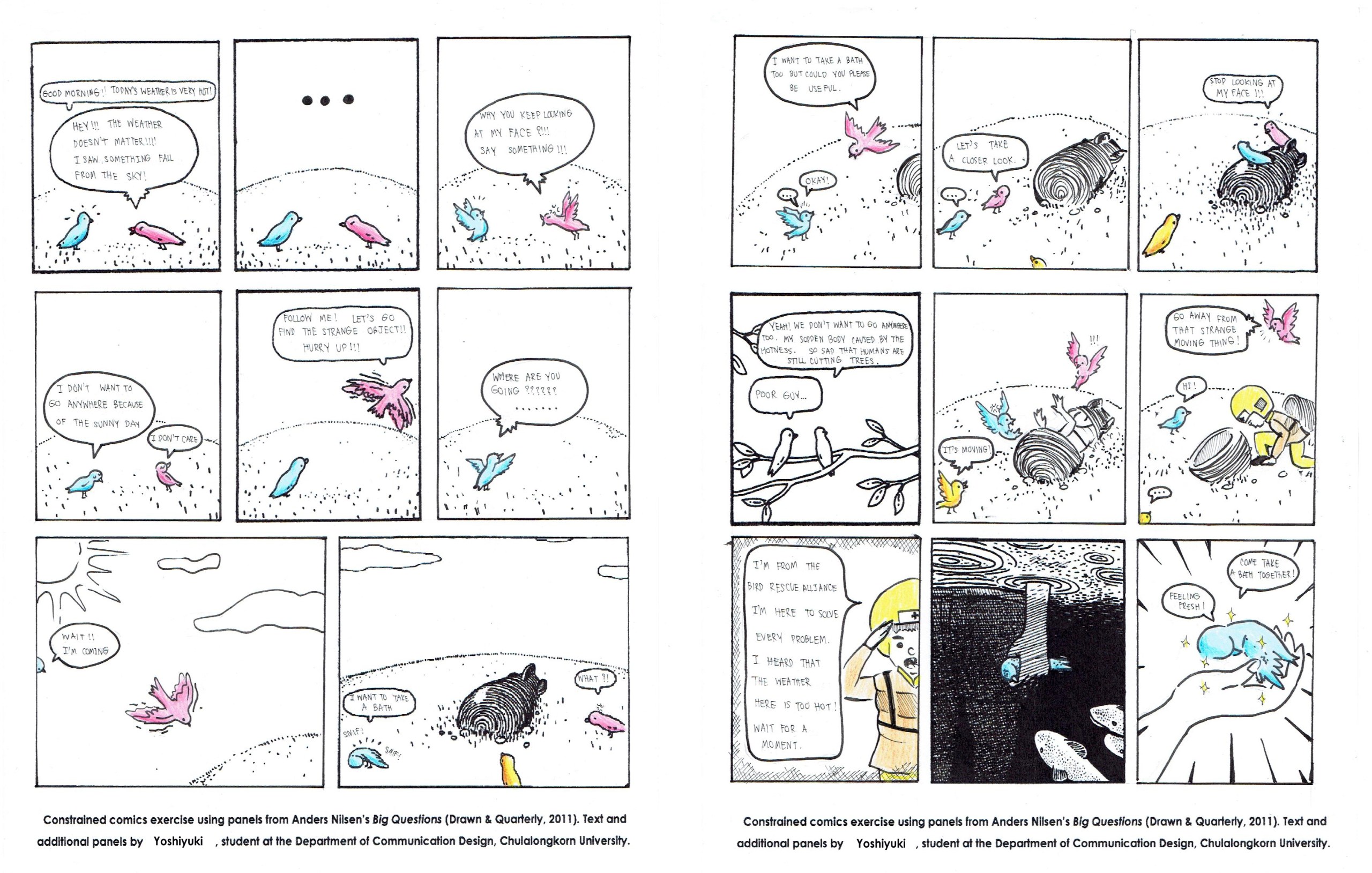
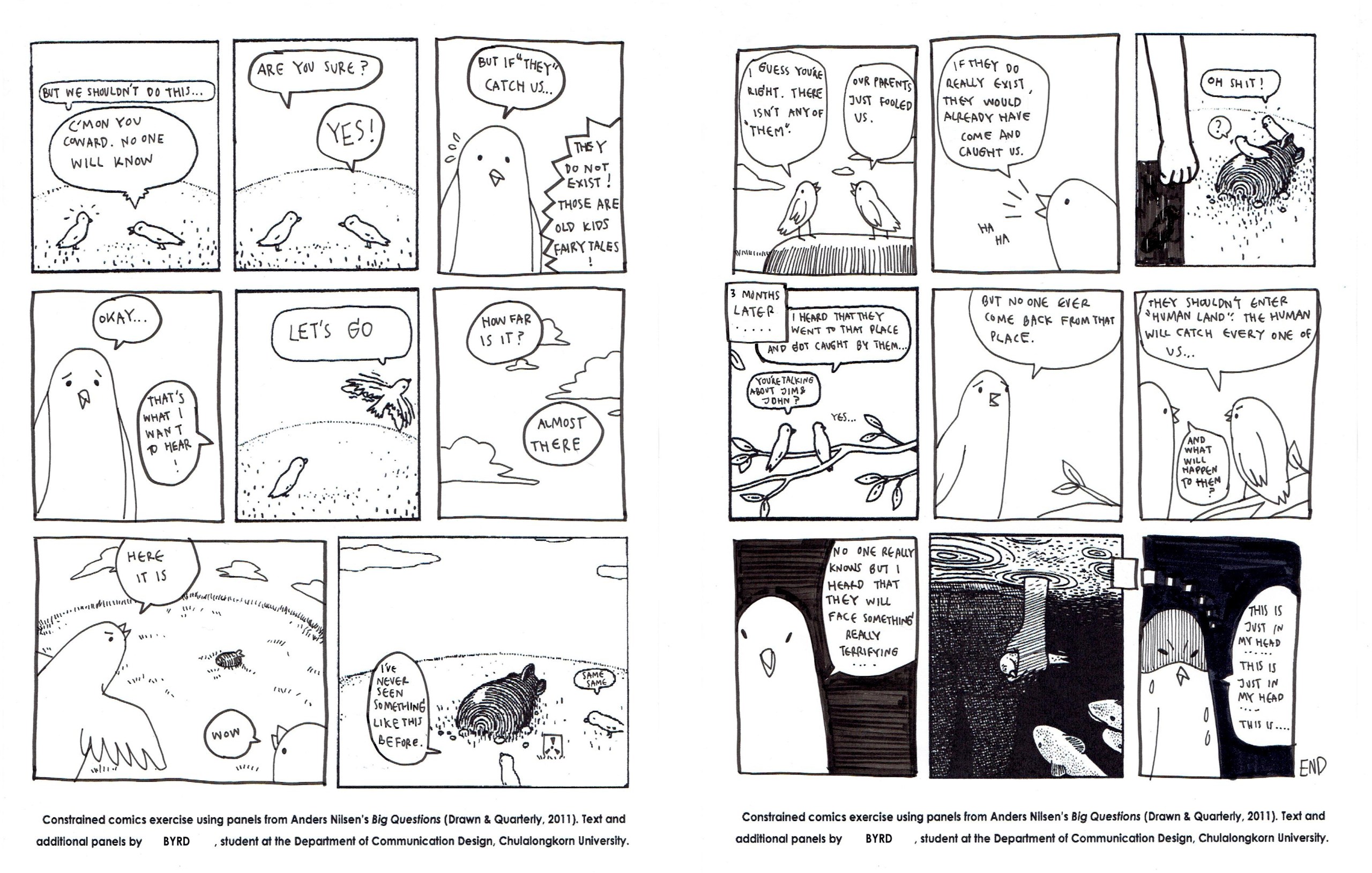

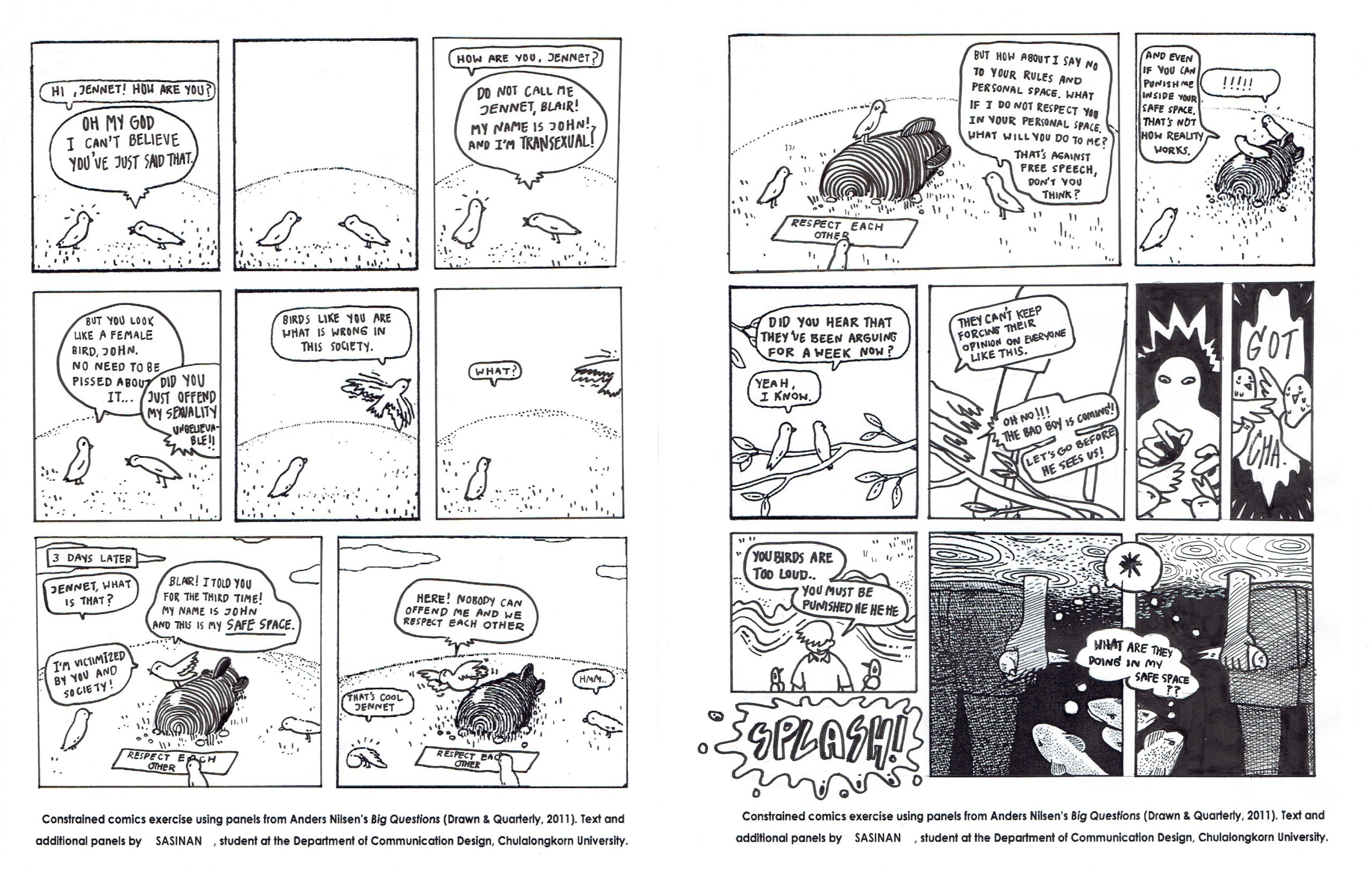


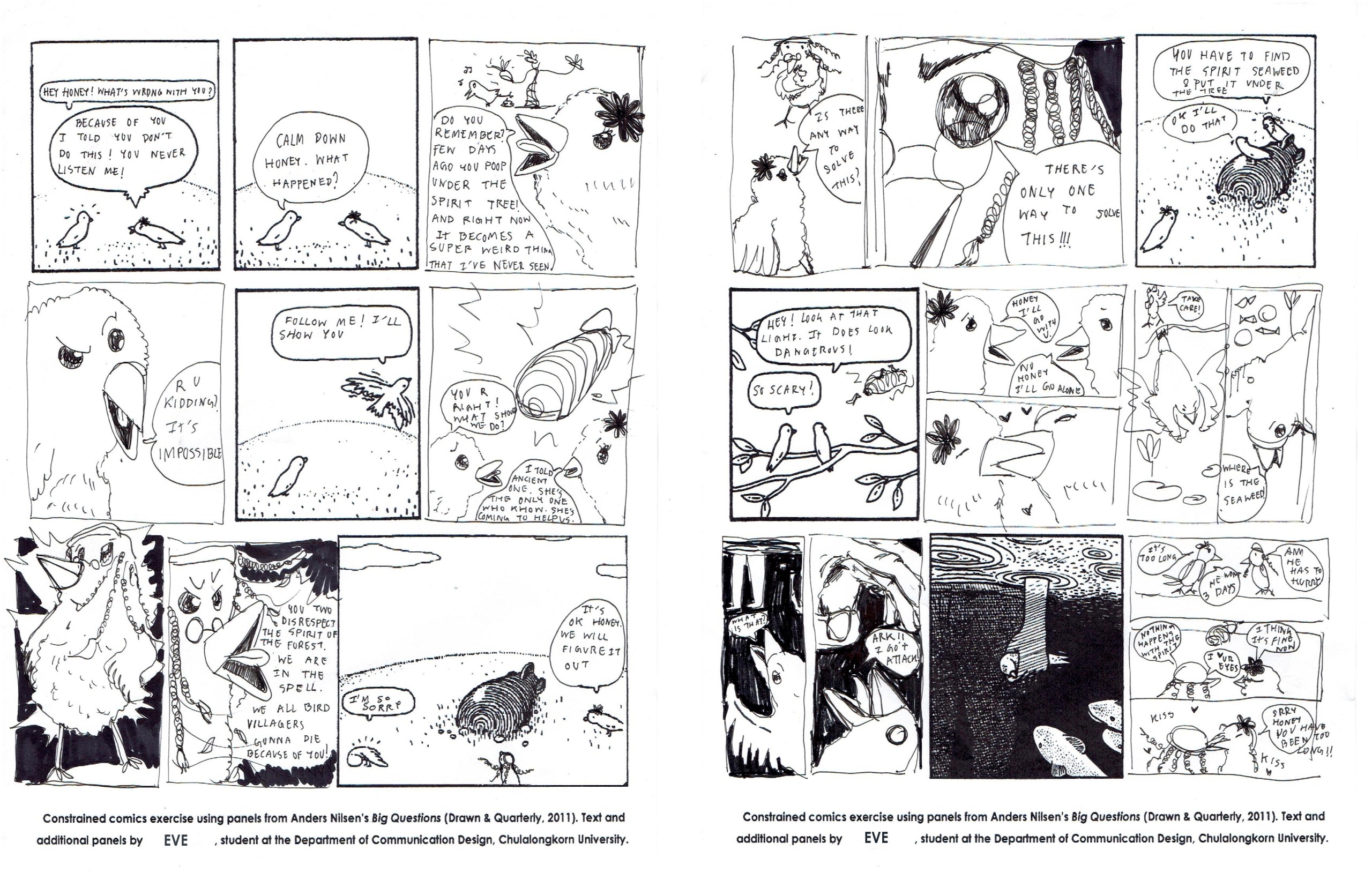


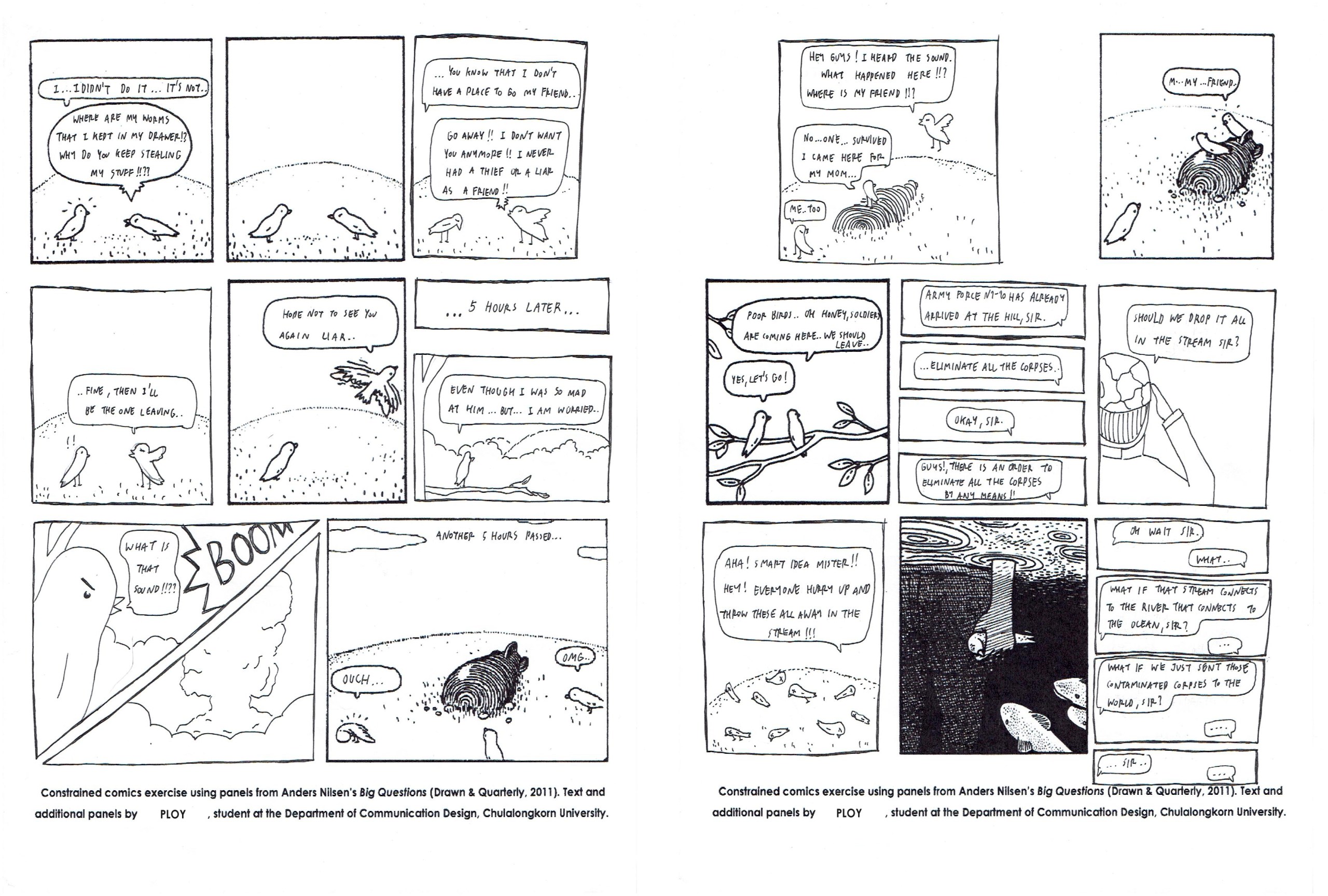
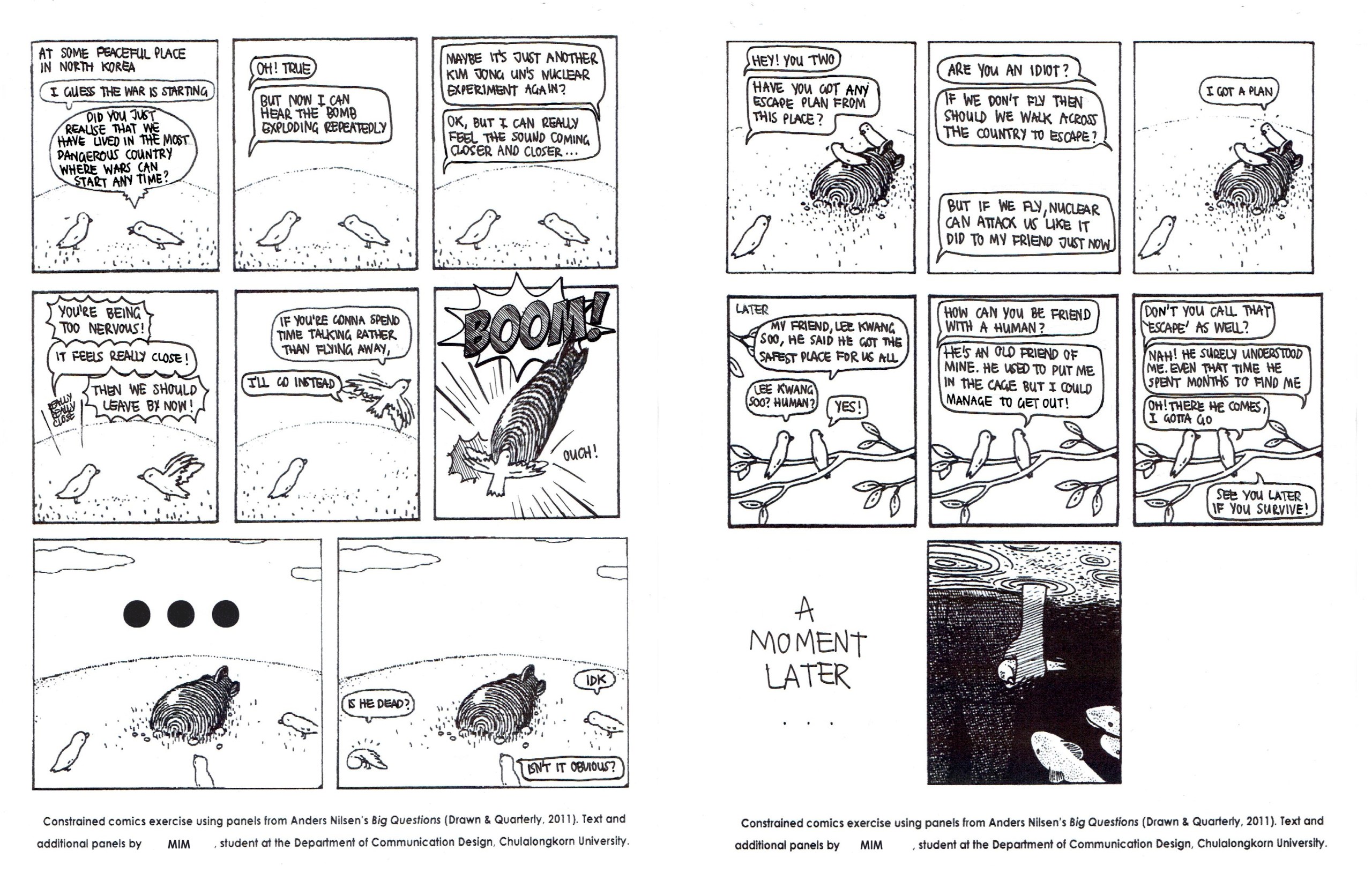

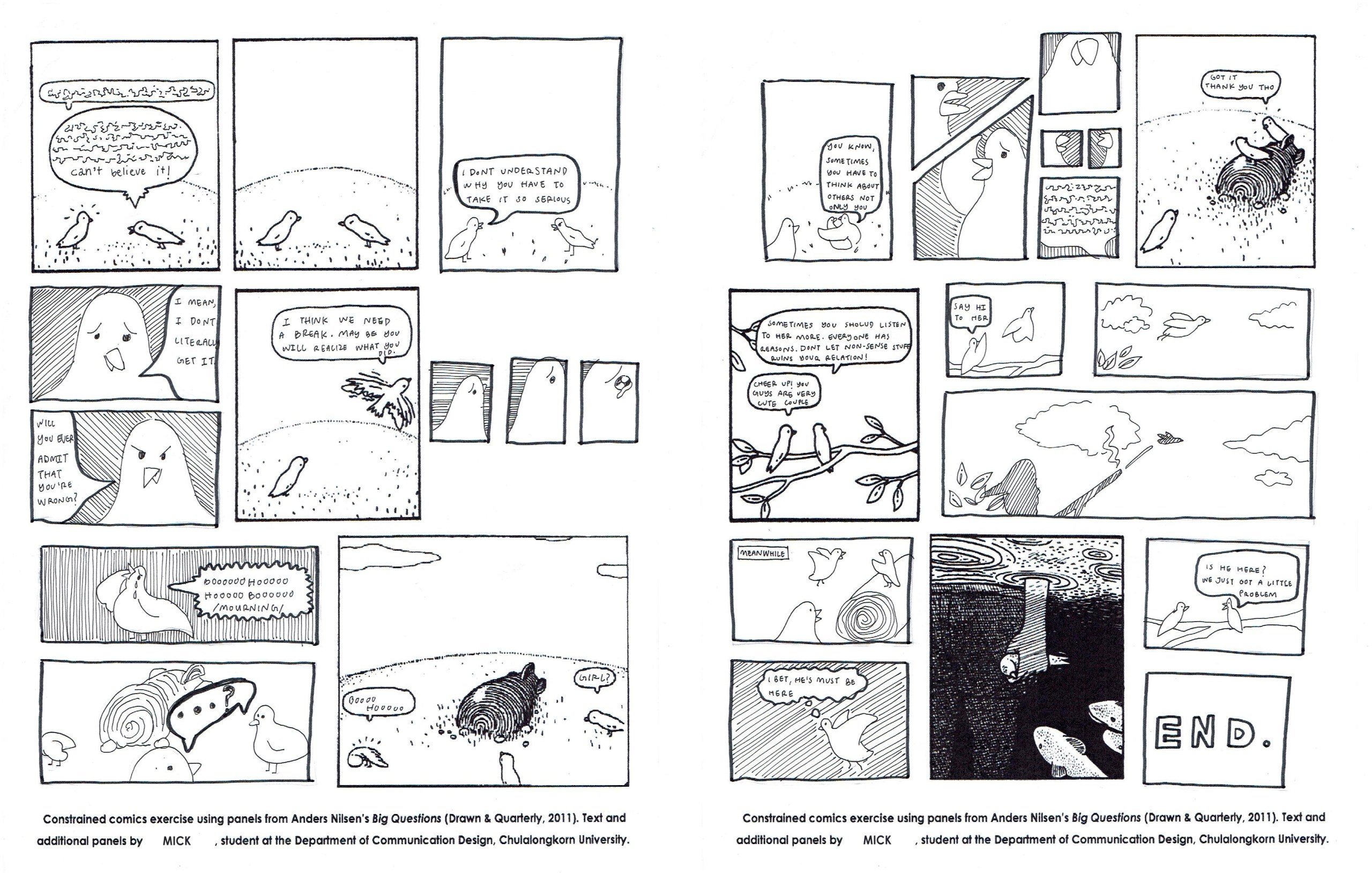


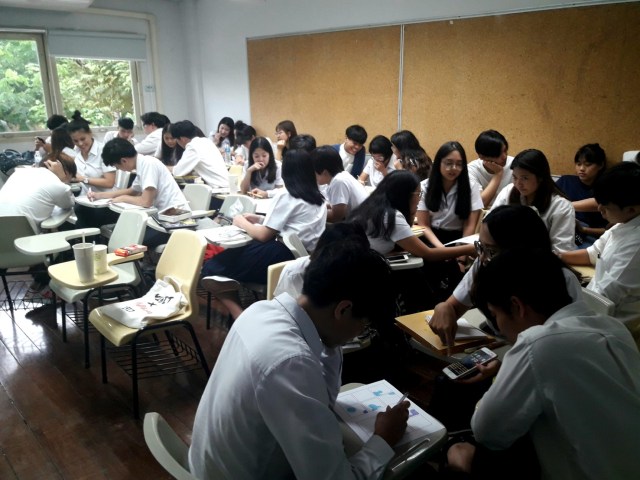
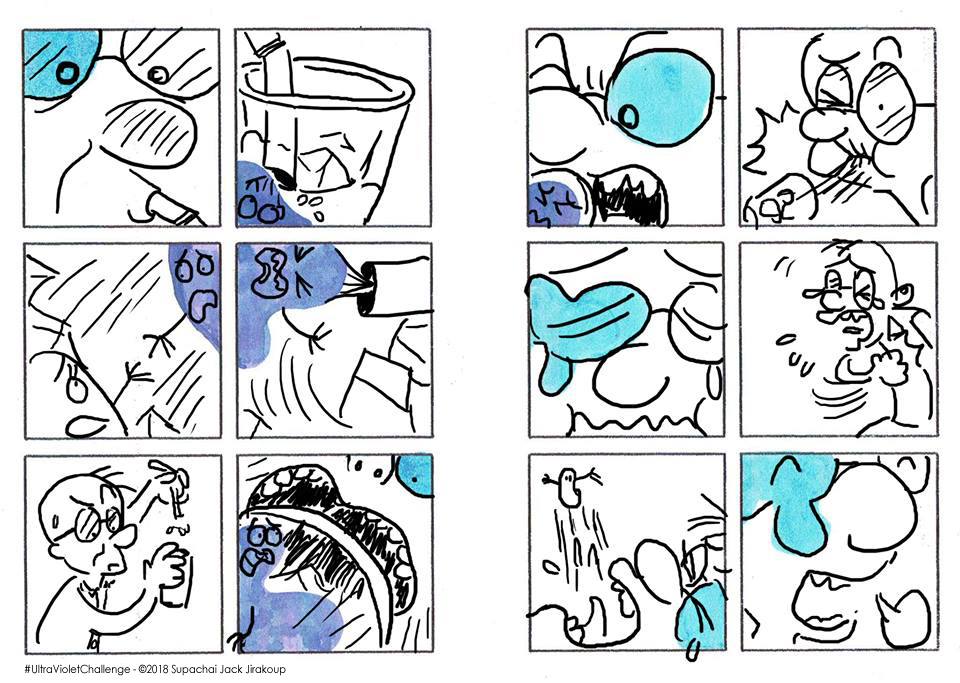
#UltraVioletChallenge: “Making Sense of Signs (and Fragments)” in-class creative assignment (“Intro Comm” & “Visual Media Studies” courses developed by the Faculty of Communication Arts; Semiotics chapter); create a figurative comics based on an imposed abstract comics (duration: 90′). Based on a constrained comics exercise used at Pierre Feuille Ciseaux international comics residency-lab.
SEE MORE #ULTRAVIOLETCHALLENGE RESULTS HERE (PART 2) AND THERE (PART 3).
BLURB!
“Brilliant – thanks for sharing!” Nick Sousanis (January 16, 2018; commenting the page by Fern, Lukpearr, Oom & Bank), assistant professor of Humanities & Liberal Studies at San Francisco State University. He received his doctorate in education at Teachers College, Columbia University in 2014, where he wrote and drew his dissertation entirely in comic book form. Titled Unflattening, it argues for the importance of visual thinking in teaching and learning, and was published by Harvard University Press in 2015.
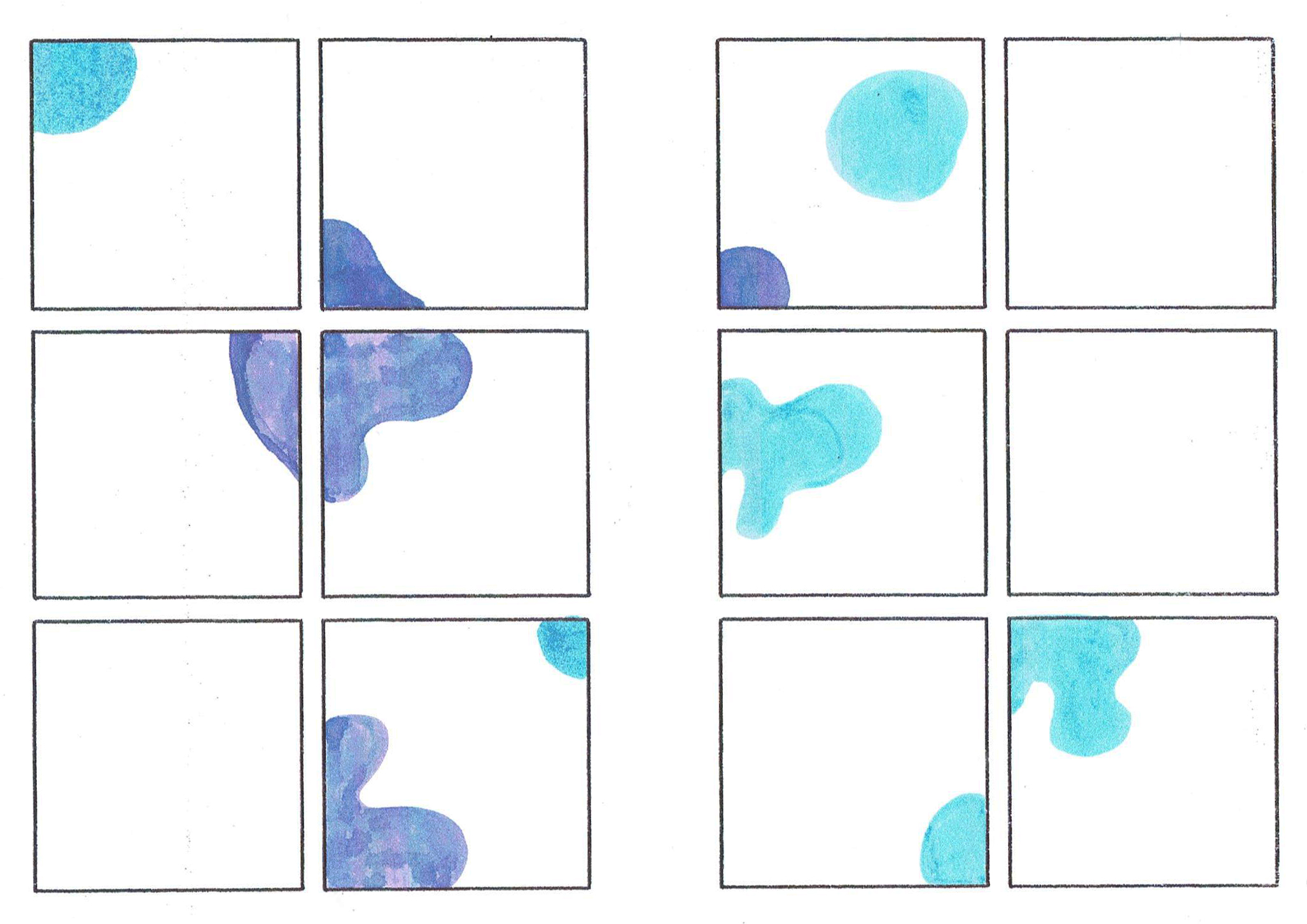

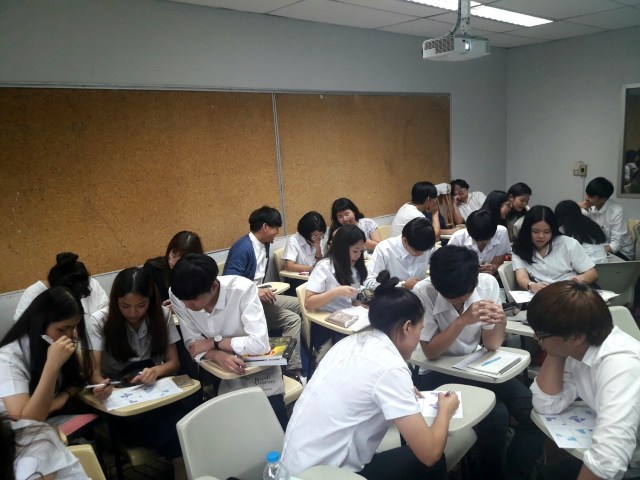
SOME RESULTING NARRATIVES:

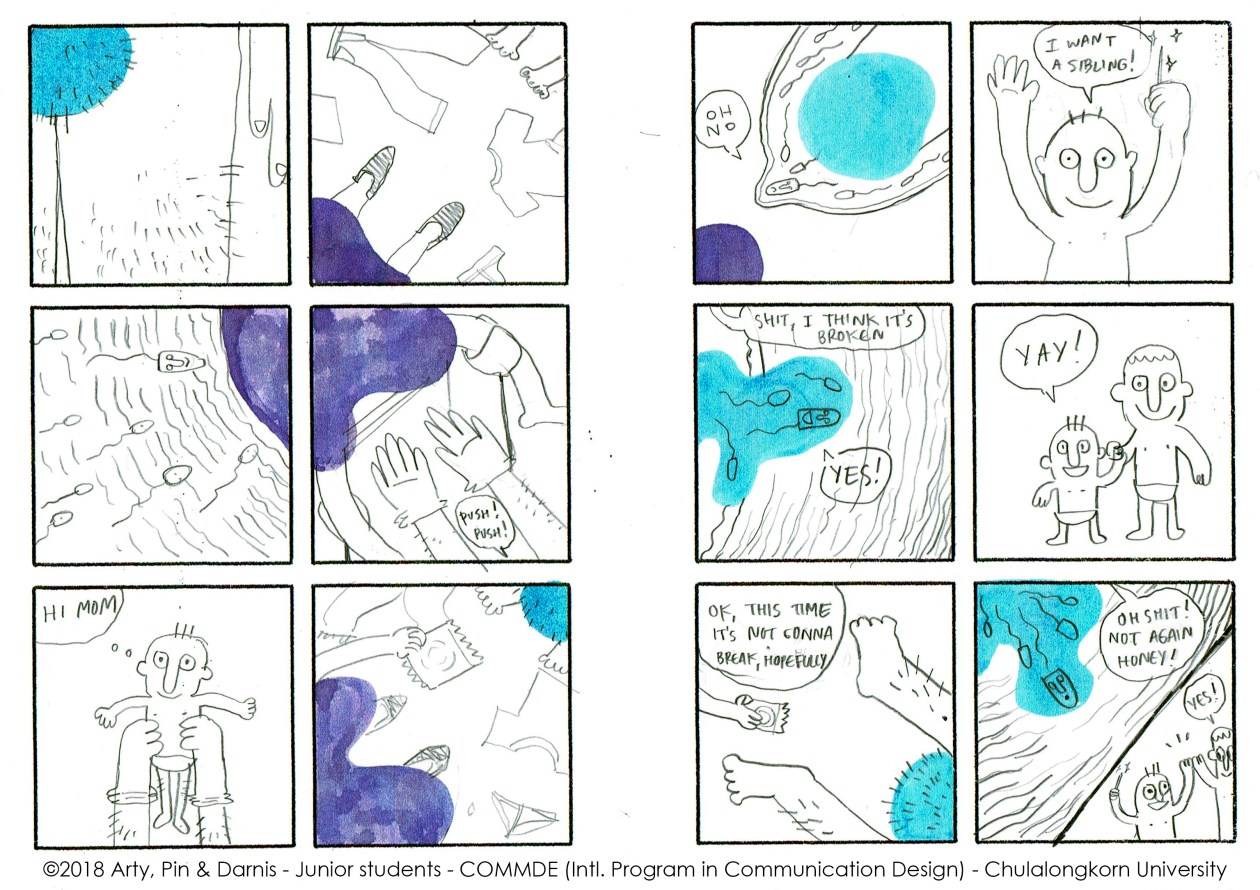


BELOW: #UltraVioletChallenge final page by Thai cartoonist Supachai Jack Jirakoup

 from-dusk-till-drawn.com